Our African Safari

Chapter 2

Previously on CharliExplores, you read about Rene’s and my introduction to the awesome African safari experience which included, among other things: Lewa Safari Camp – our safari home for four incredibly interesting and educational days. You were introduced to Misheck, our very knowledgeable and experienced guide/driver who educated us on safari life, wildlife, conservancies and so much more on our daily game drives. Game drives – the heart and soul of the safari experience and held twice daily.
We talked about our morning and evening game drives with Misheck where we roamed the open bushlands for hours observing, photographing, and learning about the diverse and fascinating African wildlife in their real life habitats.  And who could forget the lovely tradition of Sundowners – safari happy hour – during the evening game drives.                     

* You also got a small glimpse of the conservancies and their invaluable endeavors to save these amazing wildlife populations.  Thank you for joining us on our journey!

Naibor (Nahēbor) Safari Camp in the Masai Mara National Game Reserve (Mahsahē Mahrah), Kenya.

On July 19th, we arrived in the Masai Mara – the southwestern area of Kenya along the boarder between Kenya and Tanzania.  The Masai National Wildlife Reserve covers 580 square miles (371,200 acres!) It is home to nearly 90 different species of mammals and 500 species of birds! In other words, it is a huge place with a whole lot of animals – a perfect place to go on safari!

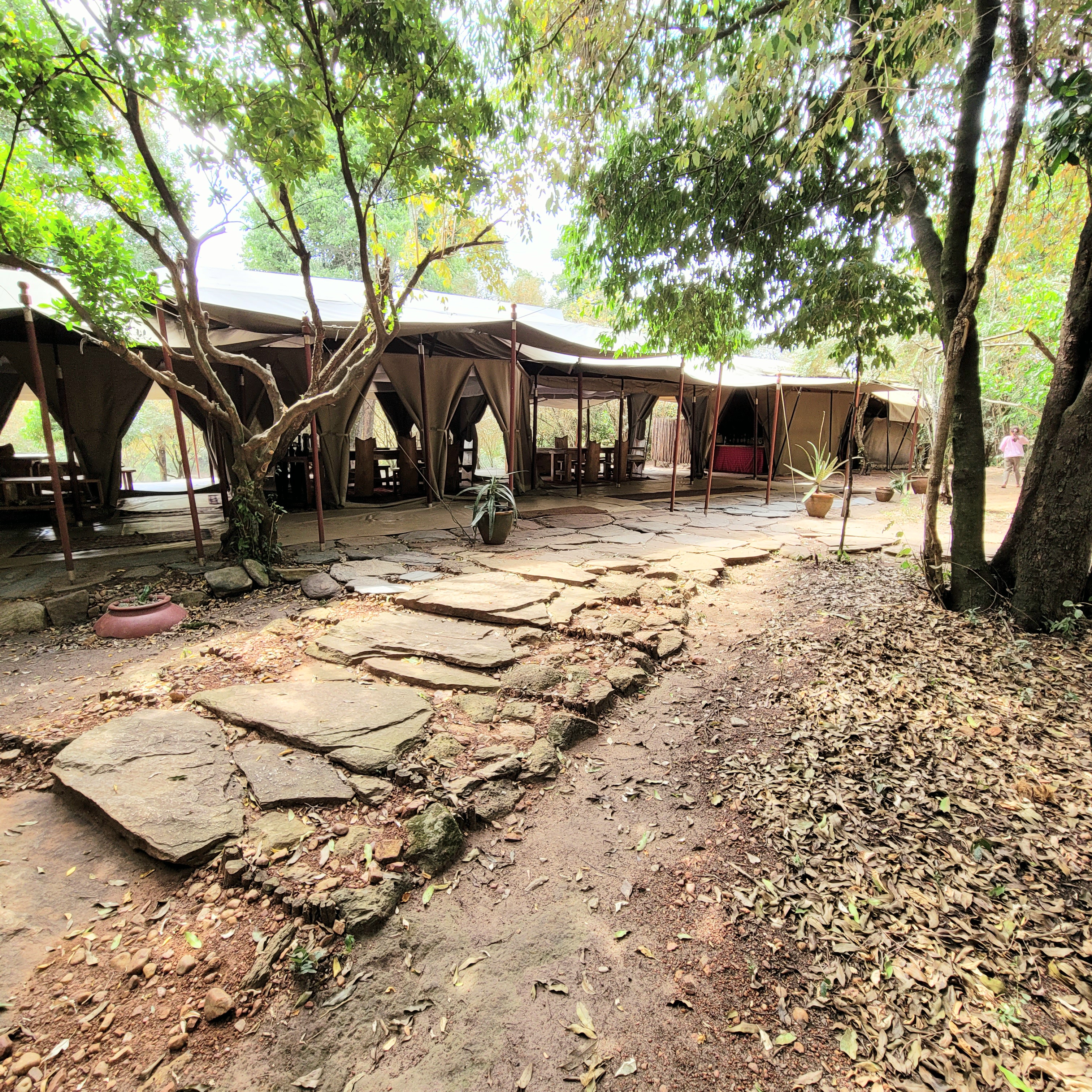
NIabor Safari Camp – the dining and commons area

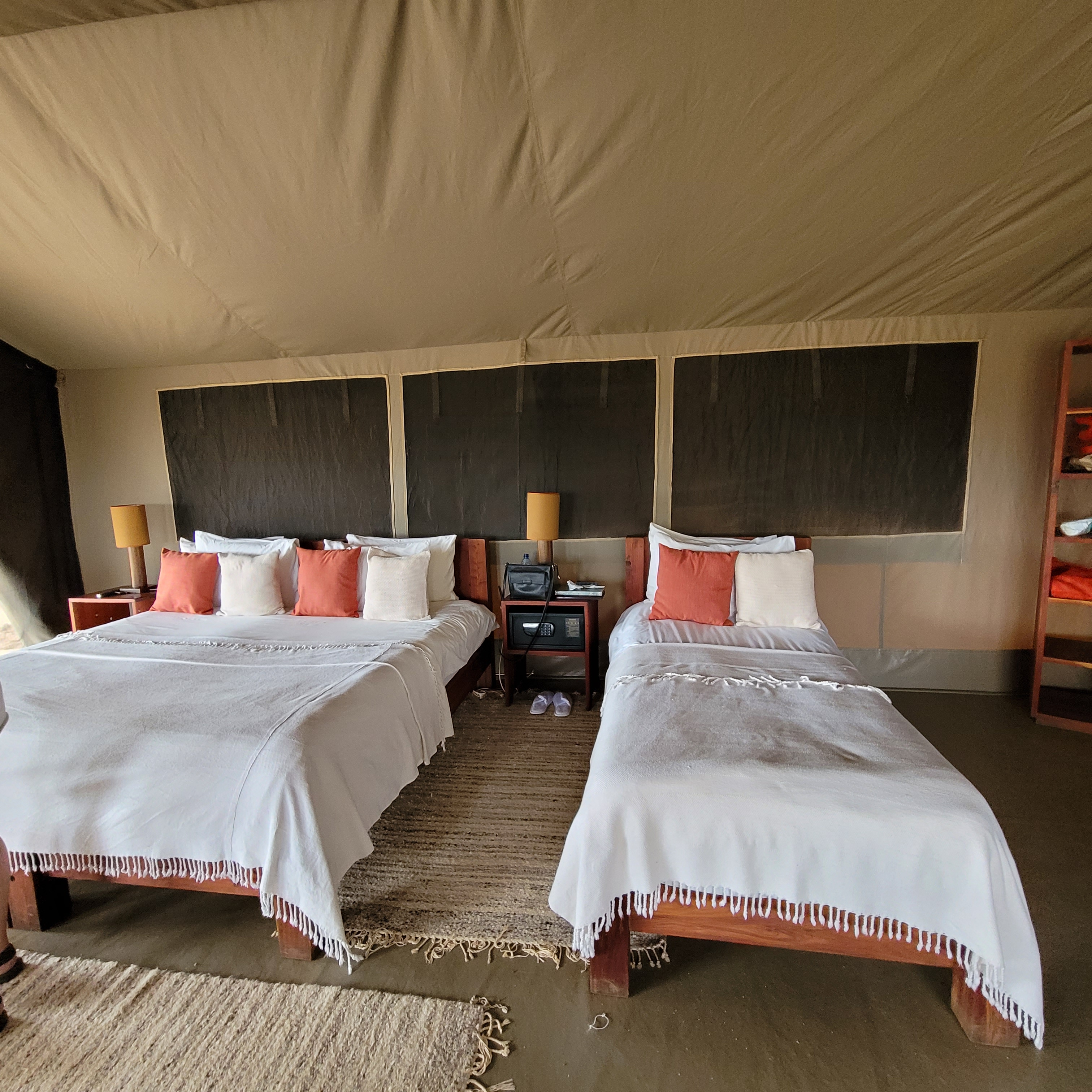
A bit more rustic than Lewa.

When I say that Naibor was more rustic, let’s just say that it was definitely more roughing it than we had gotten used to!  Before I go on, let me introduce you to Michael. I guess you would call him our steward at Naibor – he brought us water in the mornings and evenings, and was waiting outside our tent with a flashlight to escort us to dinner or wherever we needed to go after dark. He was Massi (native of the area), tall, lean, and a man of few words, but he preformed his duties with quiet competence! Okay, back to the camp setup. We had a chemical toilet but no running water – just a pitcher and a basin to wash face and hands. However, we did each have a shower every evening, and here’s how it worked. After game drive, we would tell Michael that we were ready for our showers. He would then haul water down to our tent climb the ladder to the platform  outside said tent (seen in the photo below), and call out, “Ready?” When the showerer called back “yes,” Michael would pour the water into the receptacle on top of the platform. The person showering, would pull a chain on the shower in the bathroom inside the tent, and the 7 minute rain would commence. (There was a fancy rain-shower shower head in our makeshift shower, ha!)  These were called bucket showers and certainly added a new twist to the safari experience, lol! 
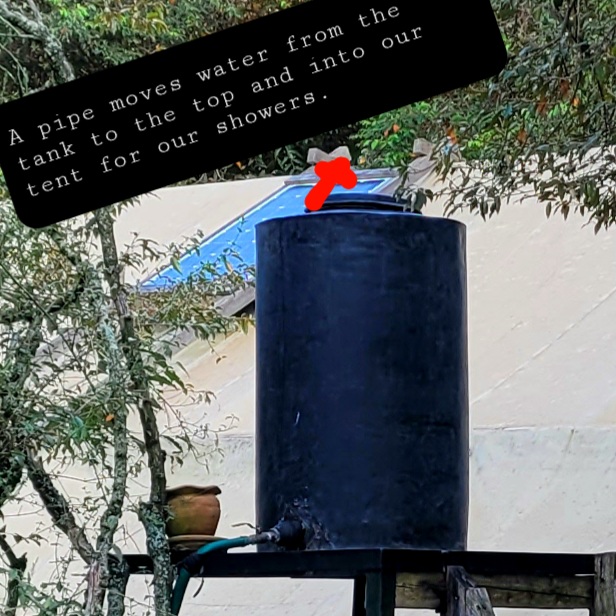
Bucket Showers

Okay, on with the safari!

Our camp was on a high embankment next to a river and a hippo pond. We were very close to the river, so were serenaded by the hippos throughout the day but especially at night. They are very loud with a unique language that ranges from dolphin like clicks and whistles to grunts and what sounded like loud belching, lol! We were concerned that the noise might be an issue at night. However, as tired as we were after safari-ing all day, we had no trouble sleeping despite the discordant lullaby.

Remember, you can tap on the pictures to enlarge them for a better view. Then tap the return > or x to return to the post.

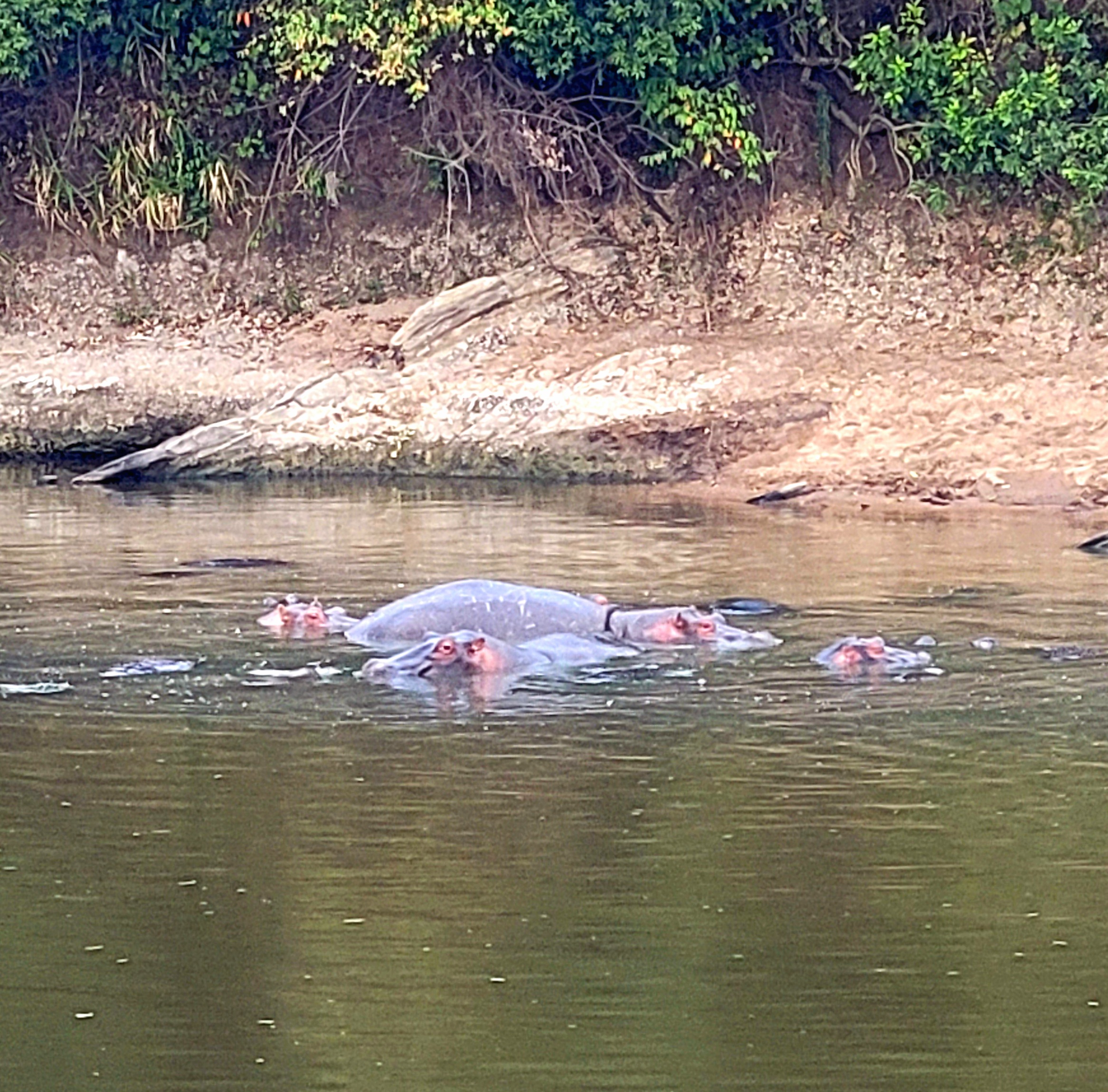
Because of the bright glare of the sun on the water, it was really hard to get a good video of the hippos, but you get the gist.

Hippo Facts: Hippos are, as the Christmas song states, vegetarians. They spend most of their day cooling themselves in ponds or rivers and grazing the plains at night. The hippo is the third largest type of land mammal next to elephants and rhinos. Hippos average 3,310 lbs for males to 2,870 lbs for the ladies. Gestation period is 8 months. *An interesting note, because of their density, hippos can neither swim nor float…odd that they spend so much time in the water.

The game drives were set up exactly as they were at Lewa Camp, right down to the departure times – 6:30 AM (uhg!) and 4:30 PM. Happily, Sundowners was the same also!!! What a lovely way to end the drive! But I’m getting ahead of myself!

We showed up at 4:30 for our first Naibor game drive and were introduced to Moikai (Mōēkahē). He also is a member of the Massai tribe and was our guide for game drives at Naibor.

Getting ready for our evening game drive!

Moikai was funny, entertaining, educational, and knew exactly where to find everything we wanted to see and more! Our first evening trip was a prime example! Moikai got word of a leopard in the area, and our search was on!!! *Leopards – elusive and sometimes hard to find.

This impressive girl had taken down an impala and dragged it up into a tree – out of reach of the hyenas and jackals – to feast on it at her leisure.

Warning, the next video is pretty graphic!

It’s the nature of the beast.
Oh, BTW, I did take the video myself!!!

The jackals and hyenas were not far off. Both species are scavengers, but they each have different rolls in the scavenging arena.
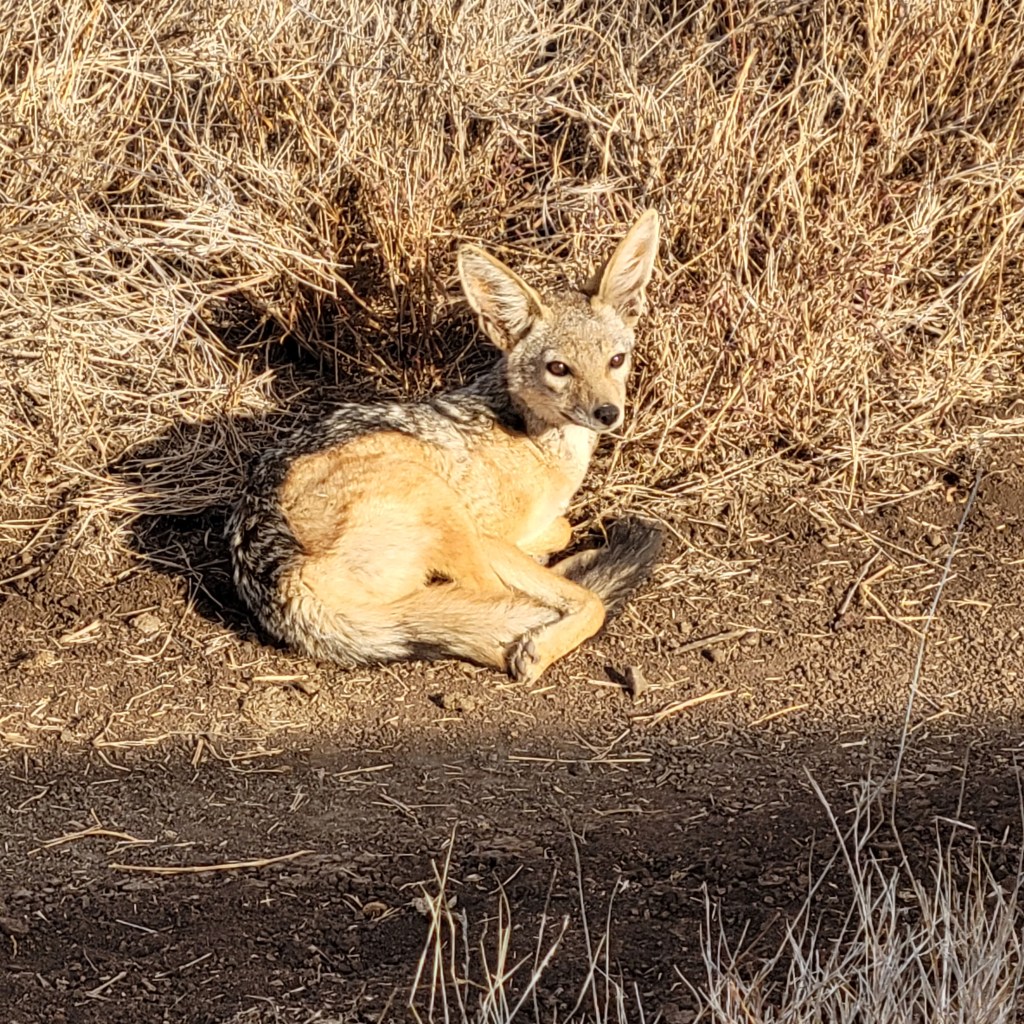
A jackal

This cutie is a jackal. Jackals are about the size of a small to medium sized dog. Adults only weigh 15 – 22 lbs. Their job is similar to that of the vulture. They eat the entrails and clean the bones of other predators’ kills…. eeewwwww!

If you saw The Lion King, then you probably know that these are hyenas.

Hyenas are the size of a large dog. Their job is to finish the job. Once the jackals and vultures are done cleaning the bones, the hyenas eat the bones. No leftovers or mess to clean up. Nature is incredibly efficient!

We returned to our leopard’s tree for a quick visit all three days we were at Naibor. On the third day, our lady leopard needed a drink, so when we got to her tree she was down and on the move. We got to see her up close and personal – just WOW!!!
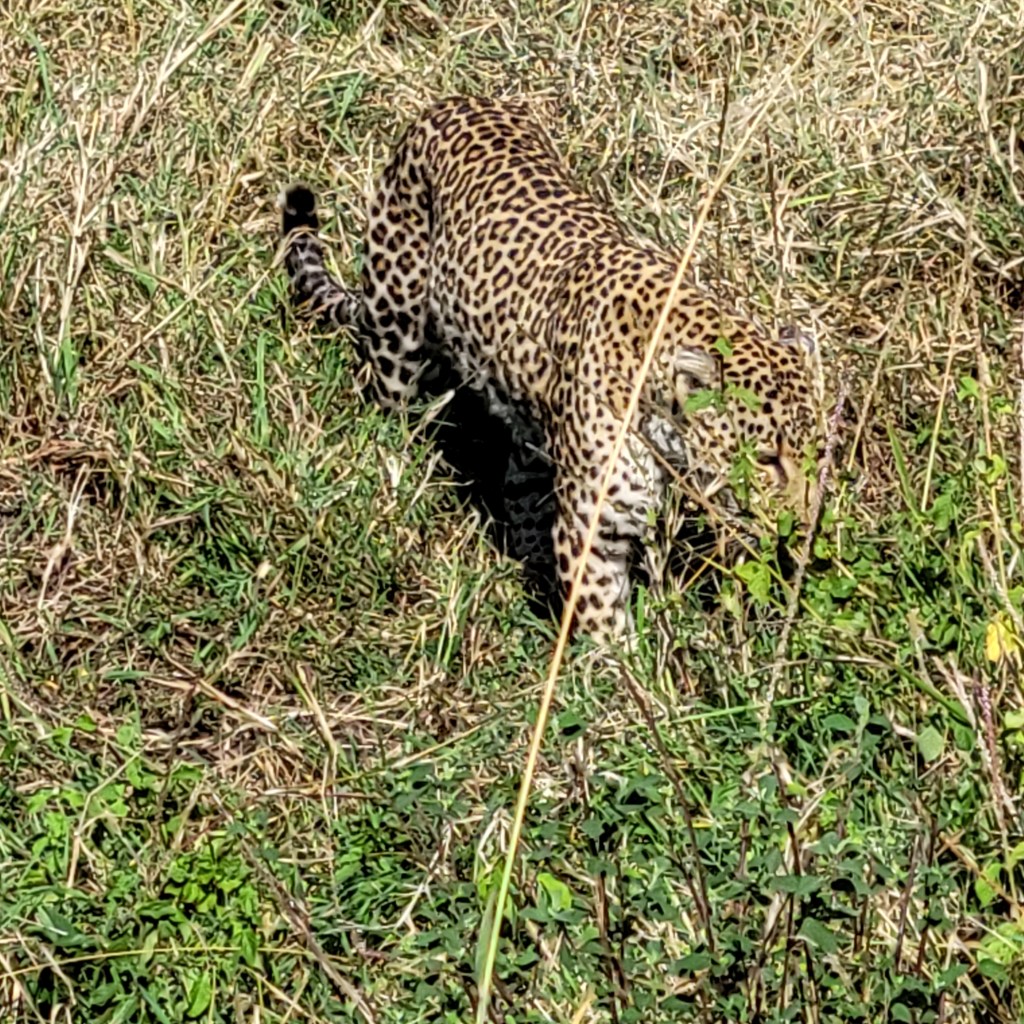
Our grand dame!

Okay, on to some of the other distinguished inhabitants of the Masai Mara!
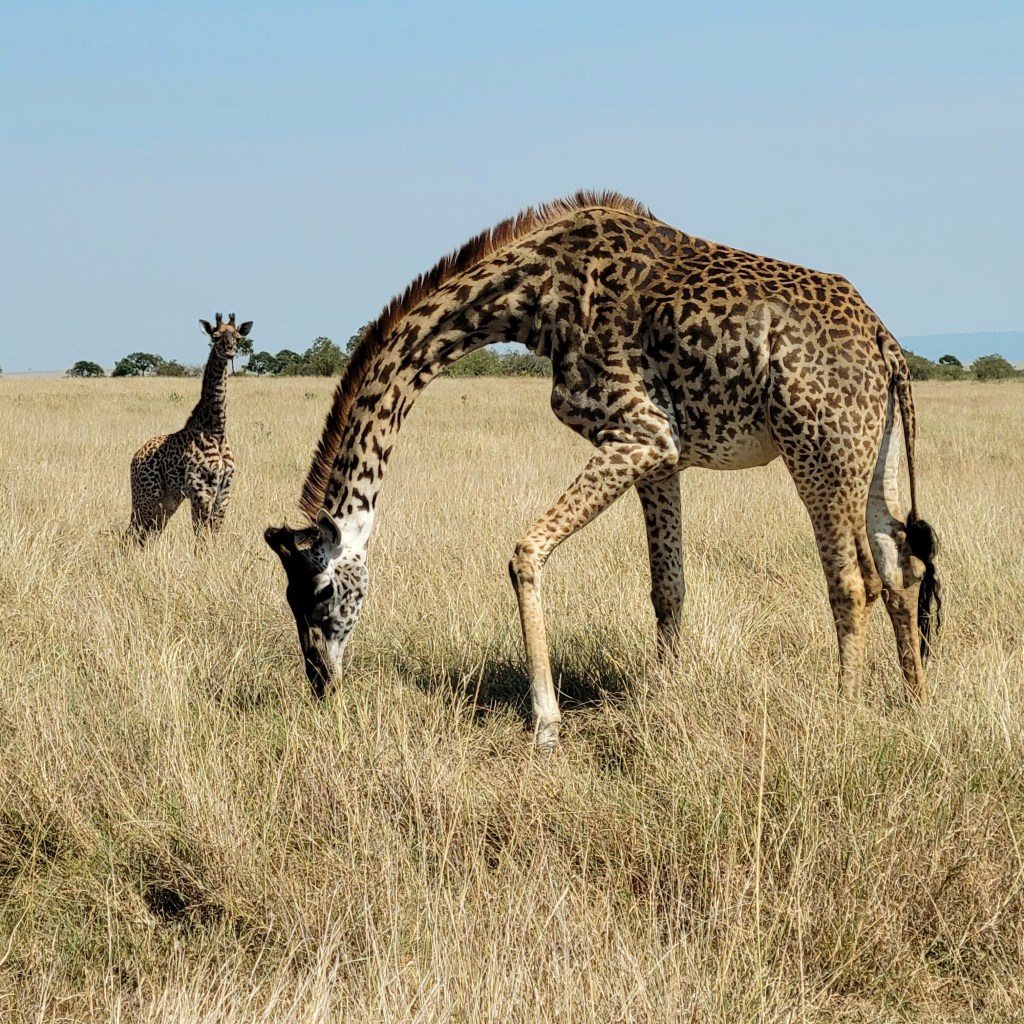
The curious baby in the background gives hope.

“We already saw giraffes!”you might say, but not these! Look closely at the color and pattern of the coats. Unlike the reticulated giraffes’ rectangular patches, the Masai giraffe is darker and has star-like spots. Their population numbers are better than their reticulated cousins. There are approximately 32,500 in existance. However, poaching still threatens their numbers, which are also tragically declining.

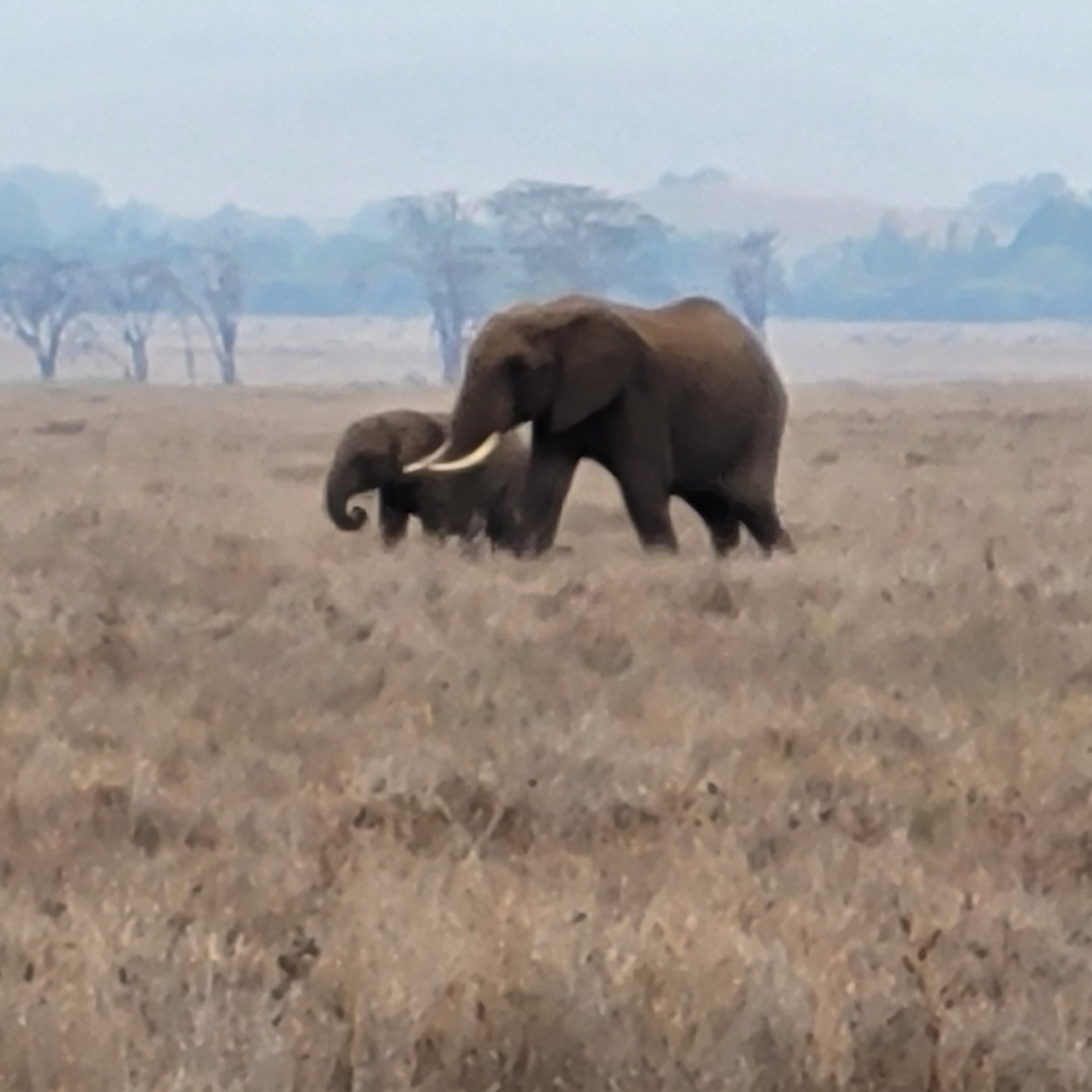
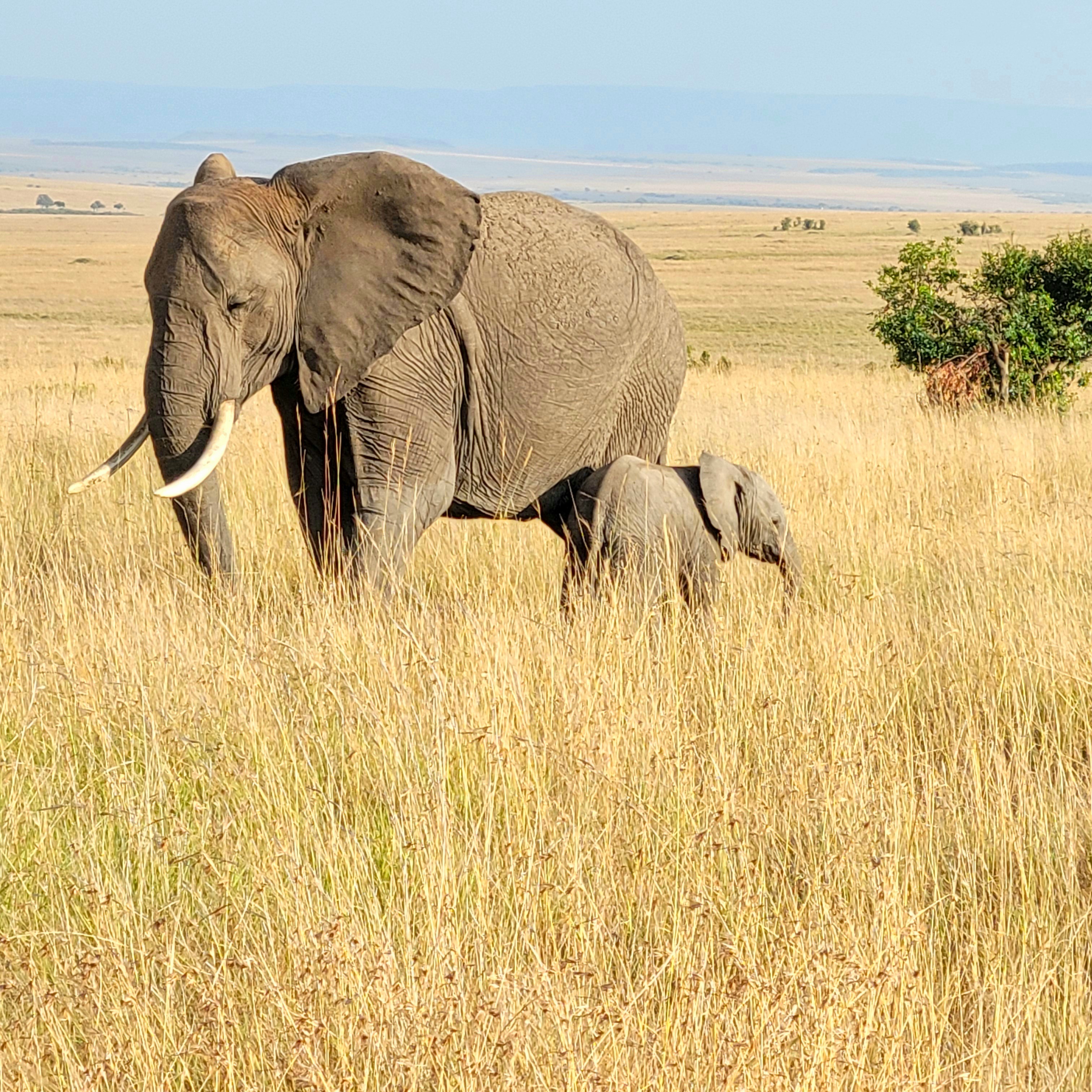
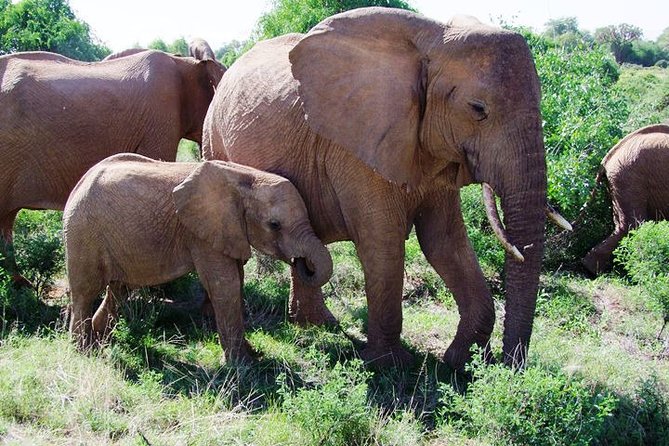
And we saw ELEPHANTS!!!!
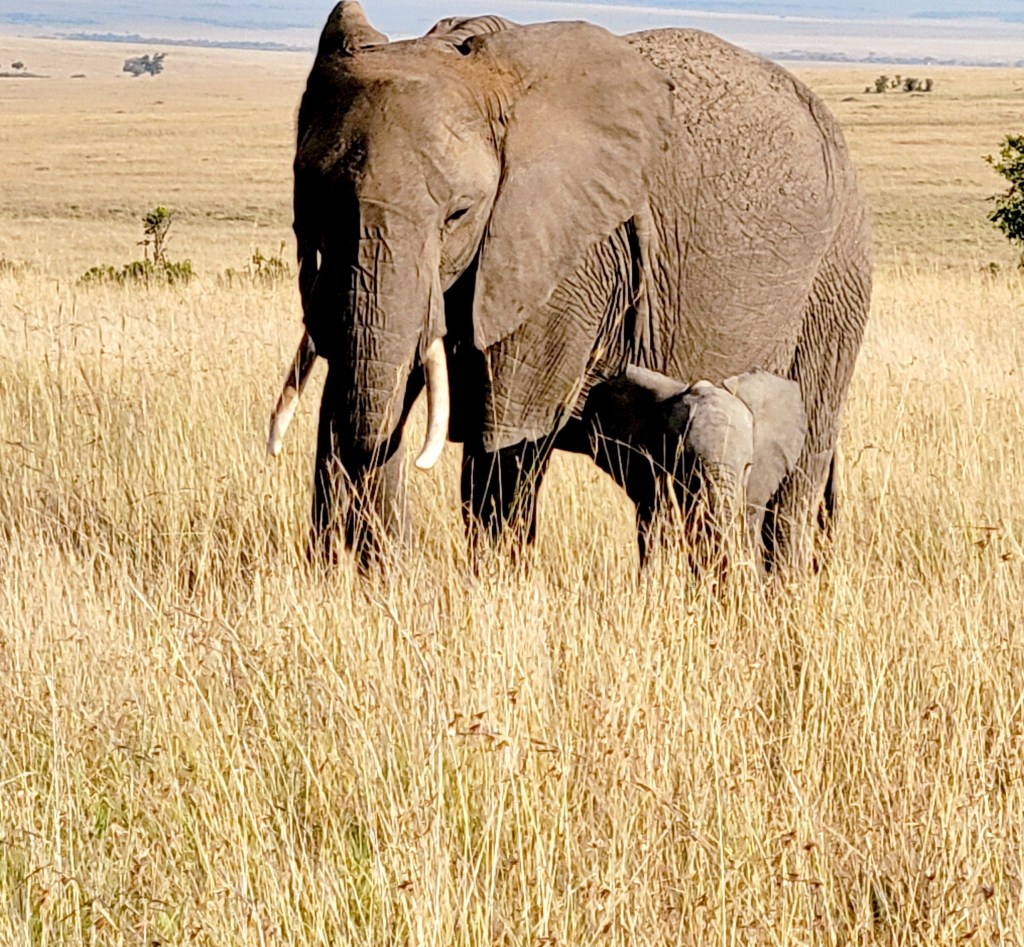
Moikai informed us that, of all the bush animals, elephants are the best mothers. They are very attentive and keep their little ones close and protected. They also teach their young survival skills. The female offspring stay with the herd for life while the males leave to go their own way between 12 – 14 years of age.

African bush elephant facts: Adults range from 8.3 ft – 13 ft in height with males growing significantly larger than the females. Weights vary between a dainty 5,000 lbs to a whopping 14,000 lbs (2.5 – 7 tons)!!!! The gestation period is 22 months – WOW, and I thought 8 months was bad!

As with the other large animals, especially the big 5, elephant populations have declined significantly due to poaching. One 2016 report estimated that the elephant population had declined by 111,000 elephants in the span of a decade. It is estimated that there are now only 415, 000 elephants throughout all of Africa. These incredible animals were/are slaughtered for their tusks and teeth – ivory. On July 6, 2016 the United States ban commercial trade of African elephant ivory. Thankfully, many other countries followed suit. Once again, the number of babies we saw give hope that the bans on ivory trade and efforts of the preserves and conservancies will be enough.

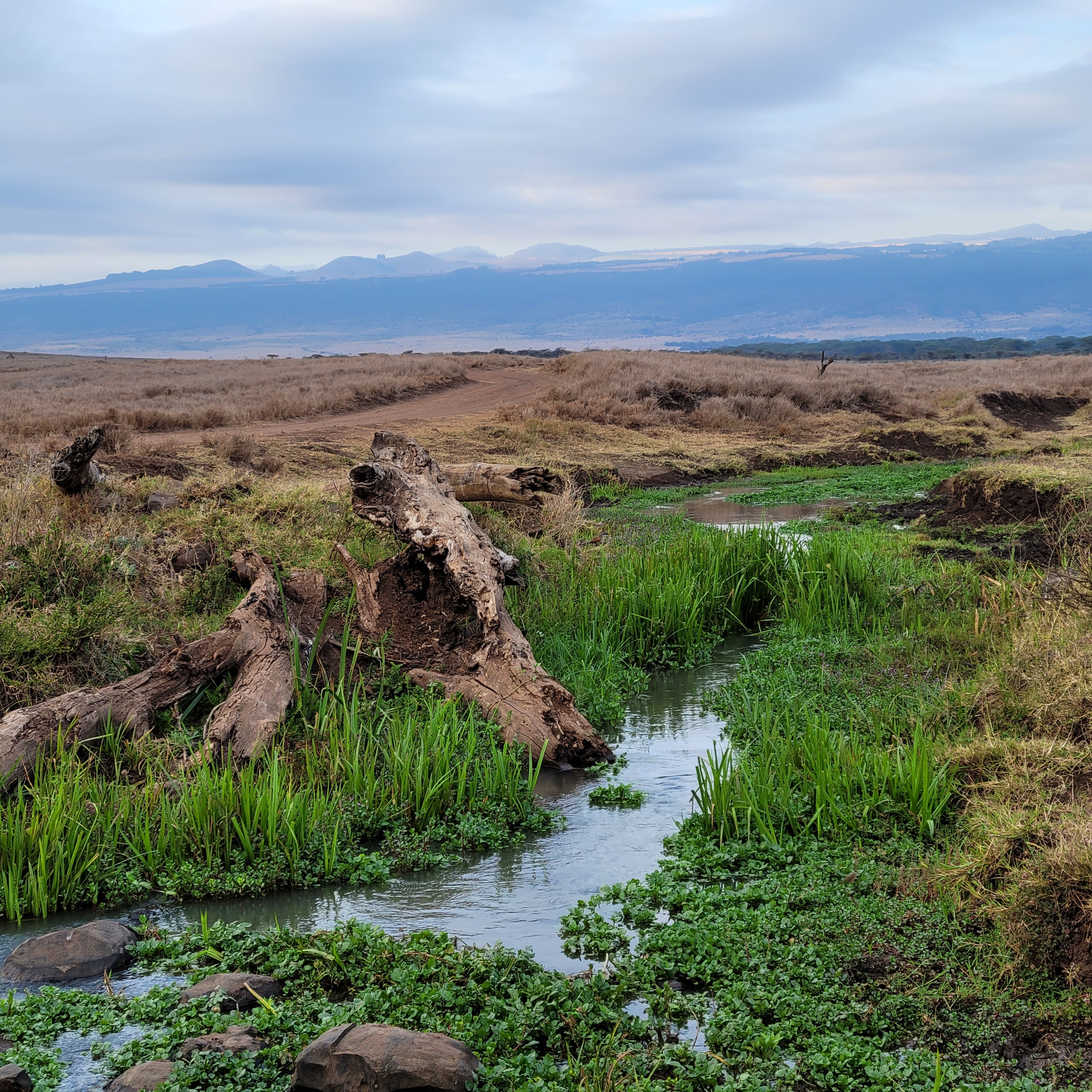
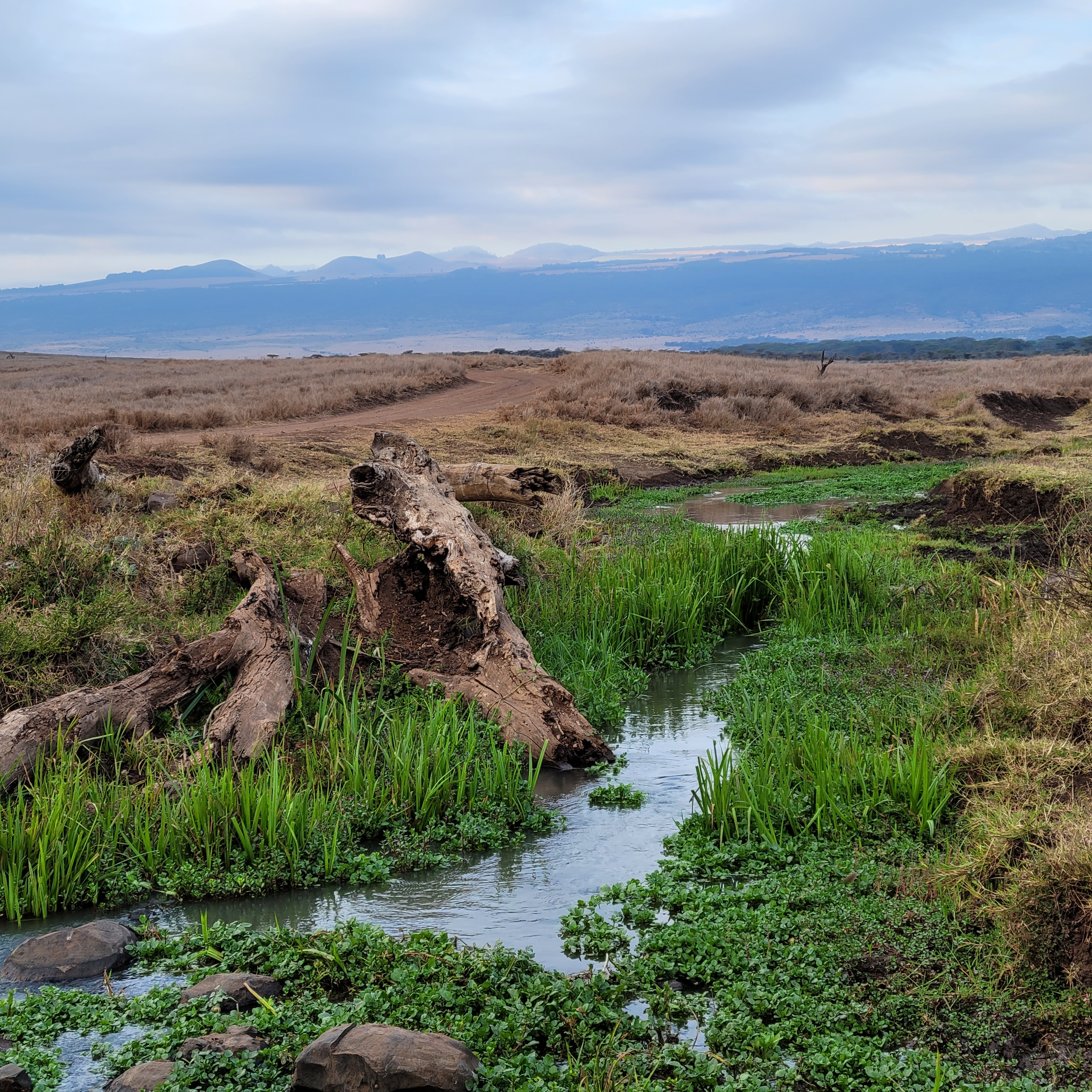
On our daily drives, we crossed numerous shrunken streams and rivers usually on rutted roads with steep uneven banks! I was never really nervous around the wild animals, but these crossings had me closing my eyes and clenching my teeth – lol, go figure!
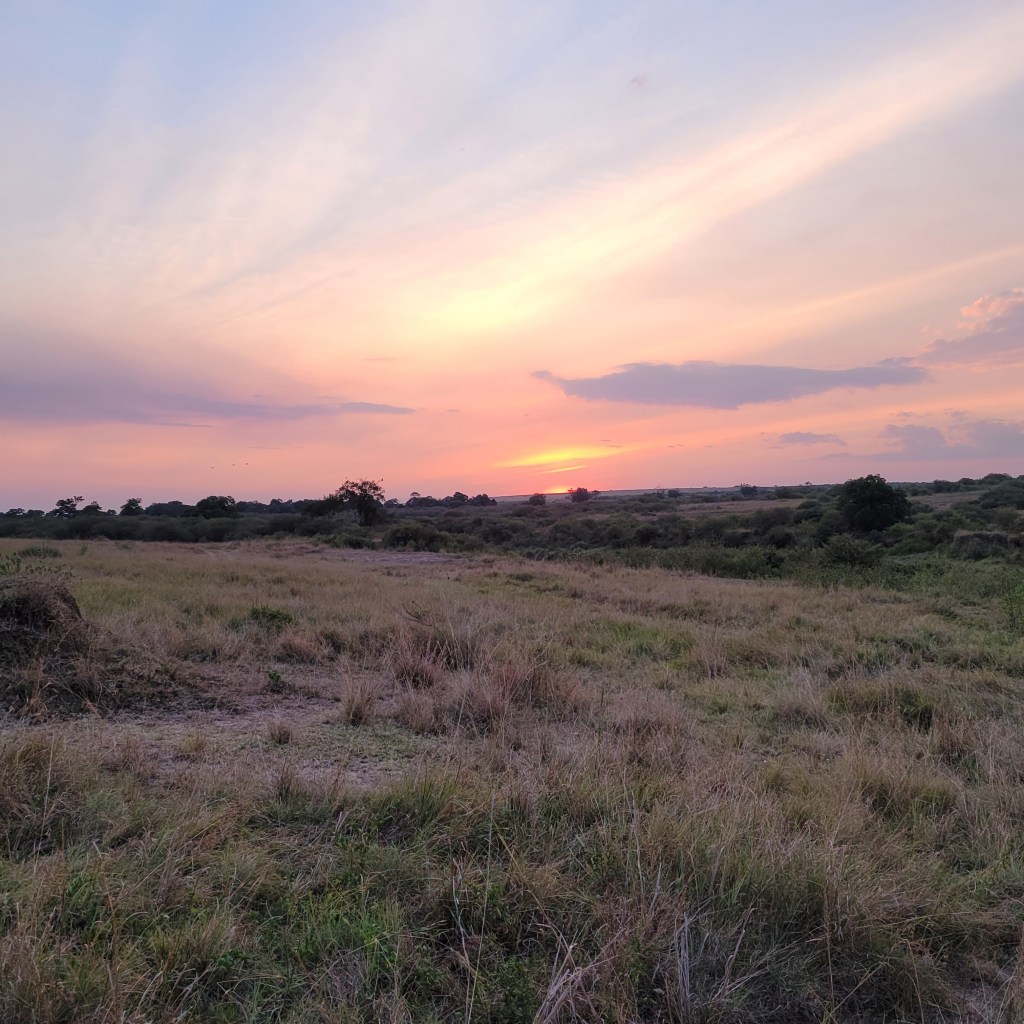
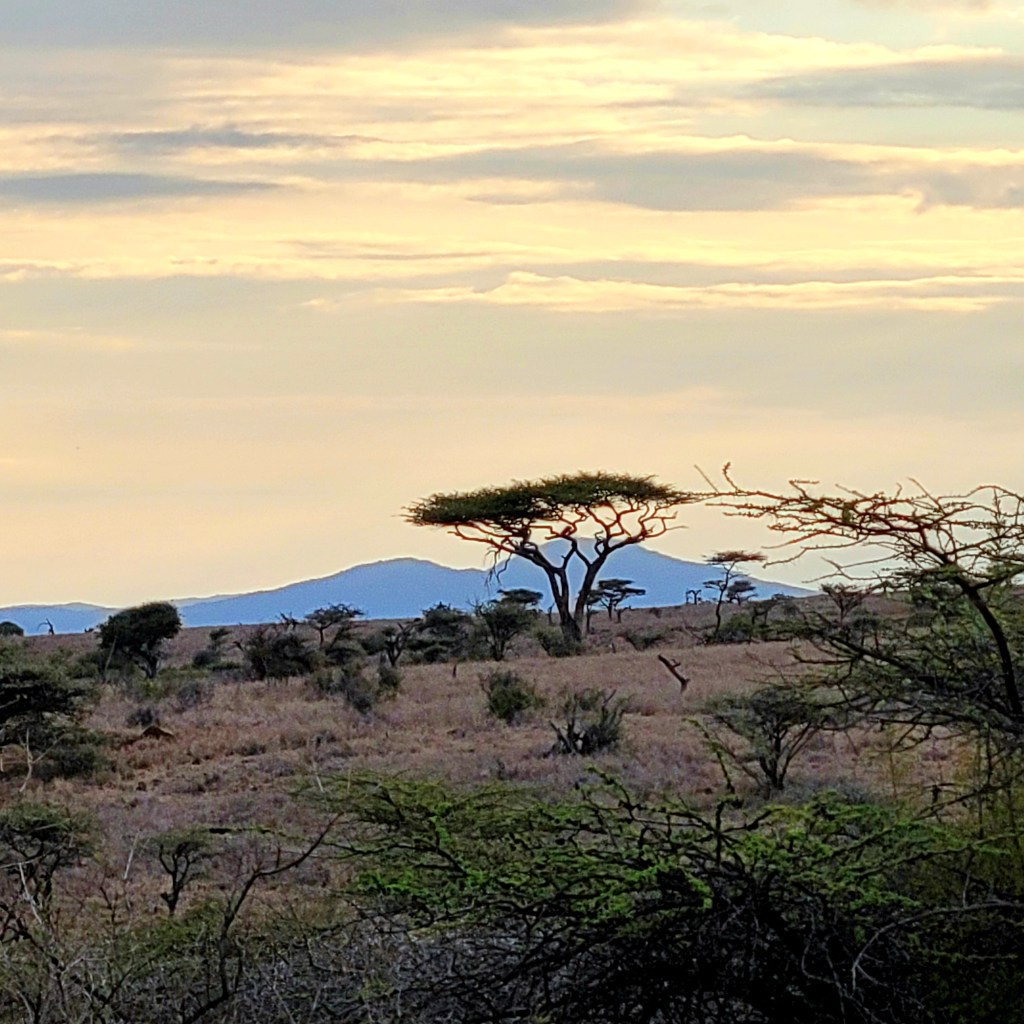
Our Sundowners view for the evening!

I had planned on covering the Great Migration in this post, but decided that it needs it’s own space. So that’s it for now.

Stay tuned for the next exciting episode! Coming soon: Lions, and Wildebeests, and Zebras, oh my!!!
At Last, An African Safari!!!!

For as long as I can remember, I have wanted to go on an African Safari. Thank you to Rene Carter, my dear friend and travel companion, for helping to make this adventure a reality!!!!
Our journey began on July 13, 2021. Well, actually it began nearly two years before that when Rene and I were chatting about places we would like to go. When we discovered that an African safari was high on both our bucket lists, the quest was on!!!!
We reached out to Audley Travel and were contacted by their African Safari expert, Tom Wilkinson. For the next year and a half we corresponded, planned, replanned, organized and reorganized our trip.

Finally on July 13, 2021 our meticulously orchestrated journey began. Despite months of careful planning, the beginning of our trip was not exactly smooth, drama free, or what we planned. We had only made it to Nashville, Tennessee when things went sideways!!! However, Rene and I are both pretty tenacious and delayed and canceled flights were not going to rob us of this trip! So from the Nashville airport, we cancelled all of the flights to and from Africa, rebooked with a different airline, and despite the crazy mess, we arrived in Nairobi, Kenya two days later. We were 6 hours later than originally planned but given the circumstances, I’d call it a WIN! We were in Africa and beginning our amazing once in a lifetime adventure!!!!

A six hour jeep ride took us to Lewa (Lāwah) Safari Camp in the Lewa Wildlife Conservancy in Northern Kenya.

A quick Swahili lesson. In Swahili, a is pronounced ah, e is pronounced ā, i is ē, o as ō and u as oo. So the word Swahili is pronounced swah-hē-lē. Hello is Jambo – jahmbō. Thank you is asante sana – ahsahntā sahnah (literally this is thank you much), please is tafadhali – tahfahdahlē, you’re very welcome is karibu sana – kahrēboo sahnah. It’s nice to know some of the basics.

Breathtaking scenery!

Lewa Wildlife Conservancy is in Northern Kenya. It is a huge wildlife preserve – 62,000+ acres! Established in the early 1990s, its mission is to protect the endangered black rhinos as well as other endangered native animal populations. Poachers and hunters, out to make trophies of the Big 5 – rhinos, elephants, leopards, male lions, and cape buffalo – had hunted these amazing animals nearly to extinction. Gratefully, thanks to the establishment of conservancies in Africa, these populations are thriving and their numbers are slowly growing! Poaching is still a problem, but a determined and heroic effort is being made to end this horrible practice. Safaris and tourism help fund the important work of these conservancies, so book your trip soon!

Lewa Safari Camp is rustic and beautiful!

The kitchen and dining area.
The pool – notice the pattern of the reticulated giraffe in the pavement around the pool.

The accommodations and the staff of Lewa Safari Camp were lovely! Though it was late evening when we arrived, they were there to welcome us. They showed us to our tent and brought us our dinner there – room service on safari, who knew!

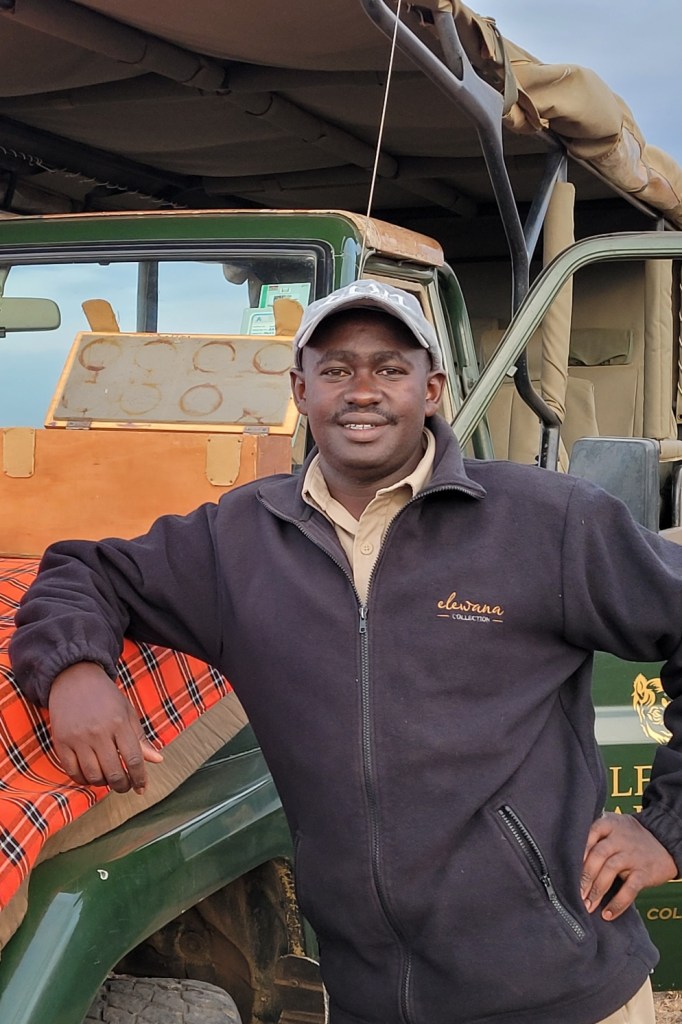
The next morning, Rene and I met our driver, Misheck, who would be our guide for the next 3 days. His job was to take us on the morning and evening game drives, tell us about the conservancy and the wildlife within, and show us the wonders of Lewa. He did all of the above, and more, spectacularly!

A quick note about game drives. The best time to see the animals is early in the morning and late afternoon/evening. So that’s when the drives are conducted. The morning drives started at 6:30AM, so we were up at 5:45 – now that’s really roughing it!!!! Sometimes we stopped for breakfast.

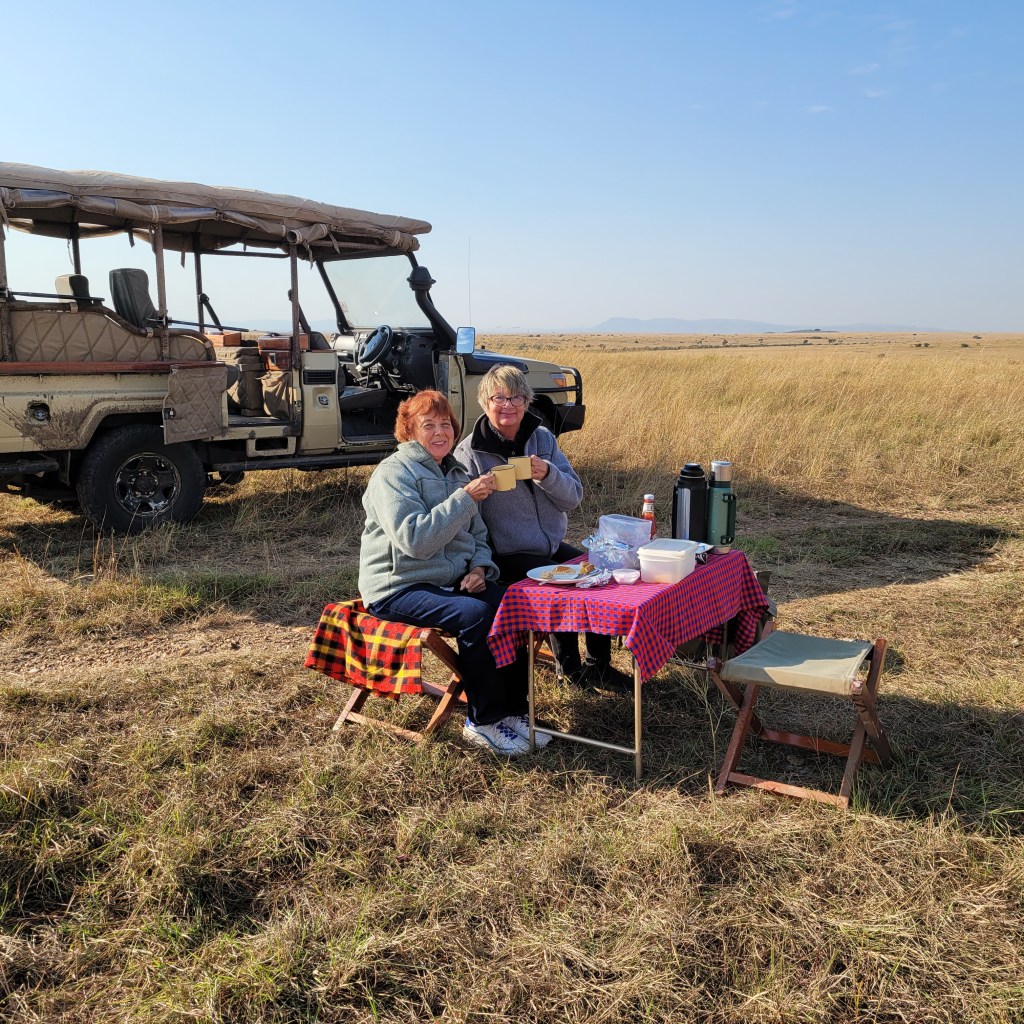
Coffee in the bush

Being on the opposite side of the globe, it is winter in Africa. Mornings were very chilly, especially in an open jeep. Morning temperatures were in the mid 50s but warmed up to the low 80s by 11. Certainly better than the 100° summer weather they were experiencing at home!

This was a special remote breakfast set up by the staff on one of the morning game drives. There was actually a chef there preparing omelets on request! Very fancy!

Evening game drives started about 4:30 in the afternoon and most drives lasted about two hours – sometimes longer if we were tracking something cool!!! Evening drives always included Sundowners – in layman’s terms, safari happy hour! Sweeeet!

Misheck and Rene and Sundowners on an evening game drive.
Our Sundowner’s view on the second evening – so incredibly zen!

Misheck is an expert in his field and extremely knowledgeable about the wildlife, the conservancies, and all things safari. He asked us what we wanted to see, to which we replied,  “EVERYTHING!!!” He did not disappoint!

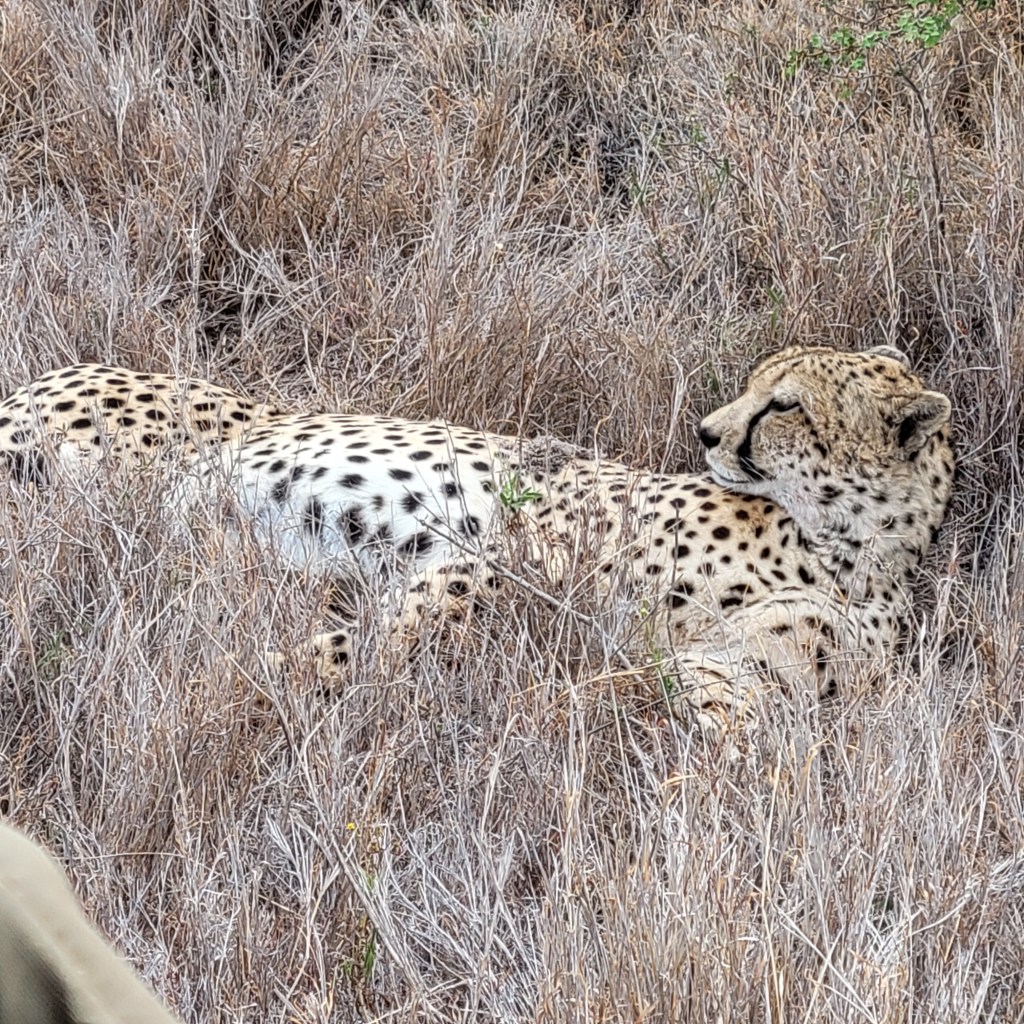
Our first trip out we saw a cheetah snoozing after a large meal!

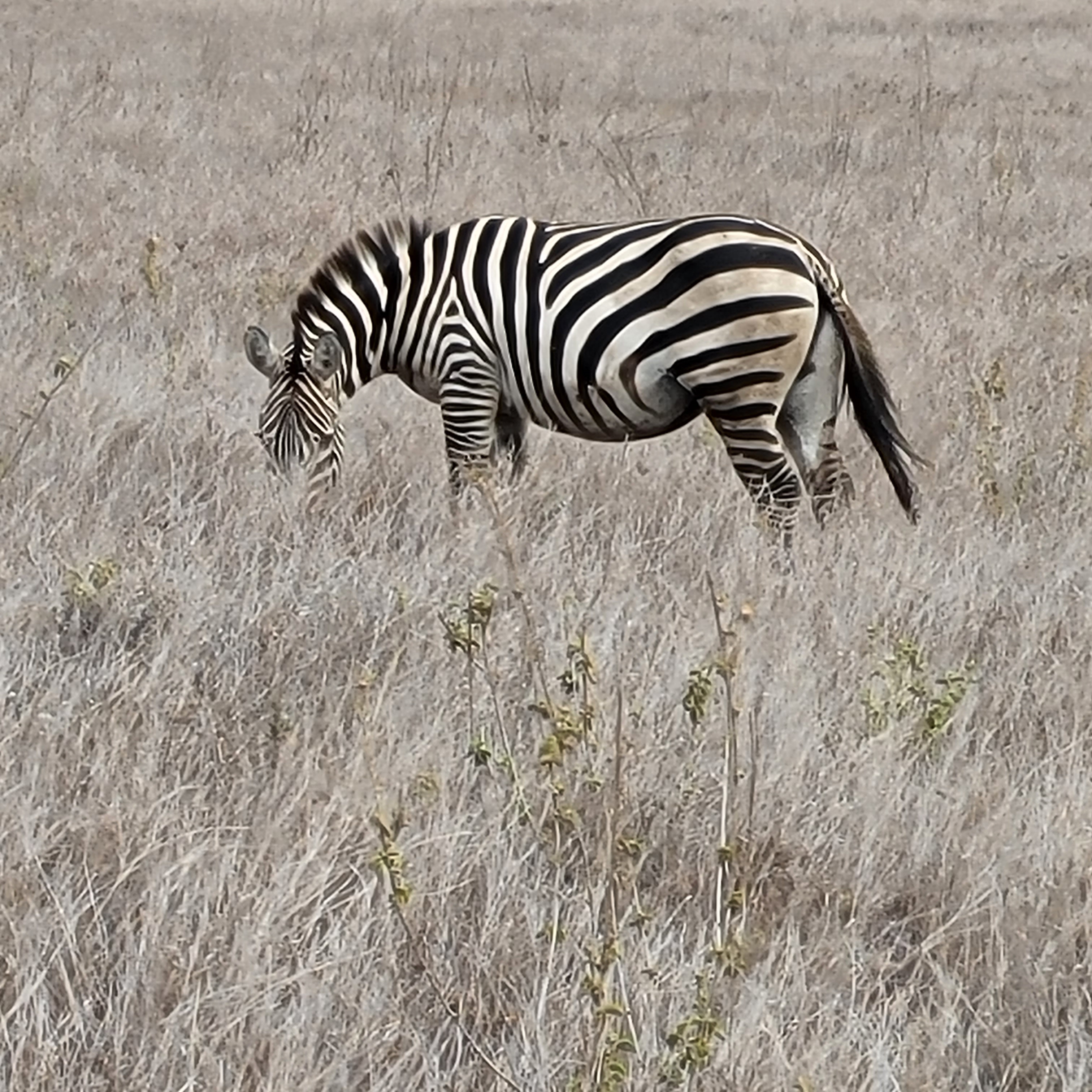
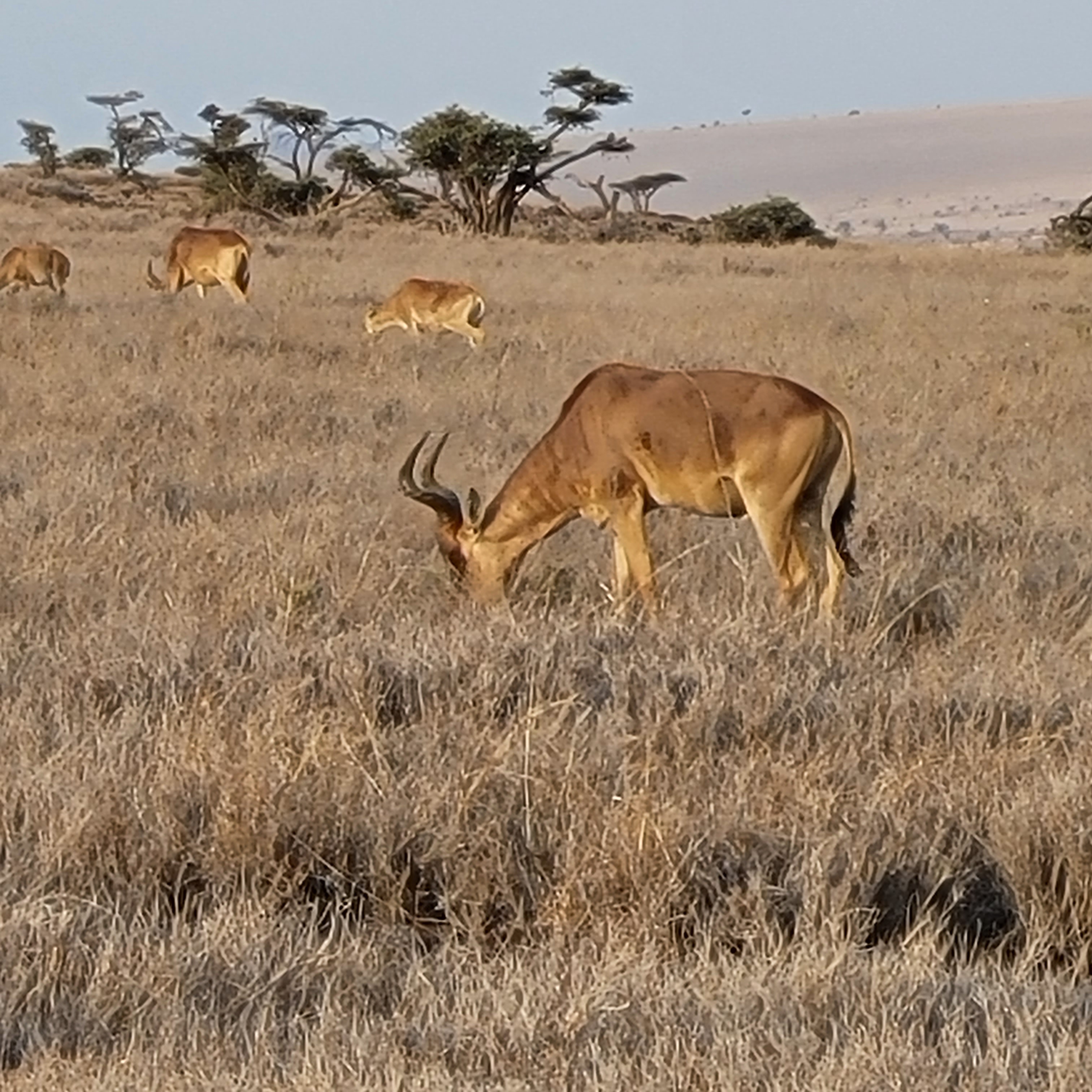
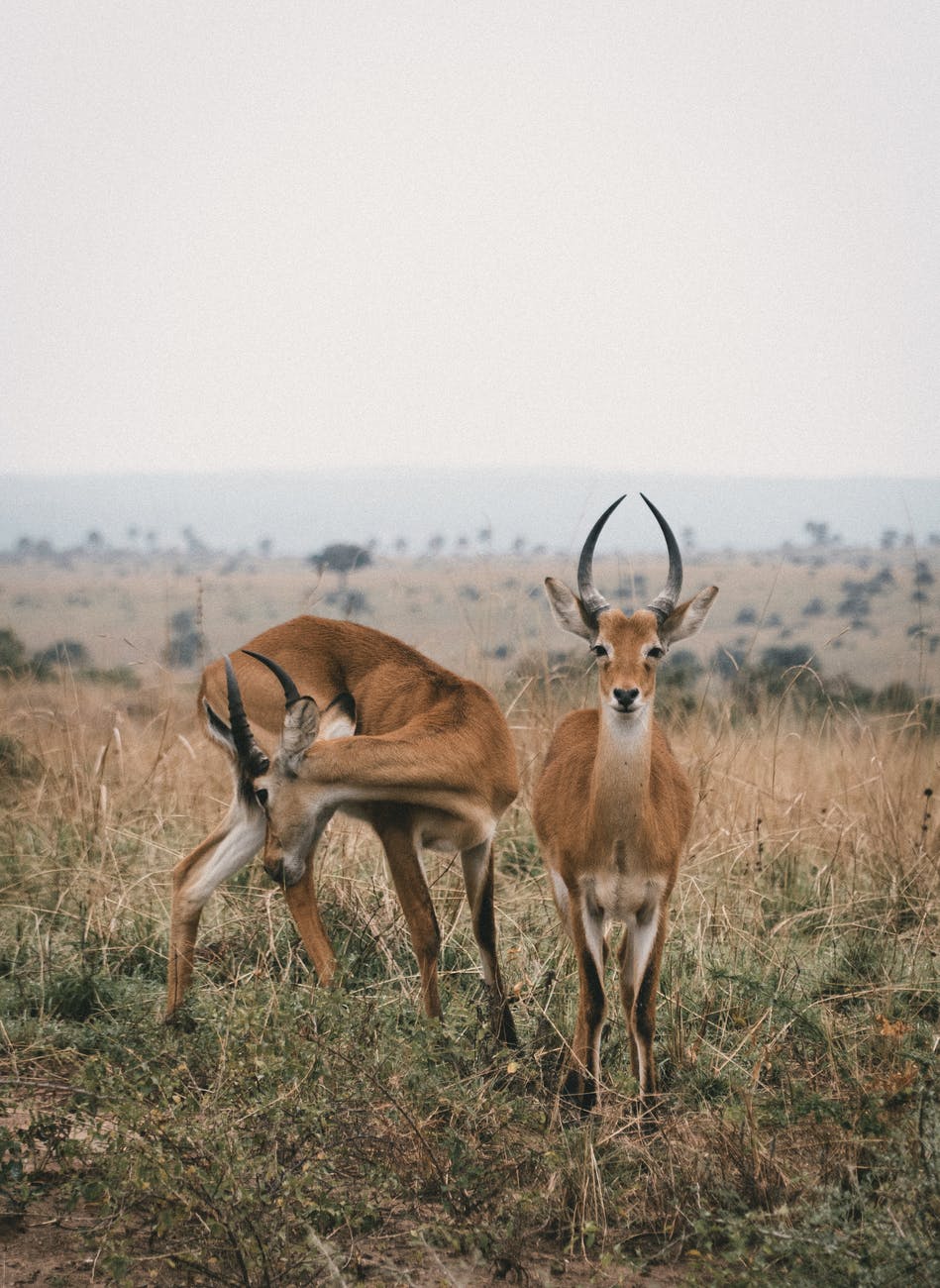
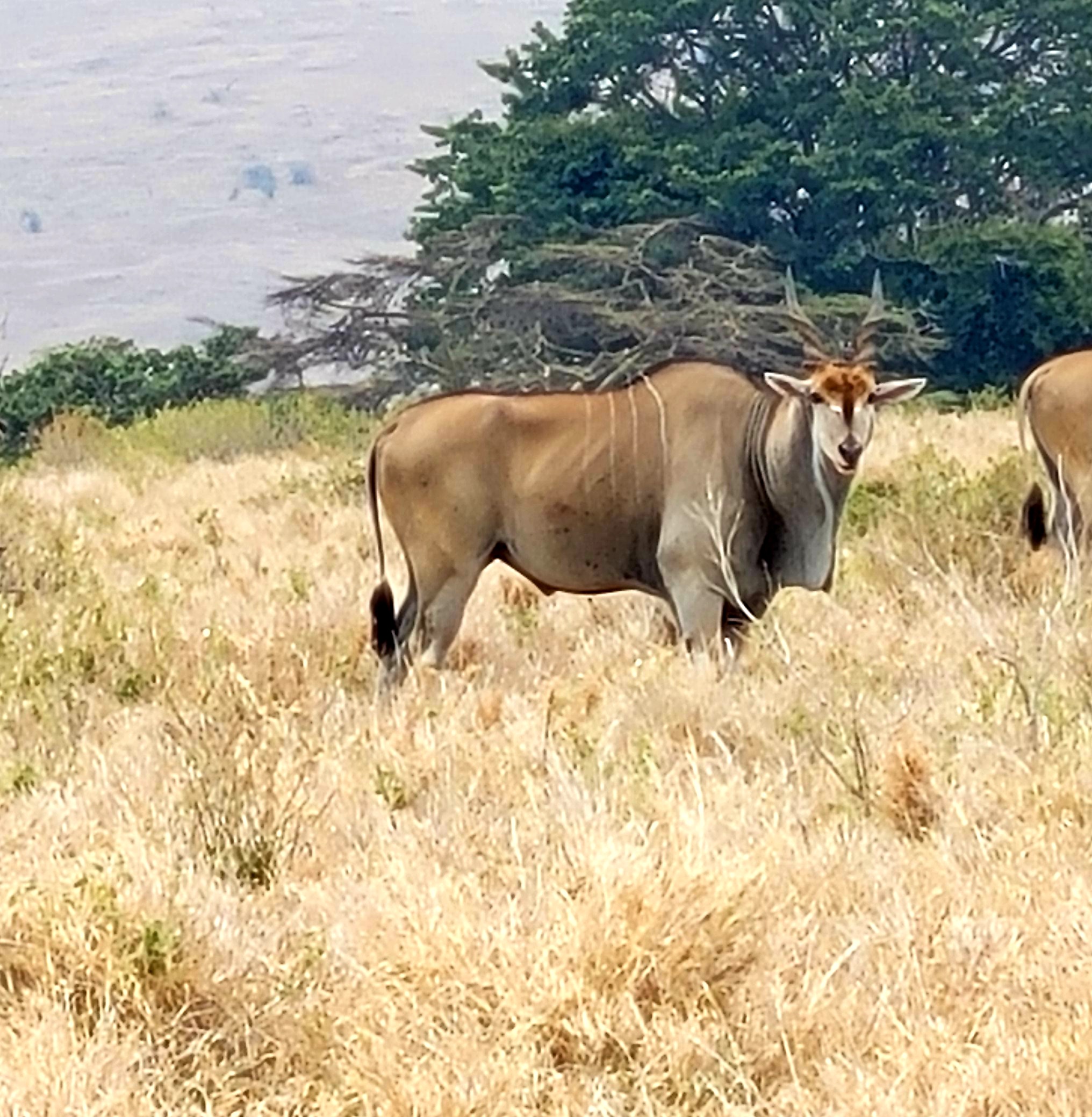
We also saw so many other animals on our game drive ventures.

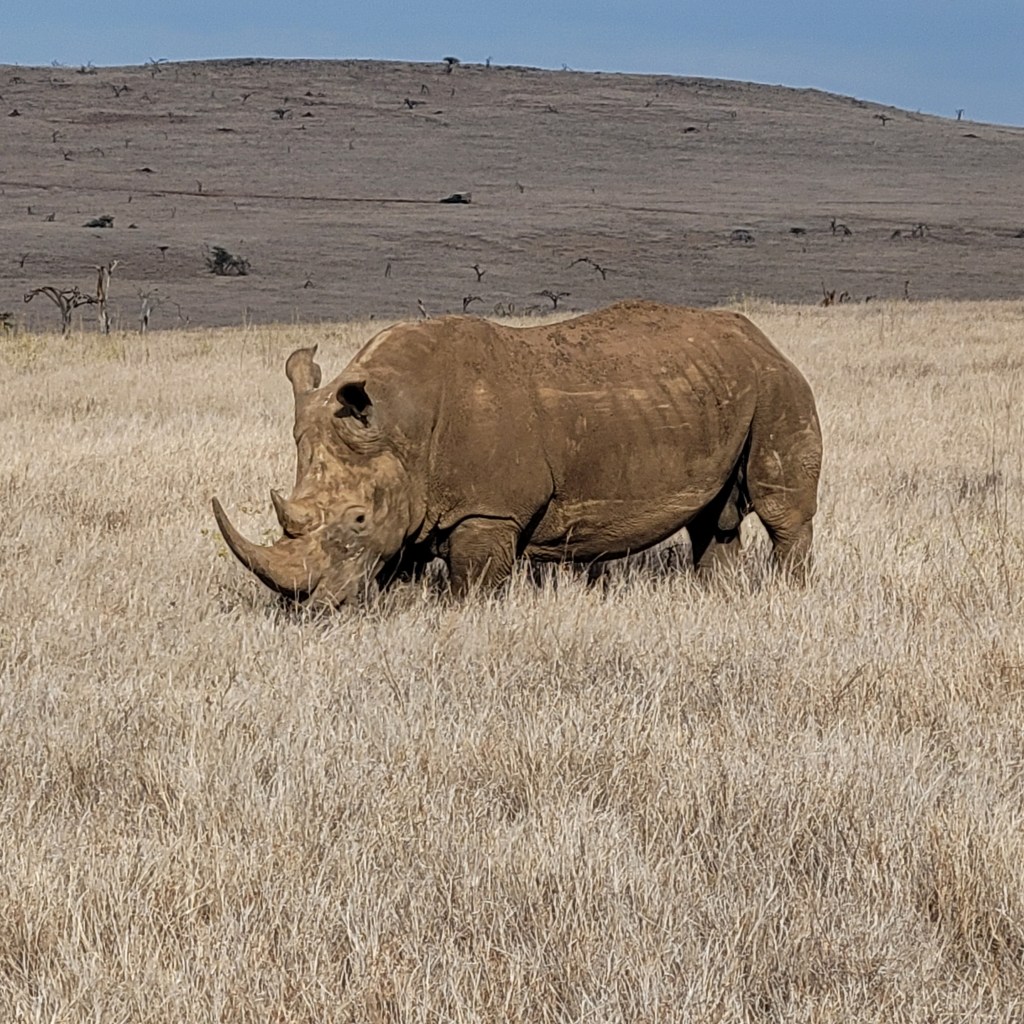
Rhino fact: Adult males average 5,100 lbs and females a mere 3,700 lbs. Height of males 5’6″- 6’1″, females 5’2″- 5’8″ LOL about the same as humans except for the weight! Gestation 16-18 months, life span 40-50 years.

Double tap on the small photos to see full screen. Then hit the back arrow to continue reading.

All but the zebras are types of antelopes. Misheck informed us that Africa is home to 72 different species of antelope! WOW!

All of this wonder on our first outing! AMAZING!!!!!

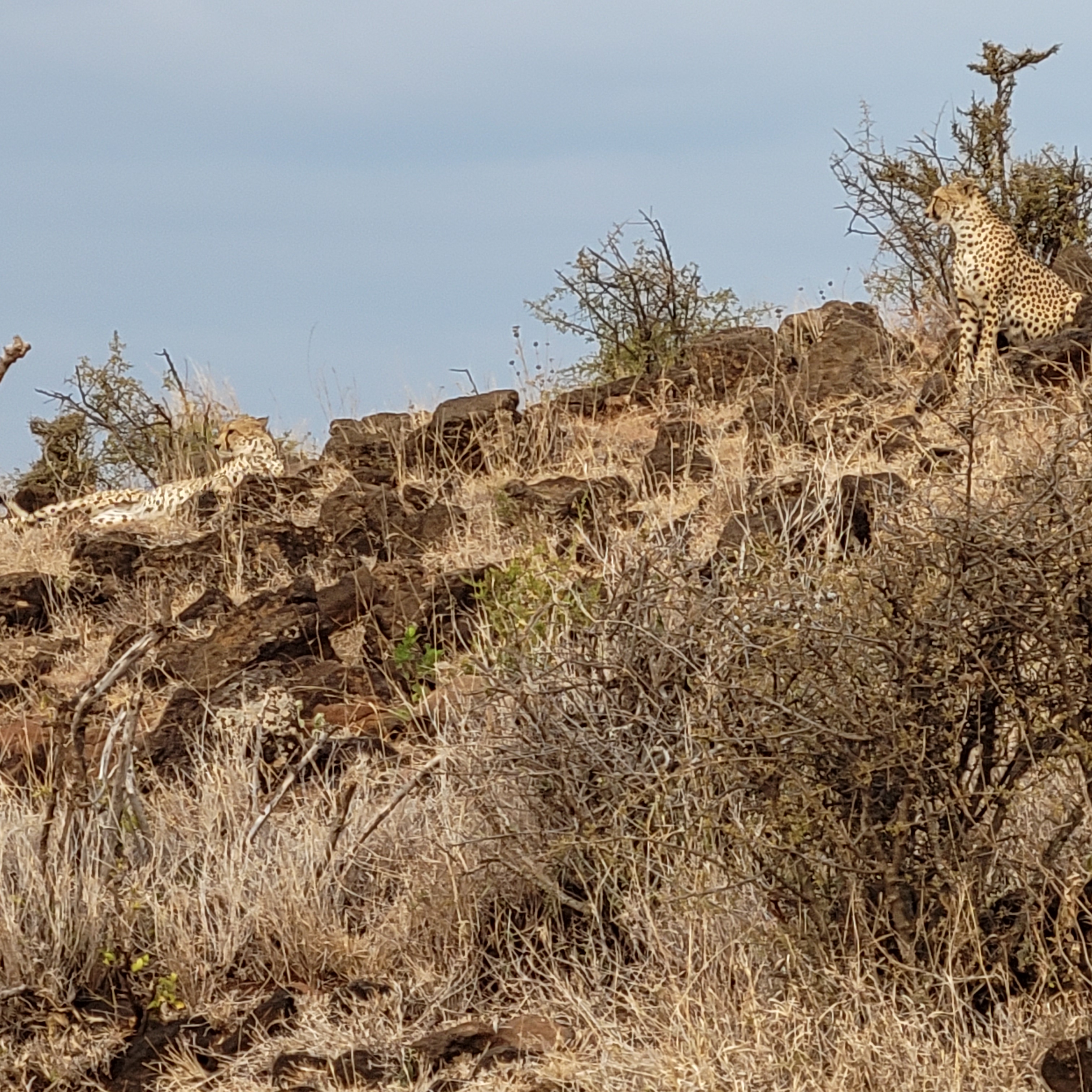
The next day we encountered two more cheetahs resting before their morning hunt.

We drove on in search of giraffes and whatever else came our way. True to his word, Misheck delivered!

A quick anecdote: A couple of times while we were stopped watching something, Misheck stated that he needed to check the tires. The second time this happened, I became a bit concerned about the state of said tires. Rene noticed that Misheck went behind the jeep and was facing the opposite direction of the jeep. It occurred to us that “checking the tires” was code for using the outdoor facilities. Misheck thought it was very funny when Rene or I said that we needed to “check the tires.” LOL

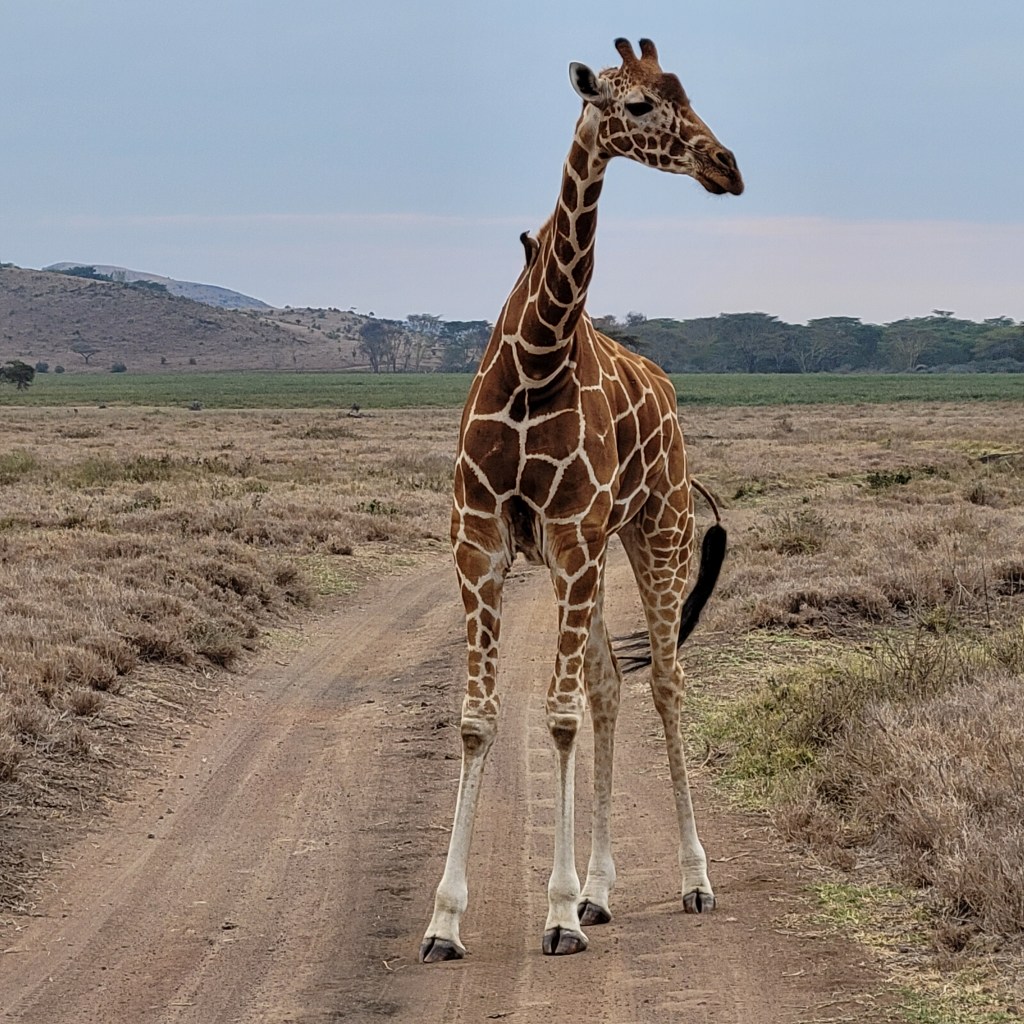
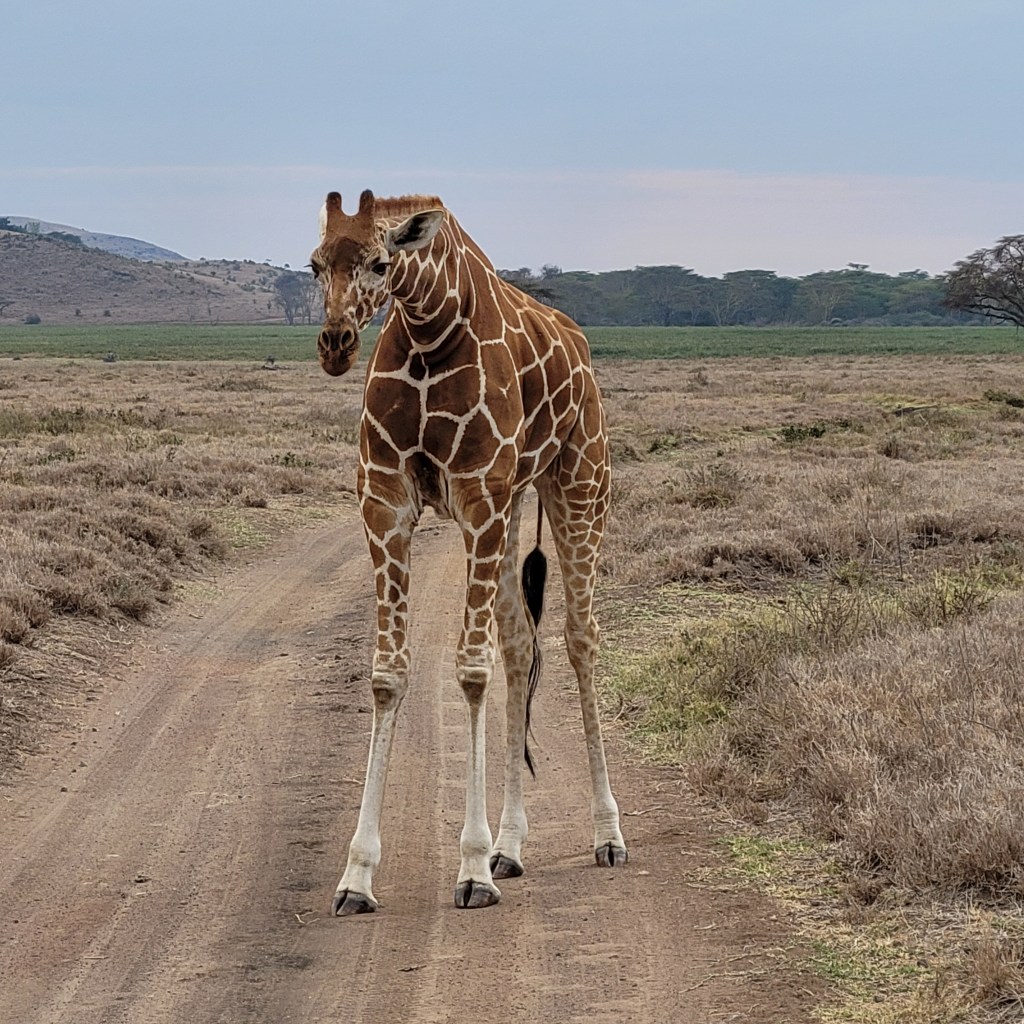
Now off in search of the elusive reticulated girafffe. It’s name comes from the geometric pattern of it’s coat. Misheck said to think of it as a rectangular pattern – reticulated – makes sense to me!

We spotted this sweet girl in the distance so we sat and waited as she sauntered into the middle of the road stopping right in front of the jeep! She stood watching us watch her – a mutual admiration society.

Notice the small bird (African tick bird) on the left side of her neck. The bird goes along for the ride feasting on ticks and mites. The bird gets a full meal and the giraffe gets free pest control – a mutually satisfying symbiotic relationship.

She is a reticulated giraffe – a rare and endangered species found only in northern Kenya and southern Ethiopia. There are only around 8500 of these magnificent creatures still in existance.

We were truly lucky to see several while we were at Lewa!!!!

Reticulated girafffe facts: Giraffes range in heights – a towering 14 to 19 ft. With males taller than females. The average weight is 1540 – 2600 lbs for females and 2400 – 4250 lbs for males. The gestation period is 15 months and the life span averages 25 years.

We saw a few babies, so hopefully the population is growing.

Our last day at Lewa Safari Camp was bittersweet – the end to the first part of our safari but still so much to see!

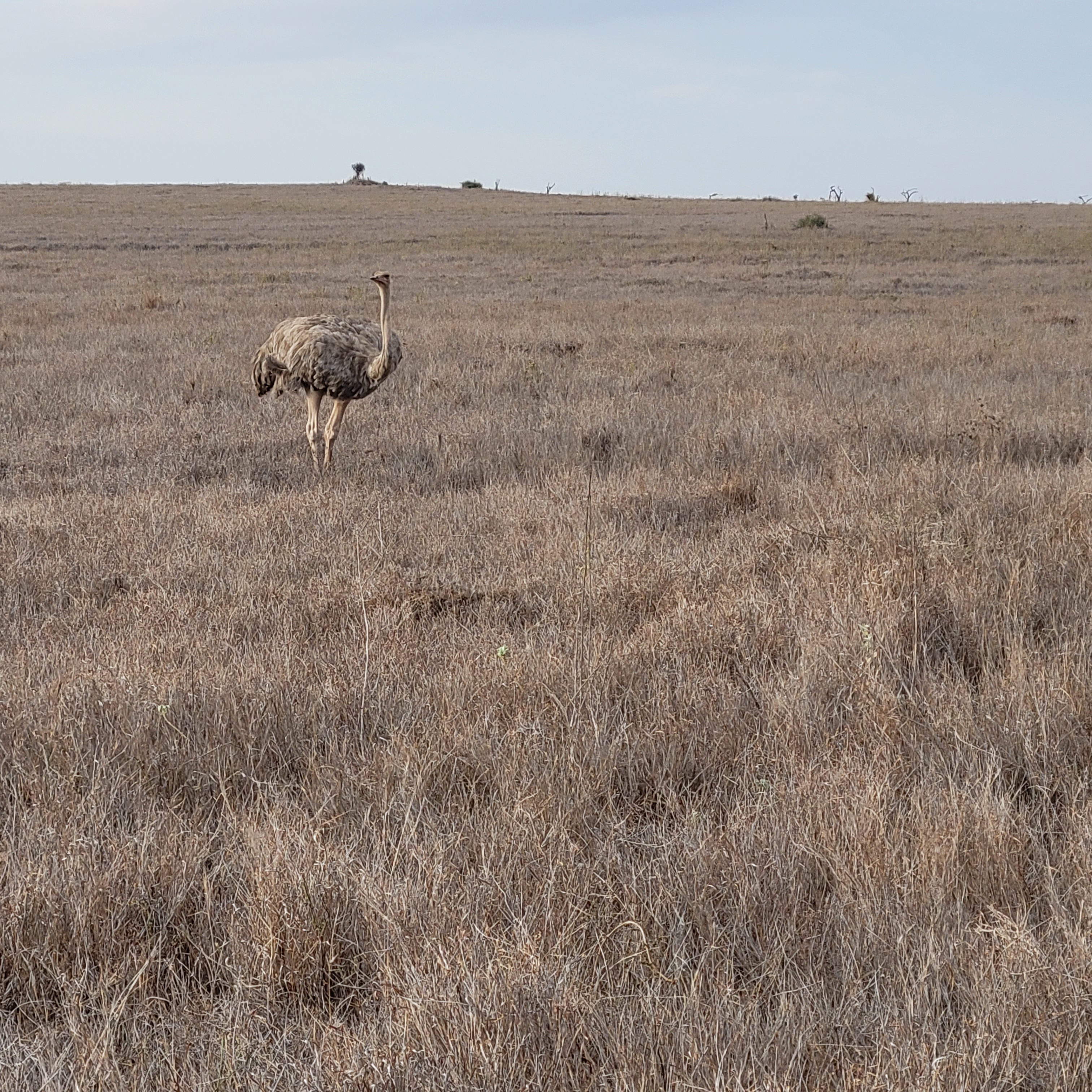
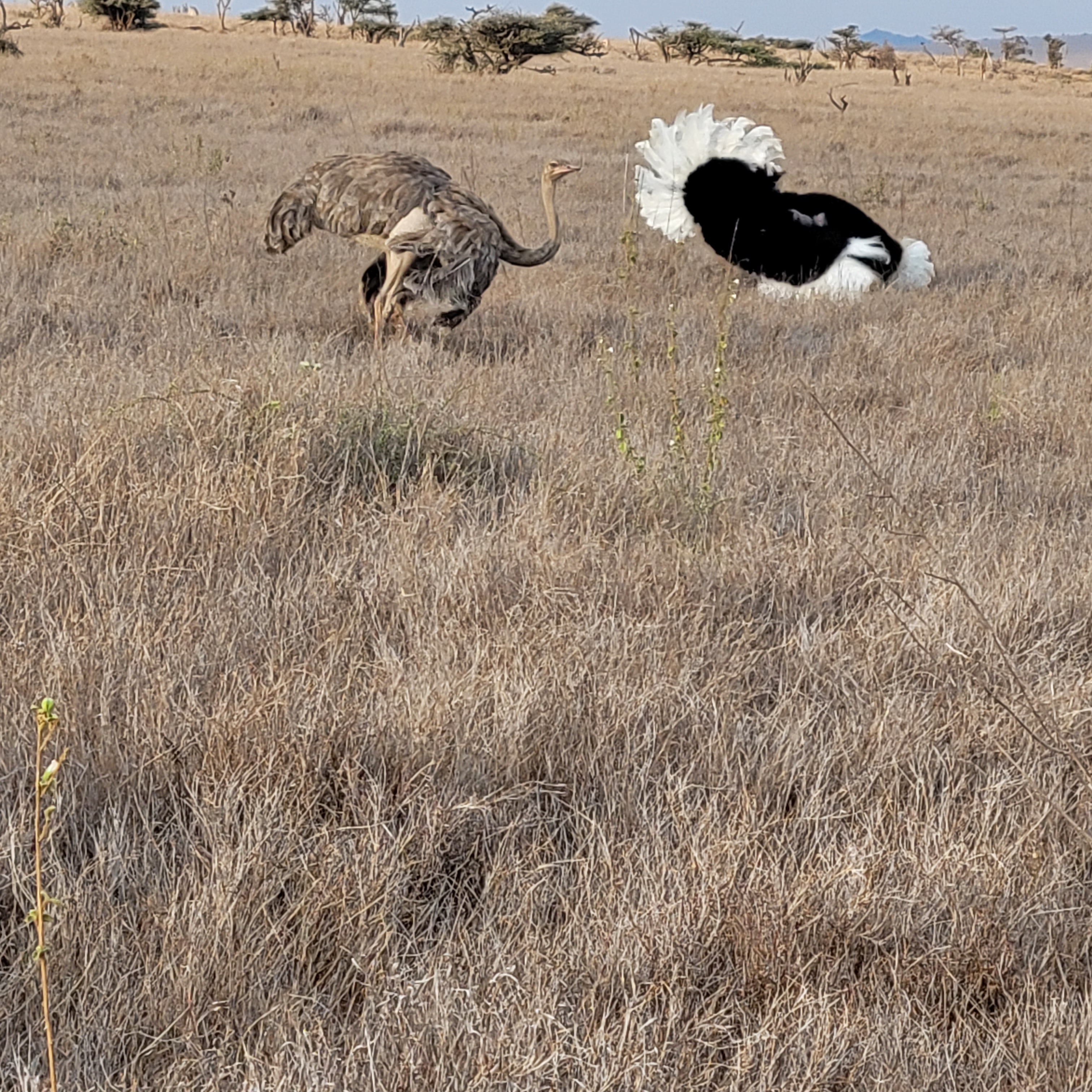
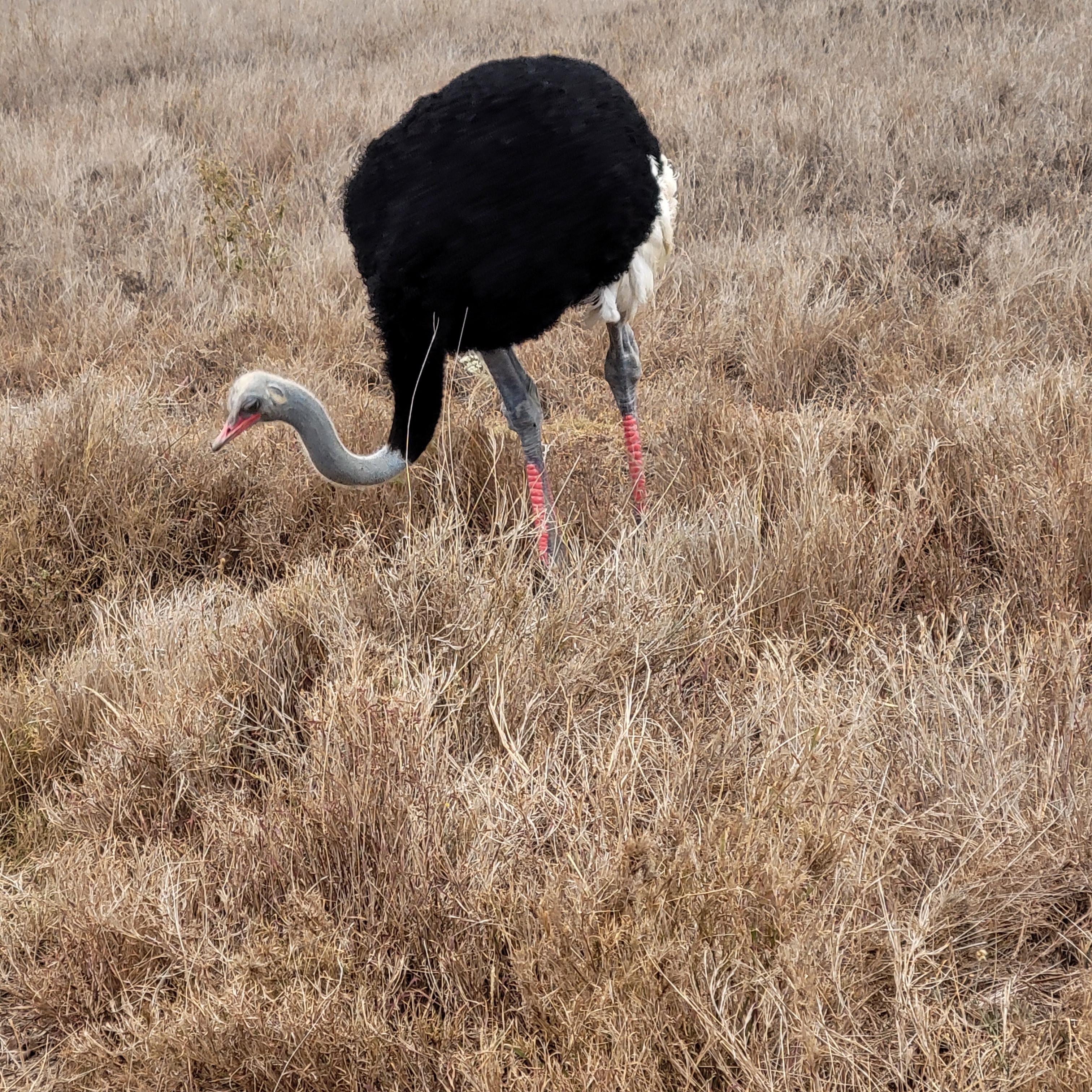
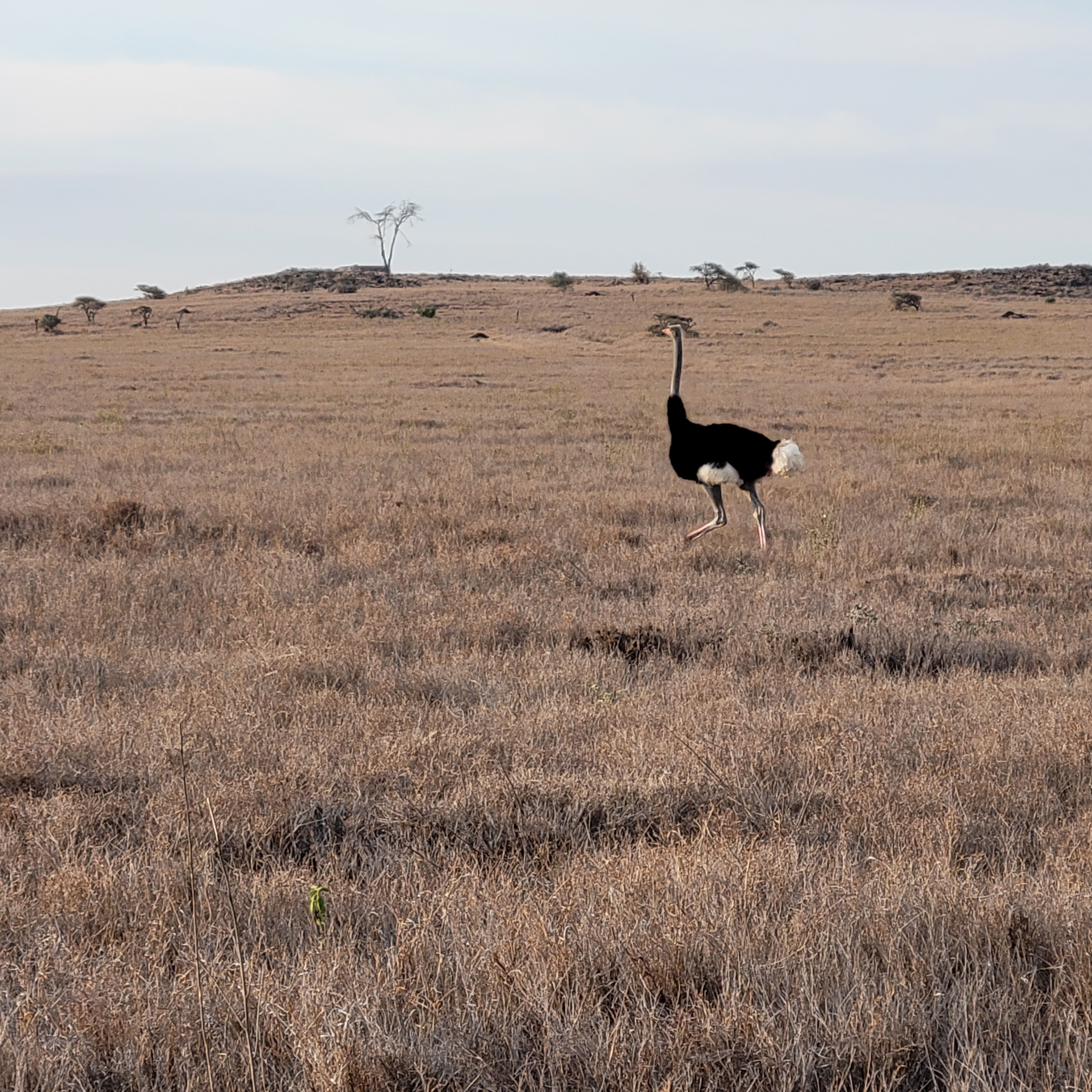
We frequently spotted lone male ostriches strutting around their territories on the plains. It was pointed out to us that usually there was a female somewhere in the area also, but she was much harder to see.

We were lucky enough to witness the mating ceremony! When the male spotted a female he would begin his courtship dance – swaying side to side and flapping his huge wings. Slowly, they would move toward each other as he continued to dance. When they reached each other, if she was willing, she would lie down and they would mate. If she rejected him, he would run off at breakneck speed! We got to see both occurrences.

The next morning we bid farewell to the staff and Lewa Safari Camp. Misheck drove us to the air port – an open field with a couple of small huts like the one we had stayed in and a wide dirt road…hmmmm. But the small twin-engine prop plane arrived, we boarded and were off to the next leg of our grand adventure!

*lf you hit follow on the right side of the post and add your email address to CharliExplores. you’ll receive a notice when I post the next segment of our African Safari Adventure. Please, feel free to leave comments, questions, funny remarks… I love knowing you’re out there! Thanks for joining in the adventure!