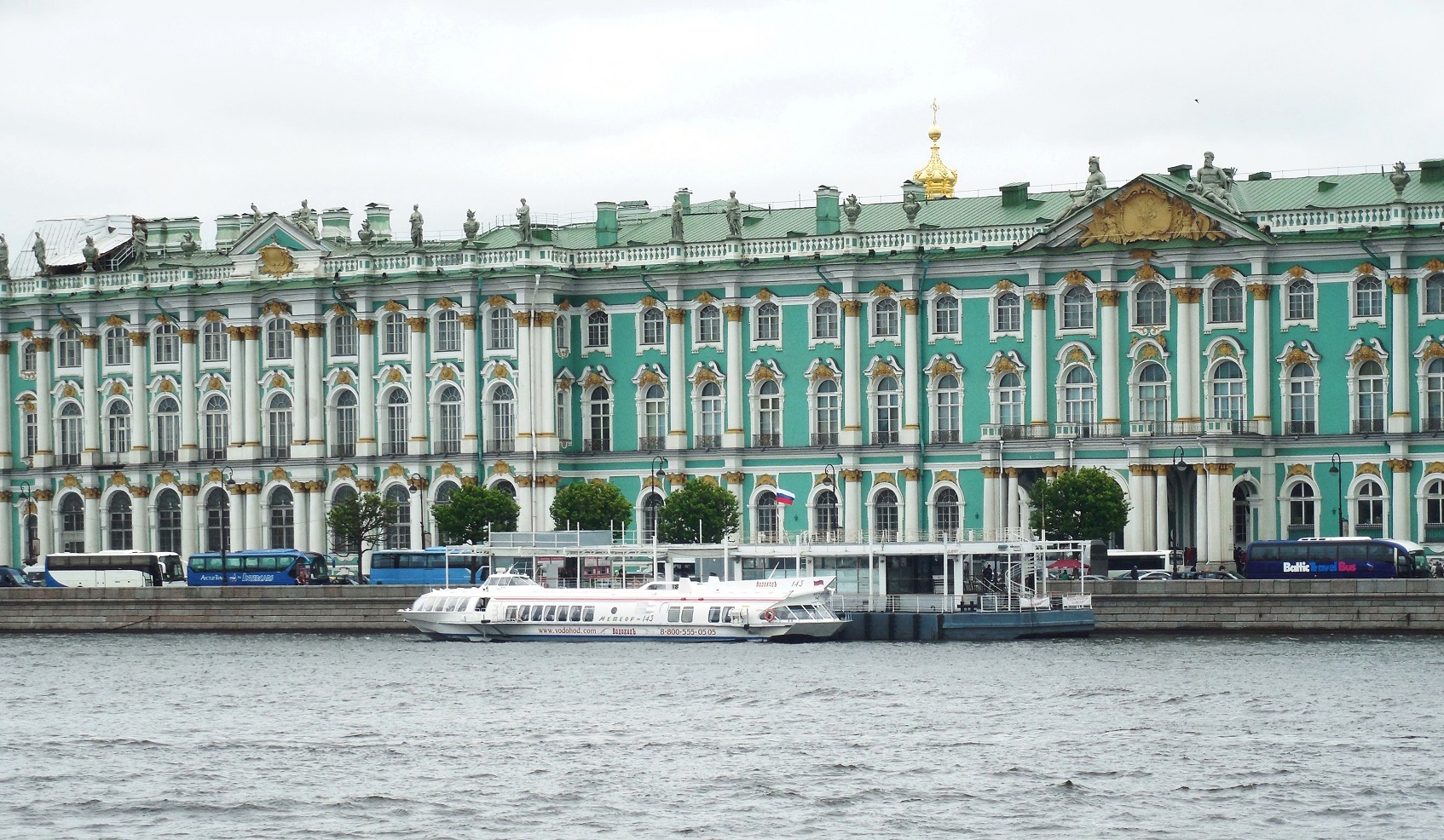
We saw Peterhof – the summer palace – in the last post, well the Hermitage was the winter palace of the Tzars and Tzarinas. I don’t know where they resided in the fall and spring…
Anyway, I also mentioned Empress Elizabeth/Elizabeth-the-Spender and her dresses. Well evidently Catherine II who ruled Russia from 1762 – 1796 had her own indulgences. After ousting her husband from his position of Tzar and having him exiled (he died shortly after in an “unfortunate hunting accident”), Catherine took over as the Russian Ruler and began collecting lovers, hmmm. Word is that she had a great many and that she promoted her “favorites” to high ranking positions over her 34 year reign (just a bit of interesting trivia to spice up the tour).
Luckily Catherine II also collected art which gave St. Petersburg its start for the magnificent Hermitage.
The Hermitage boasts over 3,000,000 items in its collection – just thinking about that exhausts me. Luckily Irina, our St. Petersburg guide, just hit the highlights and here are some of my favorites:
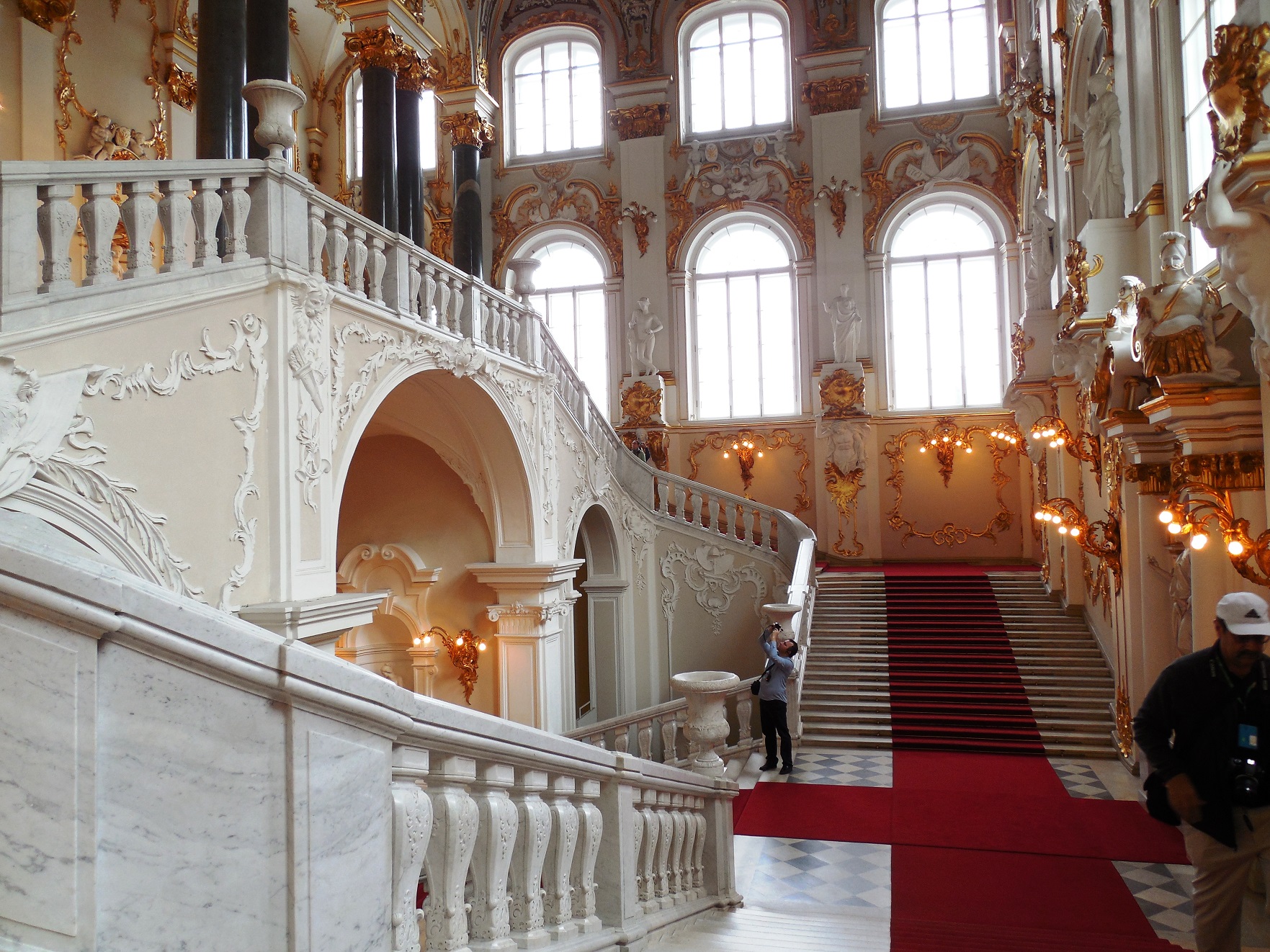
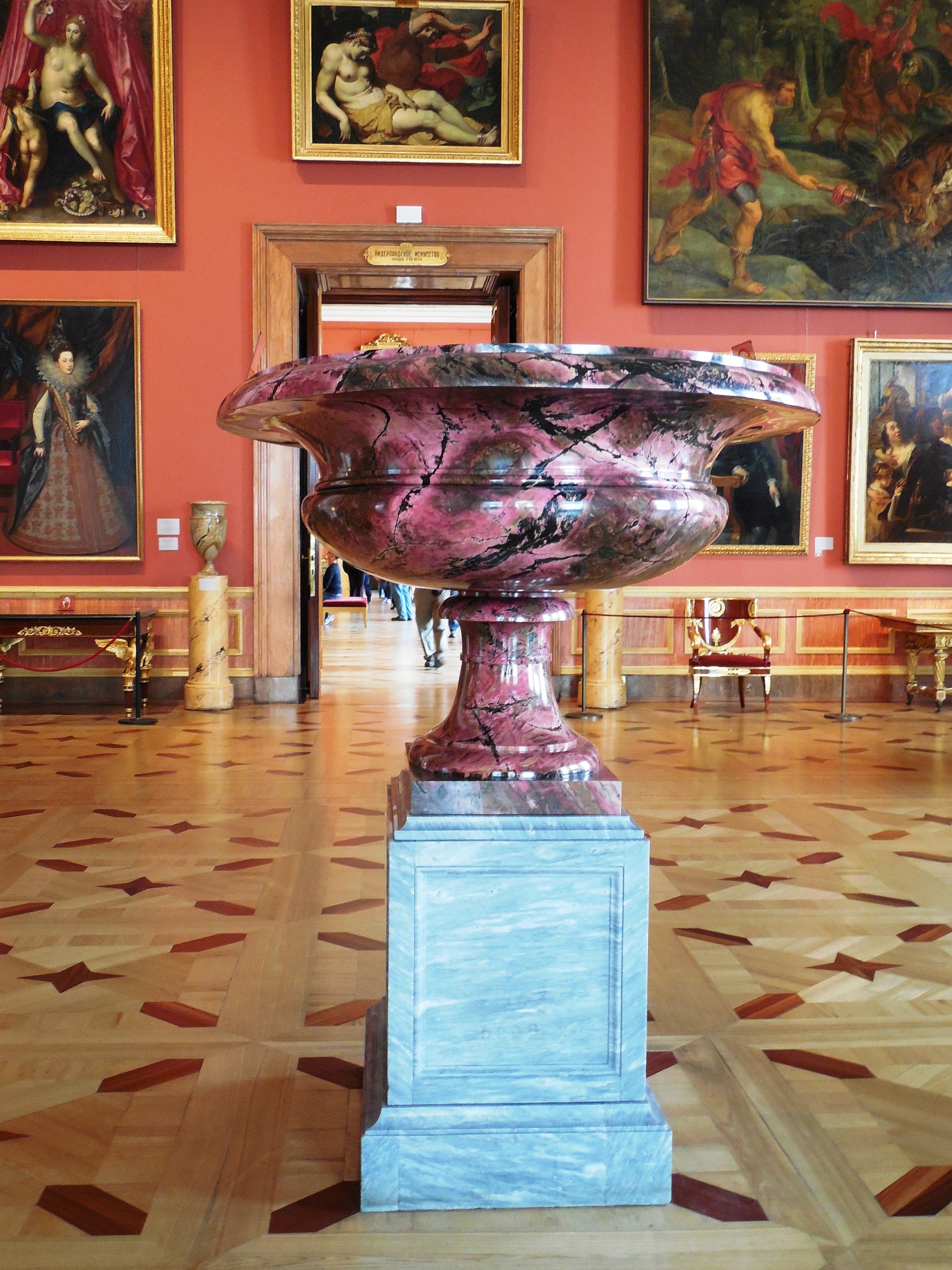
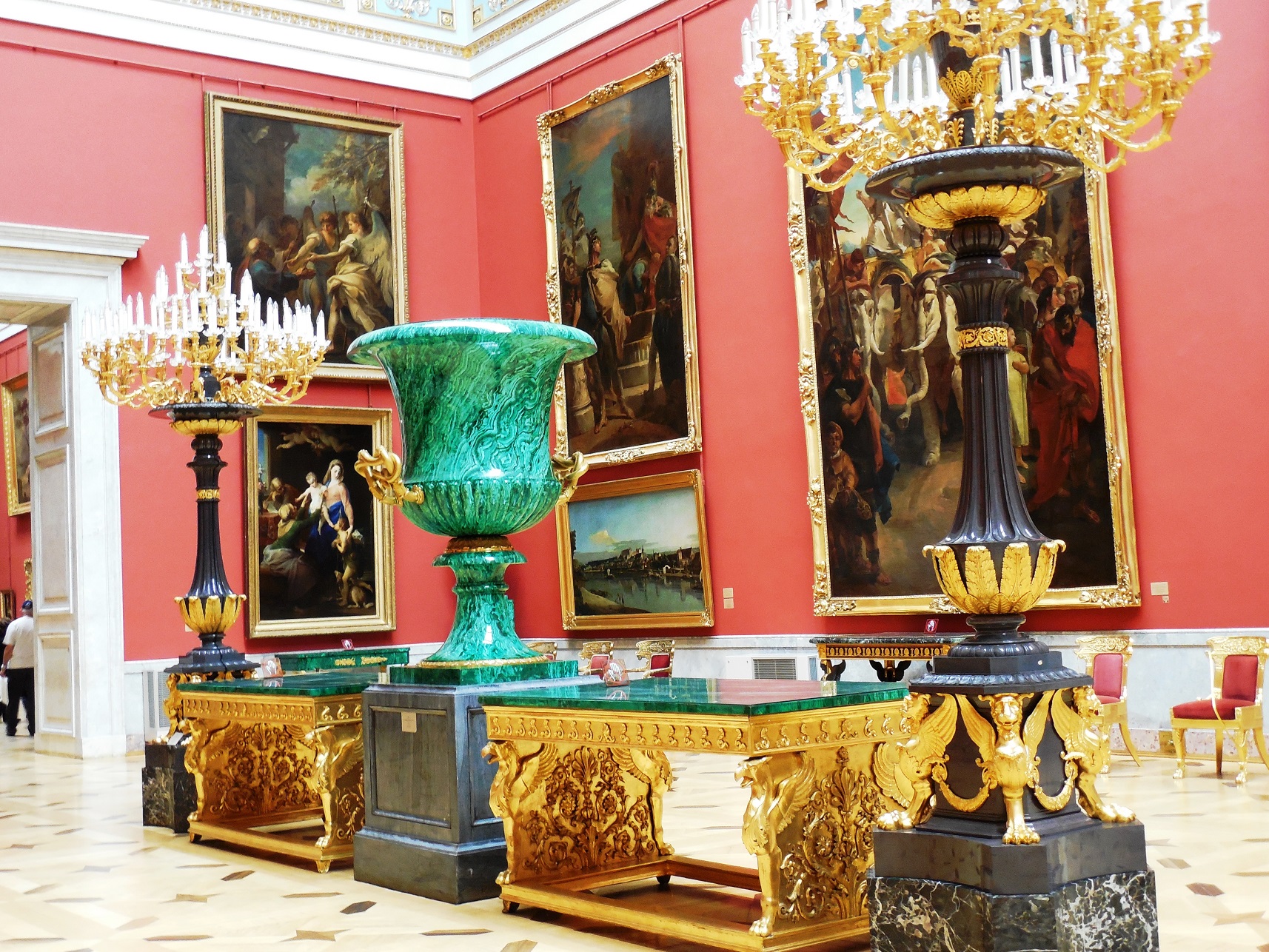
The glorious entrance to the Hermitage MuseumHuge and magnificent Urns, this one made of rhodonite.BreathtakingExquisite works of art from ceiling to floor. This urn is malachite – one of my favorites.
And floor to ceiling.
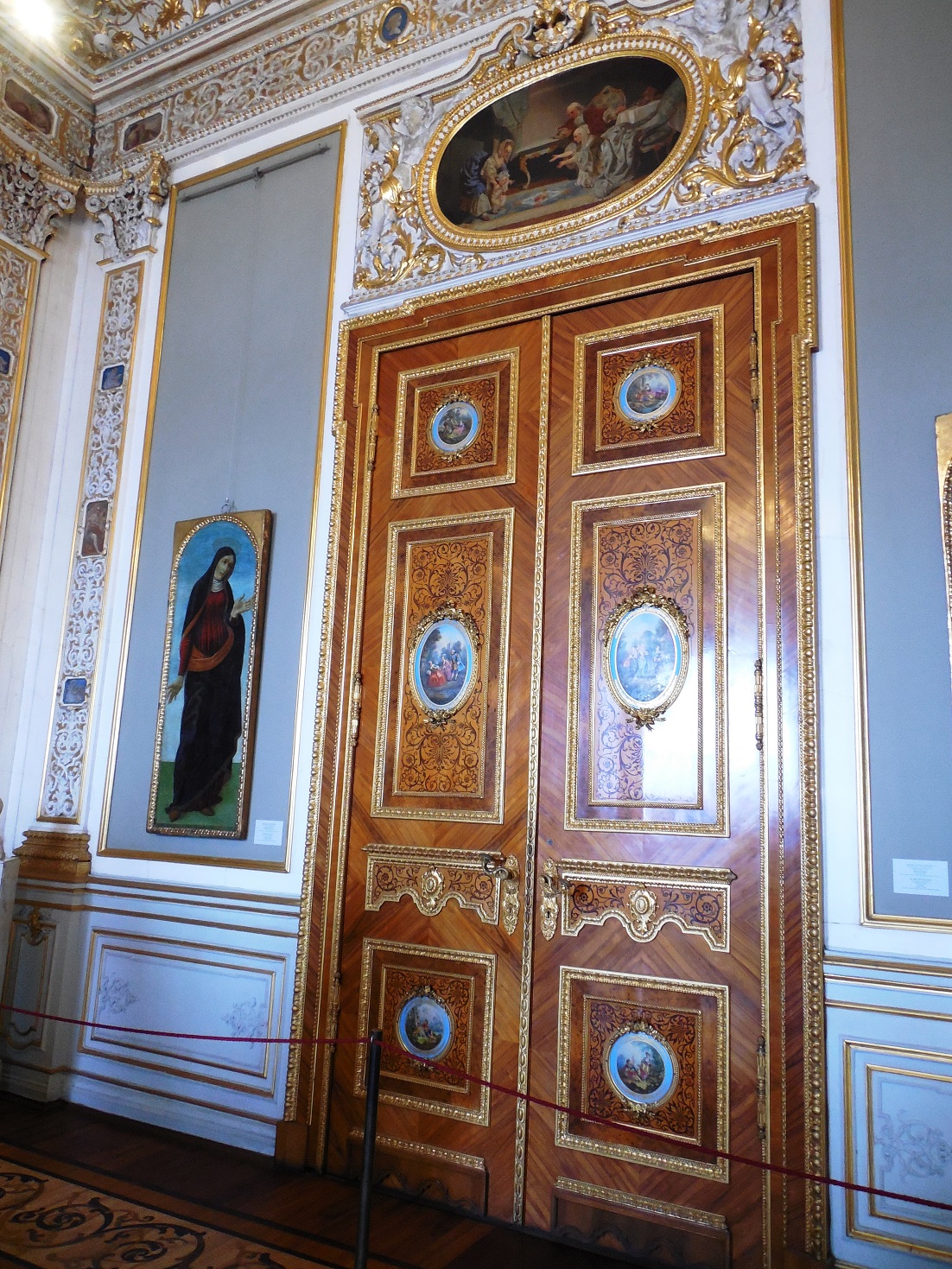
Grand StaircasesIncredible doors and no two the same.Another beautiful door with intricate carvings.
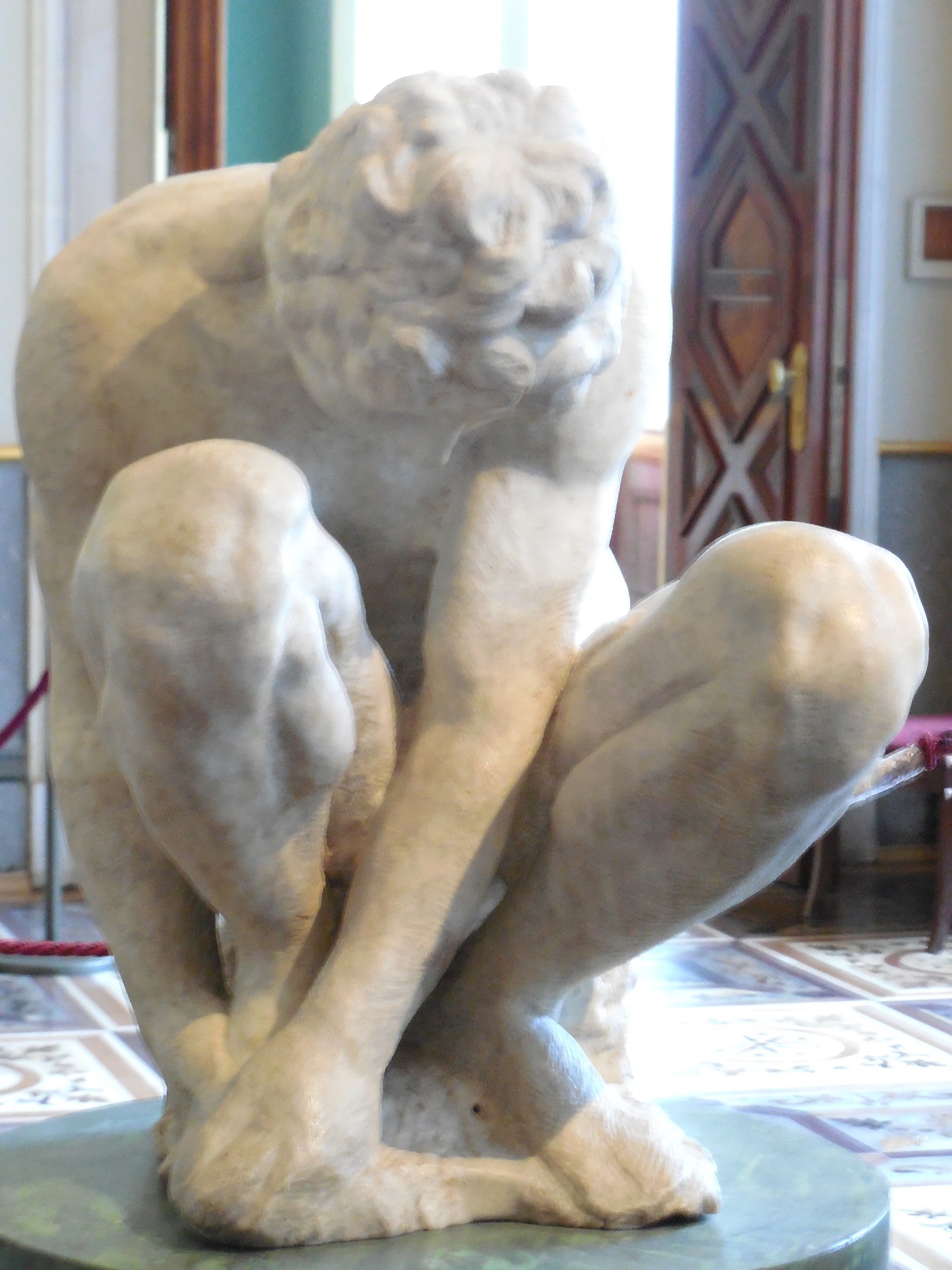
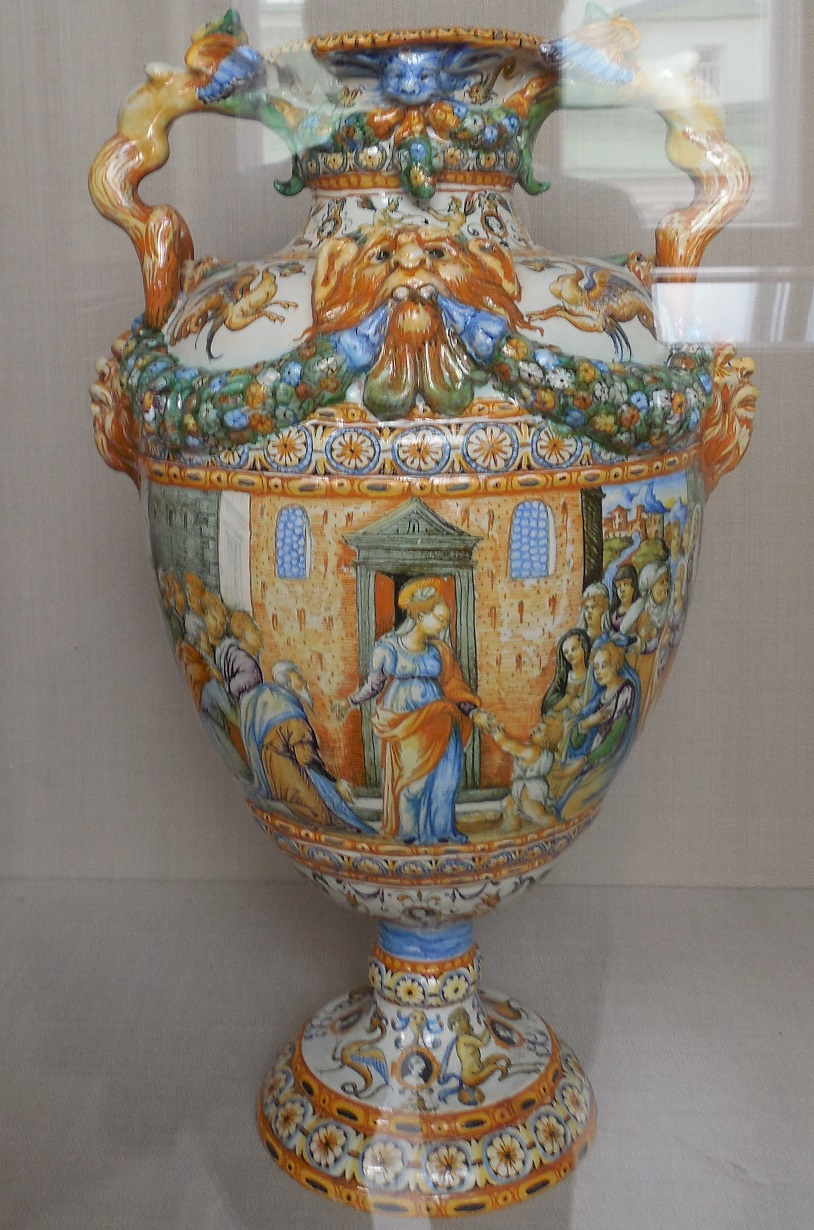
The floors in each room were different and amazing.The Nativity by Giovanni della Robbia – I think this relief sculpture.is exquisite!Michelangelo’s Crouching BoyIntricate and beautiful ceramics.
This metal sculpture is a clock. On the hour the peacock turns and fans his tail, the owls eyes blink, the rooster crows, and the mushroom displays the time – WOWWonderful sculptures
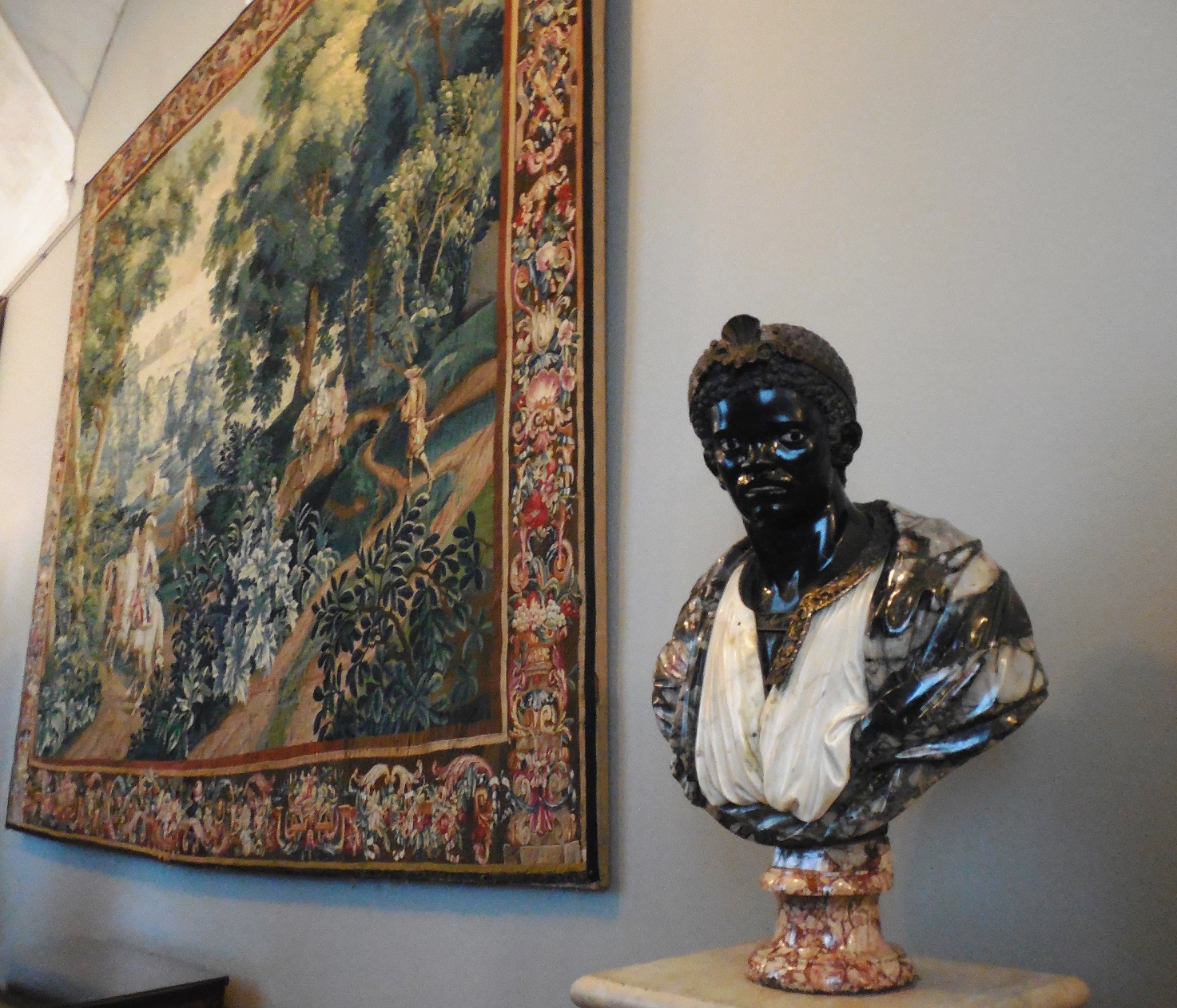
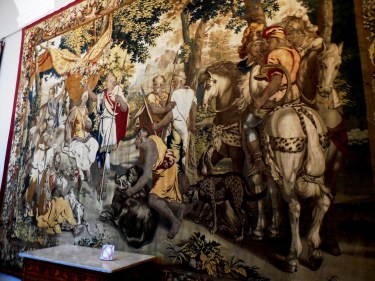
and exquisite tapestries
and exquisite tapestries
And of course the incredible paintings
Caravaggio’s The Lute Player
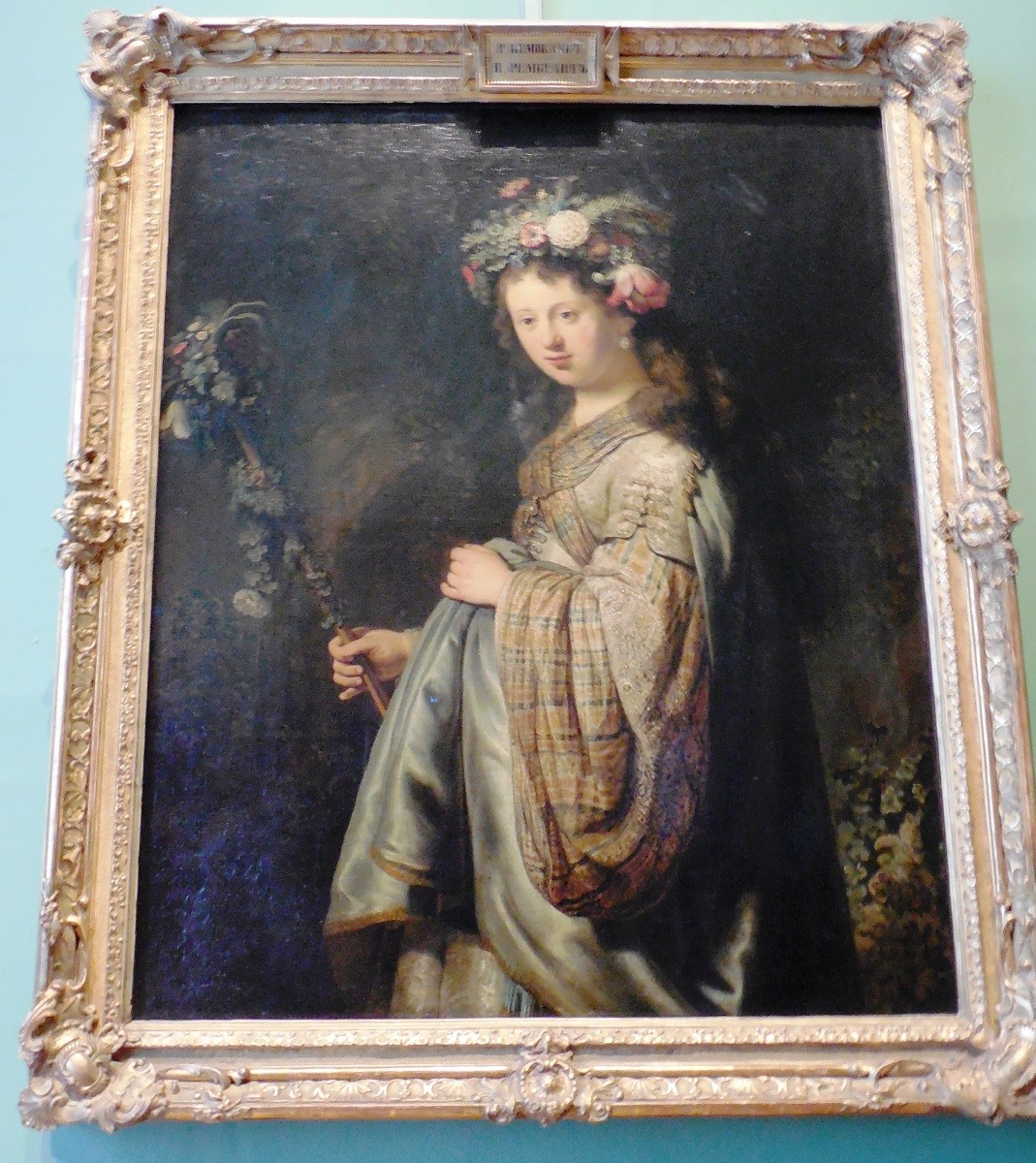
Flora by Rembrandt – It is thought that he was in love with her but it could never be proven.
Friendship by Pablo Picasso – I’m not always a big fan of Picasso, but I like some of his work especially this one.
Works by Monet
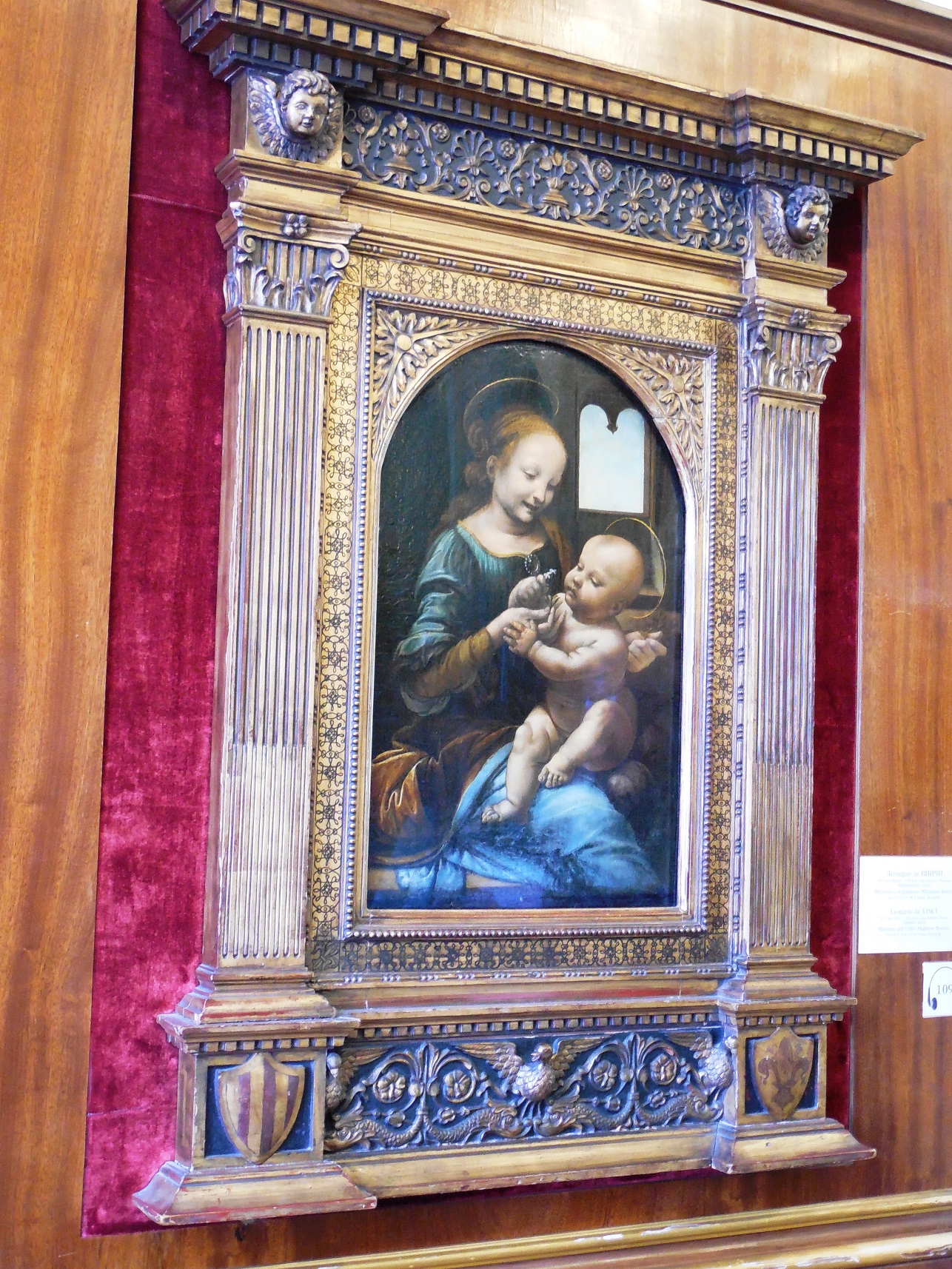
Leonardo da Vinci’s Madonna and ChildLeonardo da Vinci’s Madonna with Child
Both of these are da Vinci I thought the comparison was interesting.
So ends a lovely morning at the Hermitage, now how about lunch.
Actually, this wasn’t the same day, but the experience was so fun and worth sharing.
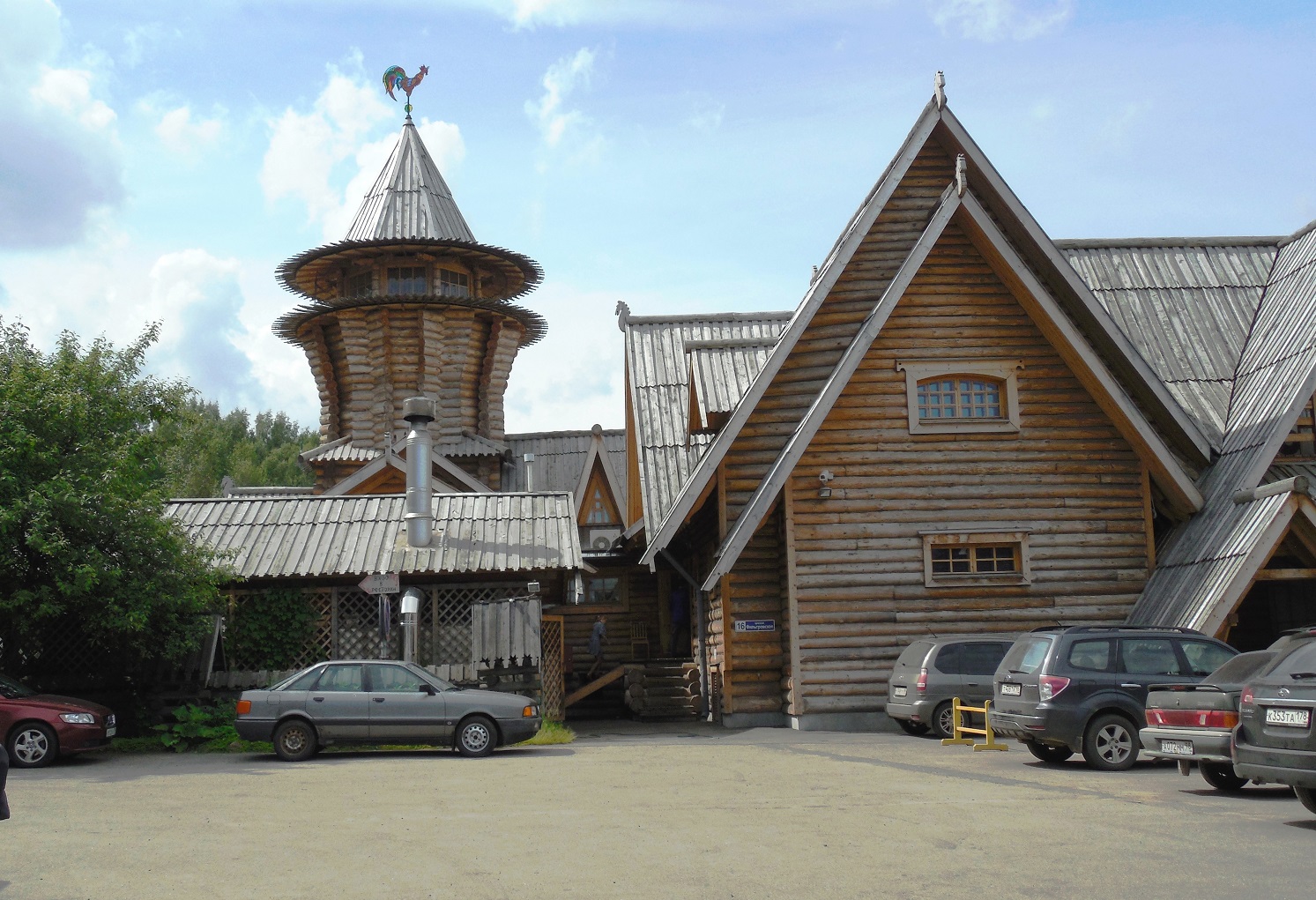
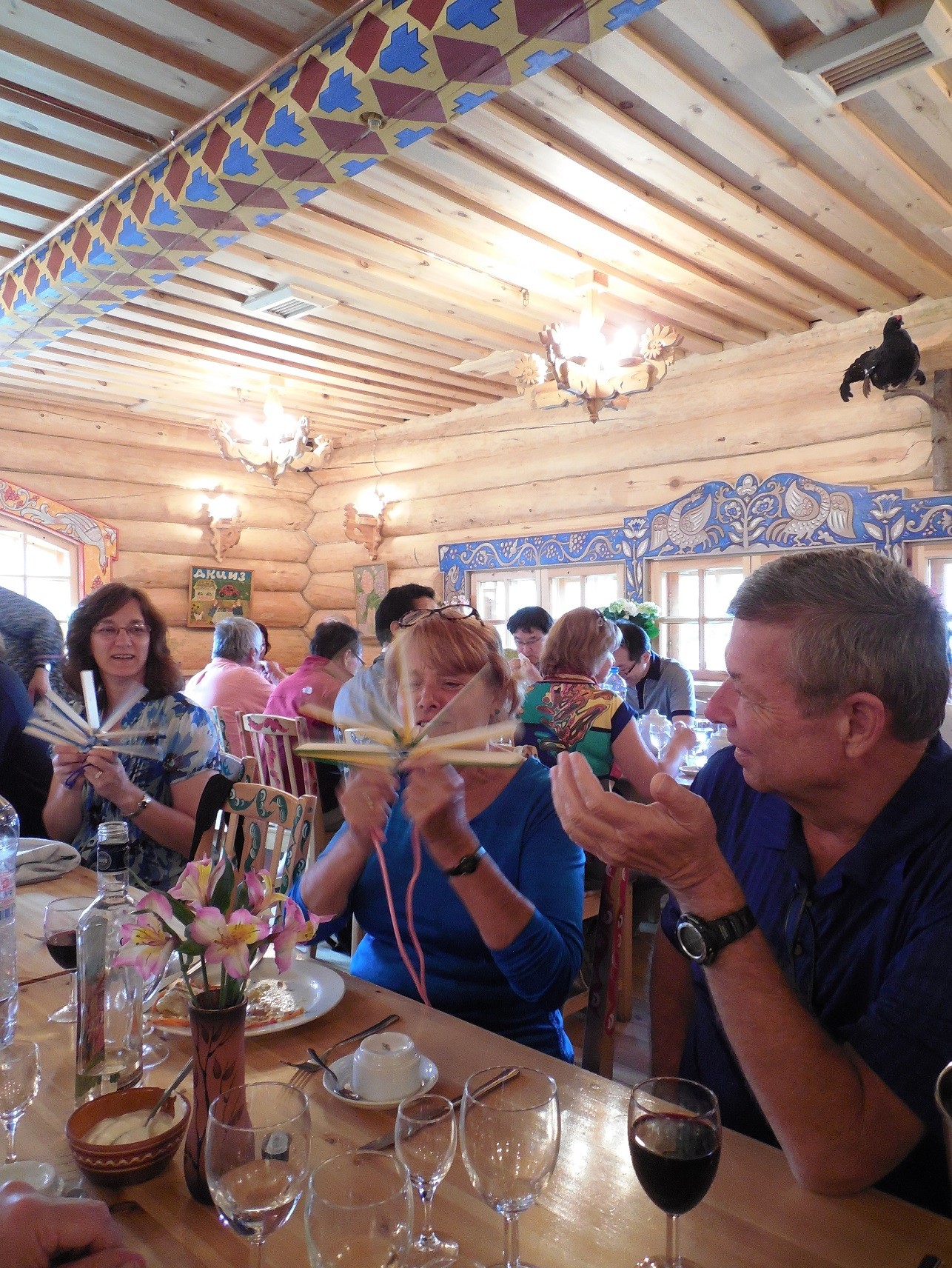
A restaurant designed in the style of a home of a wealthy Russian farmer. *Click on the picture and take a closer look at the great architecture..
Kori took us to an inn that is a replica of an historic home of a wealthy farmer and it was enchanting.
The décor was charming and the food (dark brown bread with an incredible sour cream/chipped beef/ herb spread, rich mushroom soup, pickled garlic & other vegetables, potatoes, sausage and a yuuummmy raspberry tart dessert) delicious!!!!!
We sat at long tables and ate local cuisine – wonderful!
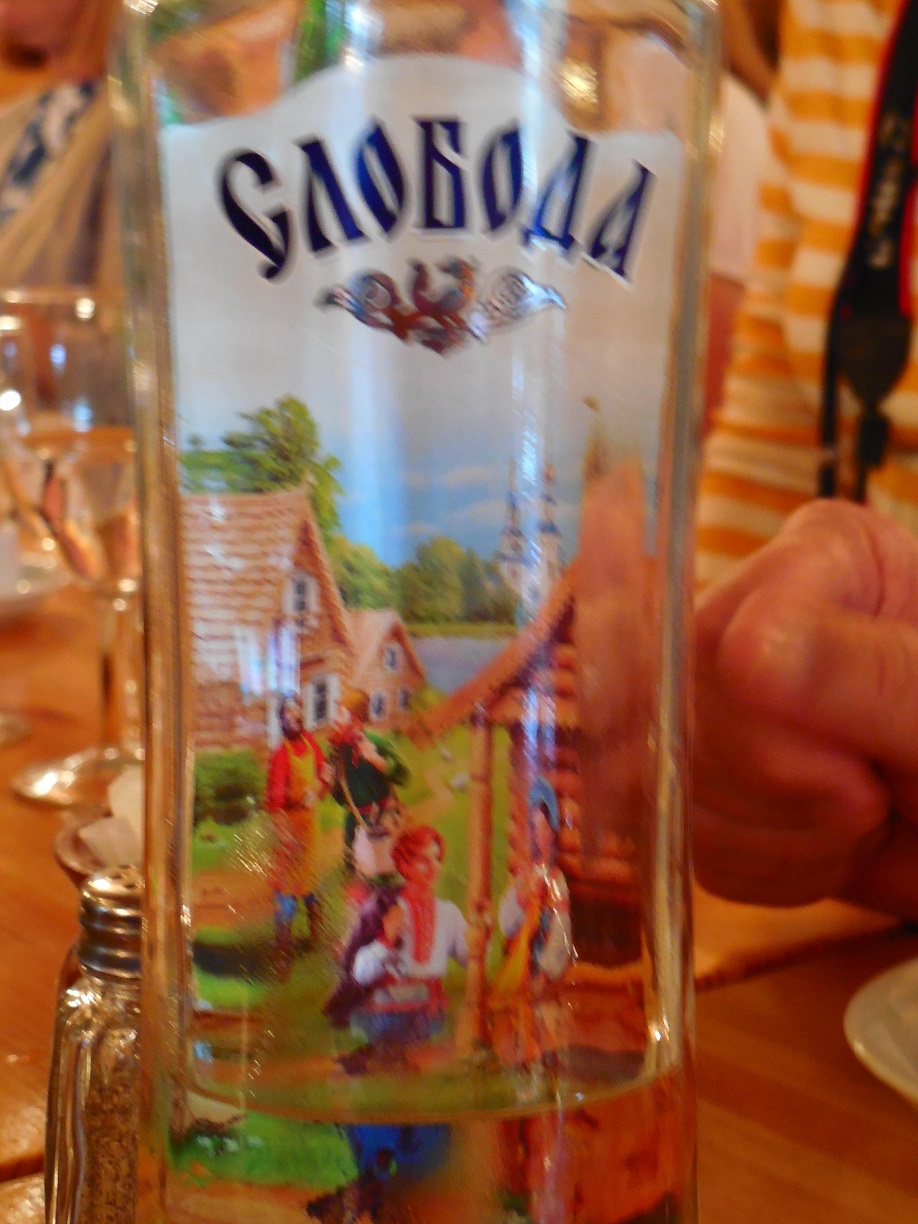
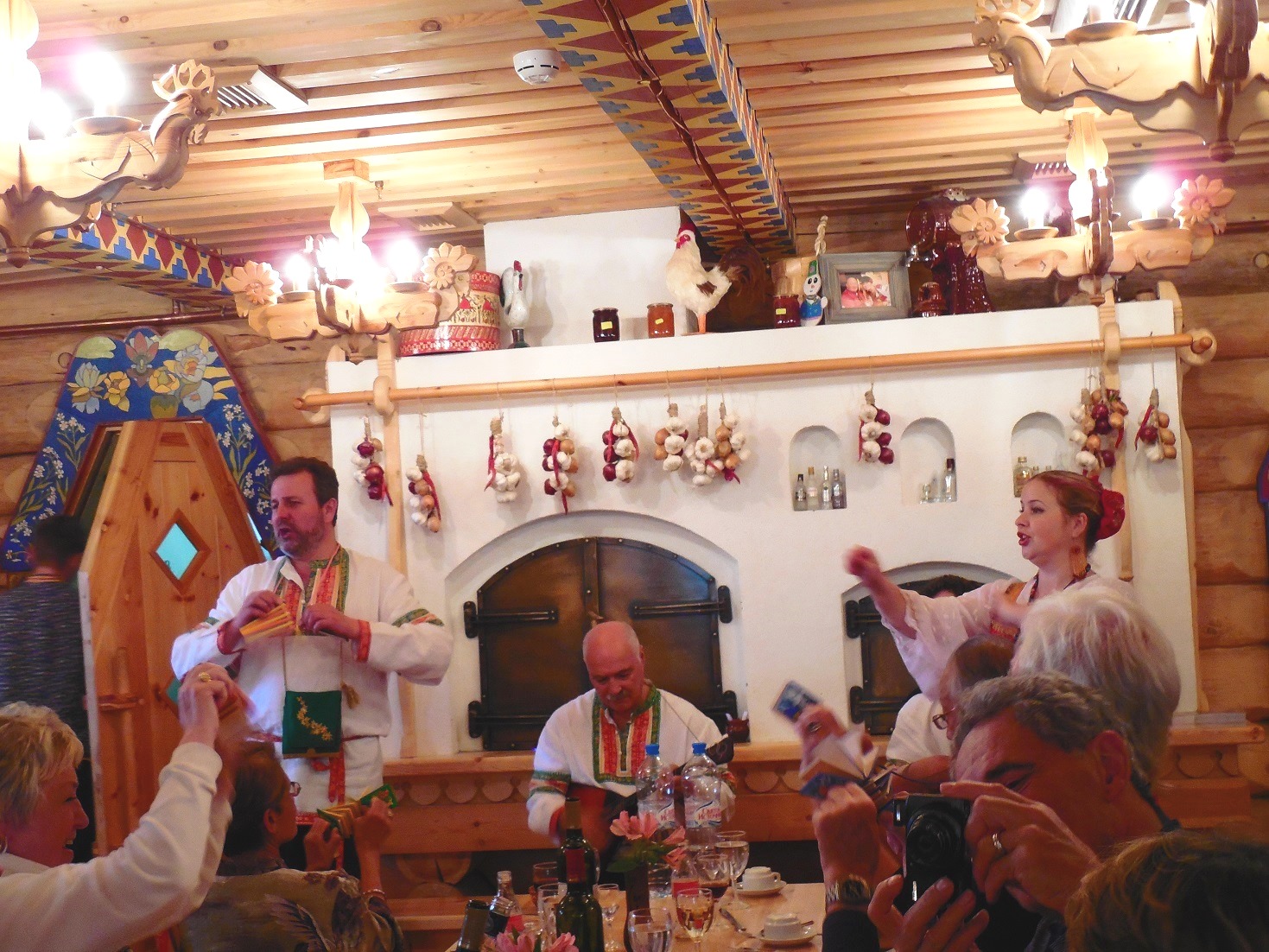
Joining in the band we played clackers – fun.Even the vodka bottles were beautiful – especially after partaking of the vodka. Does this look blurrry to you?We were serenaded with rousing folksongs, accordion playing, boisterous sing and dancing – delightful!A powerful voice singing Russian folksongs.
What a wonderfully fun way to enjoy a meal and the local culture!
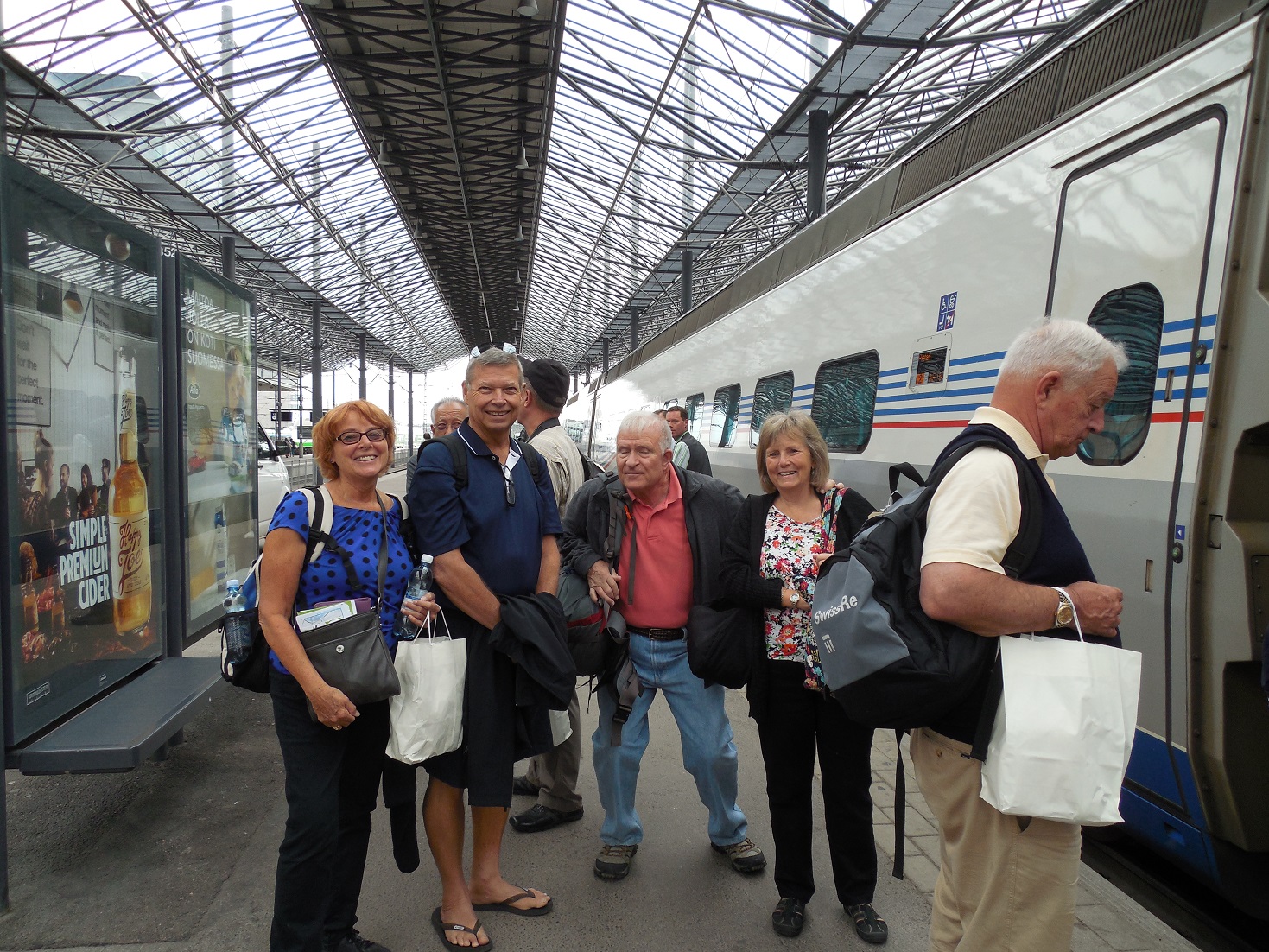
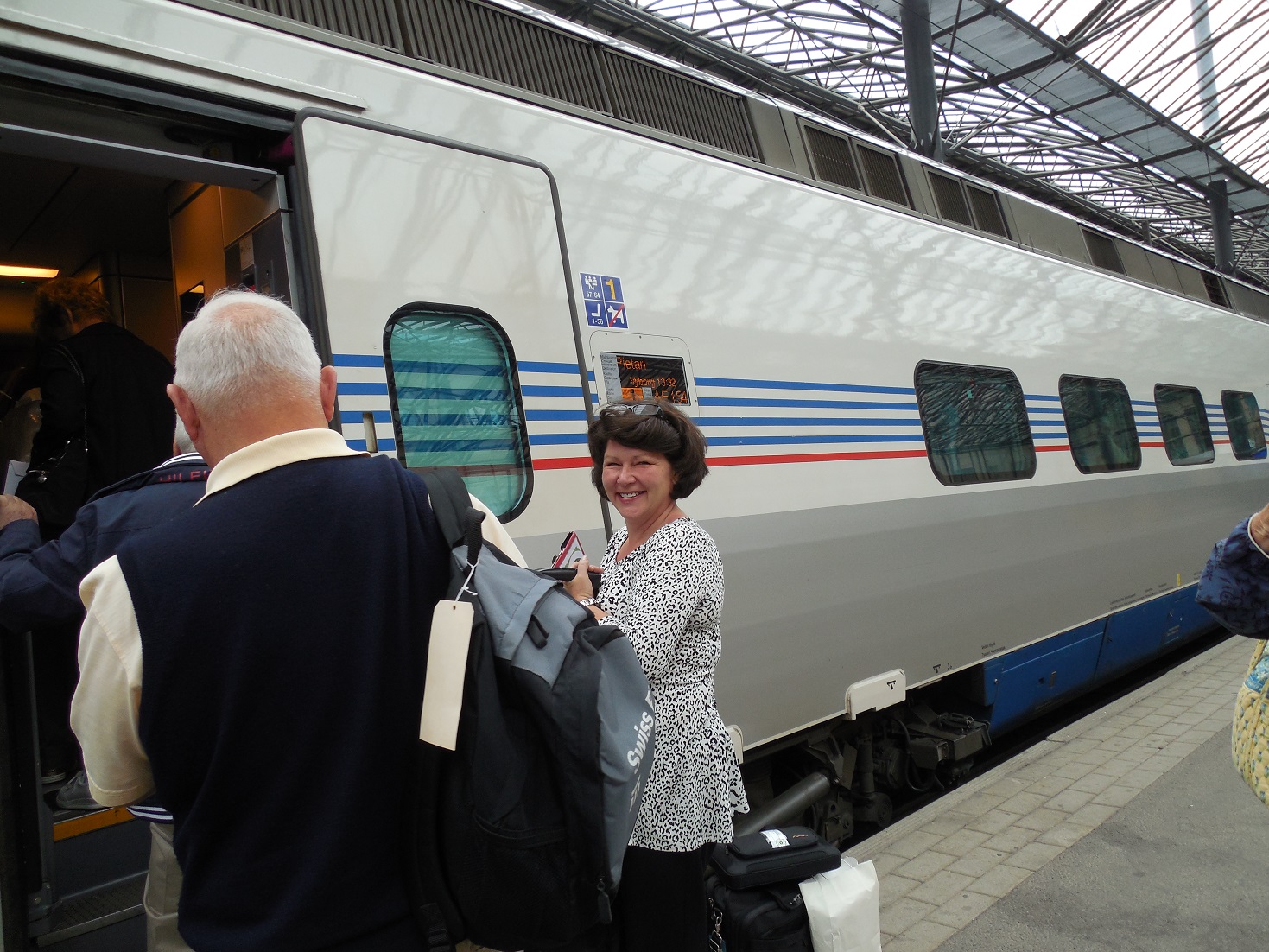
All Aboard – Tom and I with our good friends Dick and Carolyn Hill
Early in the morning on June 10th we hopped a train from Helsinki to St. Petersburg, Russia – a great city. The ride was lovely – much like the countryside that we saw in the Baltic States with lush grasslands and forests sprinkled with wild flowers. It was very relaxing except when the Russian immigration people came on to check our passports. They were a very serious bunch – no kidding around with these guys. But we all passed with flying colors and we disembarked in St. Petersburg right on schedule.
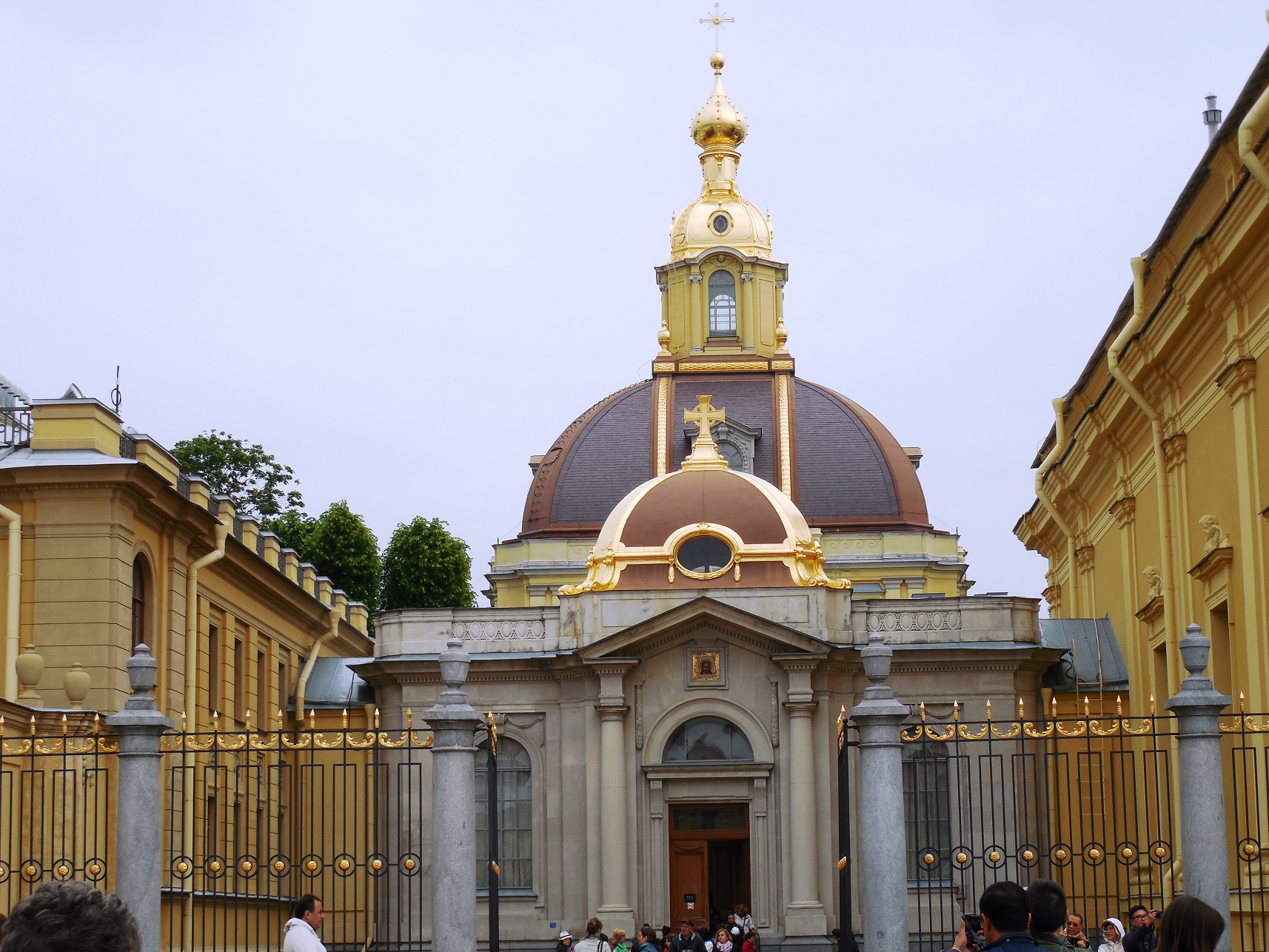
As always, we hit the ground running with our first stop being Peter and Paul (the saints not the Beatles) Fortress and Cathedral.
Peter and Paul FortressSt. Peter and Paul Cathedral
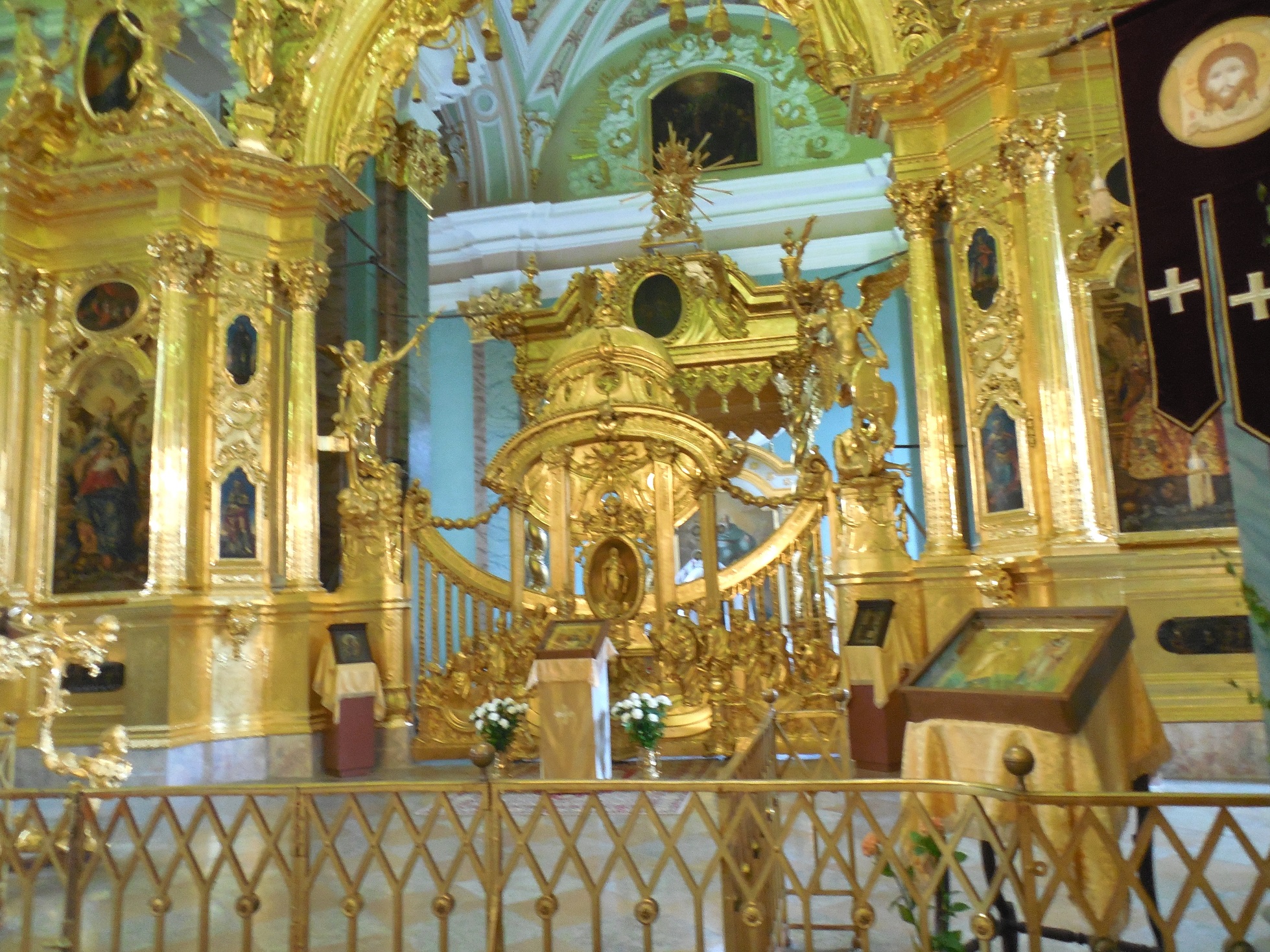
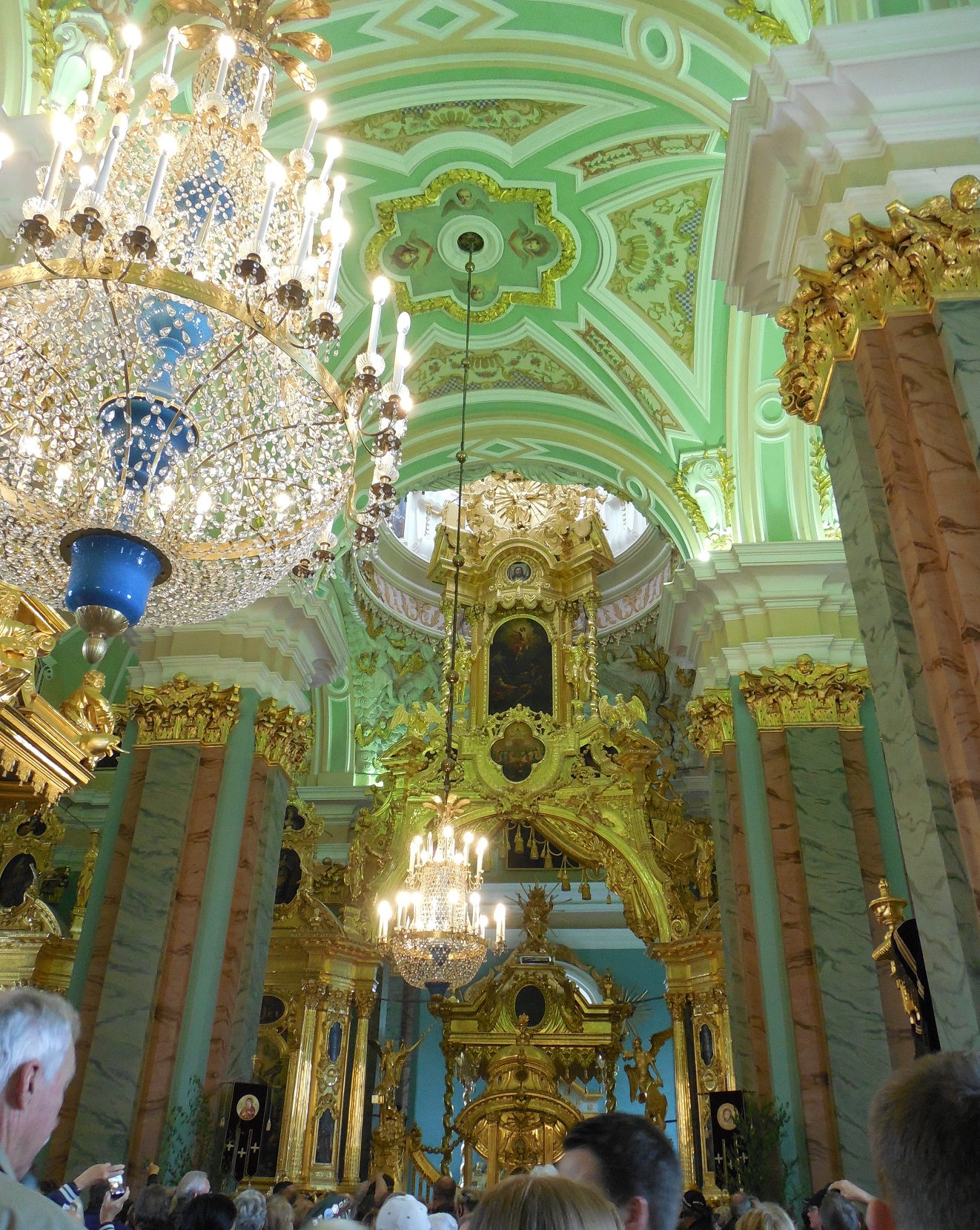
This cathedral is the burial place of the czars and OMG it is lavish.
The Alter Screen – click on the picture to take a closer look at the intricacy of this work of art.Opulence
The pictures are all mosaics- now that’s a lot of work.The magnificent burial place of the Russian Czars and Czarinas.
The tombs of Peter the Great and Catherine the Great – a great couple.
Nicholas II and his family are all buried here including Anastasia.
Nicholas II was the last Russian Czar. He, his wife and their five children were put to death as ordered by Lenin during the Russian Revolution. Lenin’s plan was to eradicate the aristocracy so that no one could lay claim by royal authority later. (We’ll talk more about that later.)
The place was gorgeous and very interesting.
Carolyn, Dick, Tom and I grabbed a quick dinner at a little Mexican restaurant (no kidding) and called it an early night.
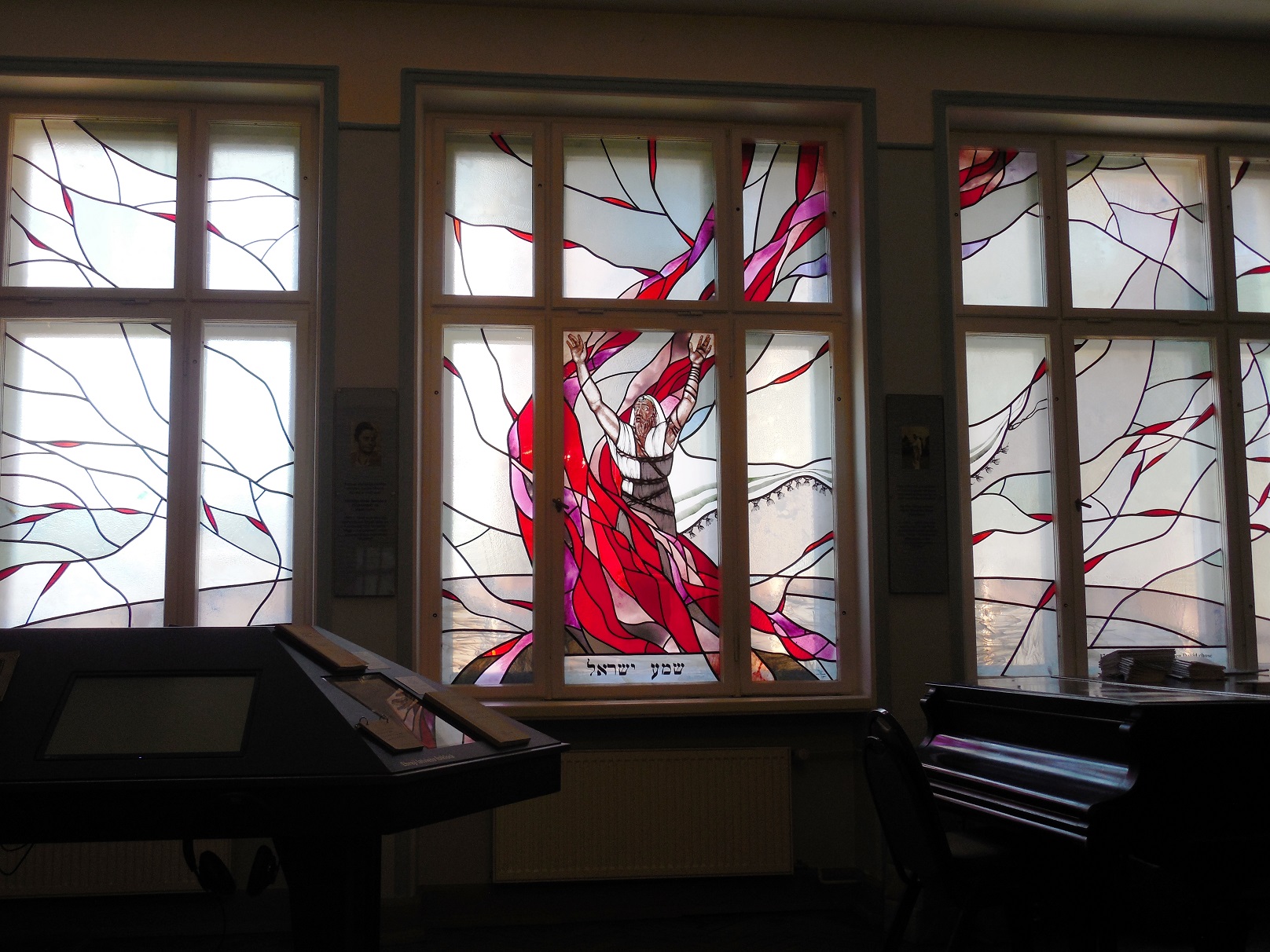
The next day was incredibly busy starting off with a visit to the Grand Choral Synagogue
The Grand Choral Synagogue.The beautiful sanctuary of the Grand Choral Synagogue
and their wonderful ambassador Cantor Gregory Yakerson. Mr. Yakerson told us a bit of the history of the church and its congregation. The synagogue was built in the late 1800s and consecrated in 1893. As was the case in the vast majority of the synagogues and churches, it was closed to worshipers and later bombed by the Nazi’s during WWII. Stalin, with his anti-religion policies, all but banned the practice of religion (if you went to worship, you may well have disappeared by the next morning). With the communist regime in power into the 1990s, repair and reconstruction was not possible until the 2000s and only completed in 2005.
Mr. Yakerson explained that decades without religion decimated their membership numbers with much of the younger generation growing up without a religious foundation. Many members returned, but not near the 1200 members they once had.
*We heard this story and others just like it repeatedly throughout our visit – so horribly sad but still with a determination to survive/rebuild/reclaim what they once were.
Cantor Yakerson in the wedding room at the synagogue – I kind of felt like I was on a set for Fiddler on the Roof.
Then this gracious man sang for us – What a gift.
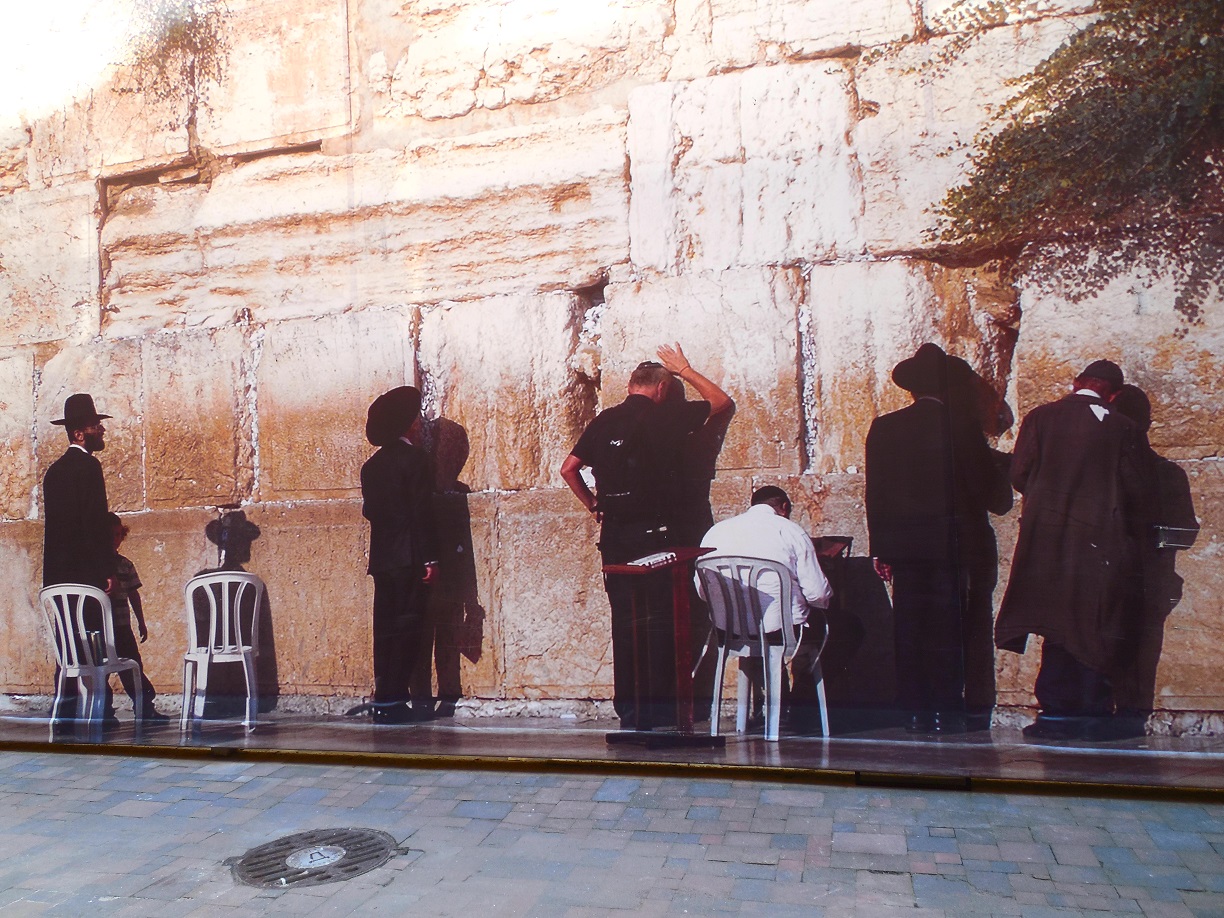
The screen over the renovation site next to the Grand Choral Synagogue depicts the Western Wall/Wailing Wall in old Jerusalem.
There is reconstruction and renovation going on all over the city and they put up screens for protection from falling debris. Their screens depict something about the area they cover and are often works of art in their own right.
Moving right along, our next stop was:
Peterhof – Summer Palace of the Tzars
This is probably a good time to give you a little background on Peter the Great (AKA Peter I or Pyotr Alexeyevich) Tzar of Russia from 1682 until his death in 1725. Hey, I’m a teacher. It’s what I do.
Peter I was the grandson of Tzar Michael Romanov. Peter became a tzar at the ripe old age of 10. He grew into the position both figuratively and literally reaching a height of 6’8″. As an adult, Peter traveled other countries and realized that Russia lagged significantly behind other European countries in development. He found this totally unacceptable and became determined/obsessed with remedying the situation in what is referred to as a “Cultural Revolution.” He brought the best engineers, scholars, architects, craftsmen, and shipbuilders from the western nations to modernize Russia while sending hundreds of Russians to Europe to be educated in the arts, sciences, crafts, and design. In his 42 years as tzar, Peter established St. Petersburg, built a Russian navy, strengthened the Russian army, modernized Moscow, secularized education, he opened the door to trade with the west and established Russia as one of the major powers of Europe – now that’s pretty impressive.
Okay, I ‘m done well at least for now, so let’s see Peterhof. Ooops, one more thing – In his travels in western Europe, Peter saw Versailles and was determined to do it better – thus the summer palace, Peterhof.
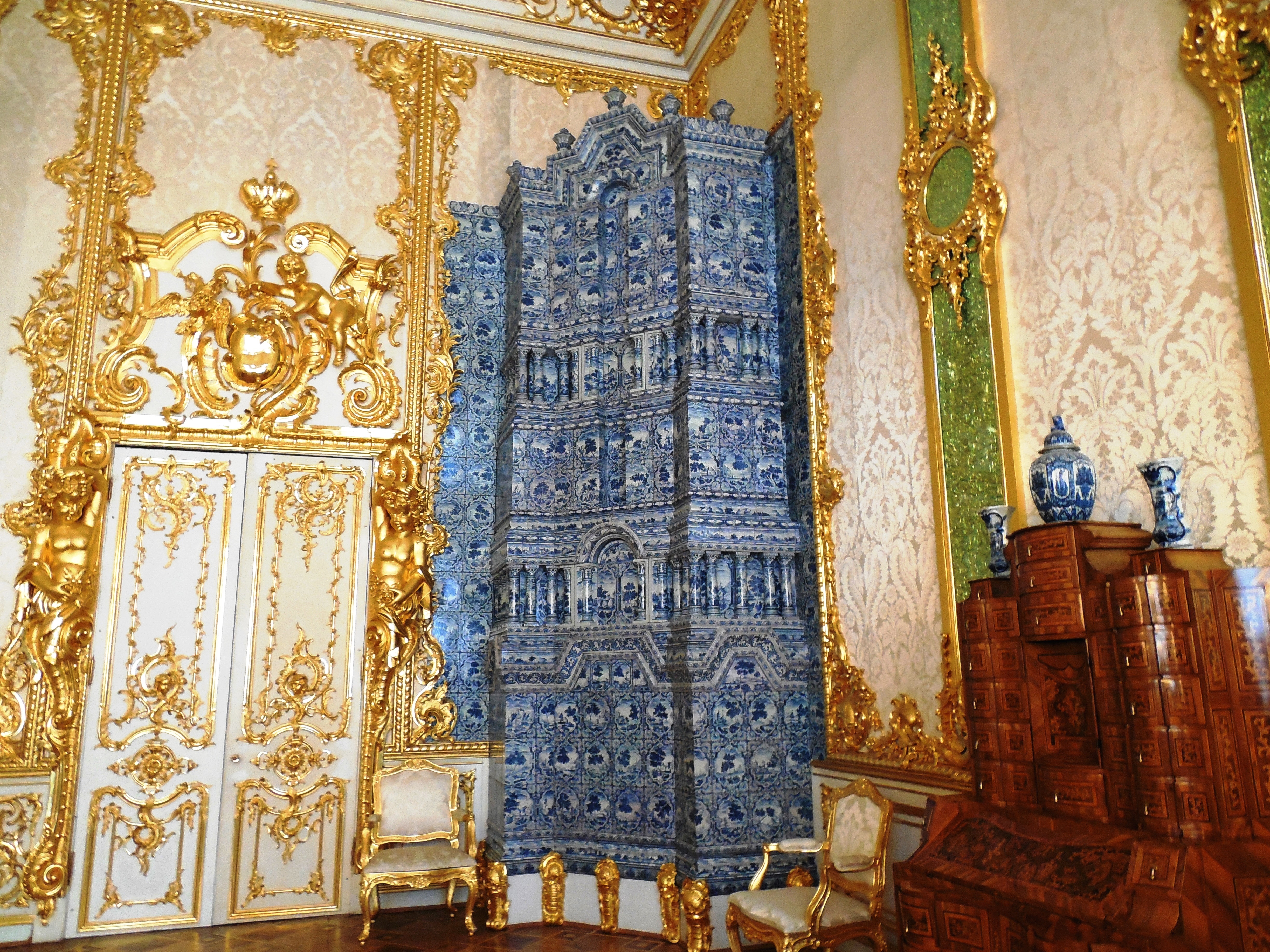
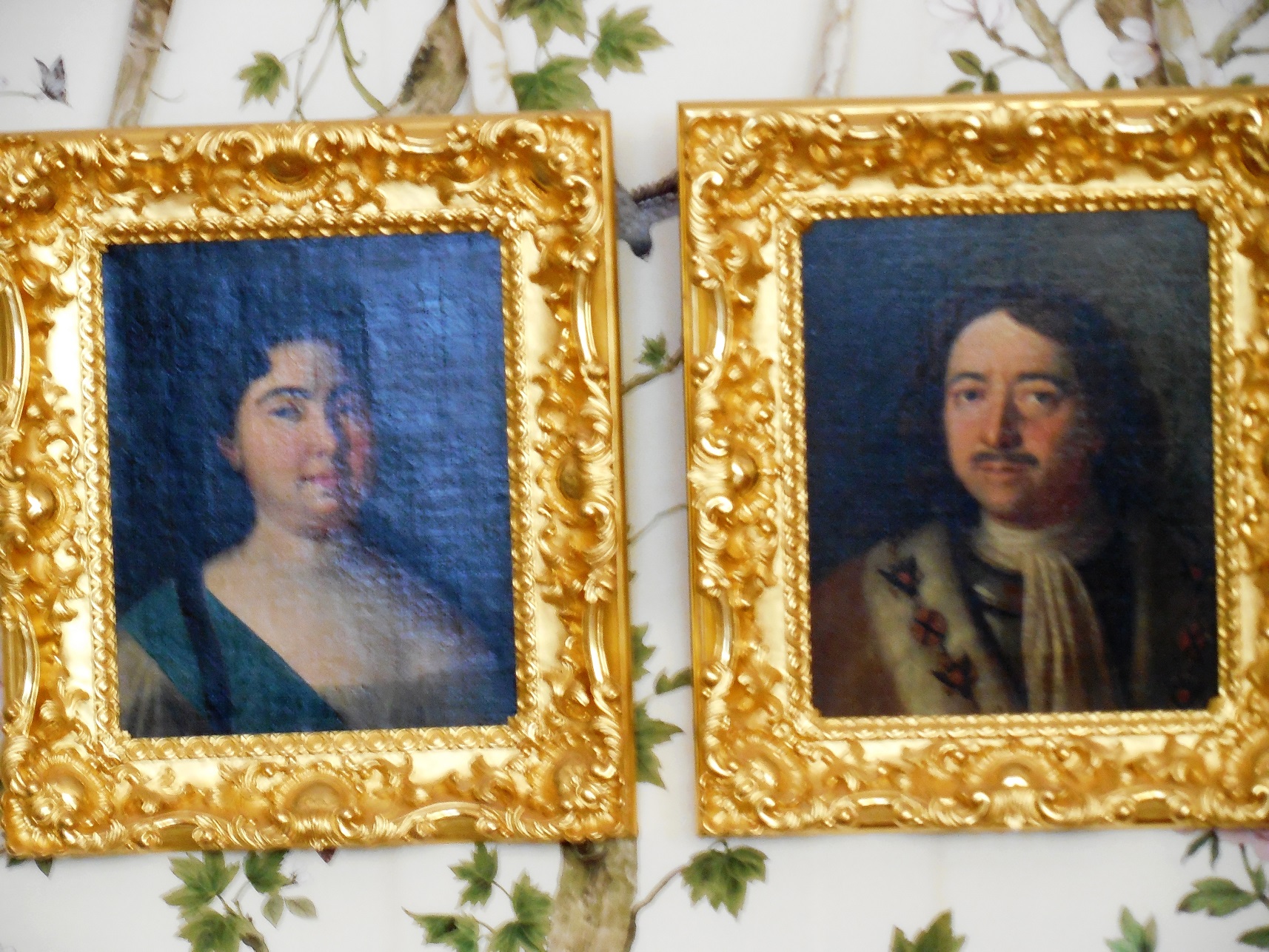
The entrance to Peterhof.WOW!Okay, so it’s pretty touristy but fun.Incredible Extravagance.The blue Wedgewood is a wood burning stove and they were in all of the rooms. Russian winters are really, really cold.History says that Elizabeth never wore the same dress twice and had 15,000 dresses when she died.Empress Elizabeth Petrovna (Peter’s second wife) – AKA Elizabeth the SpenderCatherine the Great and Peter the Great I guess you could say they’re a great couple.
Weird people taking selfies in the mirror at Peterhof.
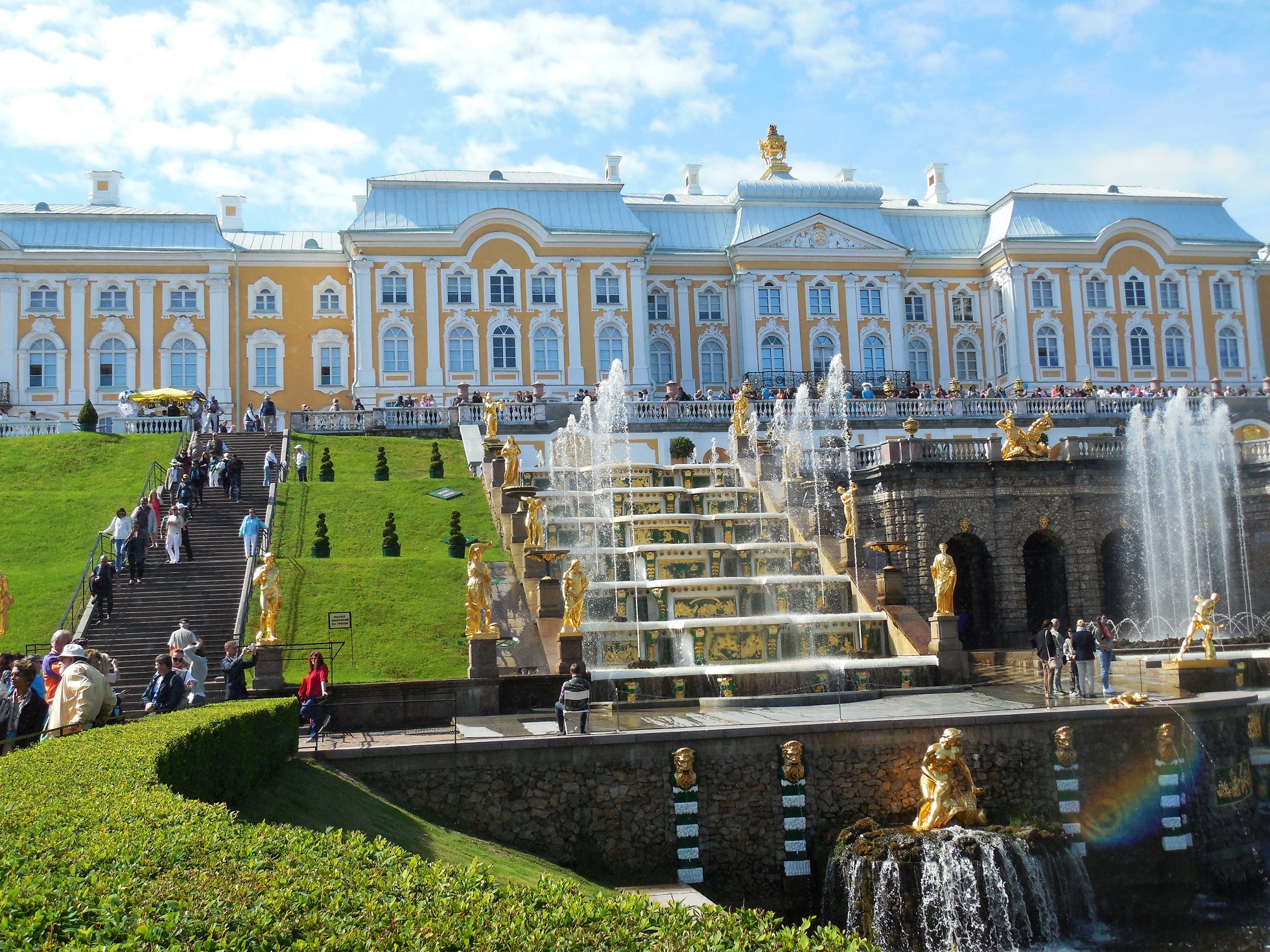
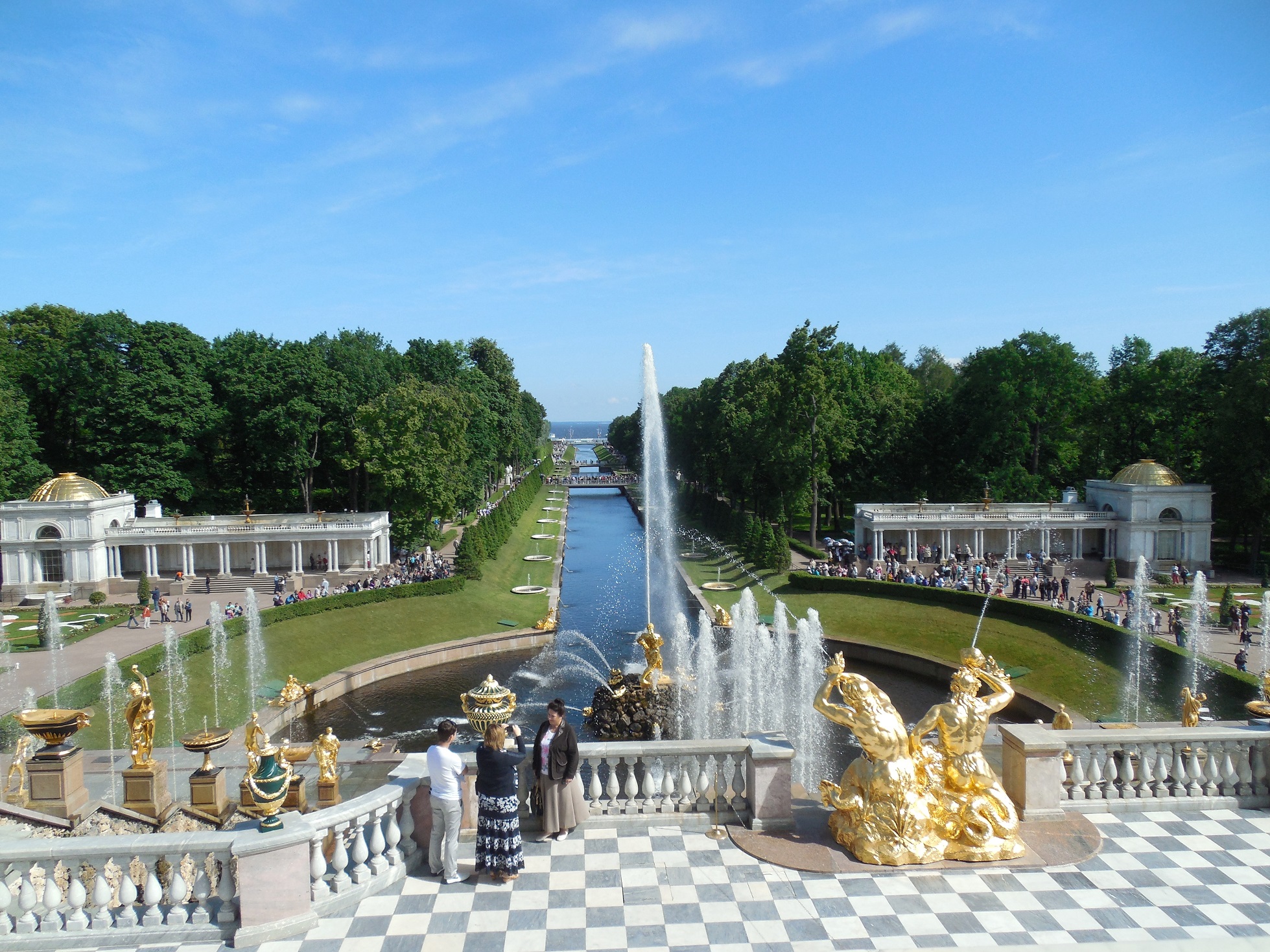
The back yard of Peterhof – pretty swank, huh.
The gardens and fountains are spectacular!
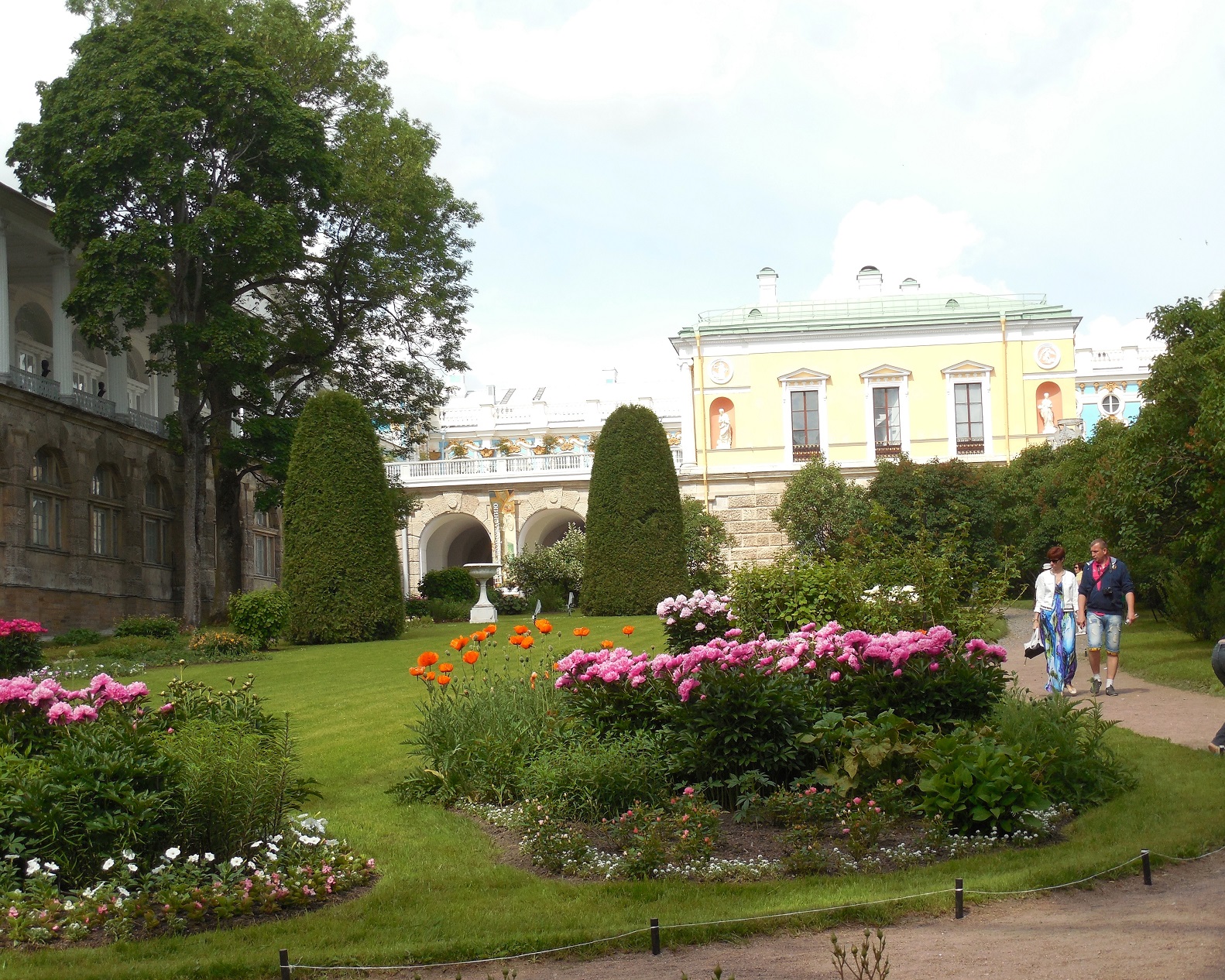
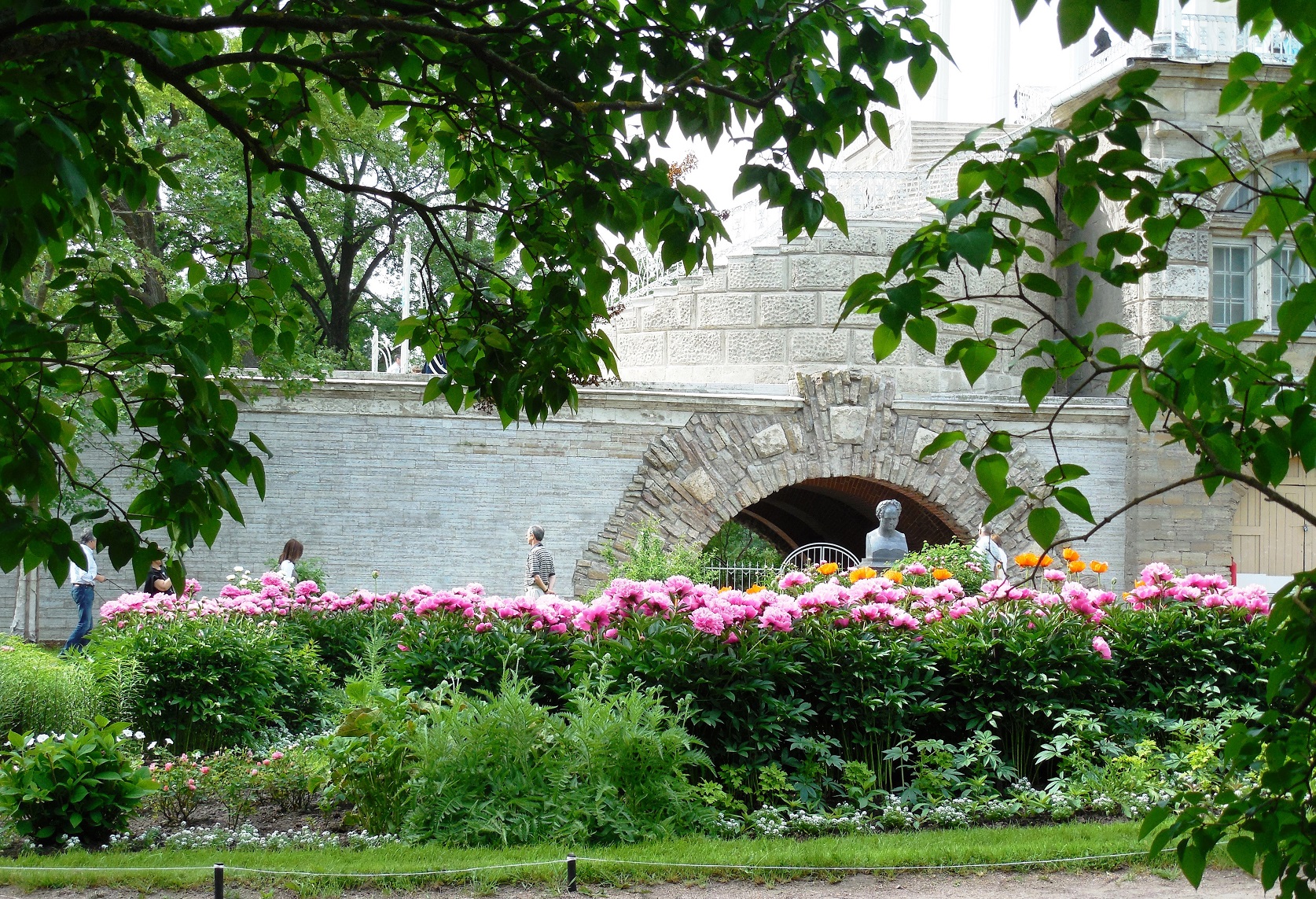
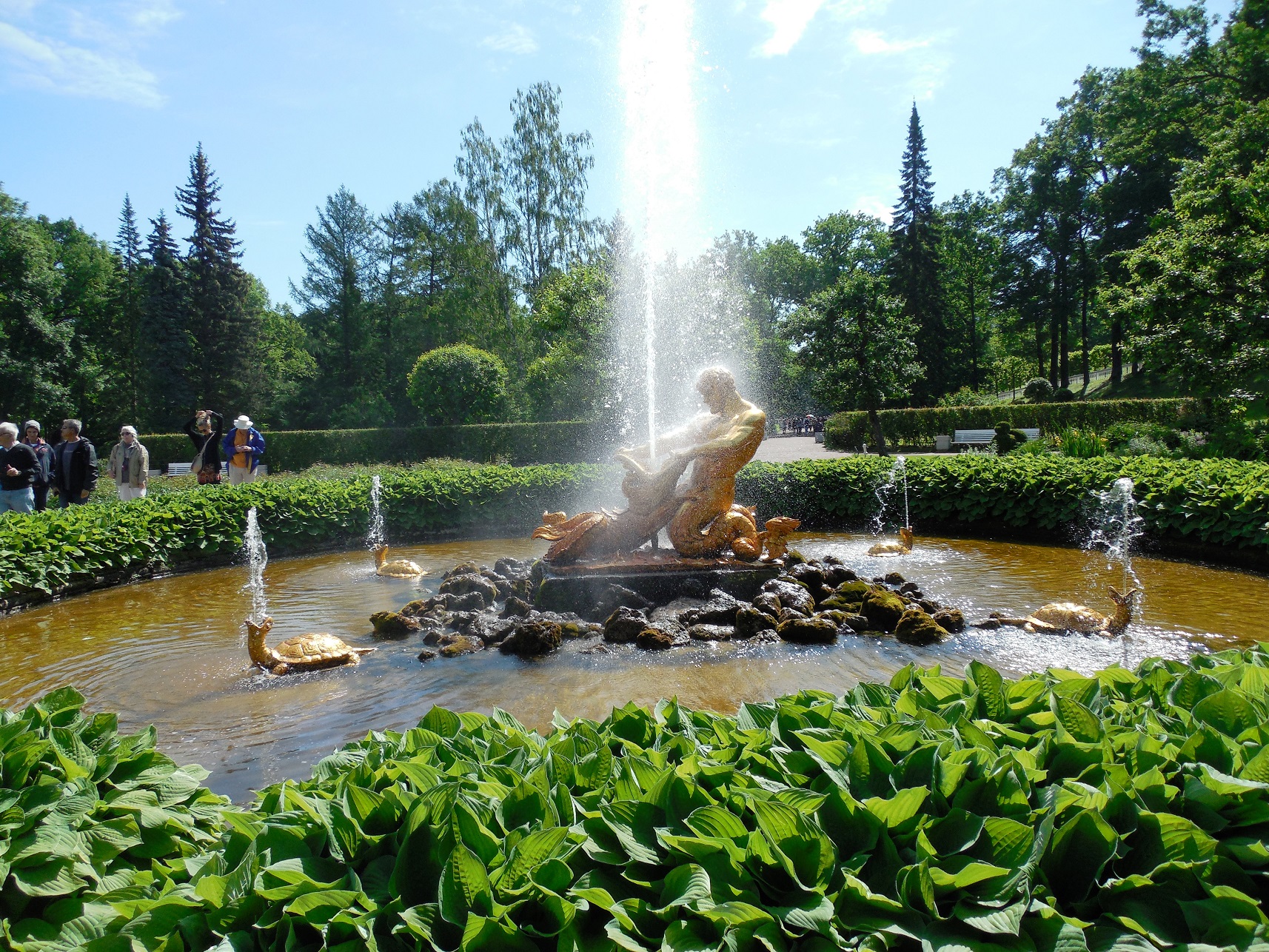
Peonies, poppies, dianthus…BeautifulThis canal runs to the Gulf of Finland.Peter really liked fountains.
The water from a naturally pressurized well feeds the fountains.
Fountains everywhere.
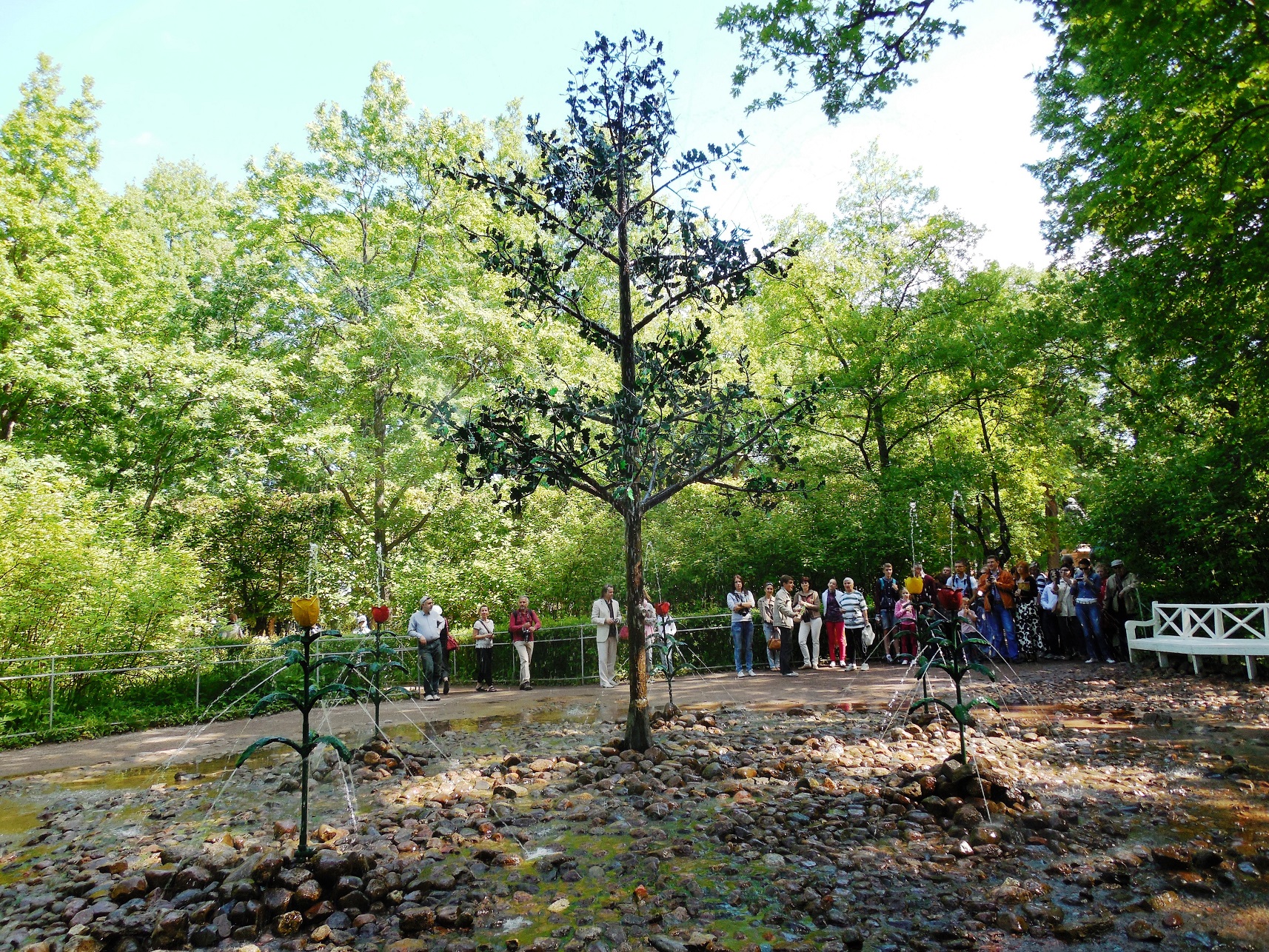
Evidently Peter TG had a sense of humor. The tree and flowers are fountains and there were fountains that would shoot out drenching guests who sat on the benches. I thought it was funny but I’m not sure his guests did.
The palace and ground were spectacular and just between you and me, I liked it better than Versailles – just my opinion.
Okay, I just want you to know that all of this was done before lunch – that’s a busy morning.
We did have a leisurely lunch on the grounds then hopped on a hydrofoil (another new experience) for a very fast ride across the Gulf of Finland and back to our hotel.
It had been a wonderful day, but Wait There’s More – We’re going to the Russian Ballet!!!
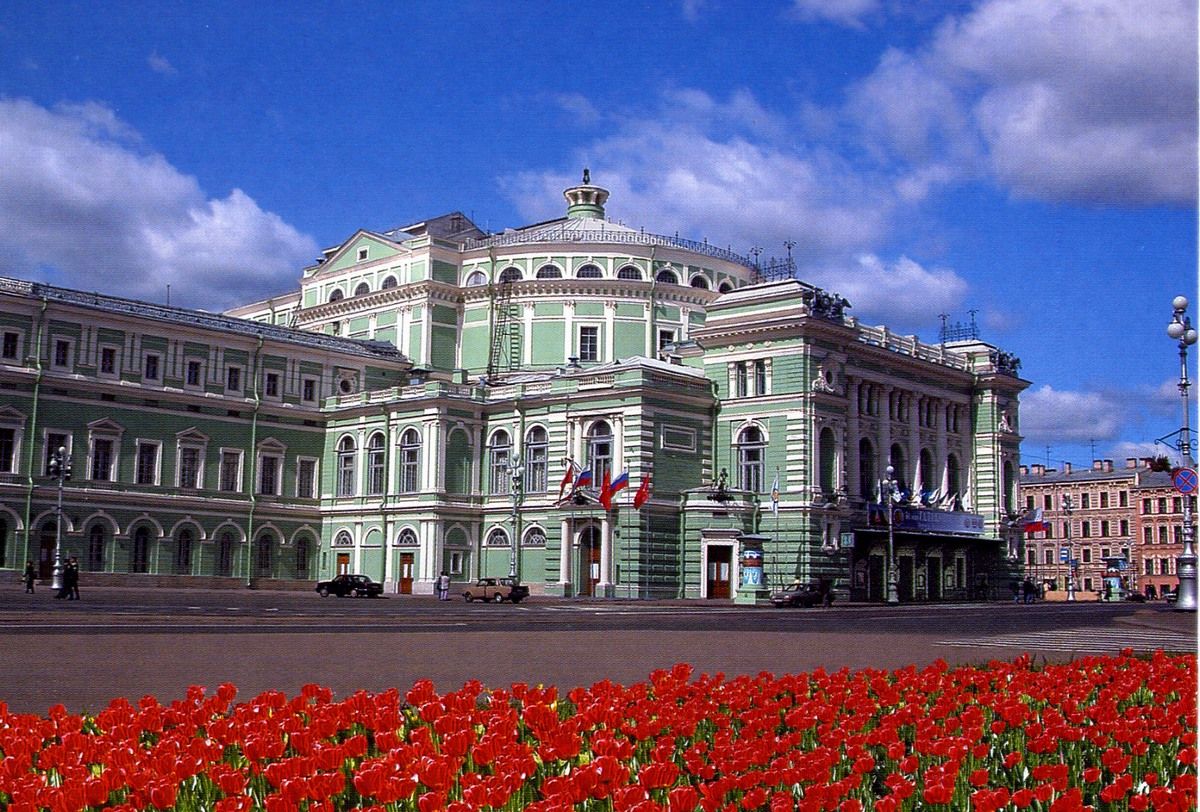
After dinner, we walked the short distance to the Miriinsky Theater
The Mariinsky Theater
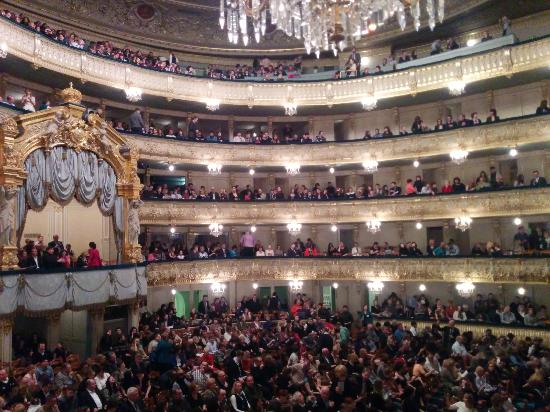
to see Tchaikovsky’s SwanLake. The theater is gorgeous,
Unbelievable!The stage was pure elegance and the orchestra outstanding.
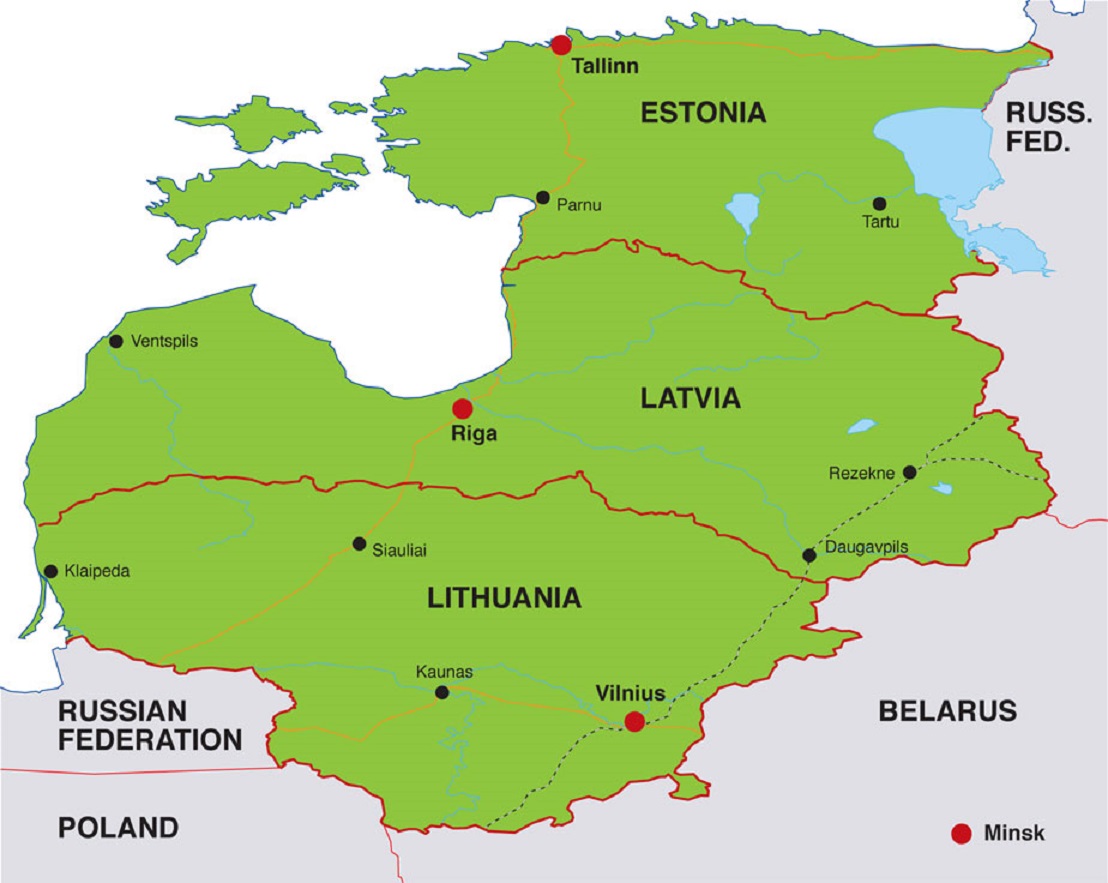
Baltic Treasures – Lithuania at the bottom, next on to Latvia and then Estonia.
Vilnius, Lithuania
June 3 – 5
We joined our tour group – 30 travelers in all and began the serious business of touring! Kori, our very organized and knowledgeable tour guide, is very good at getting us where we are supposed to be when we are supposed to be there. Our friend Dick says, “It’s like trying to herd cats,” but she does it amazingly well.
This is the ever smiling, knowledgeable, efficient, mother of our crew.
While in route to the beginning of each tour, Kori gives us background information and history. As I said, she is incredibly knowledgeable about the places and history which greatly adds to what we are seeing. Once we arrive at our tour destination, we break into two groups and local guides take over. These guides have a deeper insight into the places and their history and we have learned so much. I hope I won’t bore you in trying to retell a bit about what we’ve seen.
Old Town
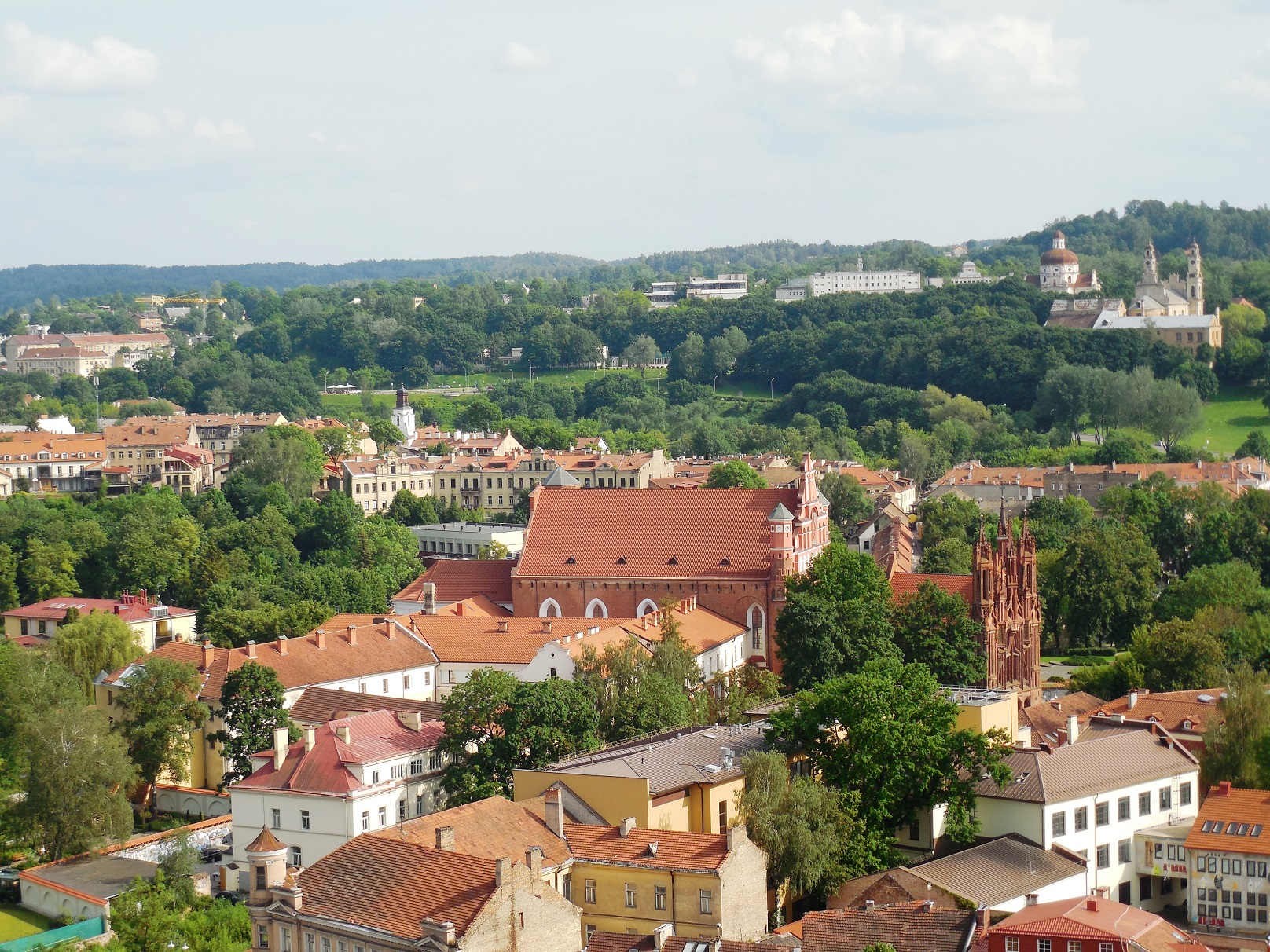
A lookout tower view of Old Town Vilnius.
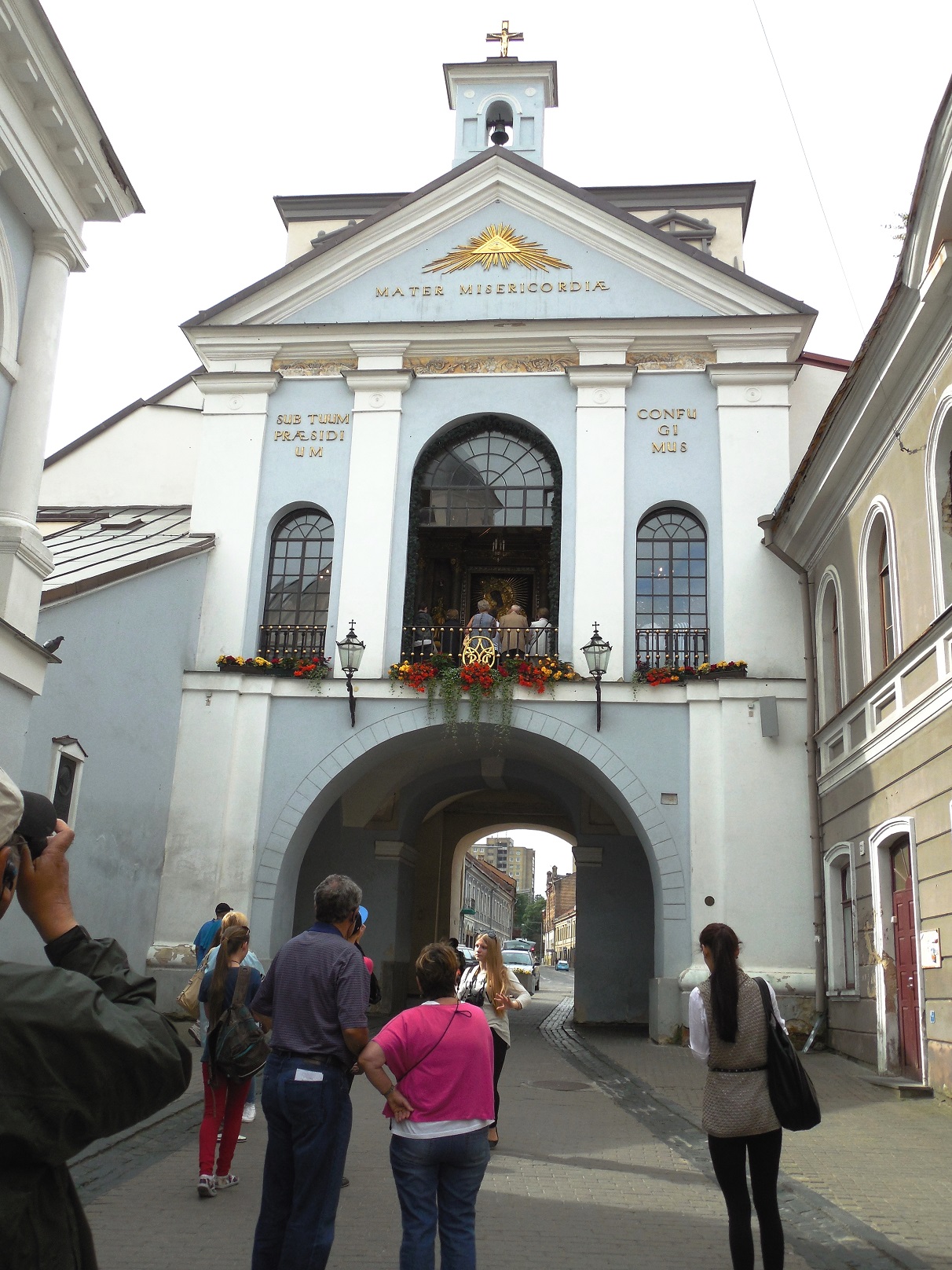
We entered Old Town Vilnius, circa 16th century, through the Gates of Dawn – a portal into the walled city. It was early and mass was being celebrated as we entered below.
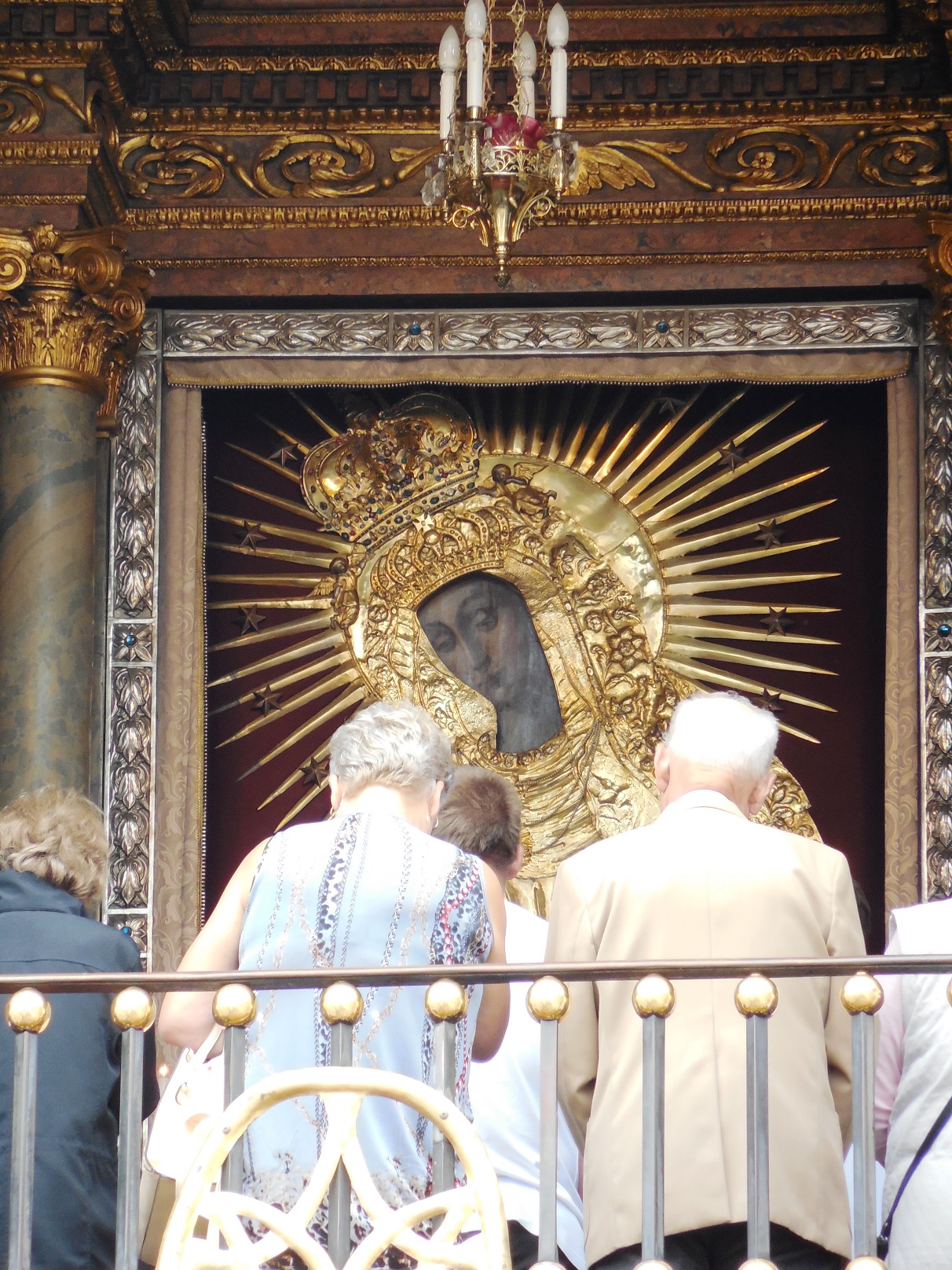
The main gate into the old walled city. The Chapel of the Blessed Mary Catholic Church occupies the building, and there was a service being held as we walked below.The famous Black Madonna is here. Not really black, the Madonna is carved of dark oak.
This chapel is the home of the Black Madonna but our guide informed us that to them she is the Blessed Mary.
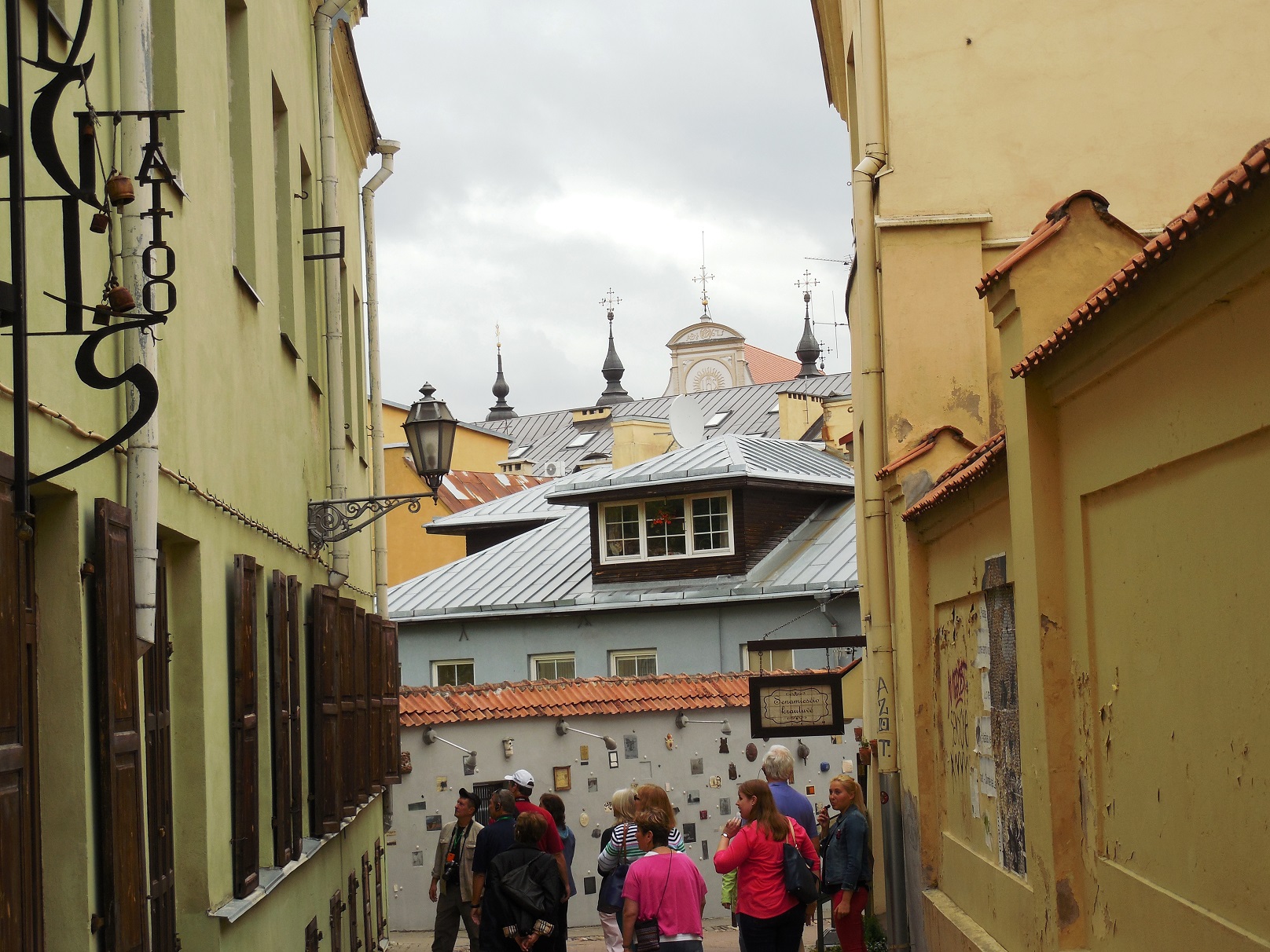
We continued our walking tour learning about the old town and enjoying the sights of old buildings, winding alleys, cobbled streets and courtyards.
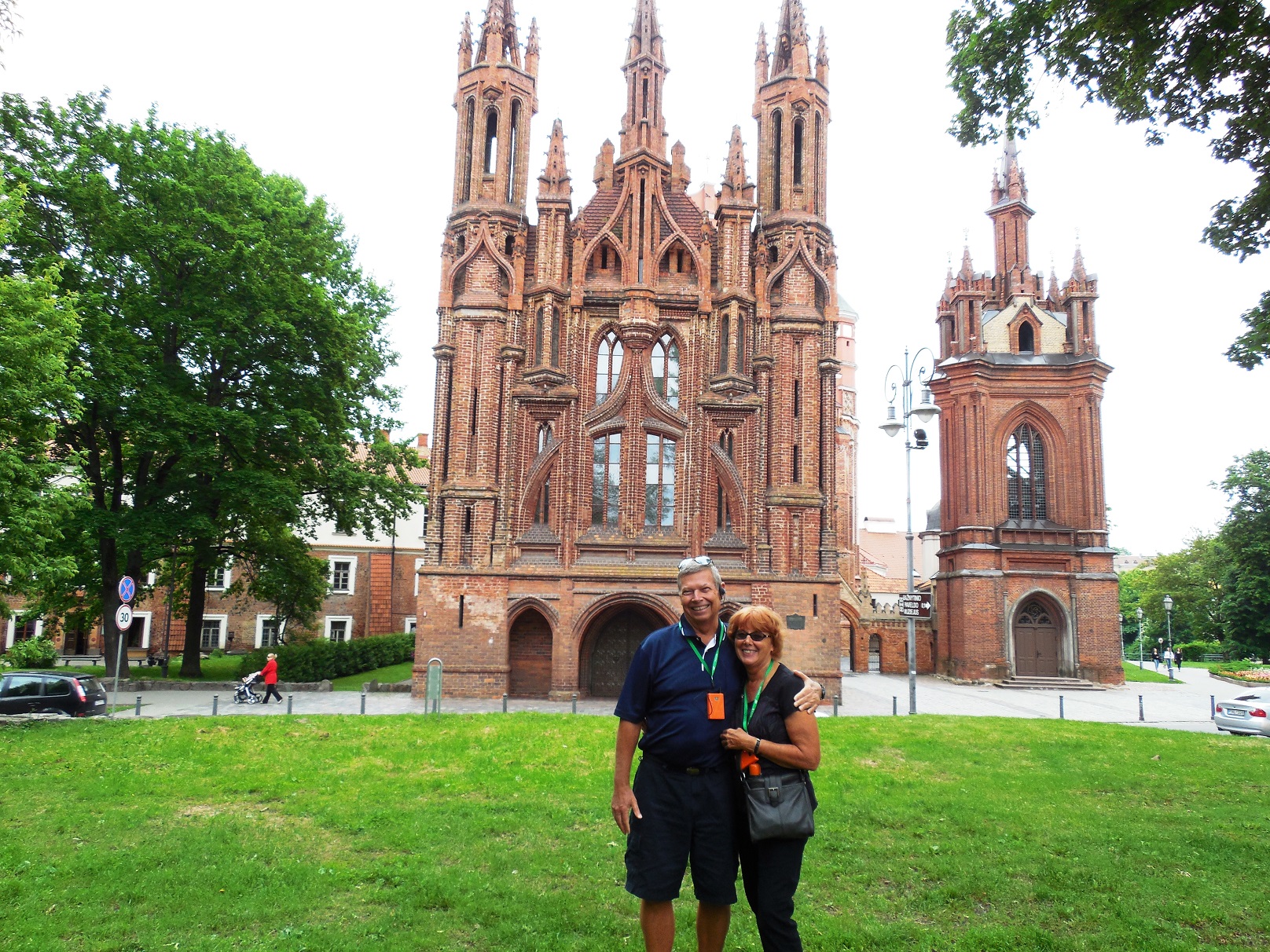
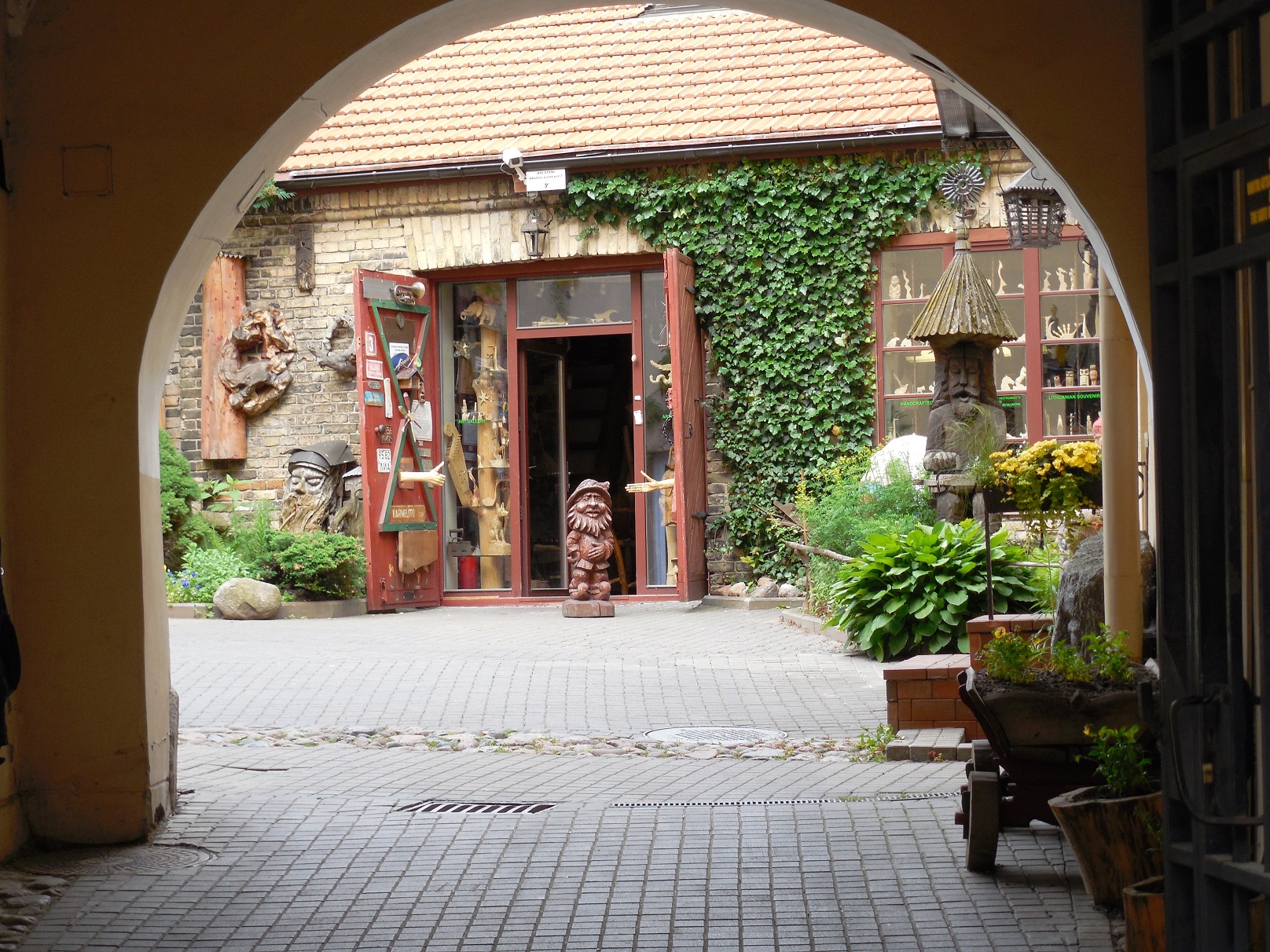
Our tour took us down narrow and charming streets and alleys.Literacy Street – All along this alley there were plaques dedicated to Lithuania’s poets and writers.Quaint shopsTom and I in front of St. Anne’s Church – not the St. Ann’s that we were married in.Short tunnels into interior courtyards gave us a glimpse of homes, shops, and Vilnius Old Town life
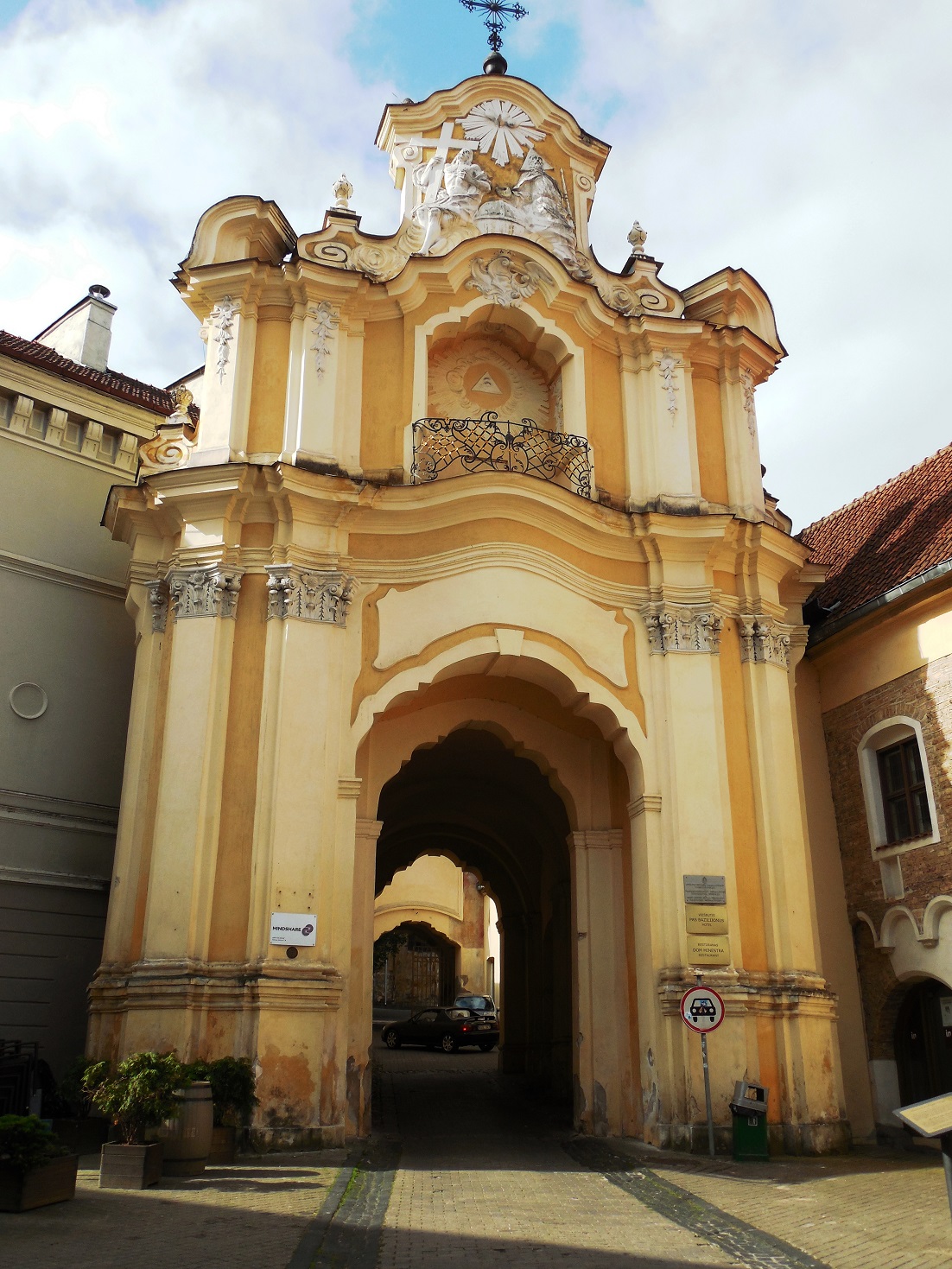
Another church gate into the old city.
The weather was perfect and it was a lovely way to spend the morning. We had the afternoon and evening to wander around on our own to shop take pictures…
Trakai Castle – Much of the castle was destroyed in 1655. In 1929 Lithuania was occupied by Poland and the Polish government ordered the reconstruction of the castle.
The next day we went to the Victims of Genocide Museum in the morning and in the afternoon we traveled to Trakai Castle. The castle had been all but destroyed but has been reconstructed using what was left of the original castle combined with the new construction.
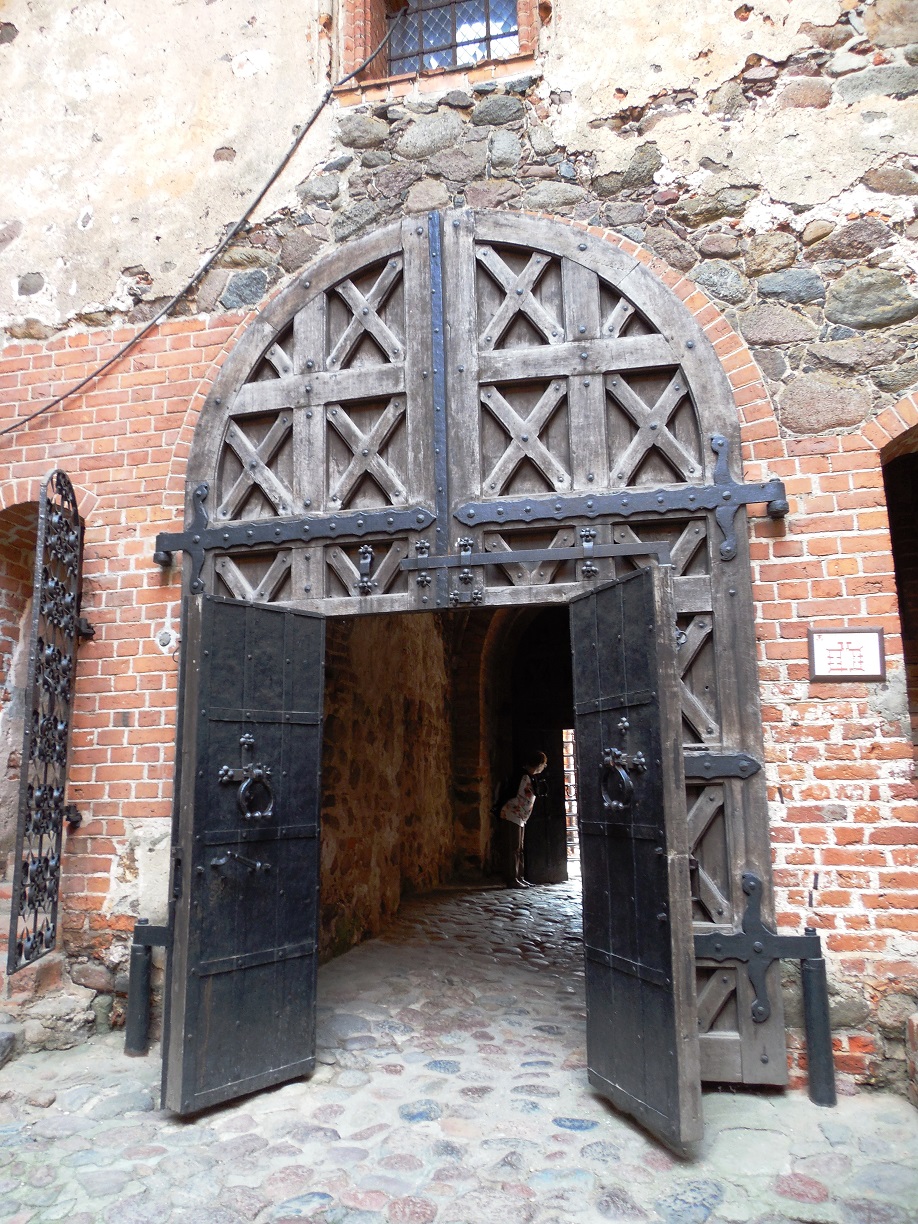
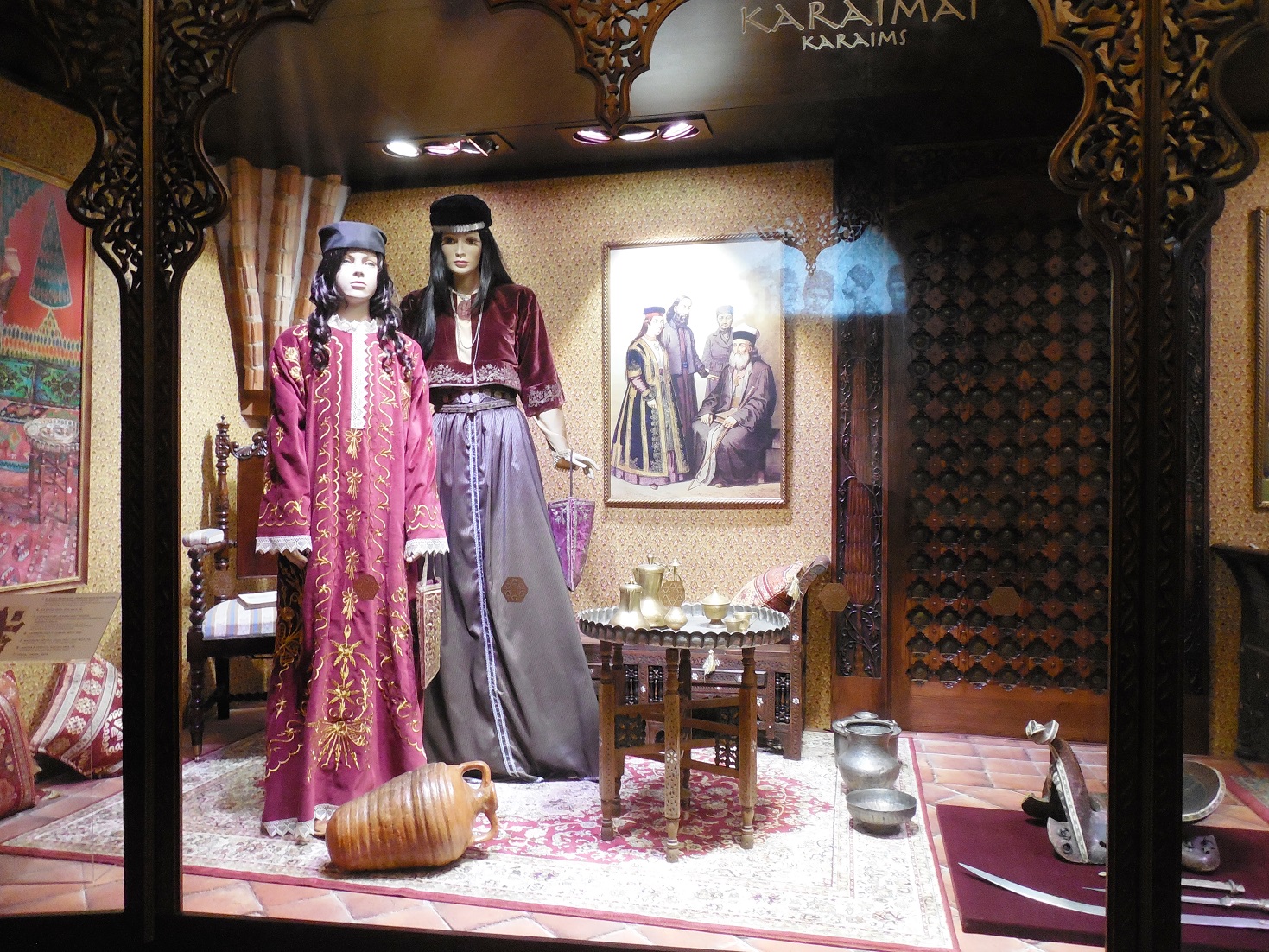
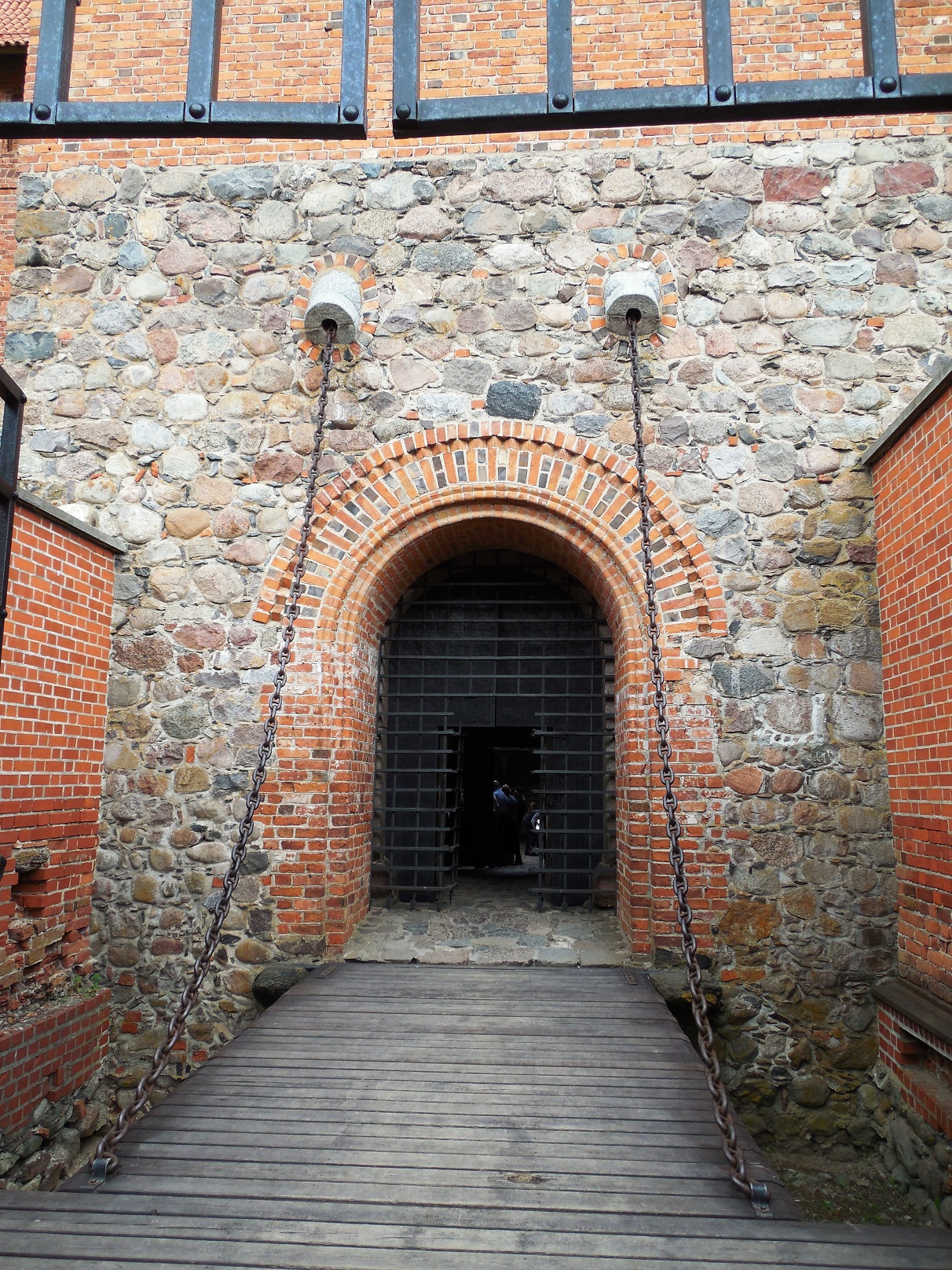
A gate into the inner castle – you can see some of the original structure.Old costumes, furniture and everyday living items were displayed.The drawbridge at Trakai Castle. I felt like I was in Camelot.The mote used to be filled with water, but water levels have dropped.
It is an interesting and a fun afternoon.
Tomorrow we head for our next Baltic State.
Riga, Latvia
June 6 – 7
Today we arrived in Riga, the lovely capital of Latvia. On this tour we have a lot to see in a short time and as usual, we hit the ground running. Our first stop upon entering the city was at the opulent 19th century Riga Opera House which is still very much in use today.
Riga Opera HouseThe main stage of the opera house with its old world elegance.Today is Dick’s birthday and he was serenaded with an operatic version of Happy Birthday. Very cool.
After Dick’s serenade we got our own performance and it was magnificent!
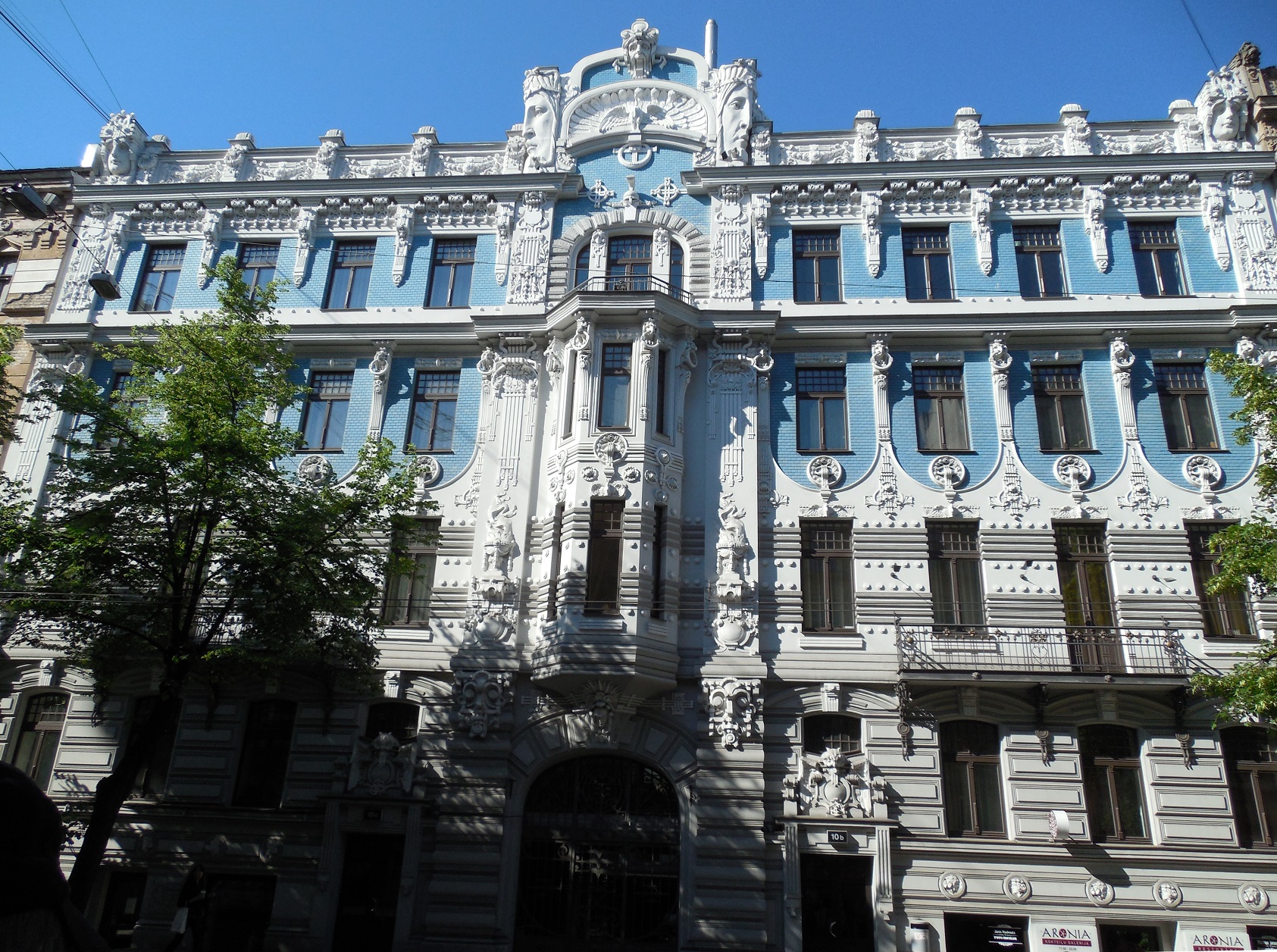
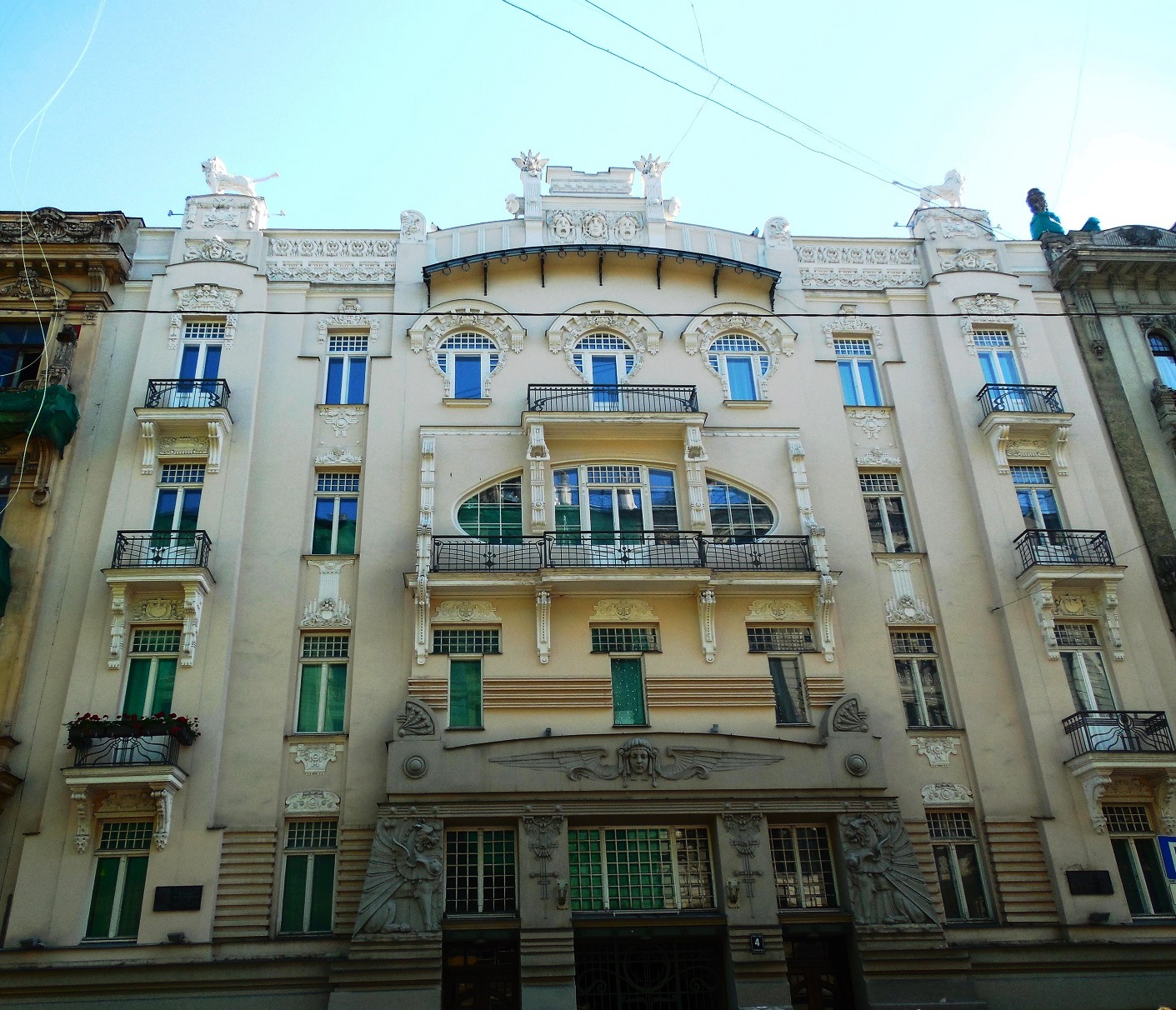
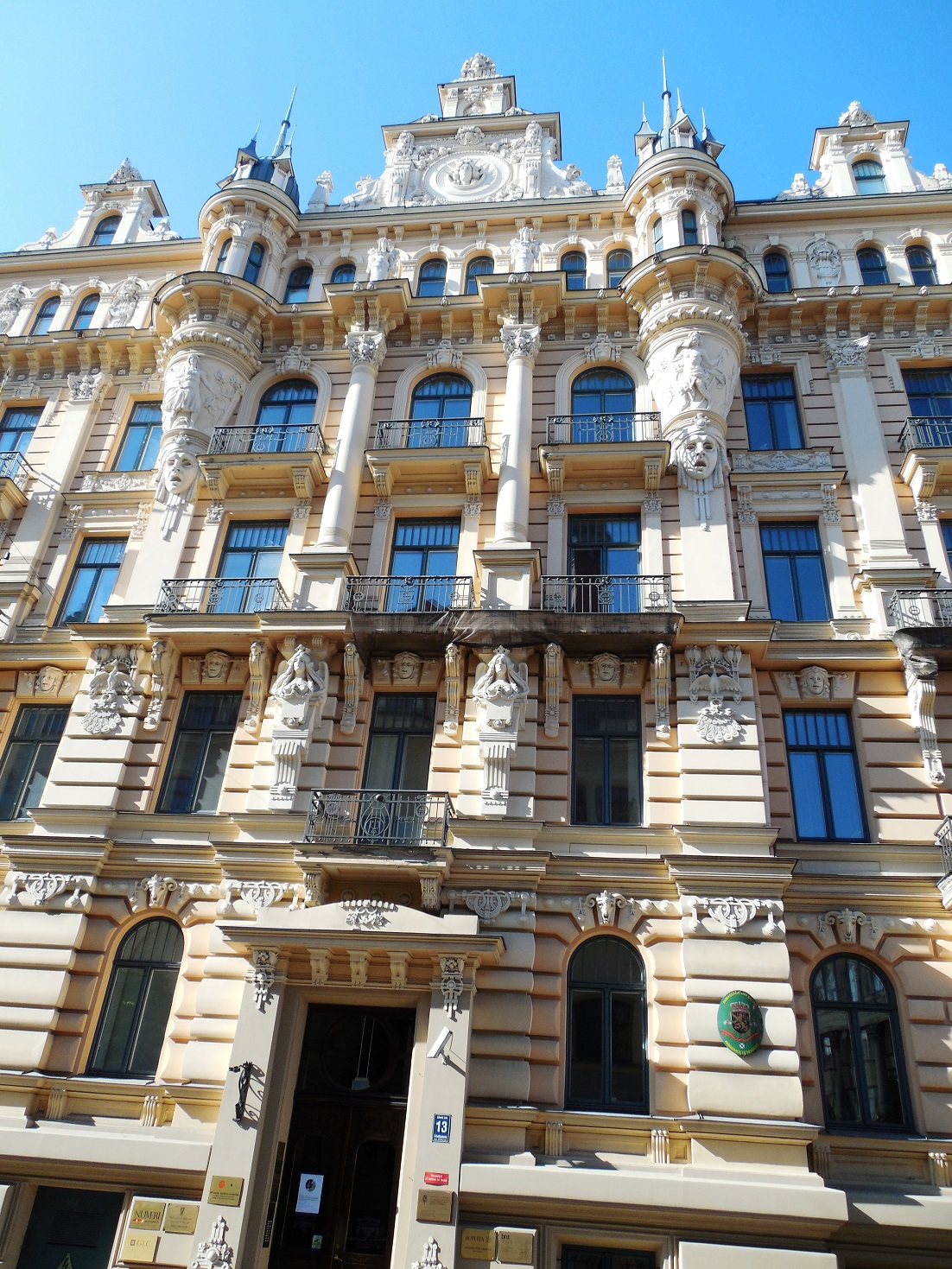
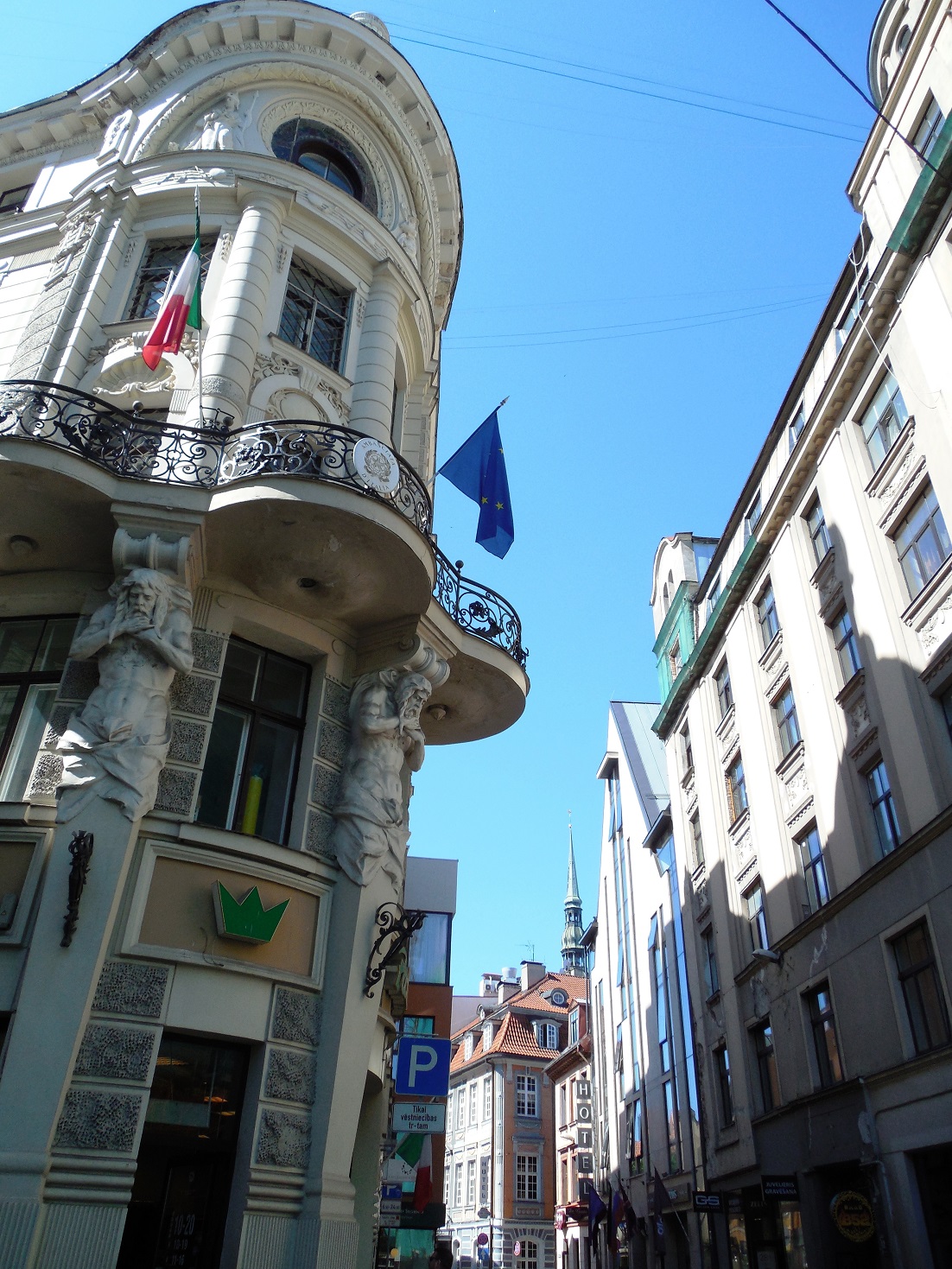
The next morning we were off again, this time to the Art Nouveau District of Riga. It was explained that after the stark severity of the forced Stalinist housing, this was Latvia’s celebration of independence. What we found was one gorgeous building after another. Being the architecture lover that I am, I was in heaven!
This is one of my favorites.A closer look at the artistry in this building.
Art Nouveau architectural style – I love it!Art Nouveau – a beautiful flaunting of independence.Across from our hotel.These buildings all have rooftop vegetable gardens for the residents. How cool is that.
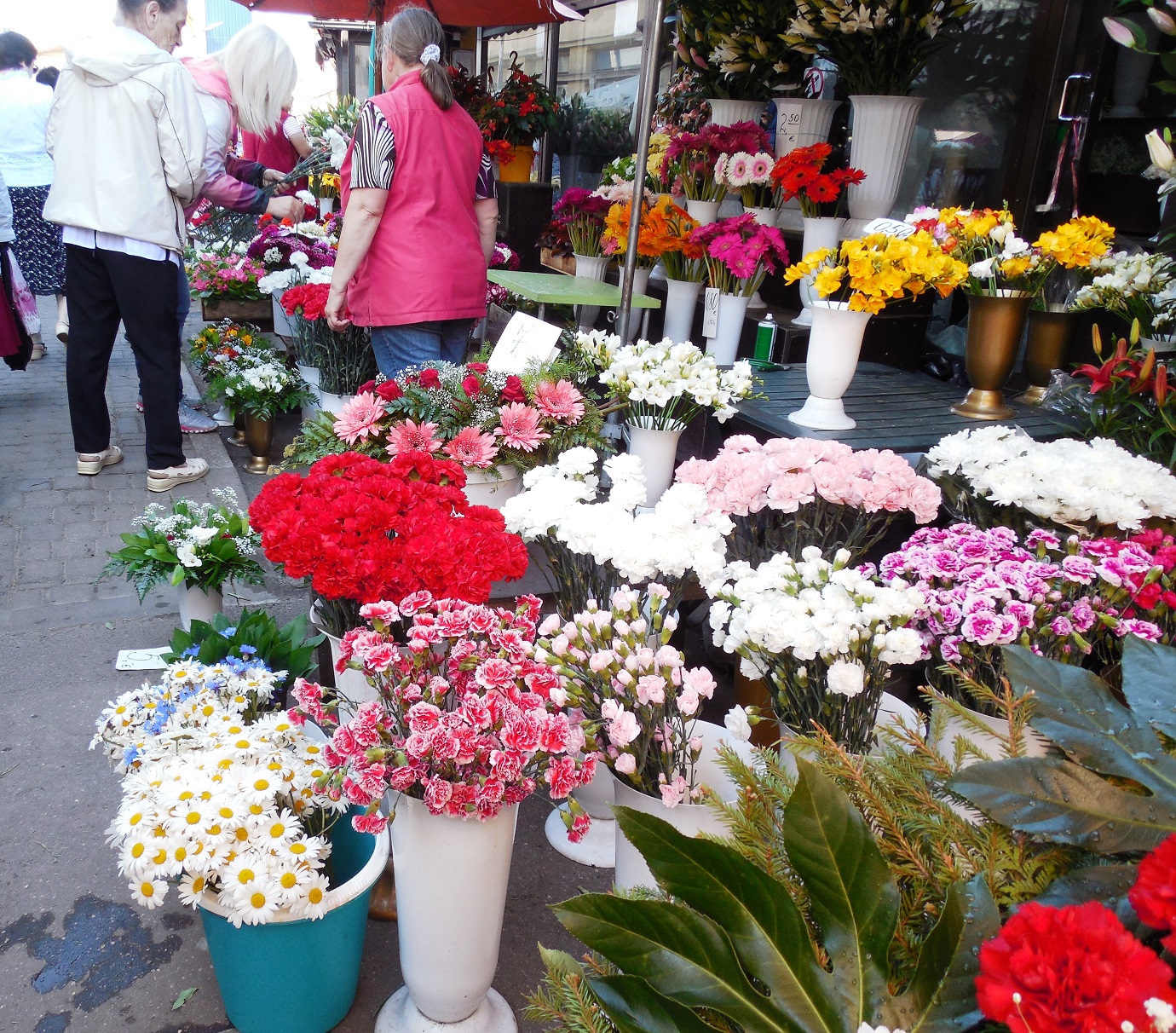
Then it was off to the Riga Market. Boring, you might think, but it was absolutely not! During the Nazi occupation of Latvia, there was a Zeppelin Exhibition – a really big deal. To house this display five huge hangers were built. When the Nazi’s left, the display hangers were turned into a huge marketplace.
Zeppelin Hangers from the Nazi era.Old Zeppelin display hangers now hold the huge Riga Market.
One whole hanger, referred to as the smelly building, was a huge fish market with every type of fish you can imagine. There was another just for meats, one for fruits and vegetables, cheeses and dairy products and of course one for souvenirs.
The fruits and vegetables looked wonderful and so did everything else.The flower shops were in tents outside and they were wonderful.We were told that flowers are a tradition in Latvia. They are given for any special occasion and you never go to someone’s house without taking flowers and only in odd numbers – 1,3,5… for good luck.
Wow, what a place!
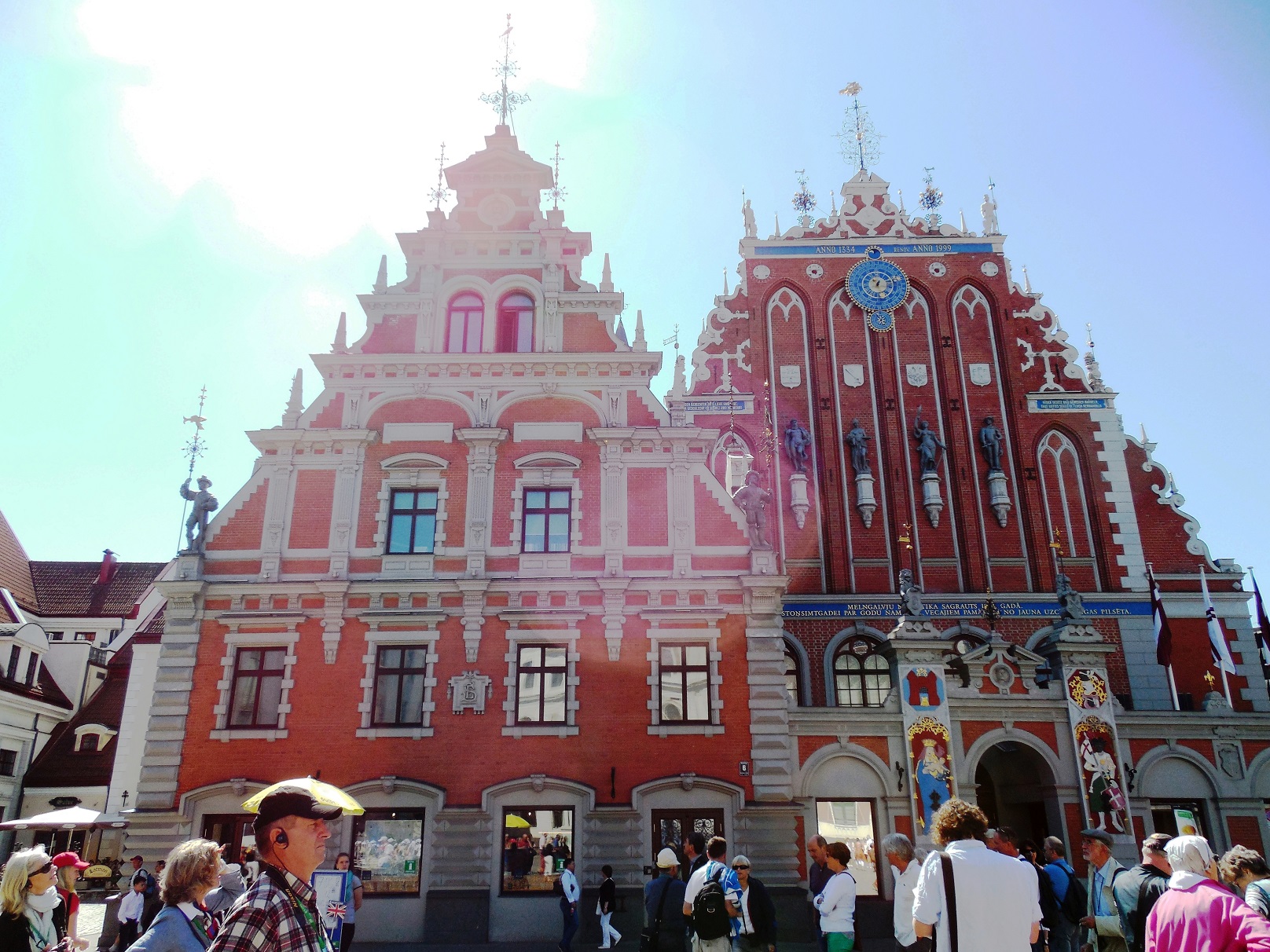
Next on the agenda – keep in mind that this is still part of the morning events – was a walking tour of Old Town Riga. When you’ve been around since the 1300s, most of the town is an old town, but this is the really, really old town. Anyway, we walked the narrow, cobble stone streets and took in the sights. And – just as in Madrid, Paris, Prague, and Lithuania – it is enchanting.
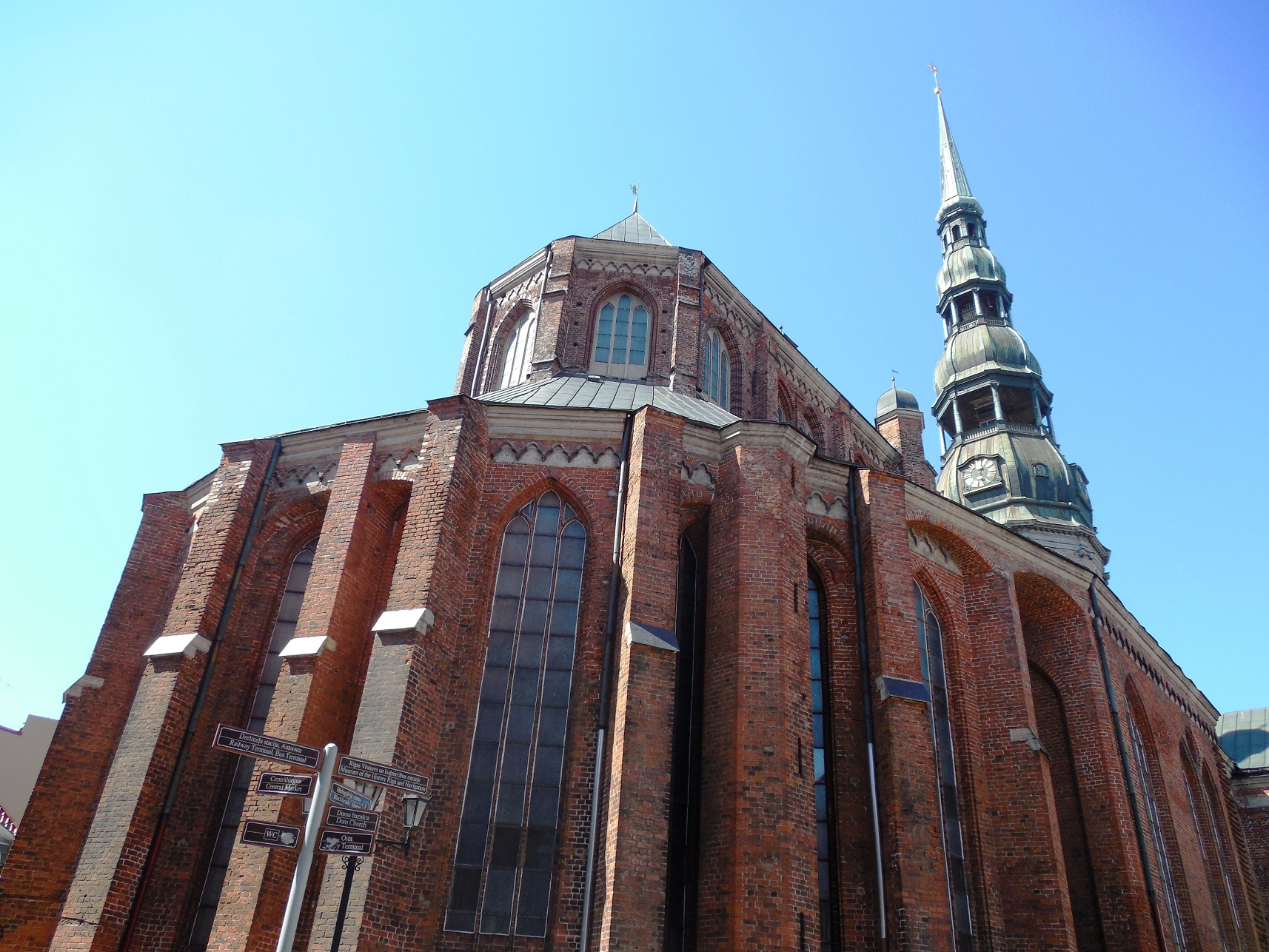
The House of the Blackheads’ Society. The buildings were cool, but I don’t remember what Olga said about the history, sorry.St. Peter’s Cathedral
Narrow cobbled streets and charming buildings.
Then we had some free time to explore on our own. And we found more charming shops with friendly shop keepers.
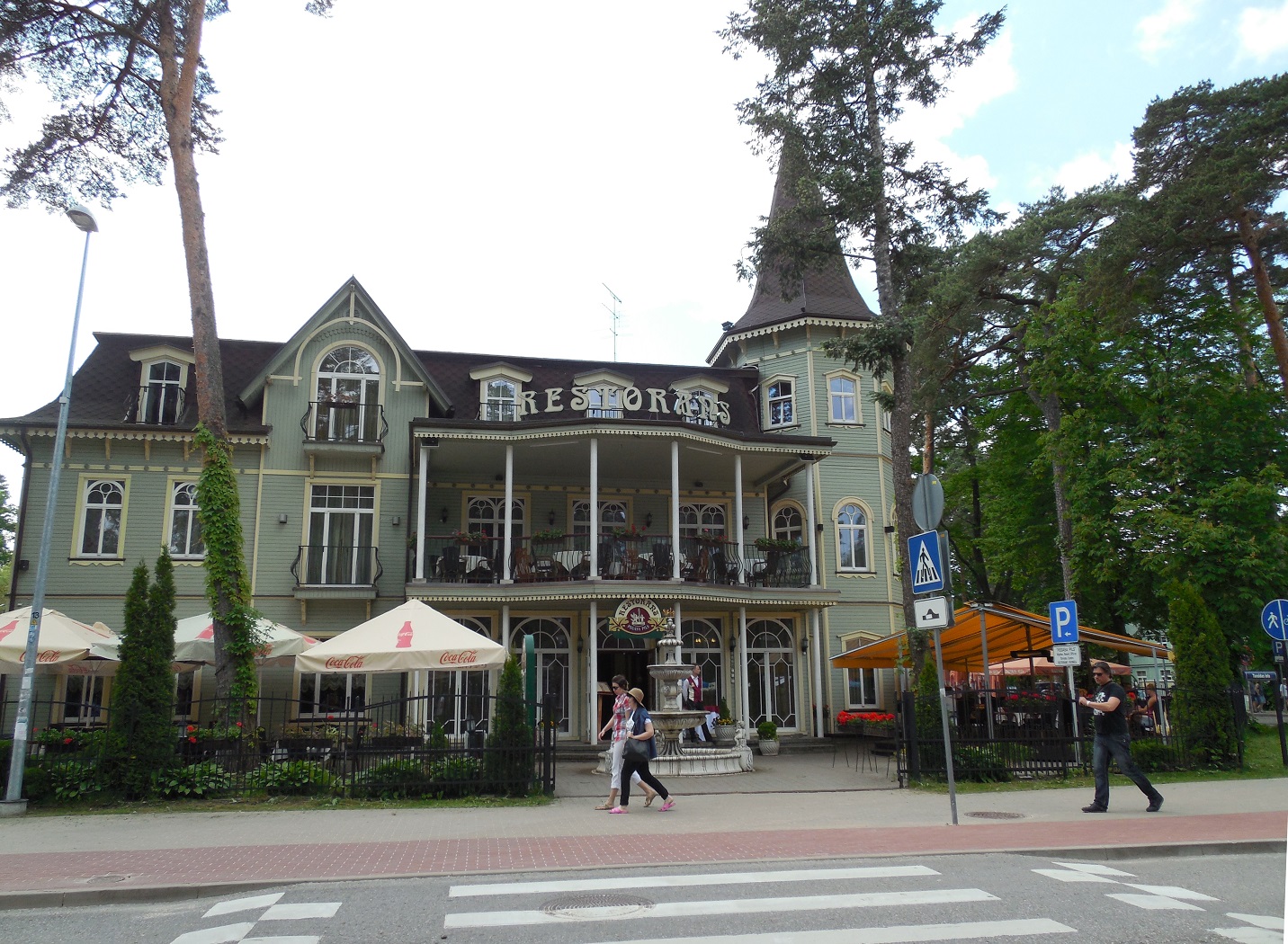
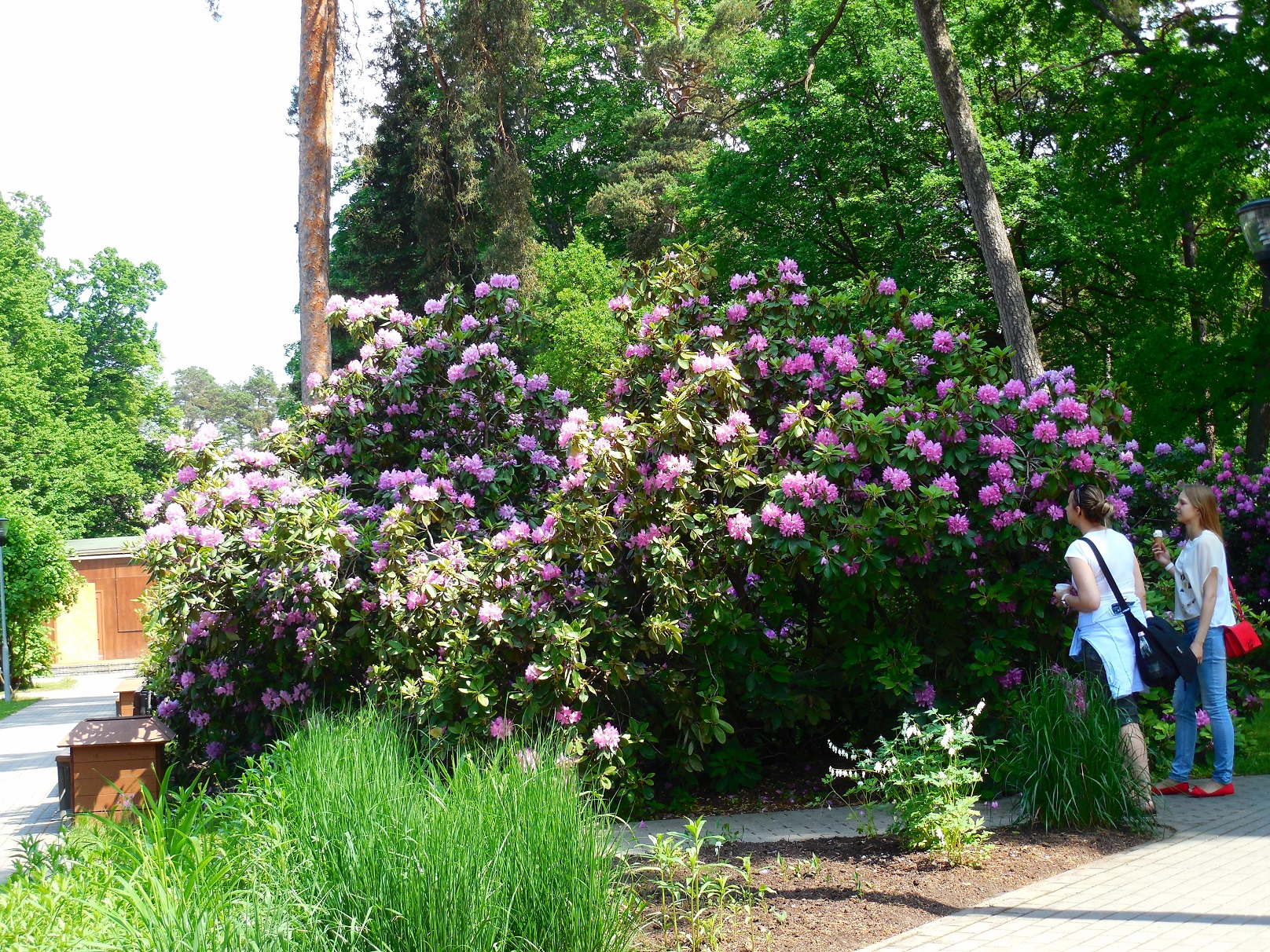
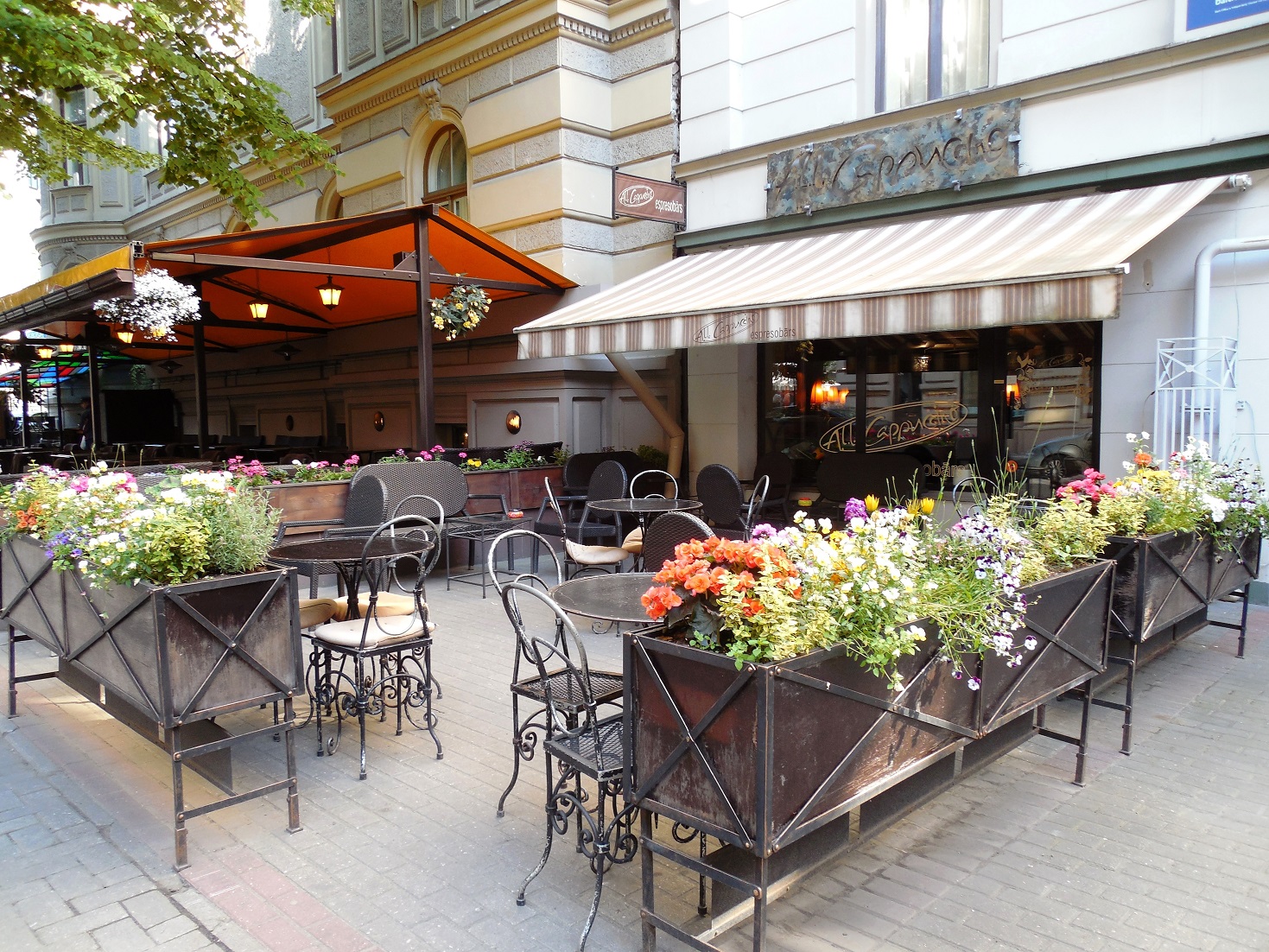
Lovely shops to explore.Beautiful RhododendronsOutdoor cafesA lovely yarn shop with beautiful wearable art.
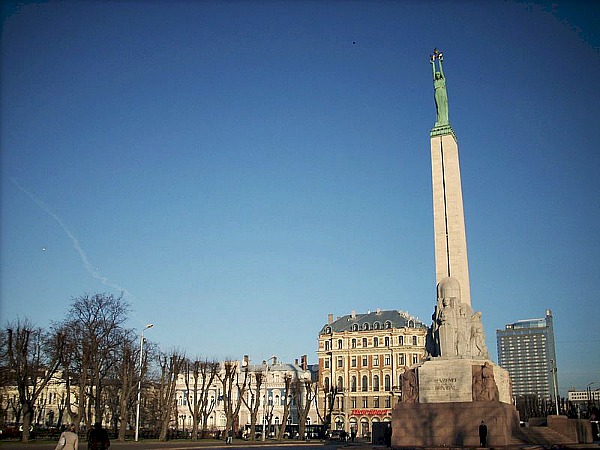
A couple more pictures
The Freedom Monument stands proud in the center of Riga.
then on to Estonia.
Tallinn, Estonia
Onward and upward.
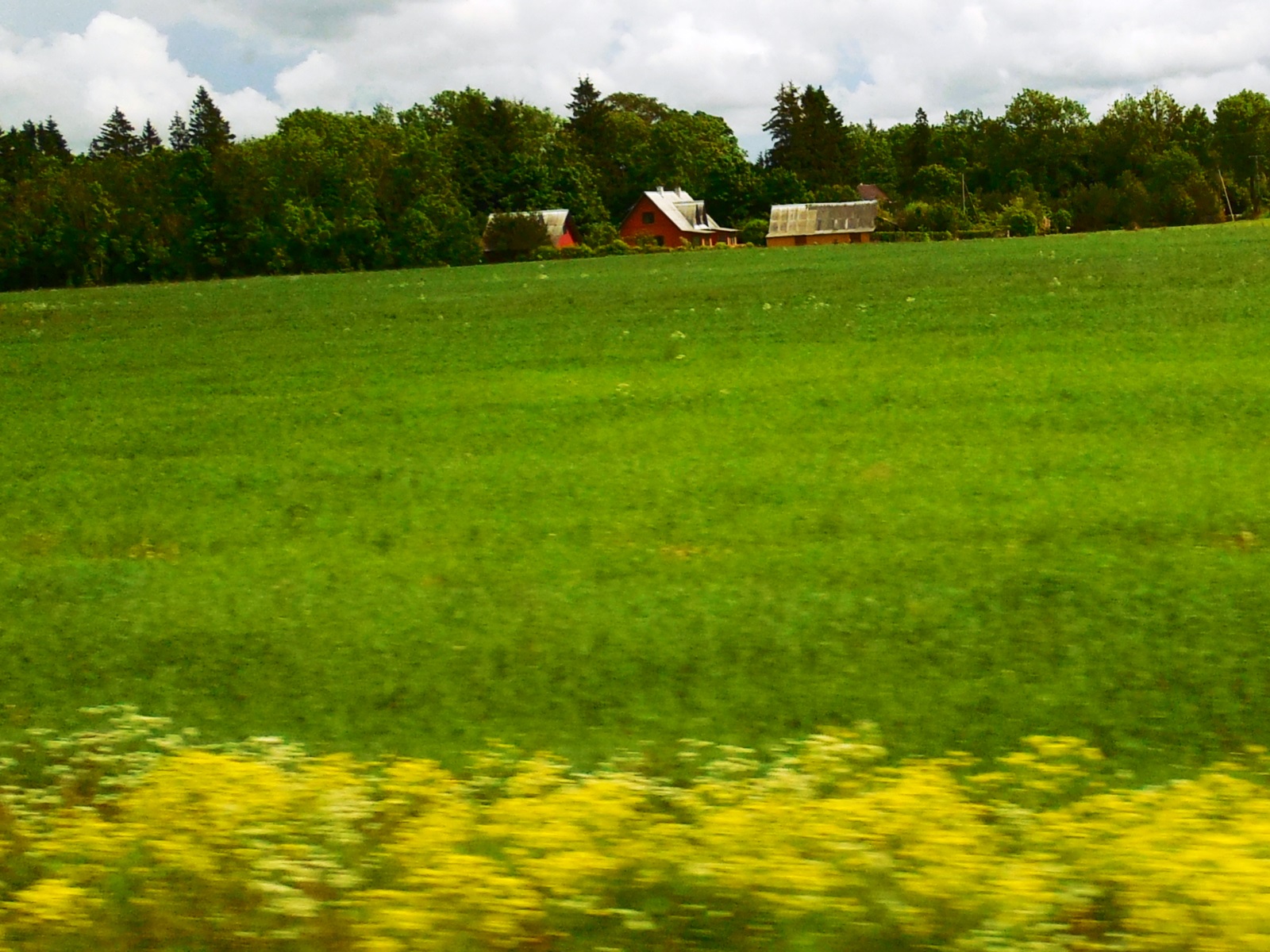
The country side on the way to Estonia was like what we had seen in route to the other countries – forests, flower laced fields, and farms here and there – a lovely drive. This was taken out of bus window so it’s a little blurry, but still it tells the story.
The most northern of the Baltic States is Estonia (population just over 1 million) and Tallinn is its capital.
Estonia – Old and New
As has become the norm, we visited Old Town Estonia first. However, Estonia’s Old Town is split into two sections – lower Old Town and upper Old Town. Needless to say, the lower part was not as classy as the upper part in those days, but both are resplendent with parks, narrow cobbled streets, and picturesque buildings.
Our lovely guide Evelyn – a wealth of information.
We entered through the gate into the old walled city.
The gate into Estonia’s Old Towne.
and began our walk just in time to here the bells of Nevski Cathedral .
Nevski Cathedral
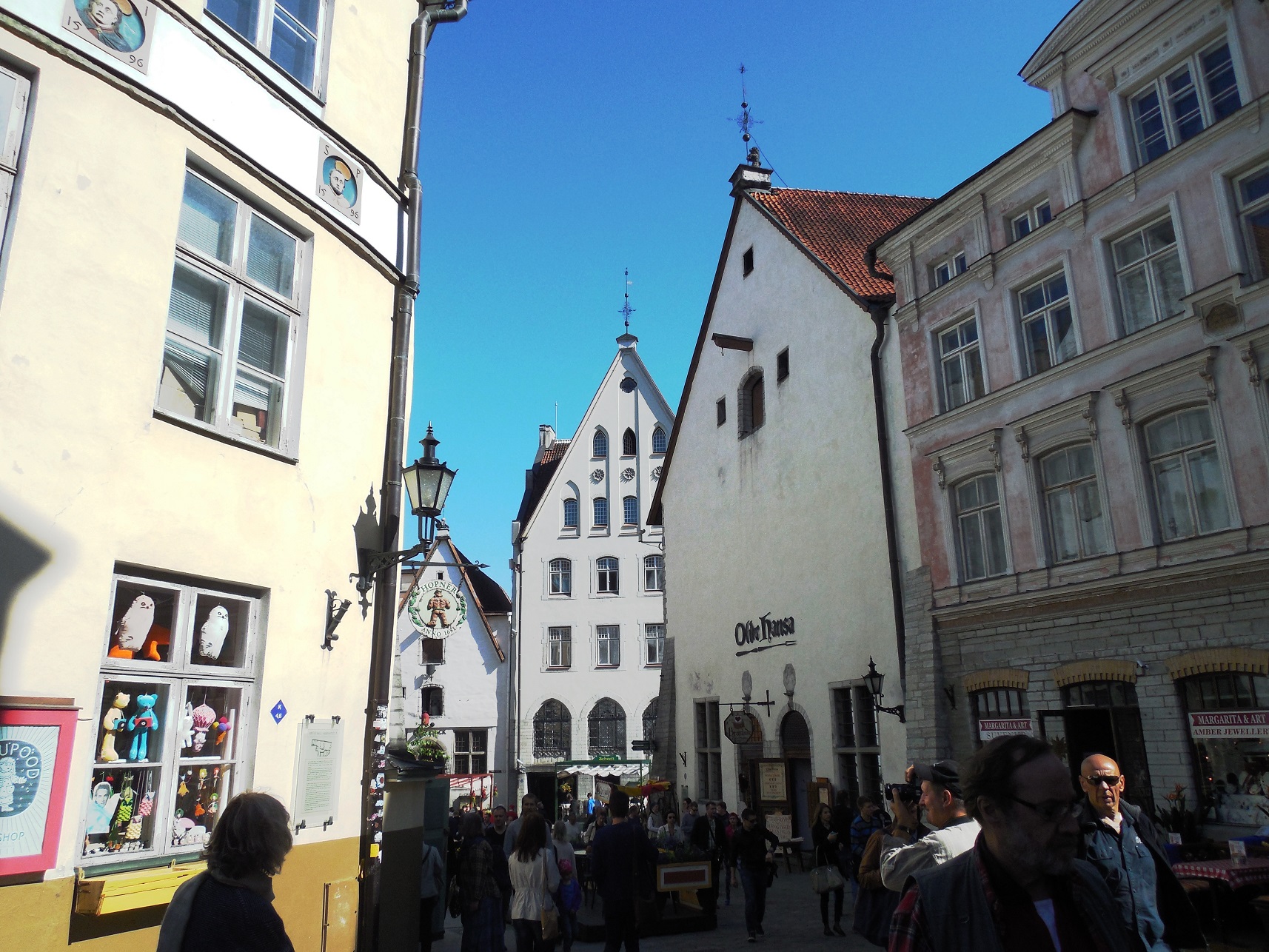
As in all the old towns of the Baltic States, the old city is charming.
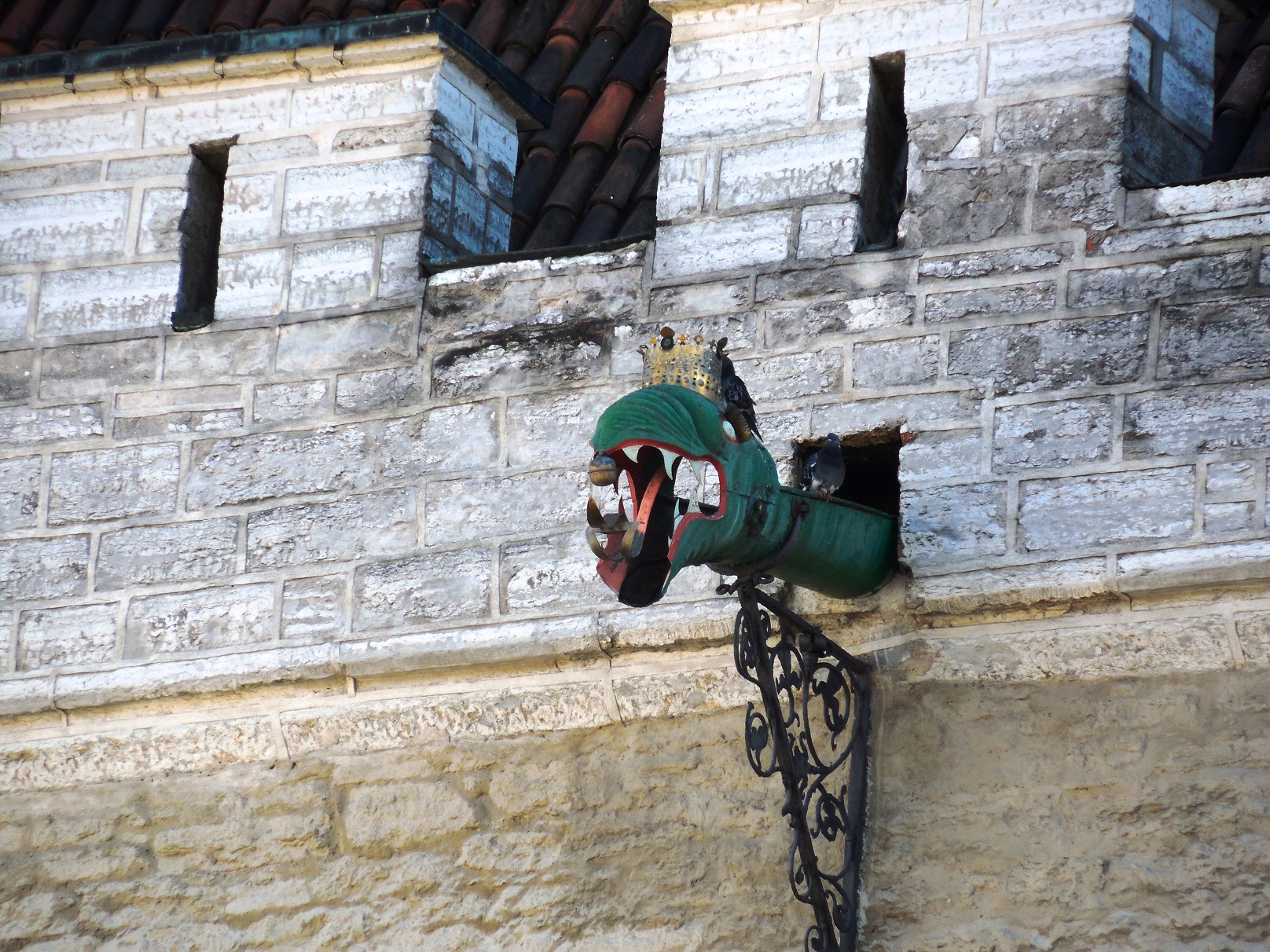
This character is a gutter spout to drain rainwater out of the palace courtyard – too funny.Narrow streets and busy people.
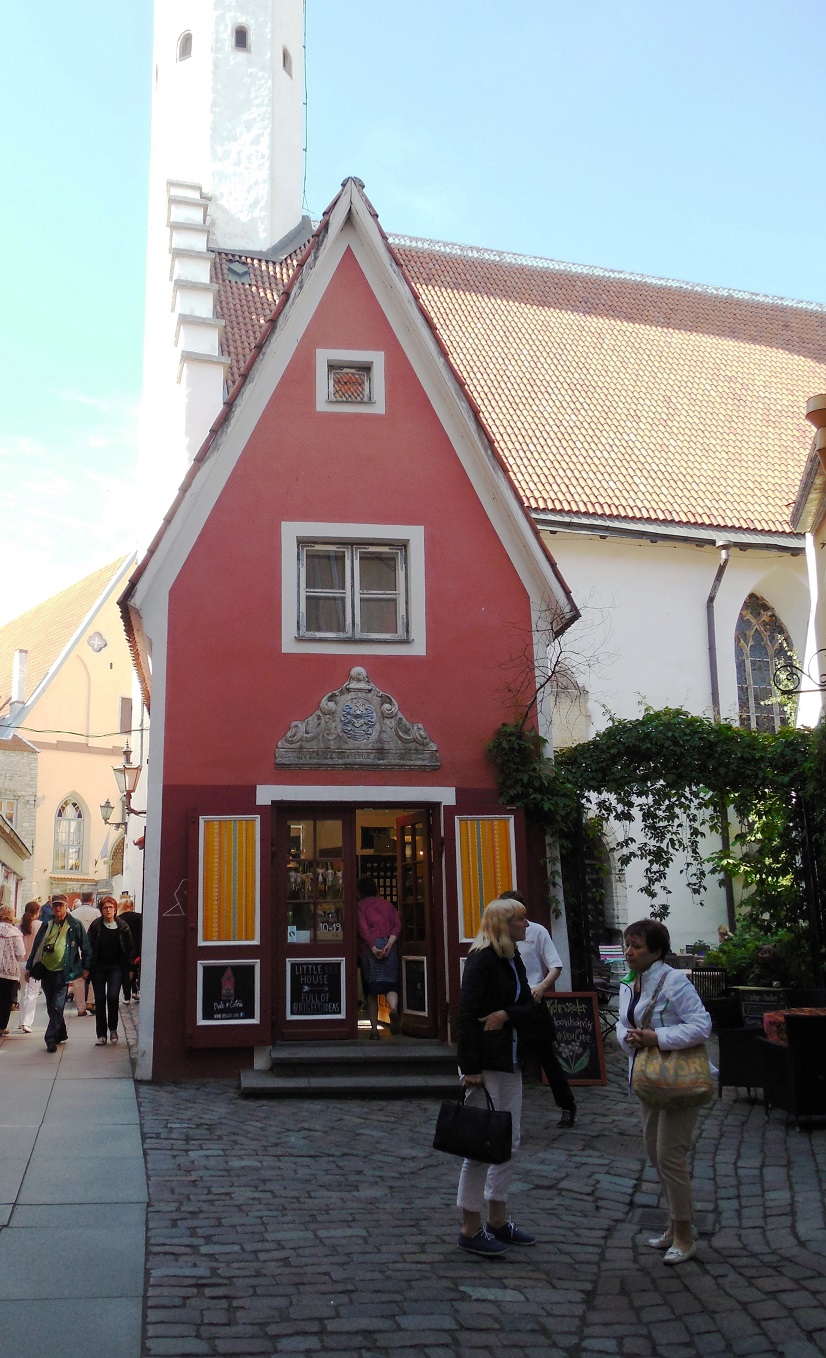
Quaint Shops
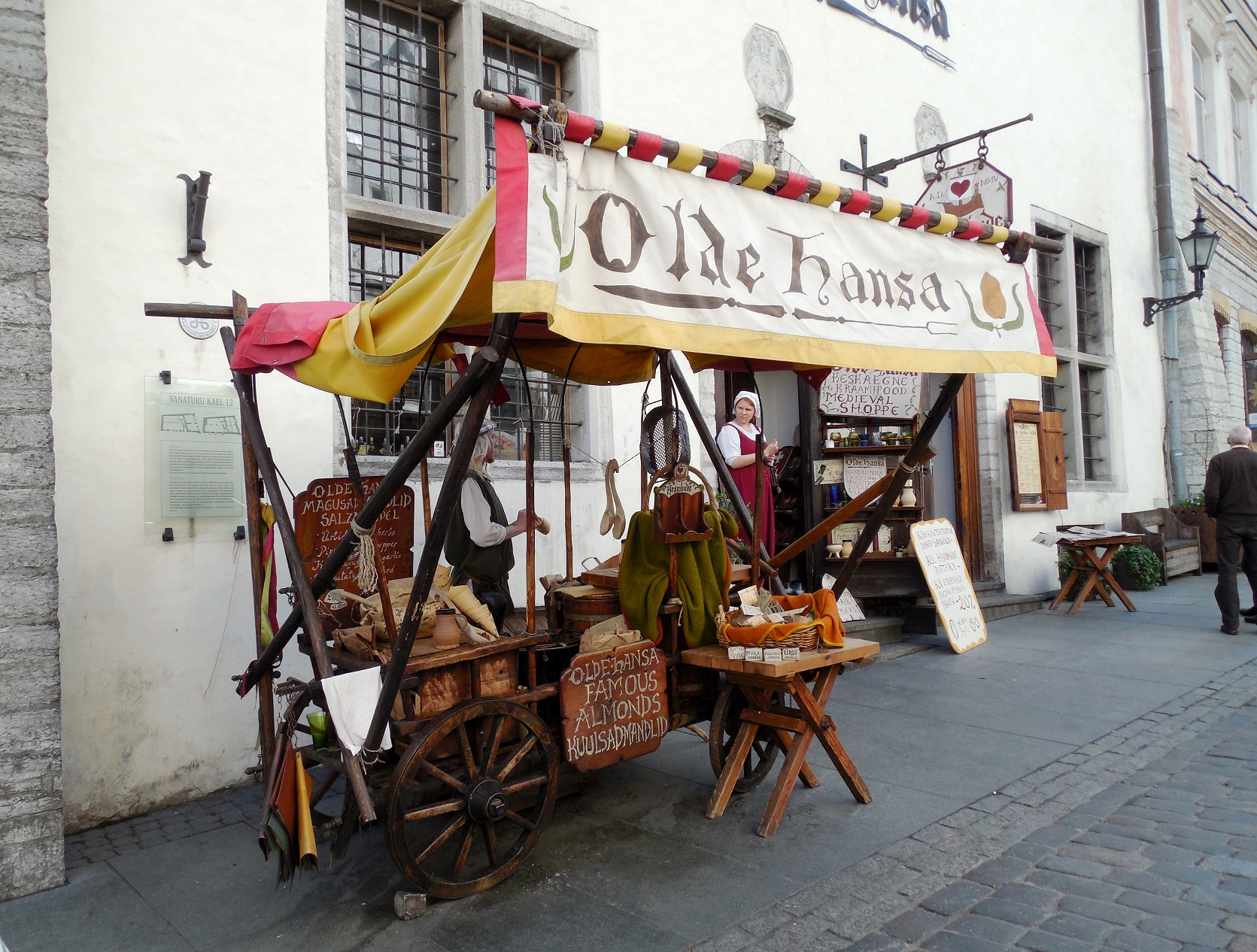
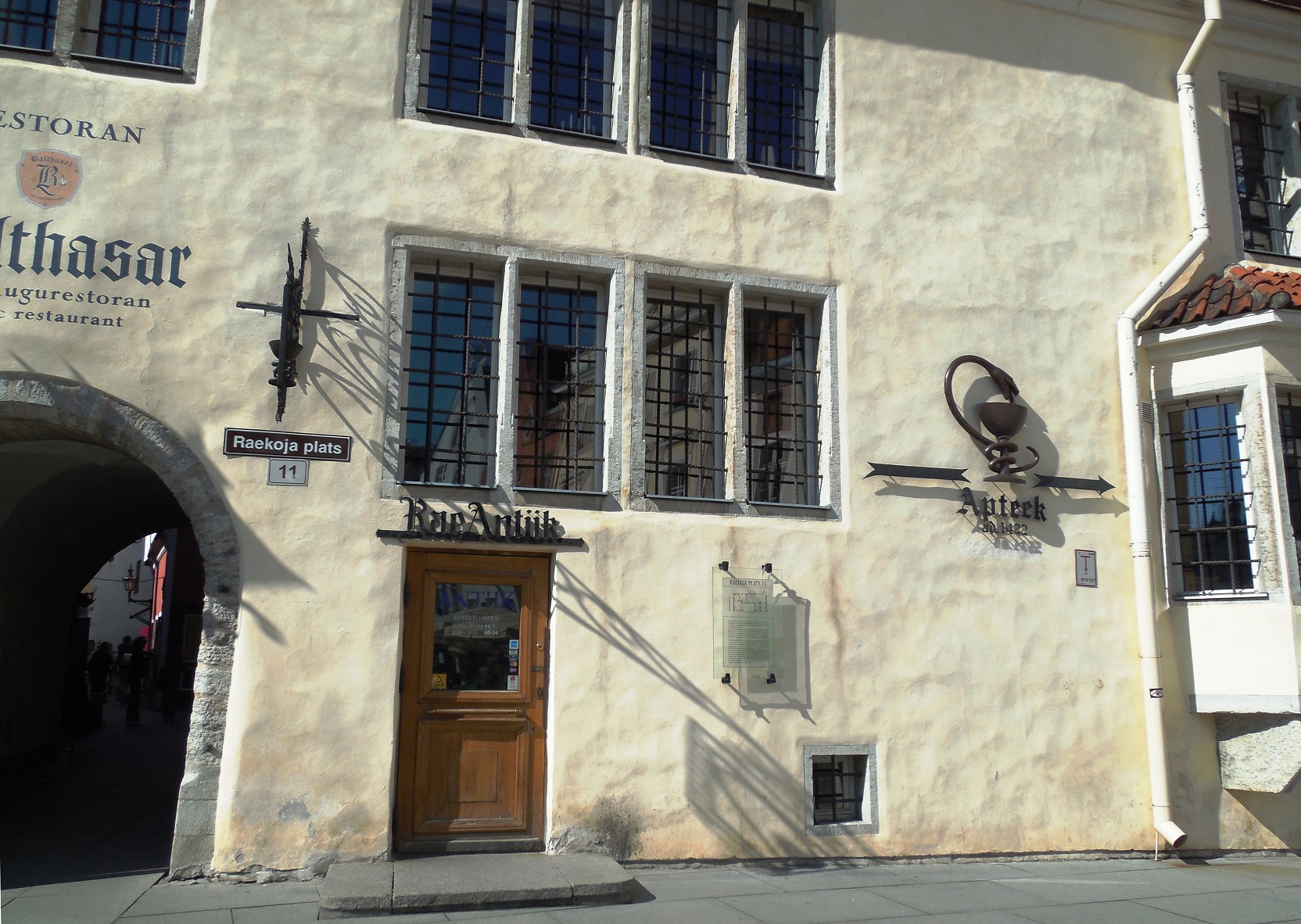
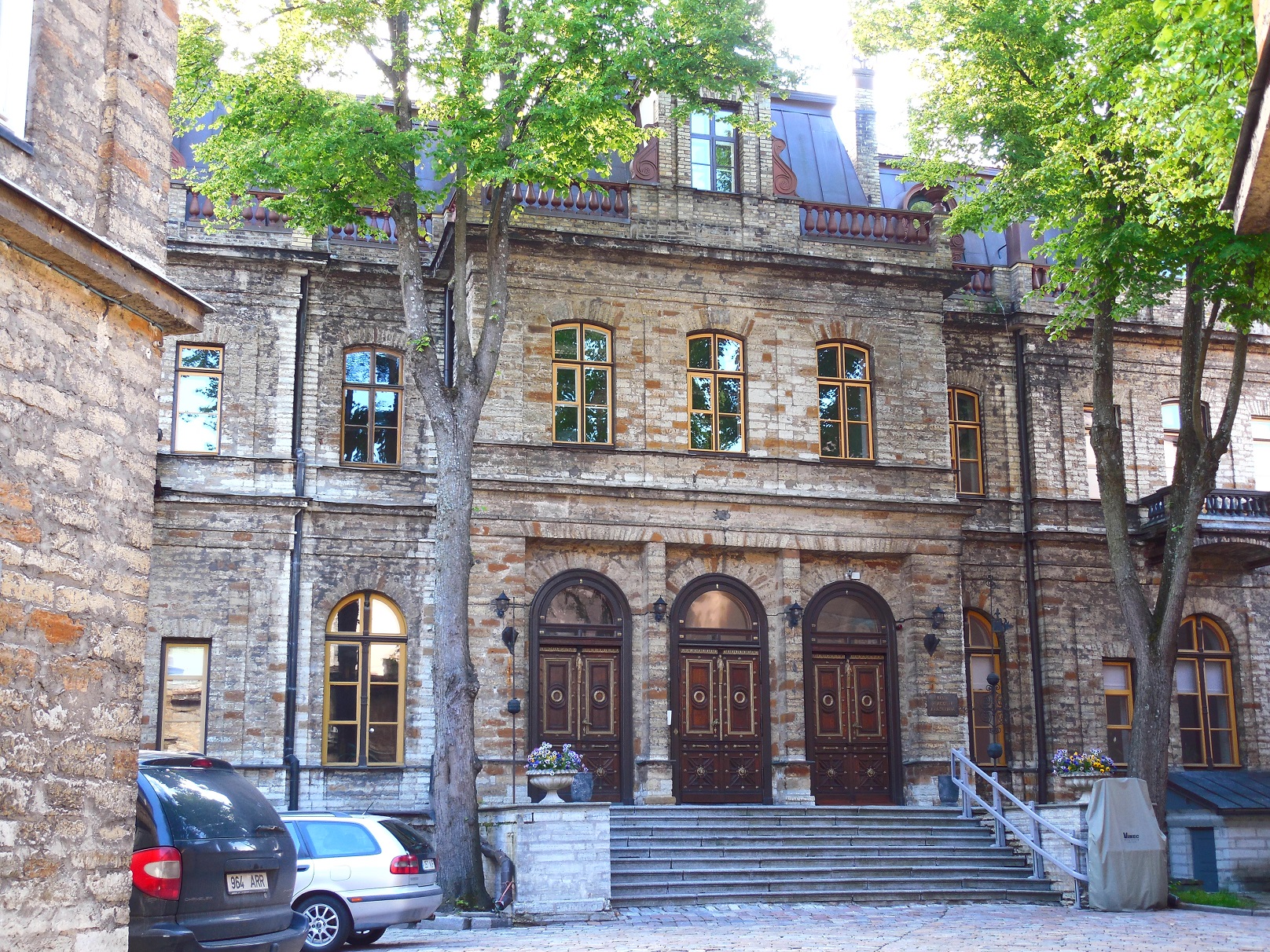
The tallest building in Europe – at least it was in the 13th century.Costumed characters selling their wares.This building has been a working pharmacy since 1422 – amazing!Gorgeous parks give the area a calm, tranquil sense of wellbeing.These beautiful old buildings now house part of the university.
Many of the large old buildings have been converted to classrooms for the university. We learned that Estonia is beginning to excel in science and technology. They, in fact, are the developers of Skype. So next time you Skype, think of tiny Estonia.
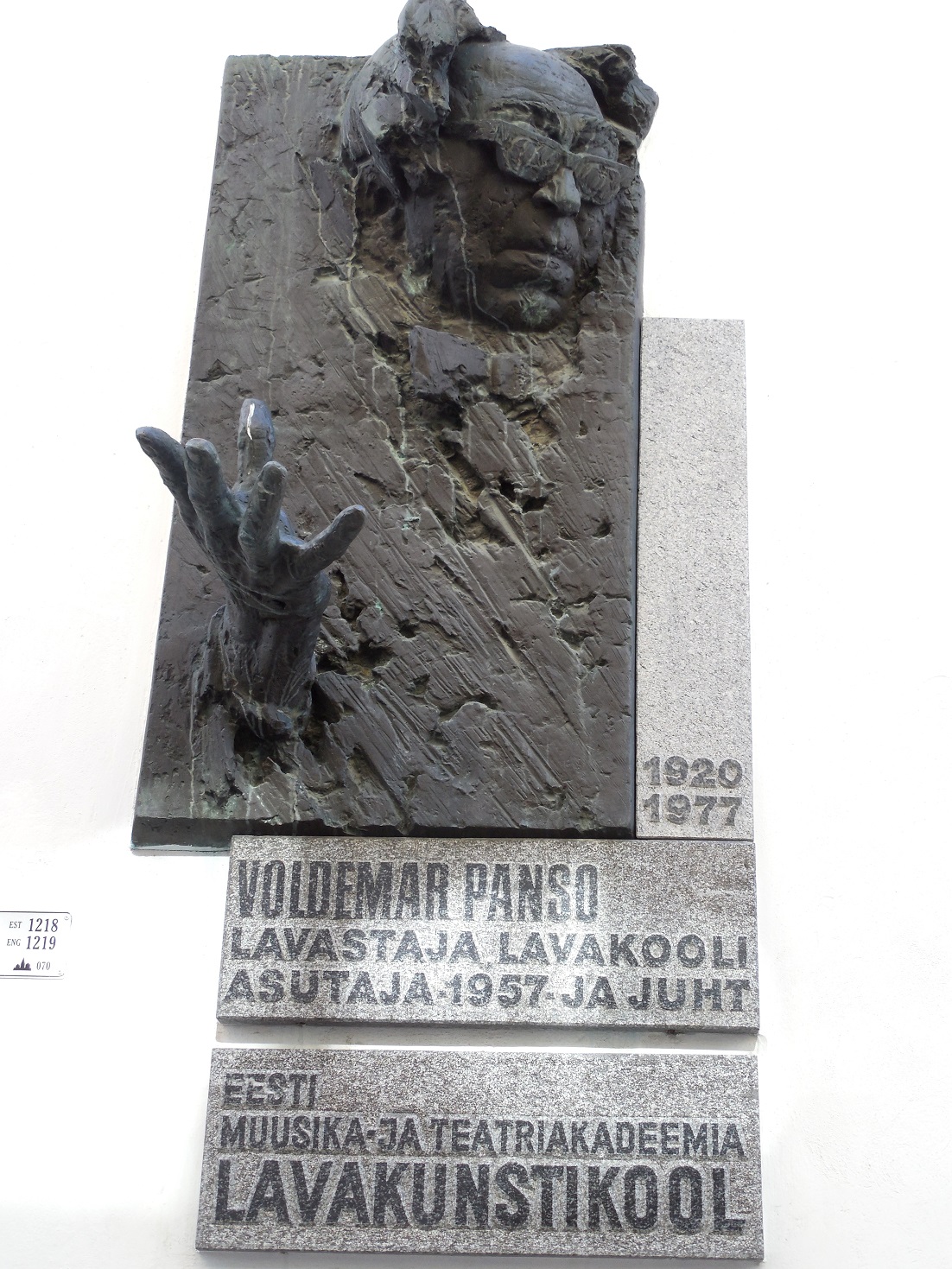
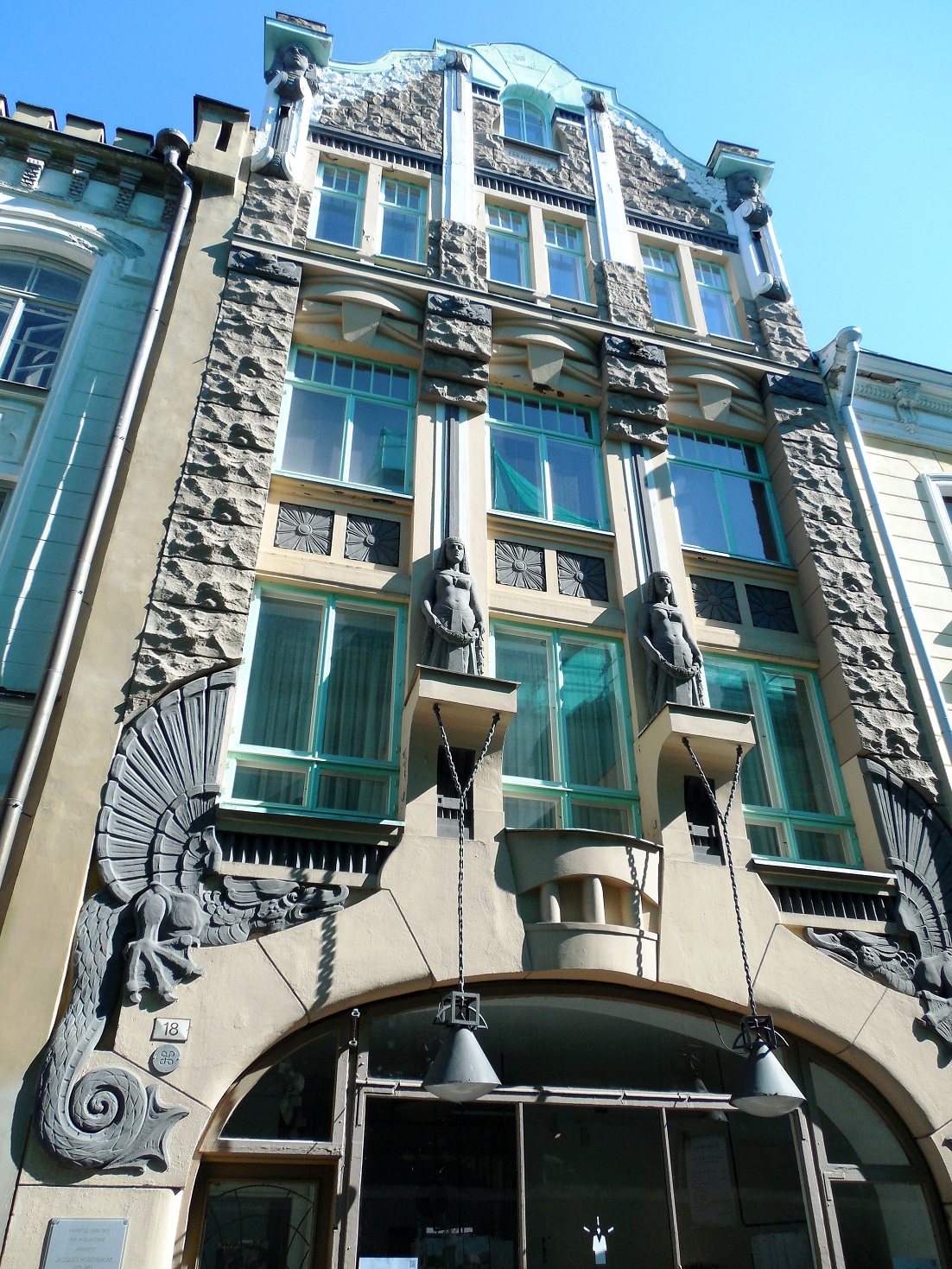
A very fun plaque on the front of the Conservatory of MusicThe Government Building – We were told that Estonia is very proud of their “Lady President” who was just reelected for a second term in office.Estonia’s Art Nouveau
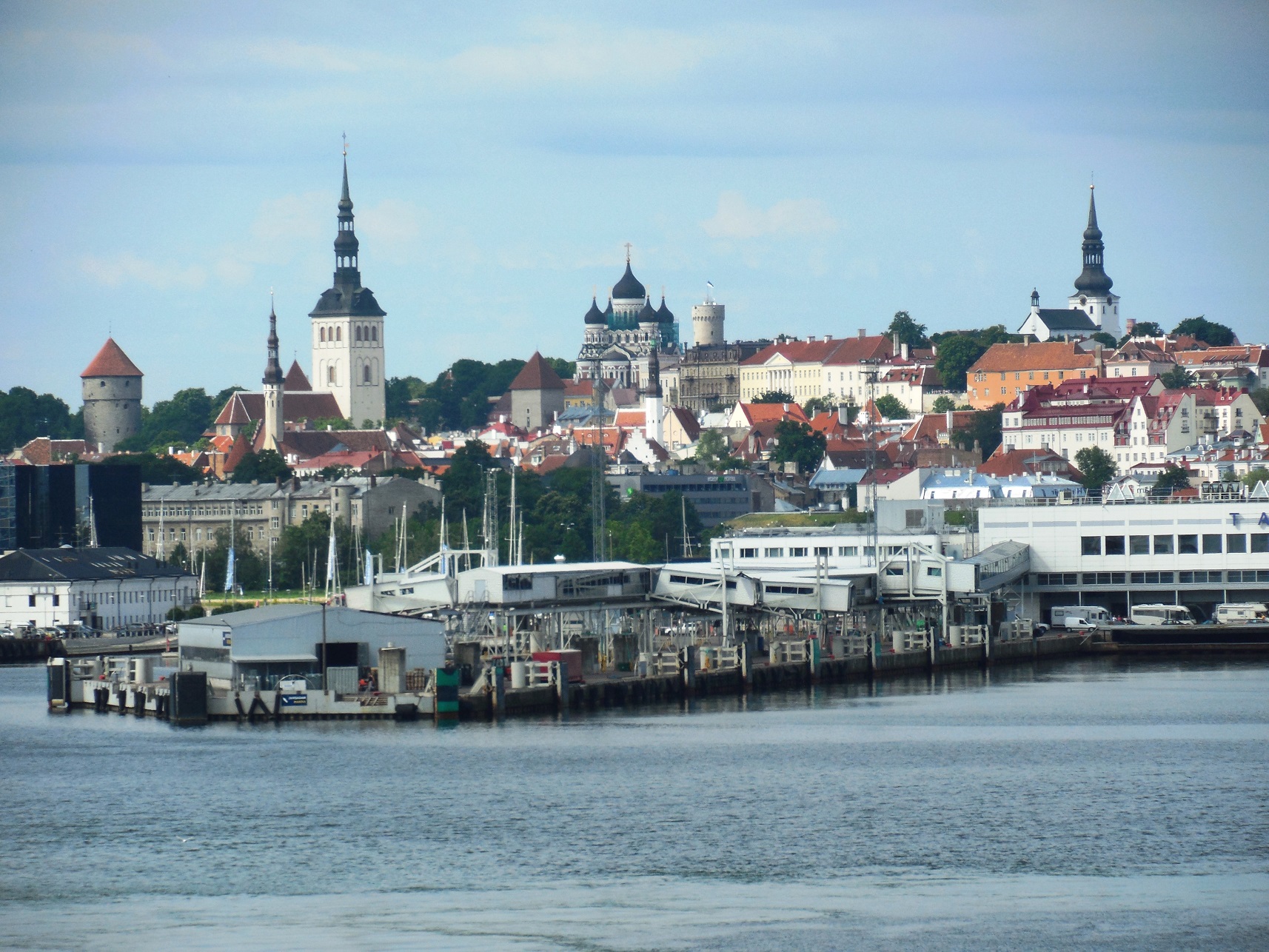
We got a quick glimpse of the government buildings and some of the newer parts of Tallinn,
and then we were off on a high-speed ferry to Helsinki, Finland bidding farewell and good journey to the lovely Baltic States.
Farewell to Estonia
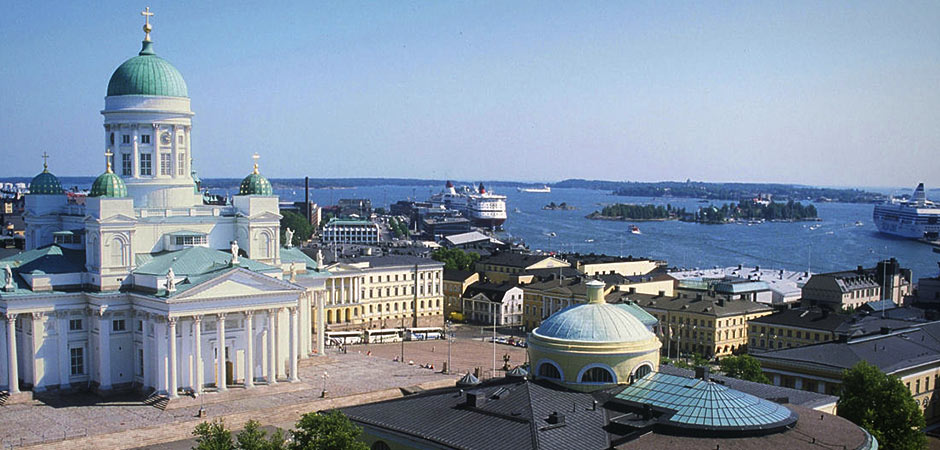
Helsinki Harbor
Finland had a much different feel than the Baltic States – newer, more modern – an interesting contrast.
We were in Helsinki for a very short time, but got to take in a few sights while we were there.
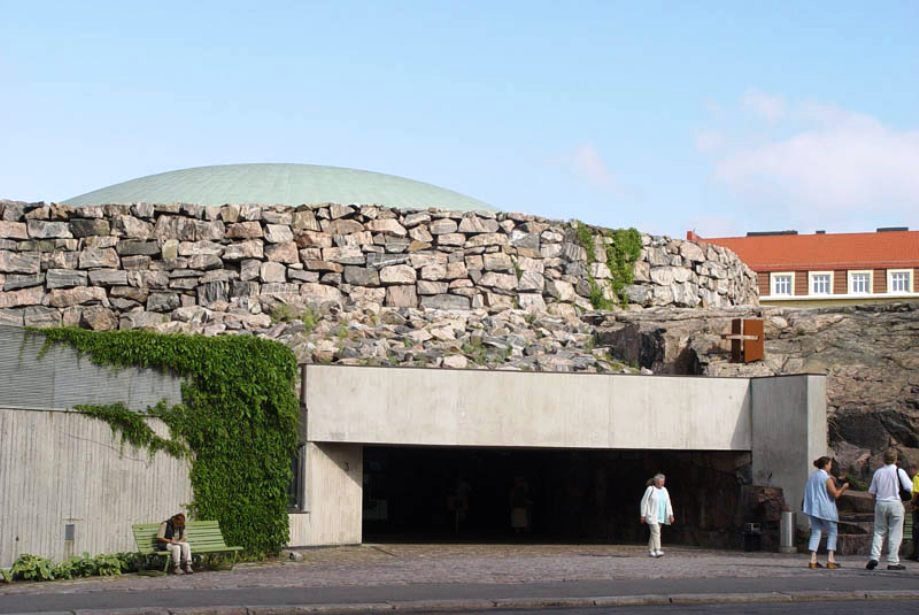
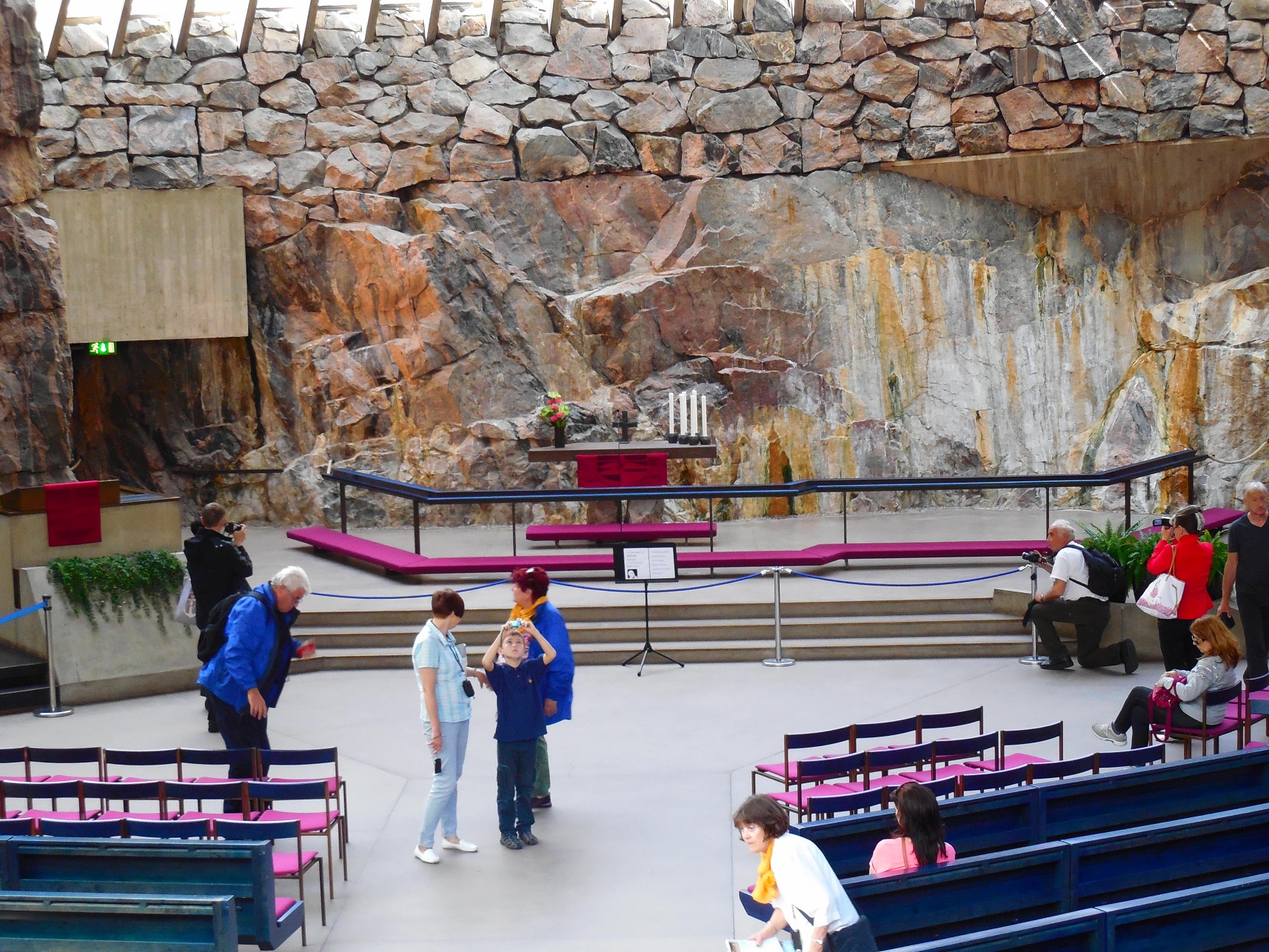
Our first stop was at the Rock Church. The church was designed by architects and brothers Timo and Tuomo Suomalainen. It was officially opened in 1969.
The Helsinki Rock ChurchVery modern especially when compared to what we saw in the Baltic States.The sanctuary in the Rock ChurchCarved out of a granite cliff, the walls are beautiful.
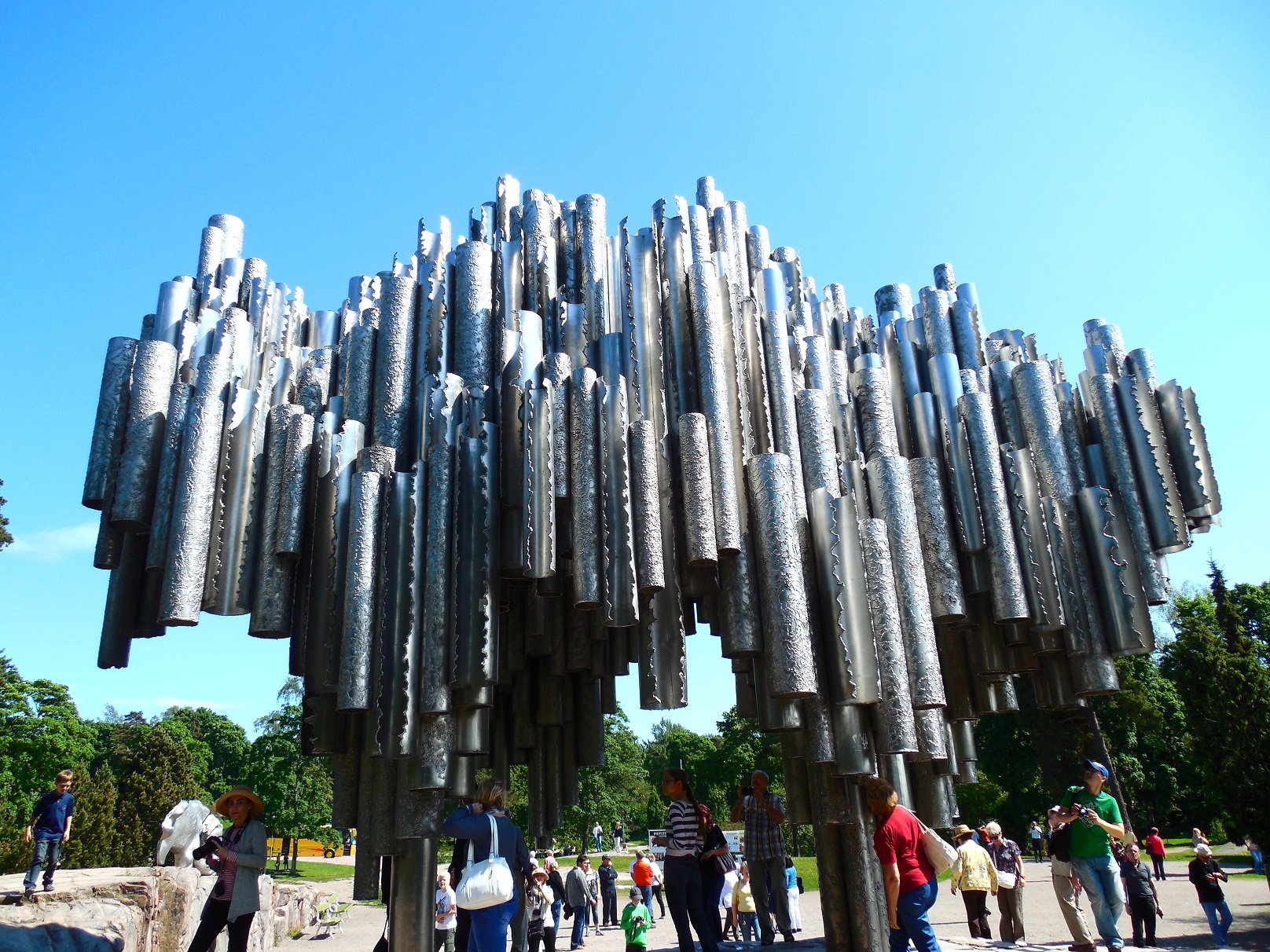
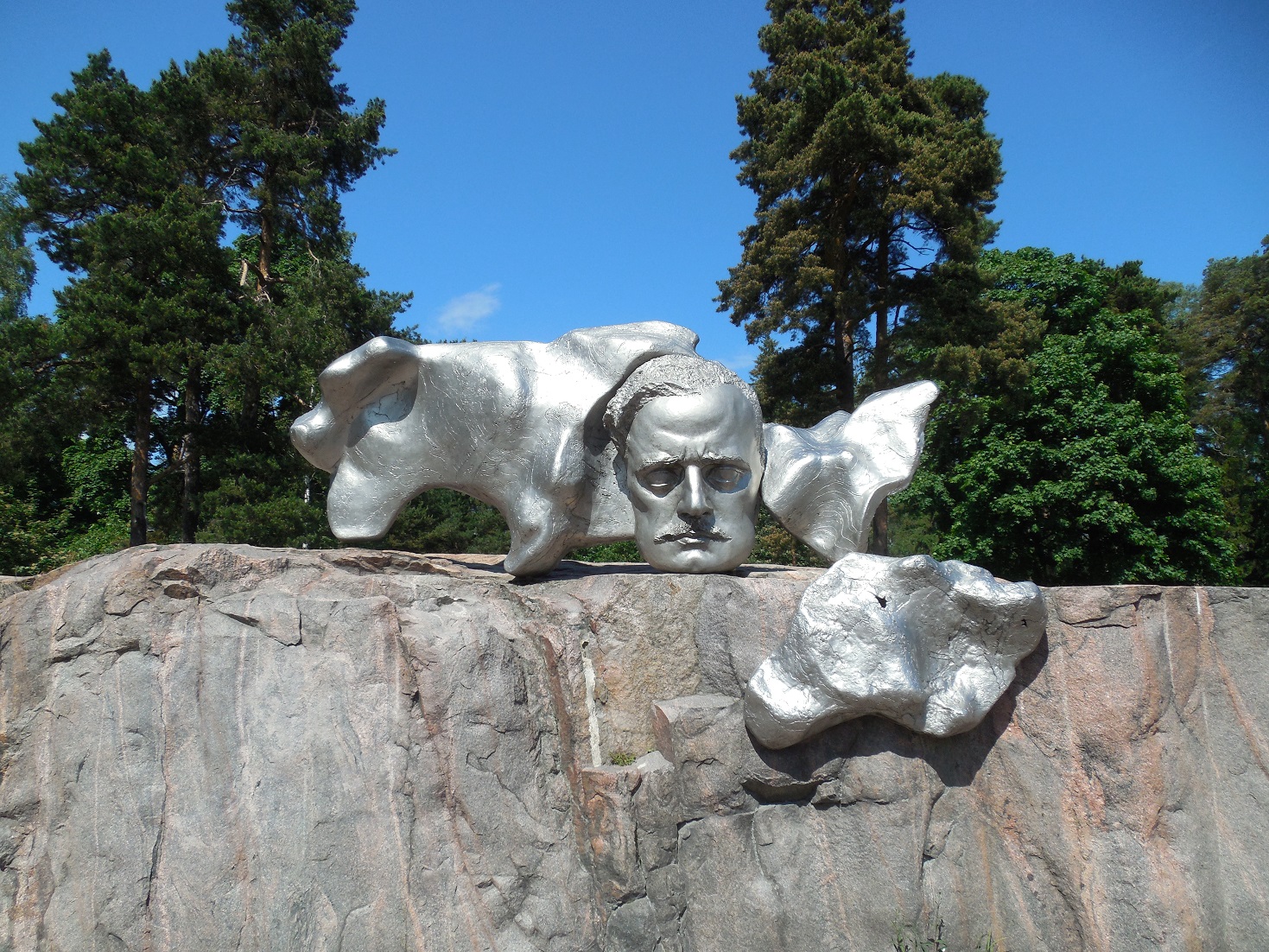
The next attraction was to the Jean Sibelius Monument.
Monument to Finland Composer Jean SibeliusThe people who comissioned the monument were expecting a statue of the composer and were a bit upset by what they got. They demanded to have something with his face on it so this plaque was added.
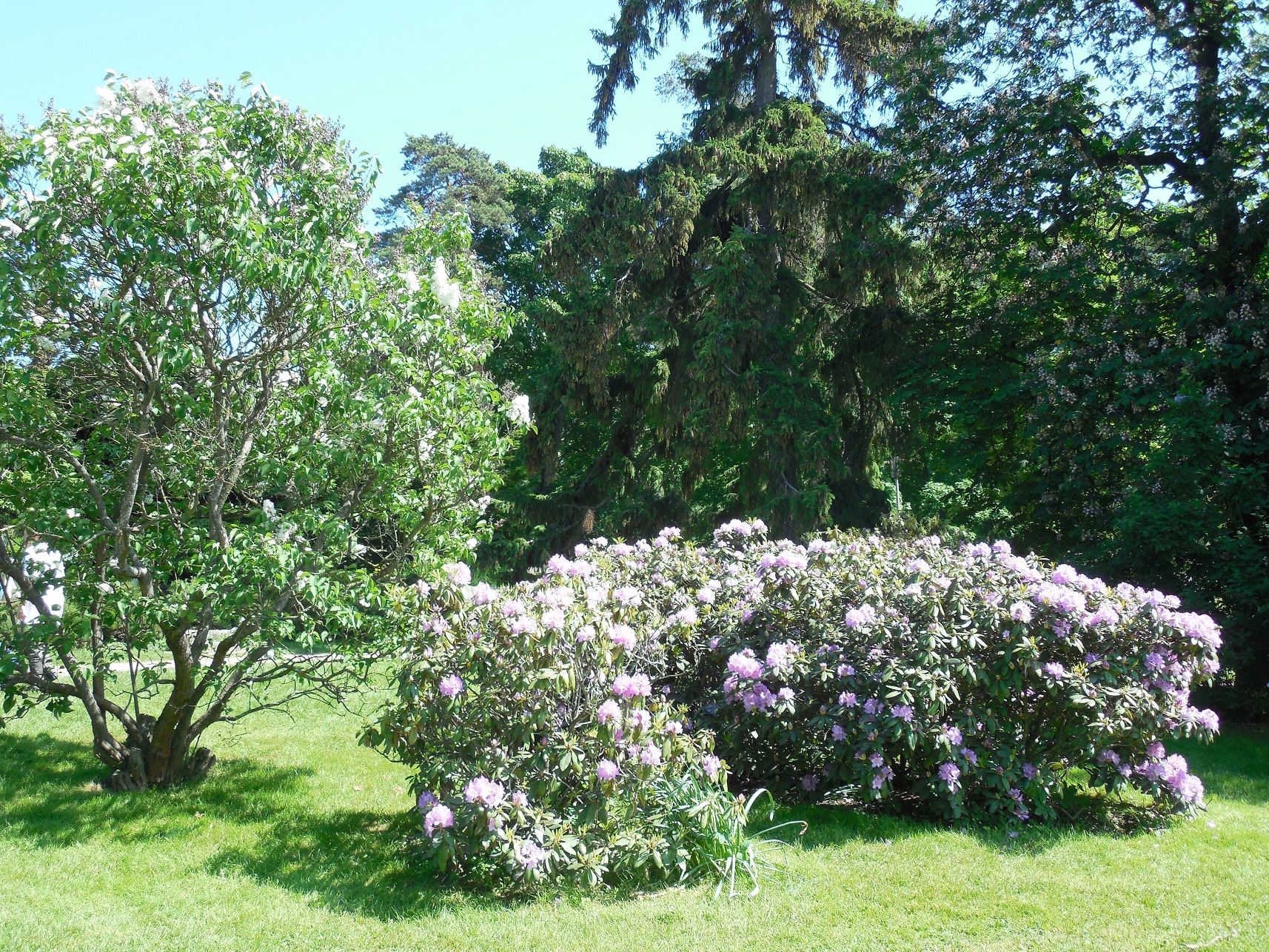
The park around the monument was lovely.
We are in Helsinki because tomorrow we catch a train from here to….. RUSSIA!!!!!!!! OMG, I can’t wait!!!
This post and the information it contains was hard to write about and hard to hear and if you want to skip it I’ll understand. However, their history has so shaped the Baltic countries that to understand the people you must have at least some information about their history.
From the 1921 until 1939 the Baltic States were free and independent nations. At the end of that period German Nazis marched through the Baltic States to attack Russia. The German Siege and occupation of the Baltic States lasted from 1941 to 1944. As a result of Hitler’s “Final Solution,” in Latvia alone, over 90,000 lives (Jews and Gypsies) were lost in the Holocaust. Lithuania and Estonia suffered similar atrocities.
Russia was able to push back the German aggressors, but both armies had left death and destruction in their wake. Near the end of WWII the Yalta Agreement left the Baltic countries under Stalinist Russia’s rule. Thus the Stalin lead Soviet occupation began its devastating forced “transformation to a socialist society.” Again these people were forced into a life they did not choose. Land and property were taken and became property of the government. Stalin said that religion was the, “Opiate of the masses,” and forced closing of the churches. Hundreds of churches were destroyed. People were told what to think and how to live. Free thought was not allowed. Coworkers, neighbors, and family members were encouraged to report any antigovernment comments or activity. Dissidents – and there were thousands of them – were deported or simply disappeared. Our Estonian guide talked about the Stalin occupation and described it as a, “controlled community.” She went on to say that the result was generations who were fearful, silent and distrusting.
With pressure from Pope John Paul II, Lech Walesa, and Ronald Regan, Mikhail Gorbachev began the political and social reform of the Communist Party which eventually brought about the dissolution of the Soviet Union. The Soviet flag was raised over the Kremlin on Christmas day 1985.
In 1991 the Baltic States began one by one the push to regain their independence. Lithuania was the first to declare restoration of their independence and the rest followed. All three are again free nations and have become members of the European Union and members of NATO. In visiting these countries, we saw the pride in newly regained independence, but the horrors of the past have left deep and lasting scars that will never be forgotten.
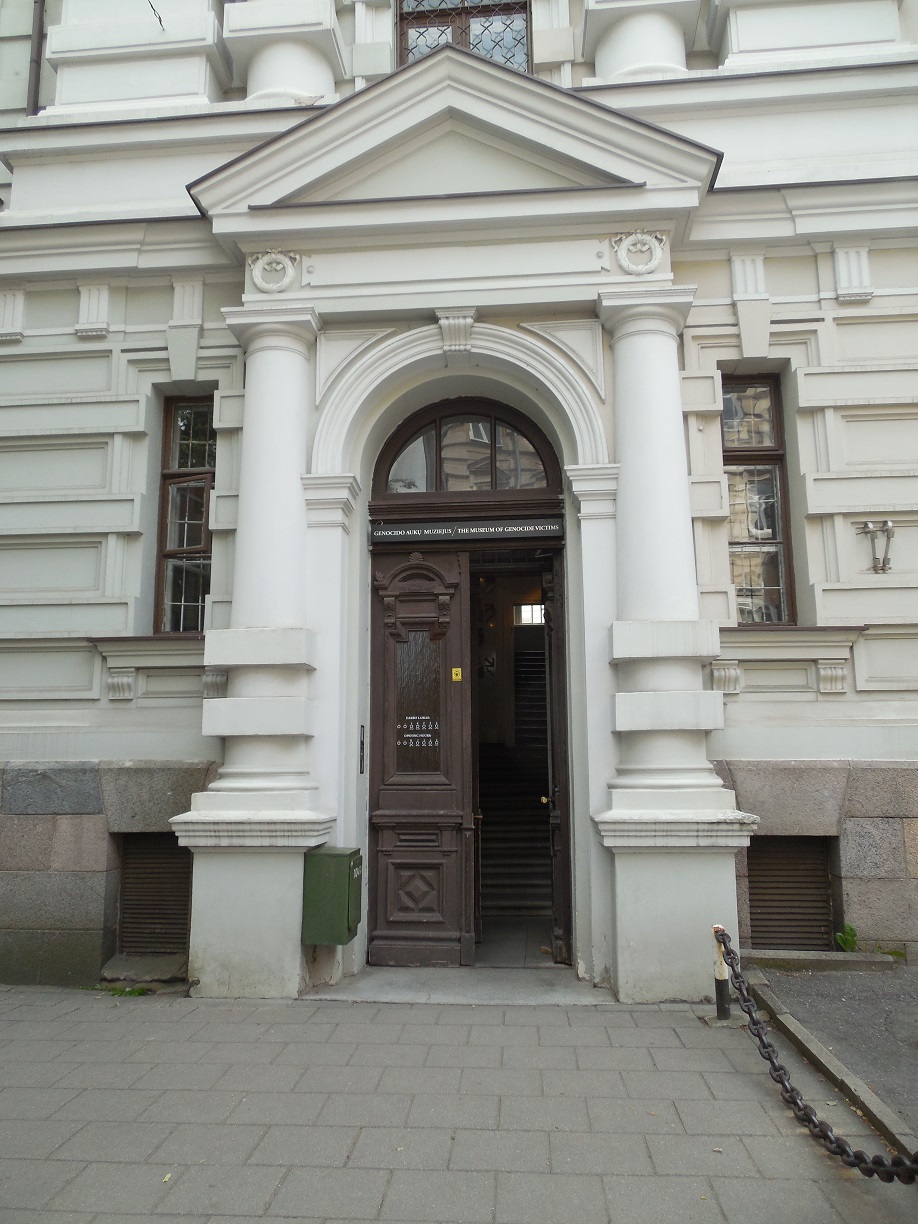
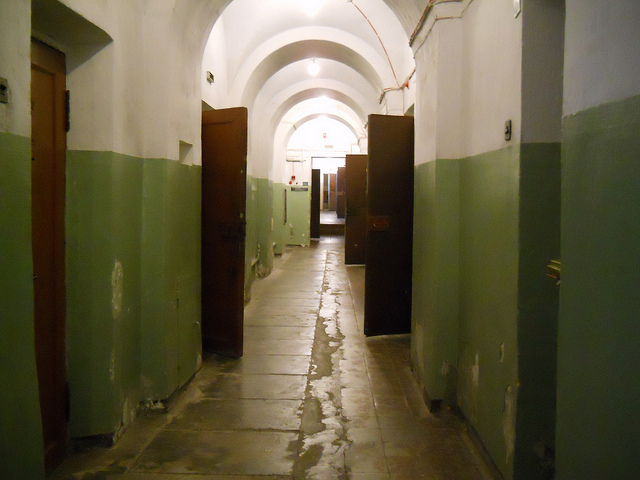
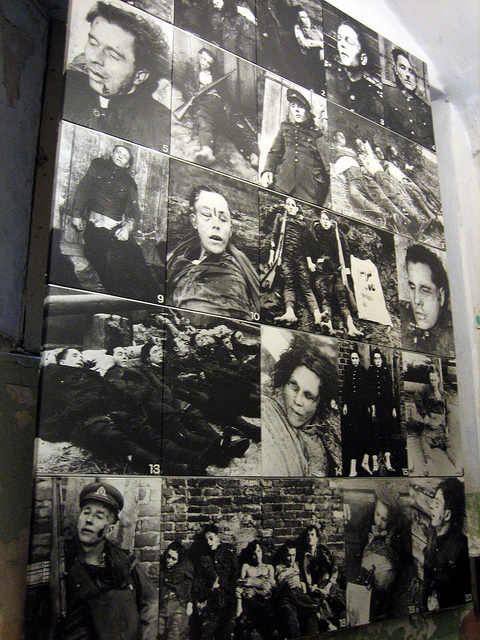
In Lithuania we visited the Victims of Genocide Museum. I knew about some of the atrocities of the Holocaust but being in a place where it occurred brought an awful new understanding.
The former Soviet KGB Headquarters now houses the Victims of Genocide Museum.The dark, dank halls of tiny cells where so many were tortured and died.The pictures of victims that were shown to children at the time in warning of what would happen if they did not follow the program.The old KGB headquarters in Vilnius has been opened as The Museum of Genocide Victims.
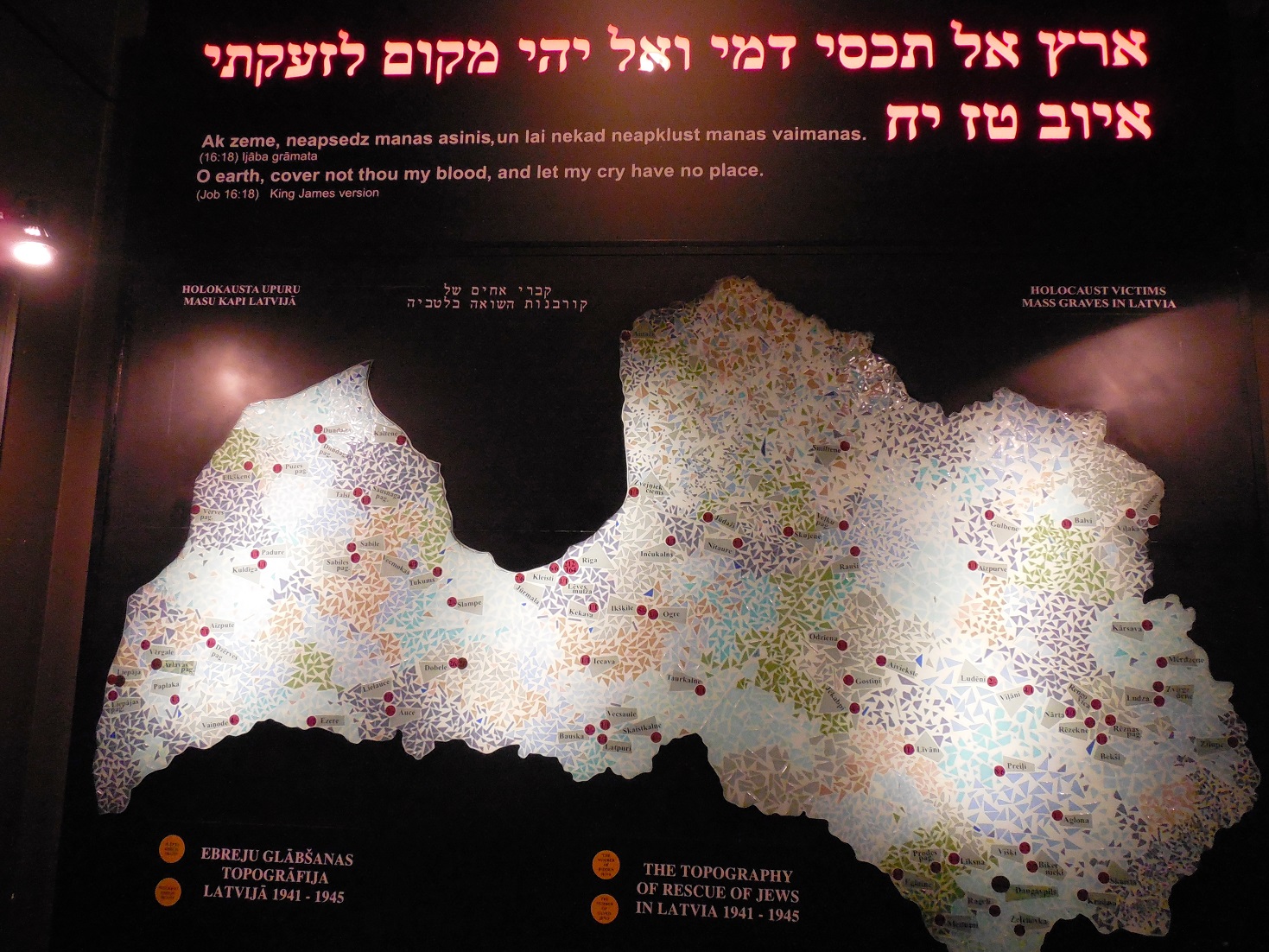
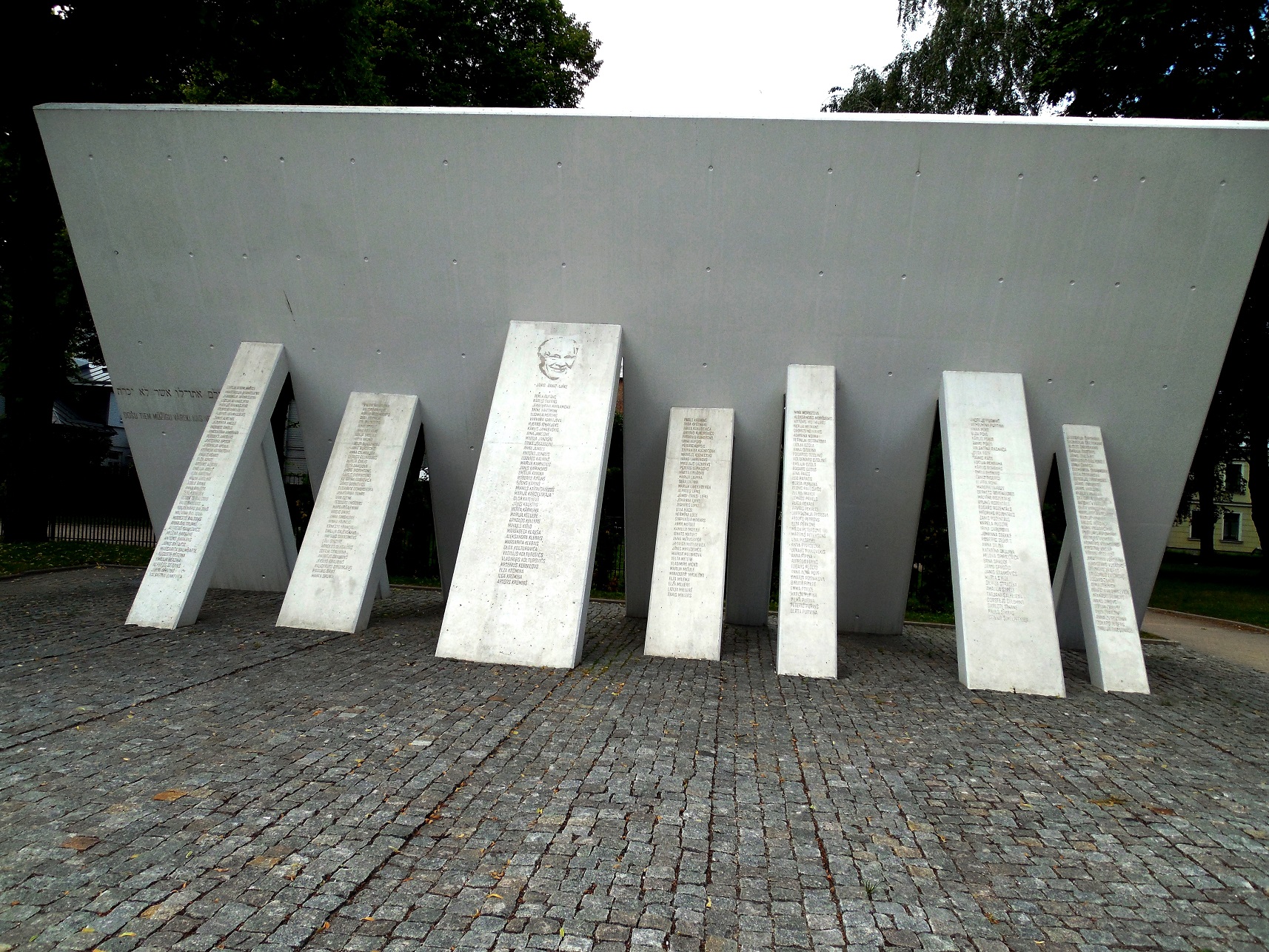
In Latvia we went to the Holocaust Museum and then to the forest where thousands were murdered and buried in mass graves.
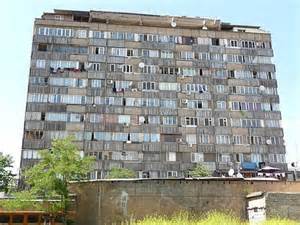
A map of Latvia showing the sites of mass graves from the Holocaust.On the rocks in this memorial are carved the names of some of the thousands of families buried in the nearby graves.This monument was dedicated to those brave souls who helped by hiding jews during the Nazi occupation.Windows in Latvia’s Holocaust Museum.We saw hundreds of this style building. No individuality was allowed.
These apartments were built during the Stalin Regime. No individuality was allowed. A family had two rooms – the bedroom 11 sq. meters and a kitchen/bathroom 13 sq. meters.
I am writing about these things because they happened. They are a huge part of the history of the people we are visiting, and so their story is part of the experience. These things happened and I feel that the world needs to know and remember how precious and tenuous freedom can be.














































 CharliExplores