On our third day in Paris we tackled the Louvre Museum – what an amazing place! Our guide on the Seine cruise said that if you took 3 seconds to look at each piece of art at the Louvre, it would take you 33 days to see it all. Despite this intimidating tidbit of information, we decided to see as much as we could before we fell into a heap.
The guide book recommended that we get there early and head straight to the Mona Lisa, which we did. The displays on the way and in fact everywhere were amazing.
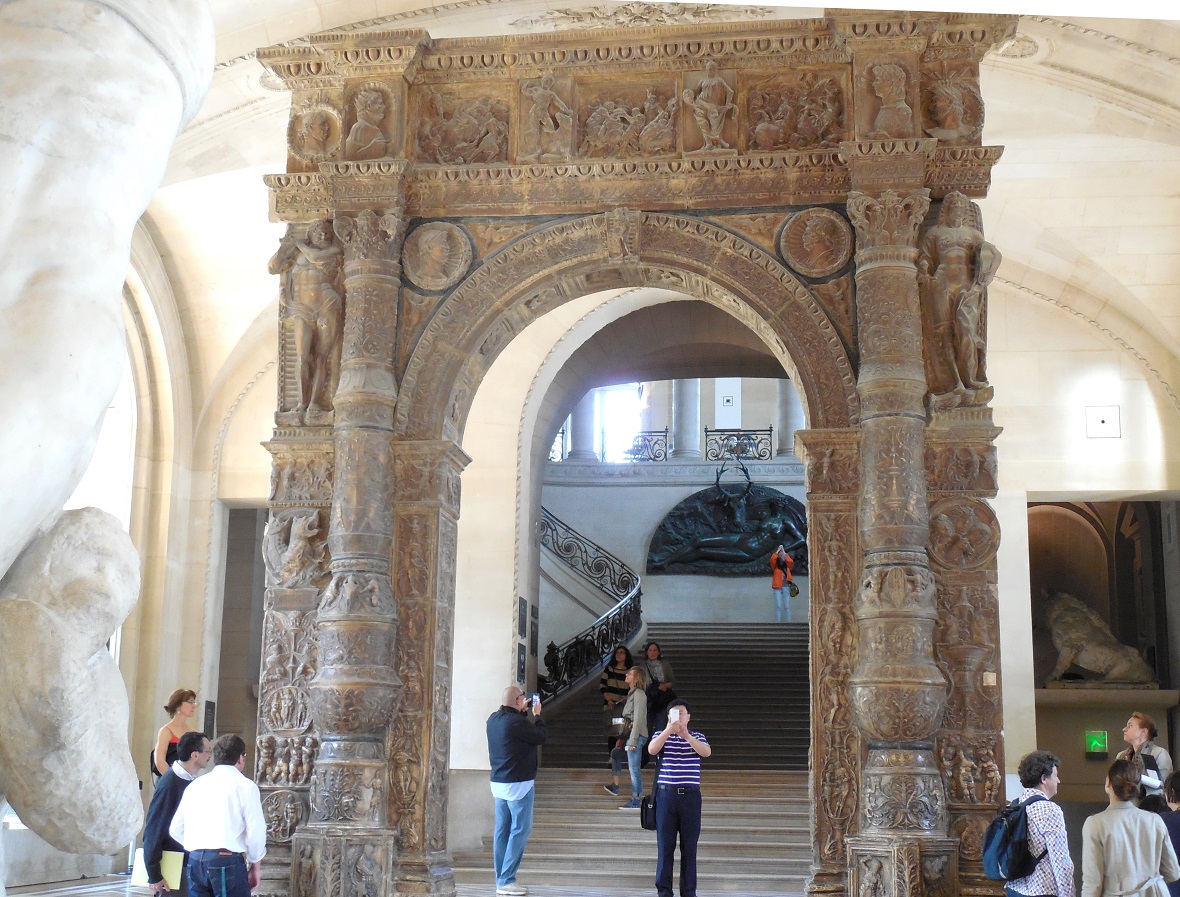
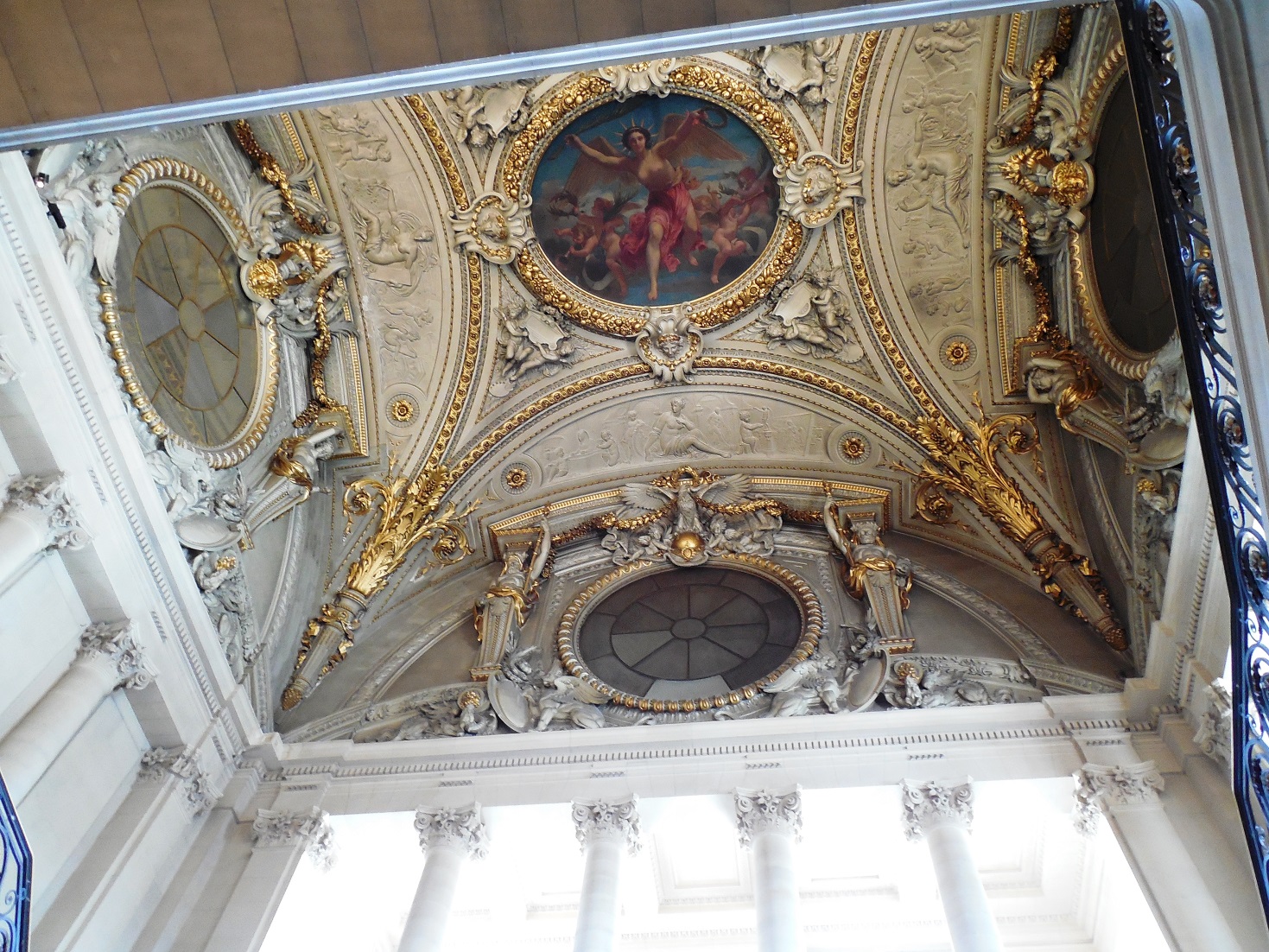
The ceilings, the displays, everything about the Louvre is on a grand and glorious scale.
In spite of the fact that we rubbernecked the whole way, we made it to the room where the honest-to-goodness real Mona Lisa is displayed. It took us 15 – 20 minutes to work our way to the front of the line to take our picture. I expected it to be flat and uninspiring, but seeing it in person you can see the brush strokes, the color, the life in the expression. I was pleasantly surprised.
The Mona Lisa by Leonardo da Vinci.
From there we just wandered from room to room taking in the sights. There is just such an overwhelming amount and variety that I don’t know where to start so I’m just going to show you a very small and random sample of what we saw.
Paintings
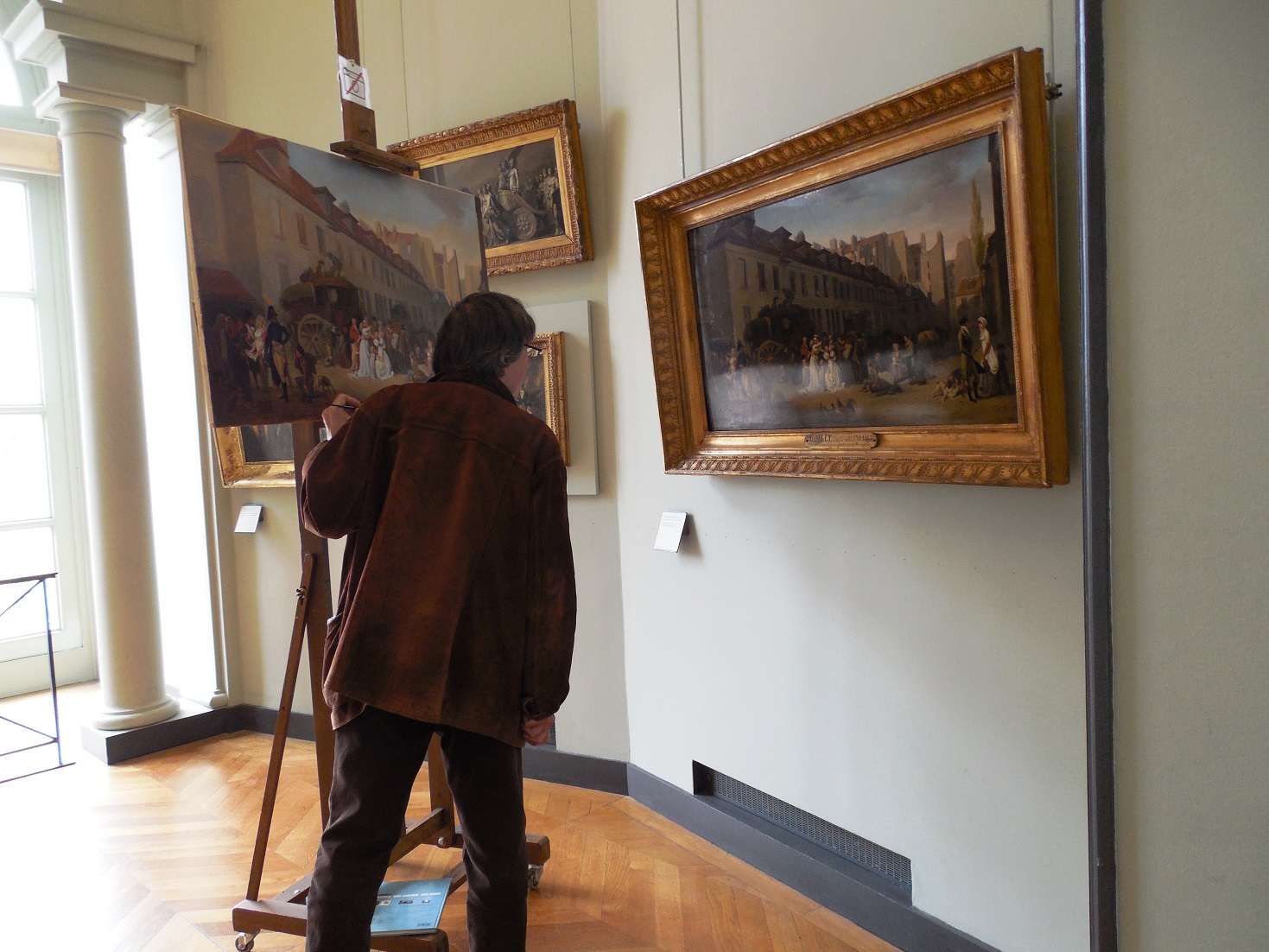
Lots of people enjoying the art and atmosphere.I enjoyed the portraits that showed expression. So many of the early portraits are so emotionless.Still not a big renaissance fan.Students of the arts honed their skills by imitating the masters.We came across groups of children studying and sketching. What an extraordinary place to learn.Another of my favorites by Antoine-BlanchardStarry Night by Vincent Van Gogh – one of my favorites
What I have confirmed is that Tom and I both like the impressionists. He is a big Van Gogh fan and we both like Monet among others.
Sculpture
I really like sculpture in general and there was tons of it in the Louvre (literally). Since I started with the most famous of the paintings, I thought it only fair to start with the most famous of the sculptures – Venus de Milo.
Venus de MiloDespite the fame of this statue, there seems to be no clear answer as to who she really is, who sculpted her, or when. It is thought that she is a tribute to Aphrodite, the Greek goddess of love, possibly sculpted by Alexandros of Antioch somewhere between 130 – 100BC. The time is pretty accurate and I find it amazing that this piece is over 2000 years old, wow.
Okay, we gotta keep moving or we’ll never finish.
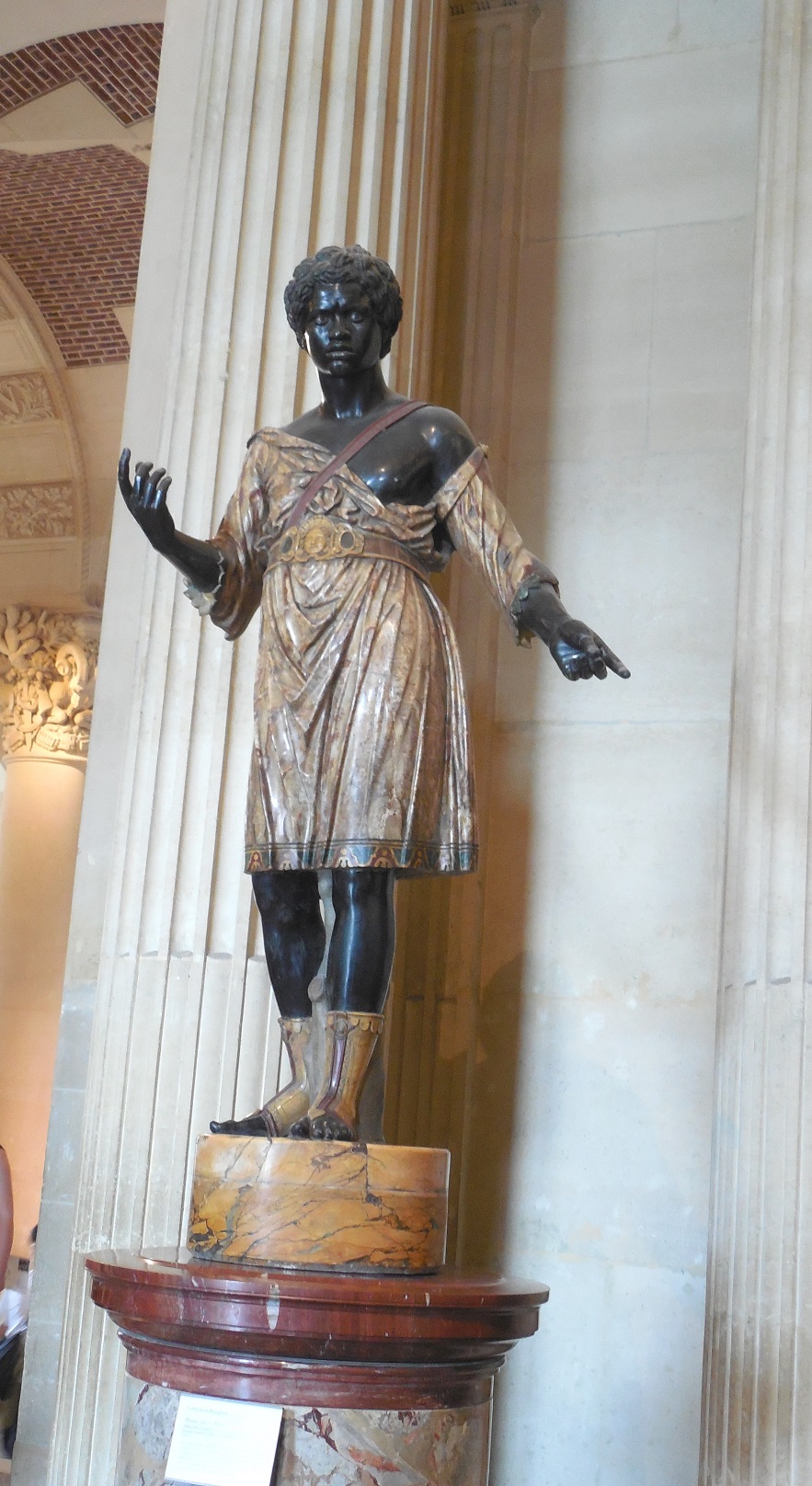
I love the smooth lines and the detail in these sculptures. I would love to be able to create like that.
I didn’t do a very good job of writing down titles or descriptions. I just took the pictures.
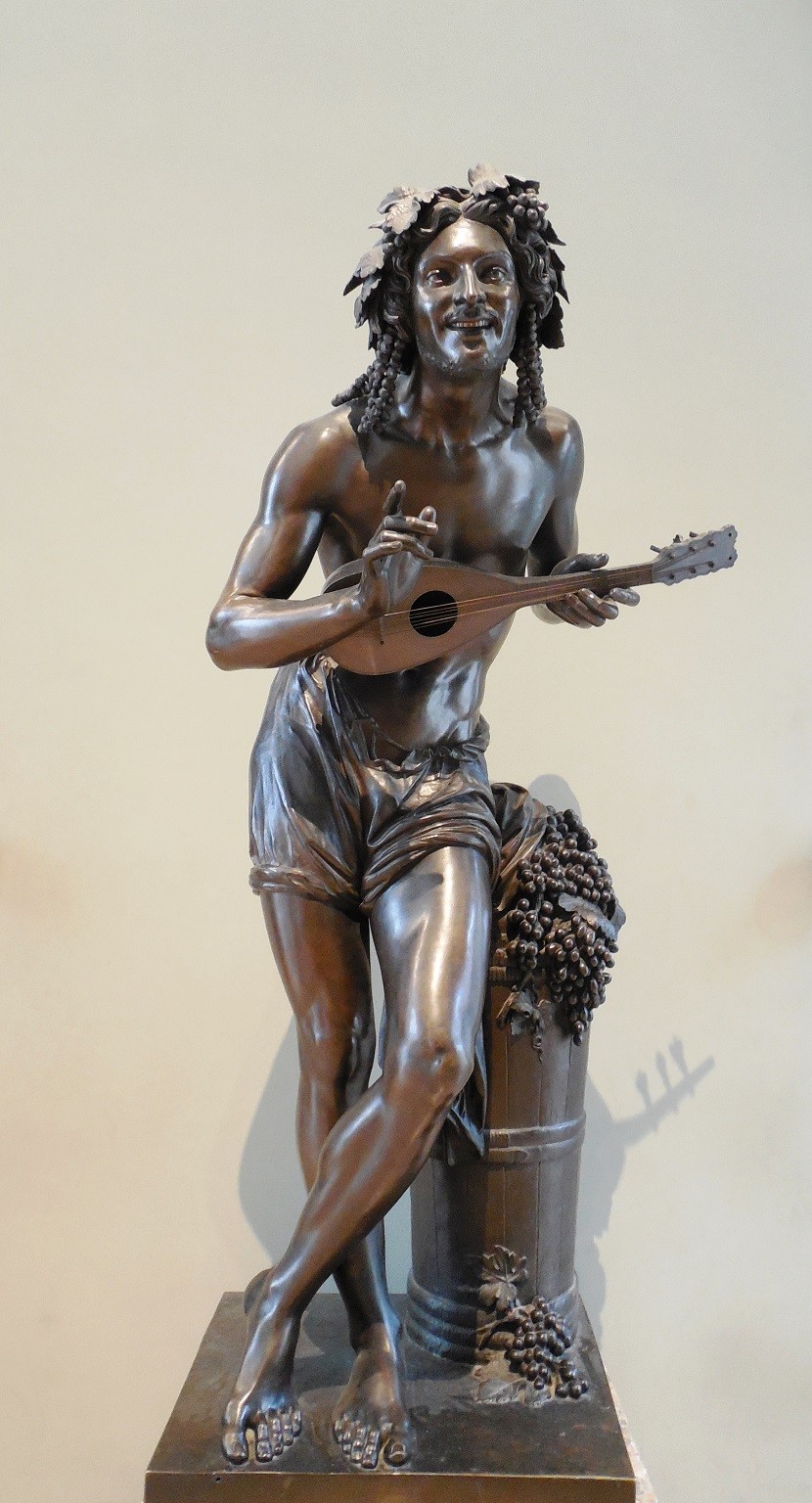
This guy just made me laugh – so happy, so much expression!
The Impressionist by Francisque DuretDancer by Edgar Degas. Degas is both a sculptor and a painter. I really like his work.The Thinker by Auguste Rodin. You Kansas City folk may recognize this one. There is a replica in the Plaza.
One of my favorite areas was the statue courtyard – so peaceful.
A courtyard of statuary – one of my favorite places.The natural lighting added so much to the exhibition of the displays.
Other
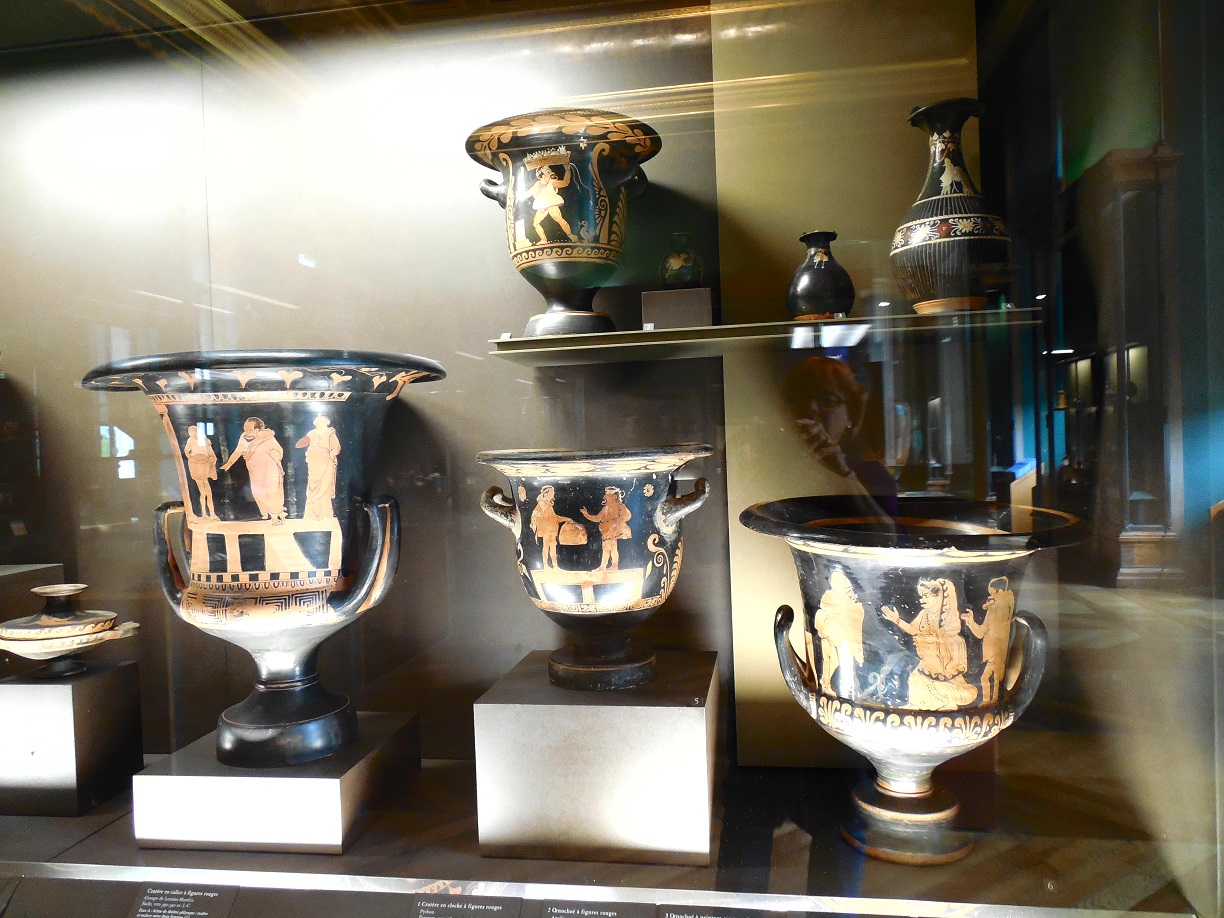
Beauty and grandeur at every turn.Egyptian Jars – dating back to 360 – 350BCI’ll have a crick in my neck for a week from gawking at the ceilings.The ceilings were spectacular!
The last exhibit we saw was the Napoleon Exhibition – Opulence doesn’t even begin to describe it.
A sitting room in the Napoleon exhibit. The lavish extravagance was unbelievable!Dressing table from the Napoleon collection.One of the many candelabras that adorned the exhibit.Over the top!Napoleon’s Bedchamber
It speaks for itself.
The grounds were spectacular as well.
The grounds at the Louvre were tranquil and inviting.The Glass Pyramid in the Napoleon Courtyard is very cool.One of the courtyard staircases – graceful and elegant.
And there you have it, Charli’s impressions of the Louvre de Paris – a truly amazing place.
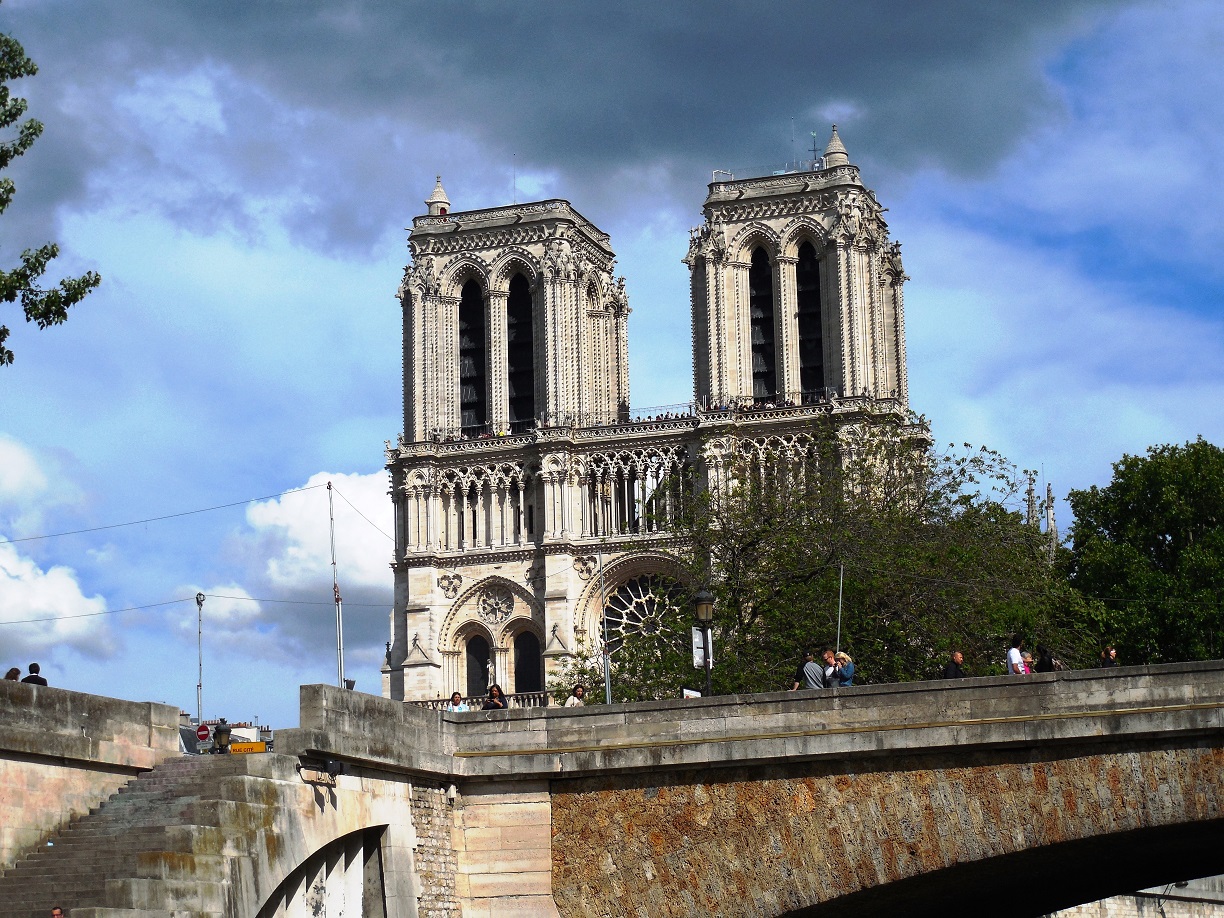
Today dawned rainy and cold (I miss the Spanish weather) but we donned warmer clothes, rain jackets, grabbed the umbrella and headed out to see the famous Notre’ Dame (Our Lady). We navigated the subway system and disembarked at the Notre’ Dame station. We arrived fairly early and so the lines to get in weren’t too bad and in about 20 minutes it was our turn to enter. (Remember that you can click on any of the pictures to make them larger then just click on the back arrow at the top of the screen to go back to the post).
Notre Dame Cathedral
Before we go any farther, let me relay some of the amazing history behind this massive and imposing work of dedication and love. I will interject here that one of our favorite guide book authors is Rick Steves and it is his books that we have followed in Madrid and here in Paris. I am going to quote his words about the building of Notre’ Dame here because I was so moved by his description:
Imagine the faith of the people who built this cathedral! They broke ground in 1163 with the hope that someday their great-great-great-great-great-great-grandchildren might attend the dedication Mass, which finally took place two centuries later, in 1345. Look up the 200-foot-tall bell towers and imagine a tiny medieval community mustering the money and energy for construction. Master masons supervised, but the people did much of the grunt work themselves for free – hauling the huge stones from distant quarries, digging a 30 foot deep trench to lay the foundation, and treading like rats on a wheel designed to lift the stones up one-by-one. This kind of backbreaking, arduous manual labor created the magnificent Notre’ Dame.
With this in mind we entered the immense sanctuary of Notre’ Dame we spent the next hour+ awestruck by the magnificence that surrounded us.
Exquisite!The pipe organ is majestic and elegant.
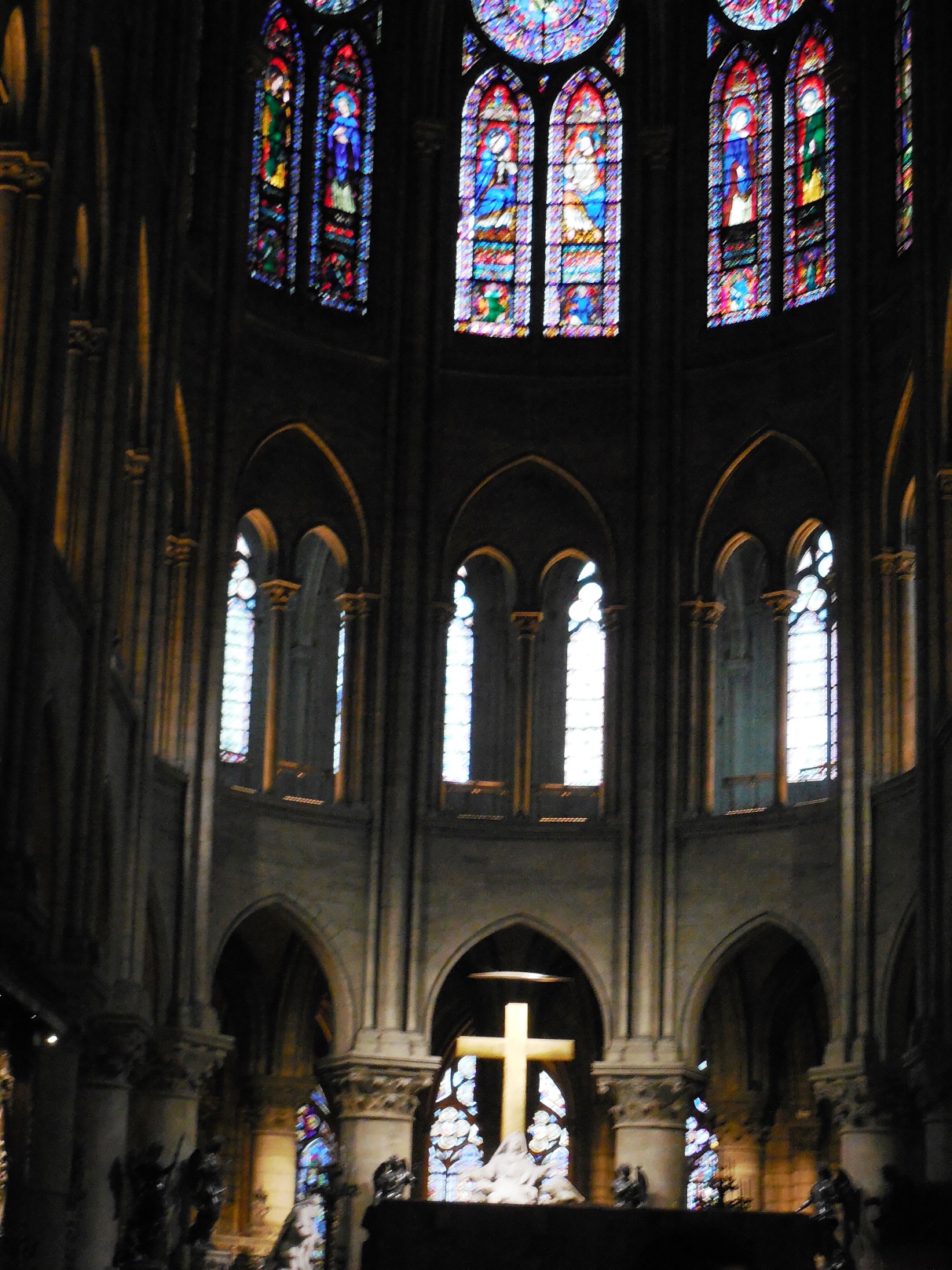
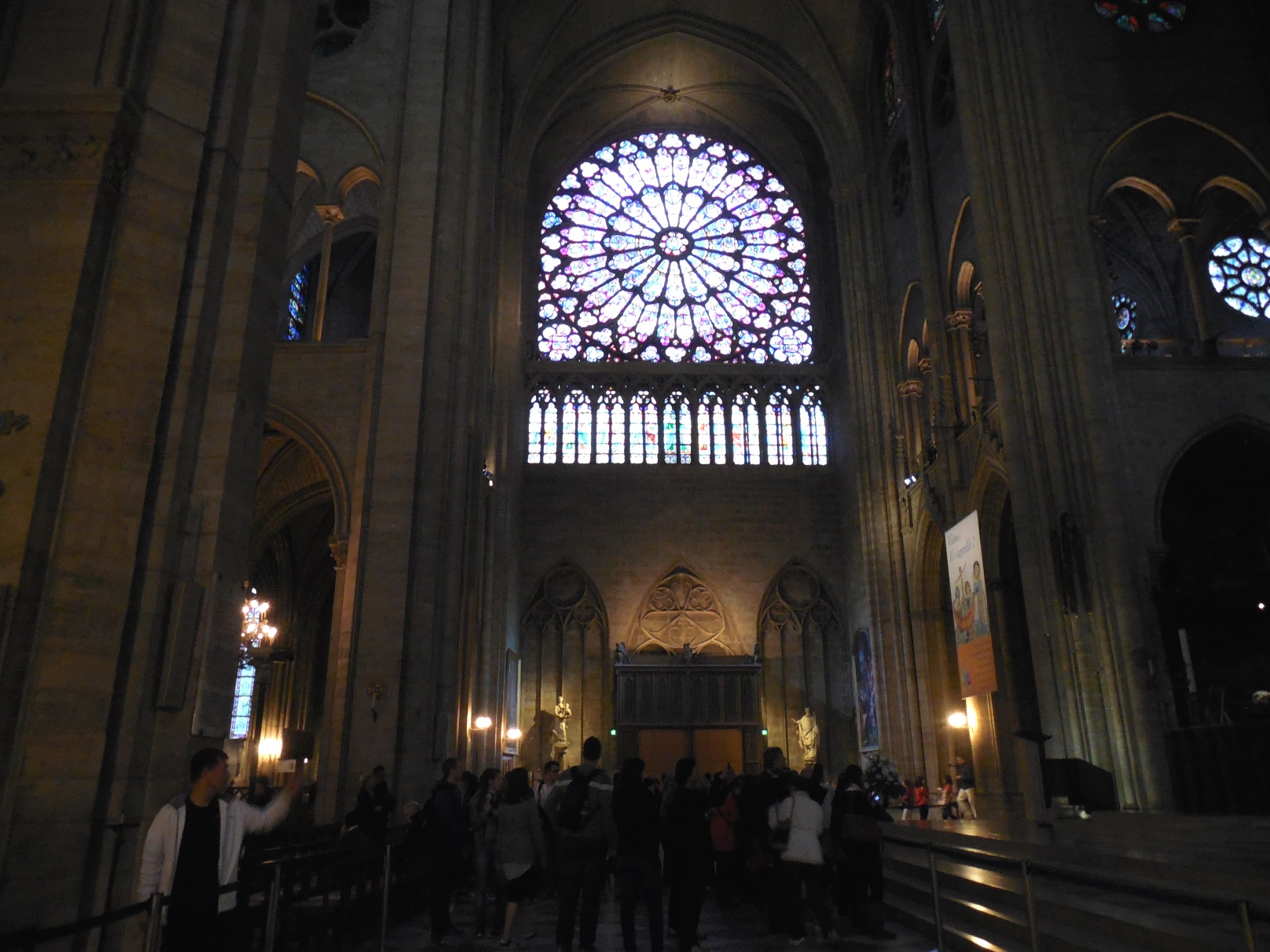
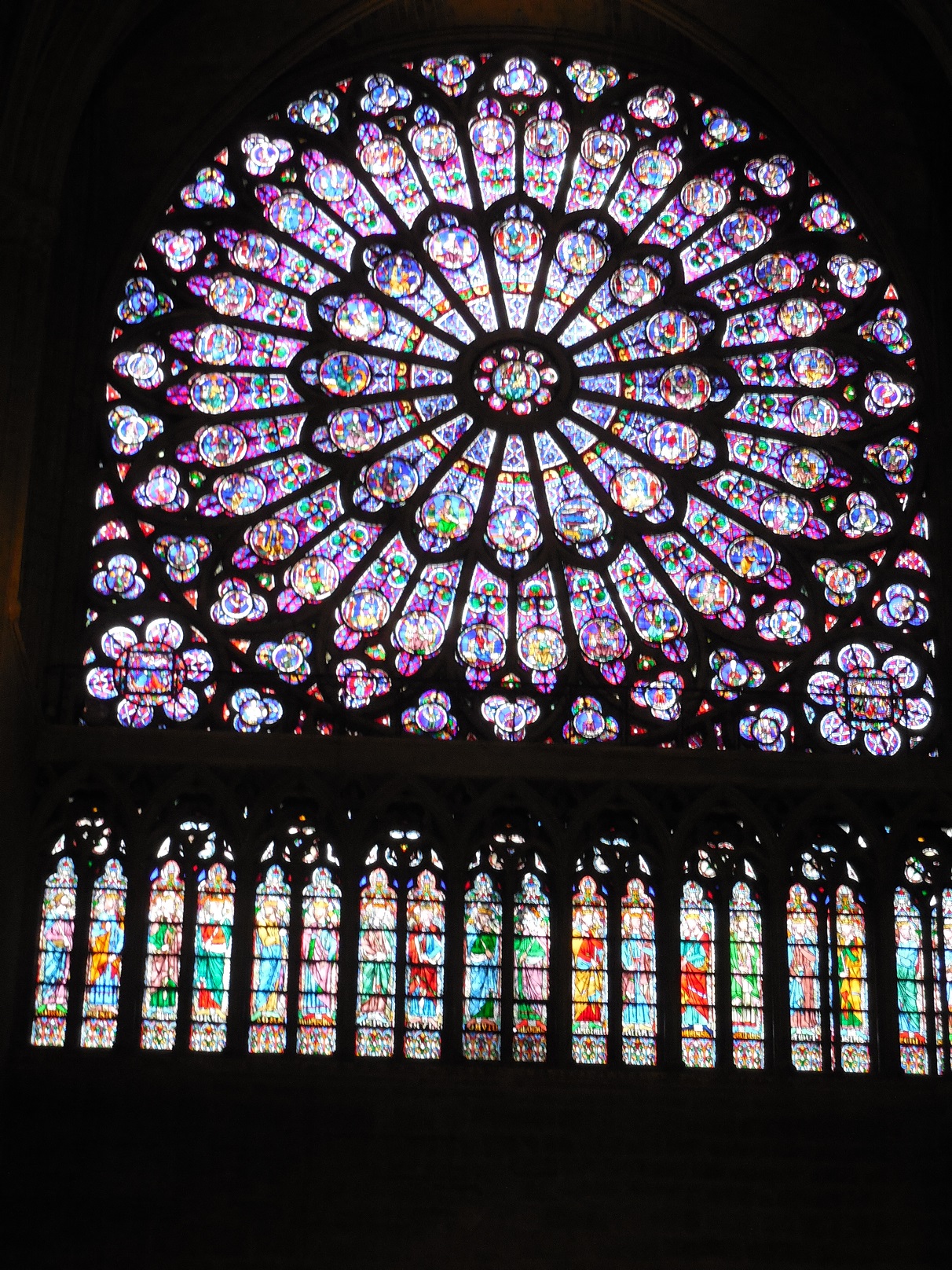
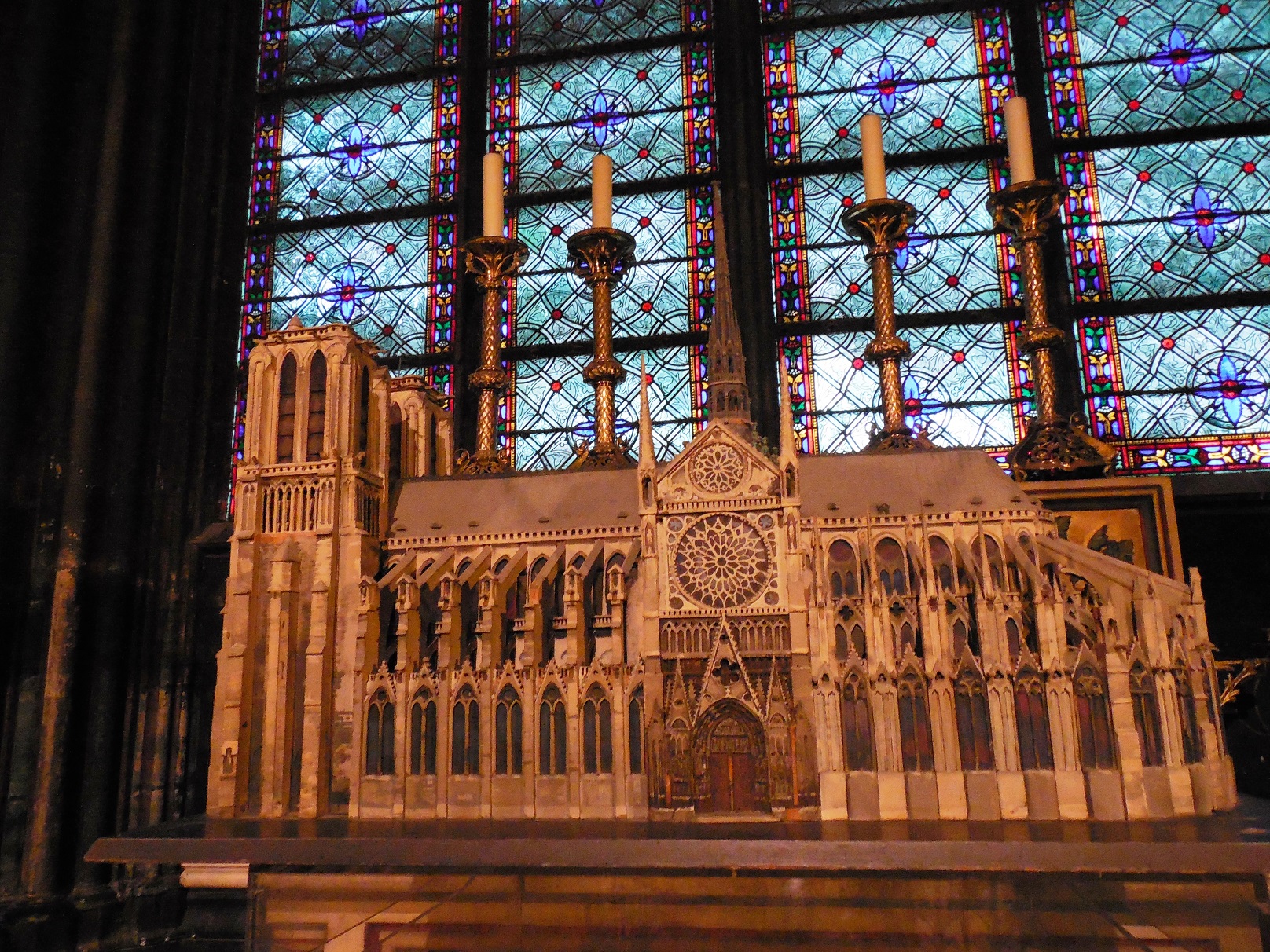
Everywhere I looked there were intricate carvings, statues, delicate stained glass windows – a glorious testament to the faith of those who built Notre’ Dame.Awe-inspiring doesn’t say enough.These windows are immense and breath-taking.A miniature with amazing detail stands in the sanctuary.As you can see, the stained-glass windows are stunning!Flying Buttress – if you look closely they are positioned between each window around the building.
You may have heard of a flying buttress but if not, it is not something out of the Wizard of Oz, it is a support structure. Because the cathedral was built with pointed instead of rounded arches, the weight of the arch pushes the walls outward instead of down. The flying buttresses (I know it’s kind of a funny name) were designed as counterpoint to the outward pressure. In other words, they were constructed to keep the walls form falling down and its worked pretty well for over 700 years. {Wow, art, history, architecture – you’re getting it all.}
The Grand Notre’ Dame from the garden view – so amazing!
After the cathedral we grabbed a quick hot lunch to get warmed up a bit. By the time we finished the rain had stopped and it was beginning to warm a little. *A side note about Paris weather – you’ve all heard the expression, “If you don’t like the weather stick around for a few minutes and it will change.” Well in Paris it is absolutely true. Every day it starts off chilly and warms up late in the day and it goes from cloudy to rainy to sunny all within the same half hour – crazy.
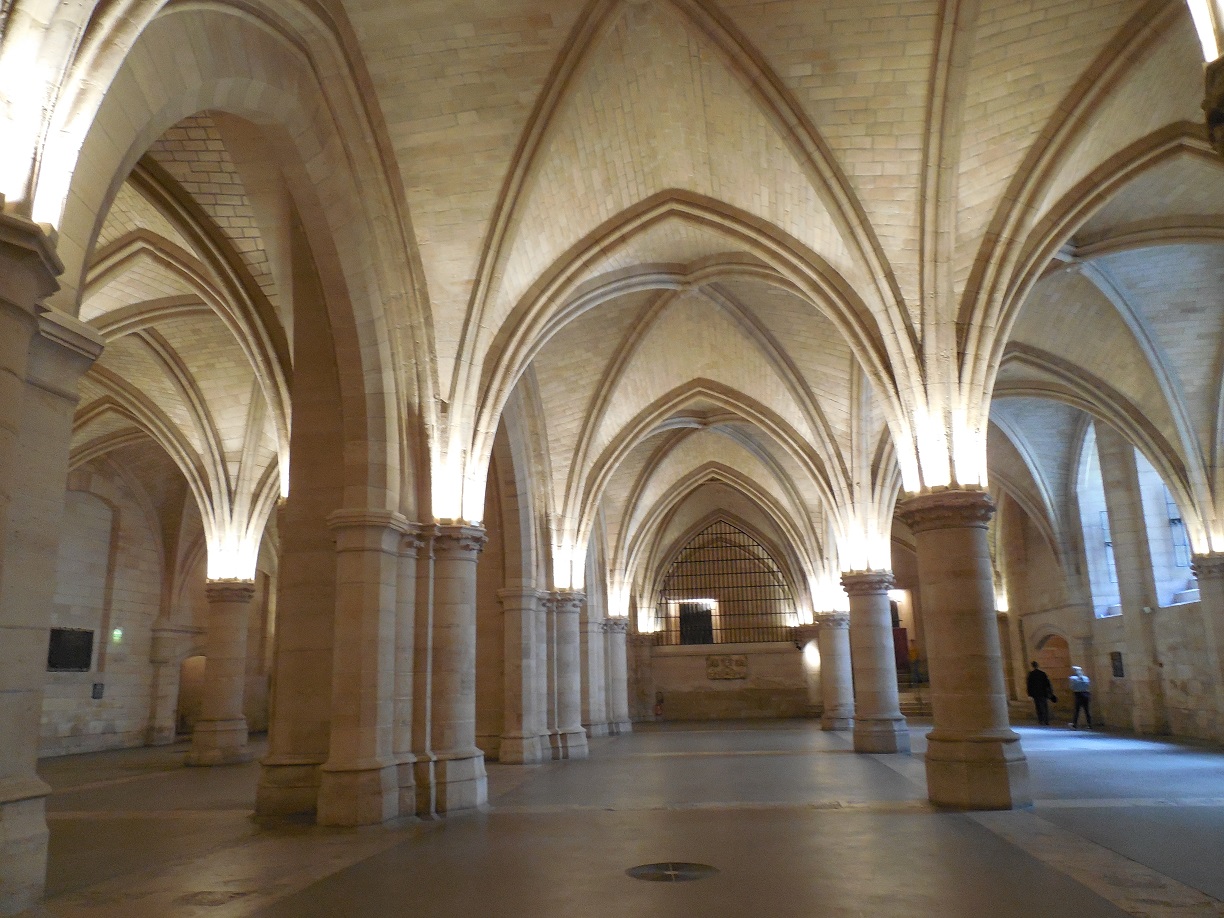
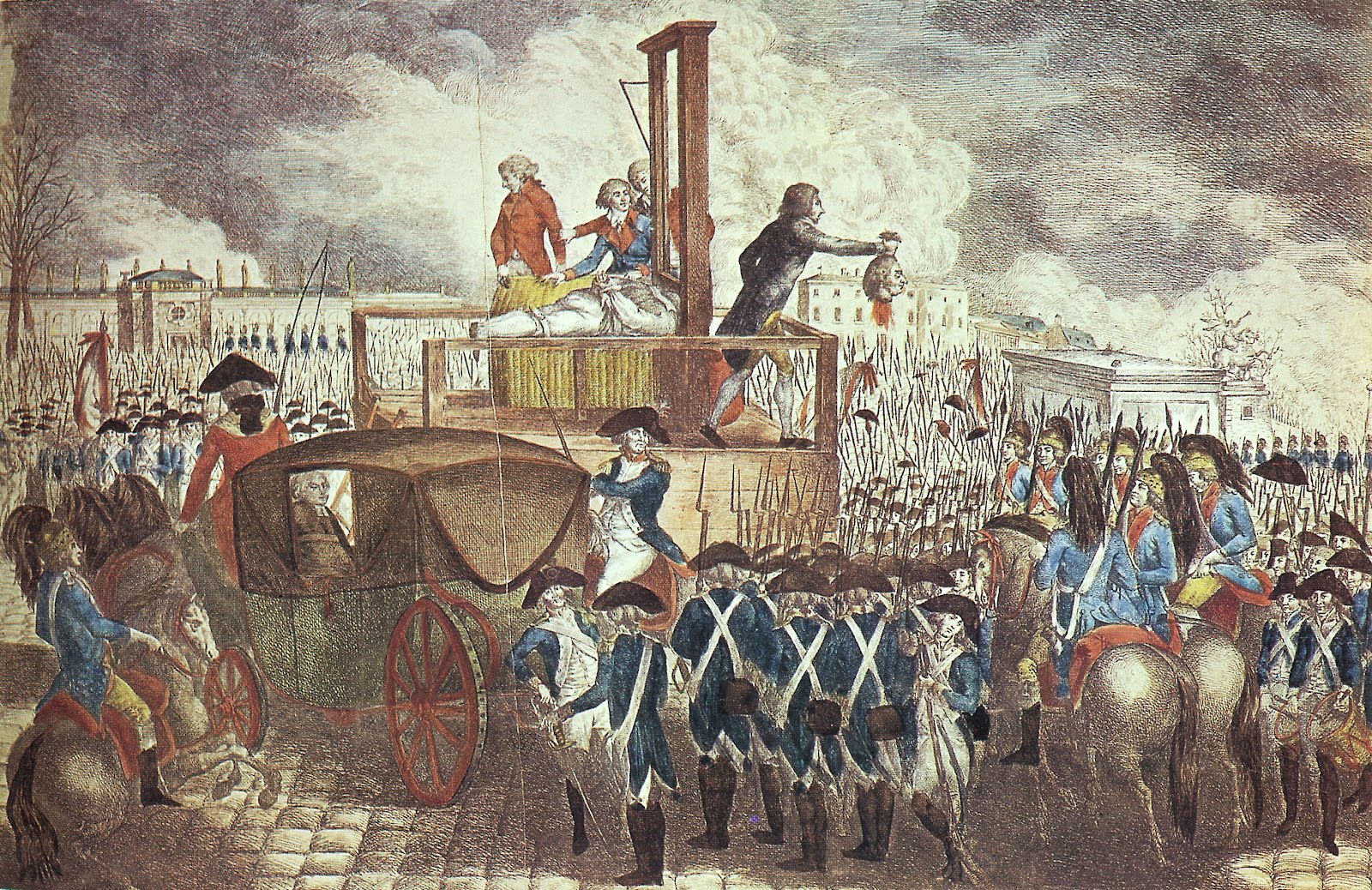
But I digress, after lunch we began the walking tour Rick Steves laid out in our guidebook. Our first stop was at the Conciergerie, which looks a lot like the title of the person at a nice hotel who directs you to a good restaurant or helps you get theater tickets but its not even close. Actually the Conciergerie was the infamous Paris prison known as the last stop for 2,780 victims of the guillotine, including King Louis XVI and his queen Marie-Antoinette during the bloody French Revolution. The outward appearance of the building belies the horrors that occurred within.
The Conciergerie
The upper floors of this imposing building now house the Paris police department, but the bottom floor is open as a grim museum of those dark times.
The impressive but now empty halls of the lower floor of the Conciergerie. It was actually a dining hall for the prison guards.Marie-Antoinette
Louis XVI – King of France at the time of the French Revolution.
From the dining hall we proceeded to the small cell where Marie-Antoinette – the “Let them eat cake” queen – was incarcerated for the last two months of her life. The picture below is of a recreation of her actual cell. The wallpaper is the original paper in the cell and her rosary plus a few other personal items are in a locked cabinet nearby.
This is a recreation of Marie-Antoinette’s cell at the Conciergerie (prison).A painting of Marie-Antoinette on the day of her execution.
The Beheading of Louis XVI.
Our walk then took us to the square where the executions took place. This obelisk was erected on the spot in the square where the guillotine was located to honor the 2,780 victims of that guillotine.
Alrighty then, on to more cheerful subjects. Tom and I walked along following the “Walking Tour” meandering along the River Seine and through the busy Latin Quarter where the tour ended.
Space is scarce in Paris and so they make use of every square centimeter.
We were walked out by this time and had returned to the famous Left Bank of the Seine where we decided a tour cruise, also suggested by the book, would be a lovely way to get off of our feet for awhile. This ended up being a great idea and we thoroughly enjoyed a view packed hour gliding along the river and taking in the Paris sights from the water/in-Seine view.
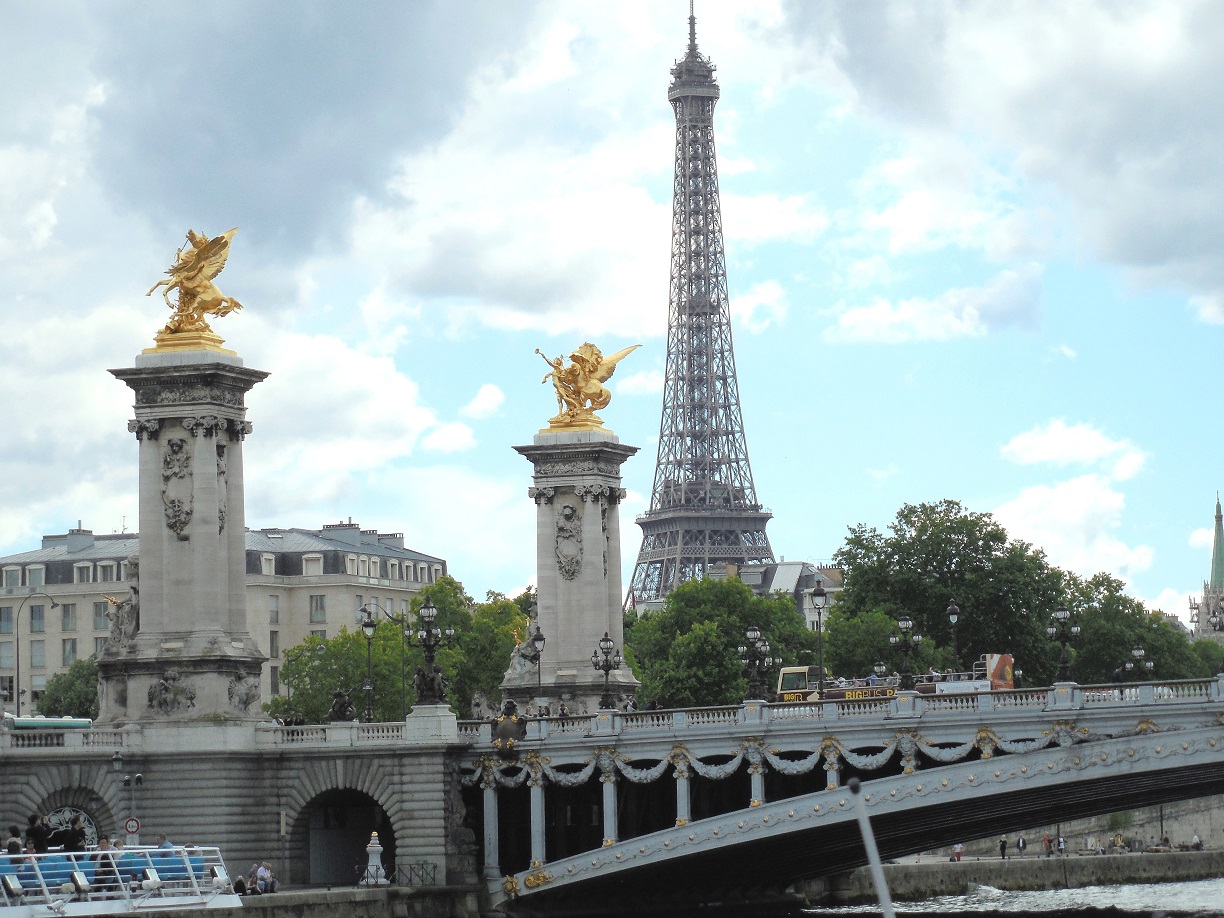
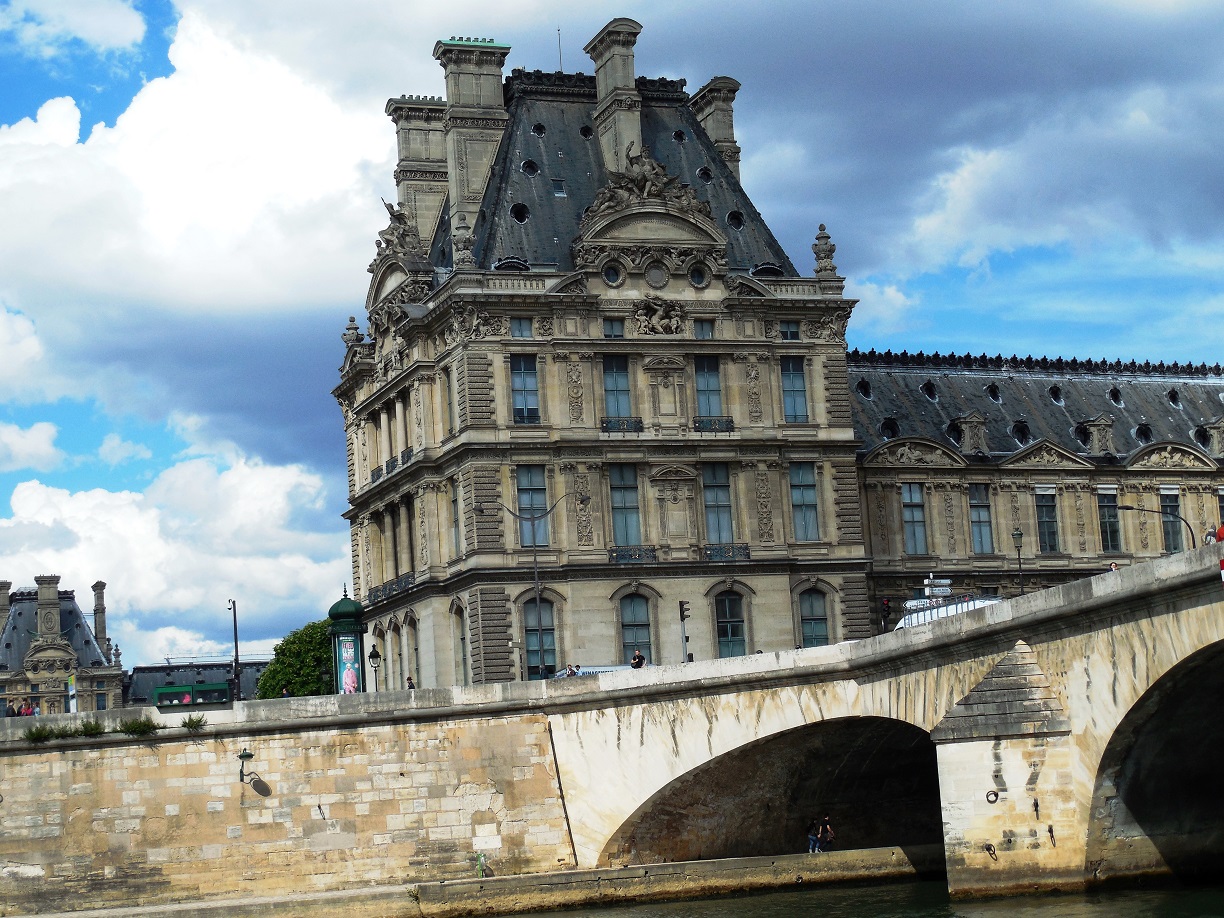
Our tour boat.The real Eiffel Tower as seen from our Seine River cruise.The Louver Museum – or at least one very small section of it.One of the many, many bridges across the busy Seine.As I mentioned before, real-estate is at a premium in Paris. These apartments are on a small island, Ile St. Louis – in the middle of the Seine. Elegant complexes on super prime land – I can’t even guess at the cost!Love Locked
This sides of this bridge look solid but are actually rails with cross bars, however the spaces are filled in with thousands of padlocks of all shapes and sizes creating a foot thick solid wall along each side of the bridge. Why?… because the tail says that if you and your true love put a padlock on the bridge, it is a sign of your true devotion and your love will be everlasting. It is a truly lovely sentiment that causes the city thousands of dollars in damage repair to the bridge – can you imagine the weight of all those locks? You have to admit that it’s an interesting story.
After the cruise we headed for the subway and home. All this fun is wearing me out!
We arrived in Paris just before noon on Wednesday 5/22/14. For those of you who fly you know that means we had to get up at 0:dark40 to get to the airport…ugh.
Anyway, we found our place. Again we are in a tiny VRBO, again in a 100+ year old building on the third floor with no elevator, quiet neighborhood with lots of charm, but this one is surrounded by major hills! The doves -ok they’re pigeons – sit on the ledge outside our window and coo to me as I’m writing my blog. It’s very soothing.
Steep Cobbled Streets
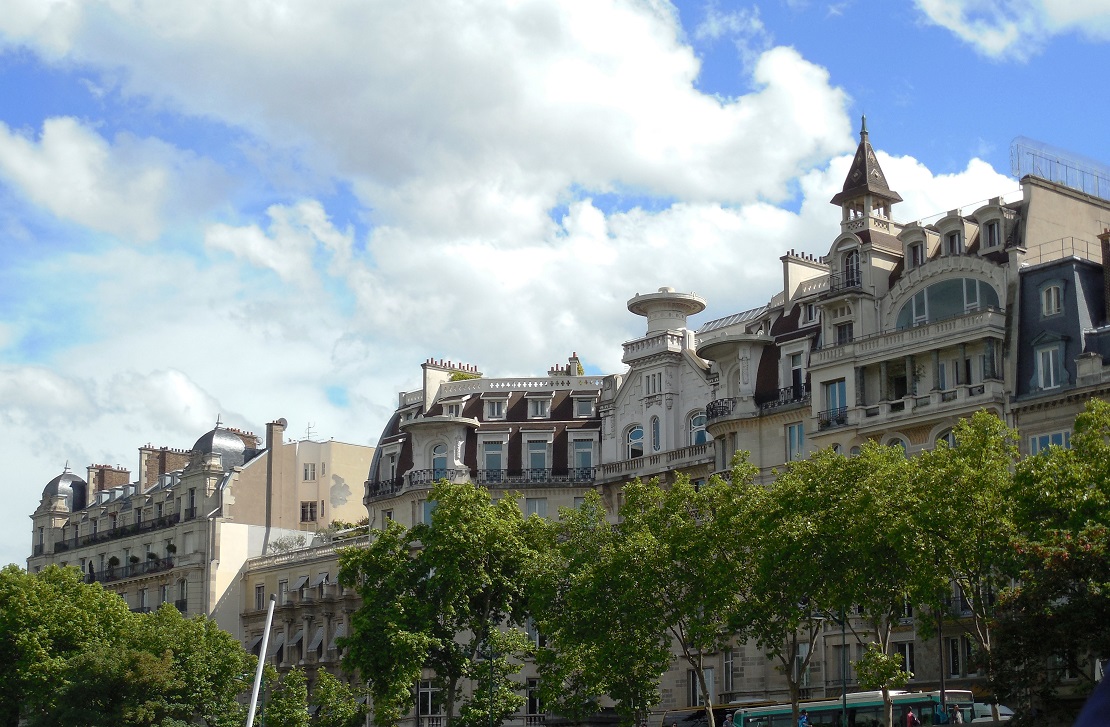
Once we settled in we explored the neighborhood. It has much the same format as the neighborhoods in Madrid – shops below and 4+ floors of apartments above. It is picturesque and functional with markets, venders, and restaurants all around, and very near the subway. It’s great!
Half a block up the street we came to a daunting stairway.
The stairway to the highest point in Paris.
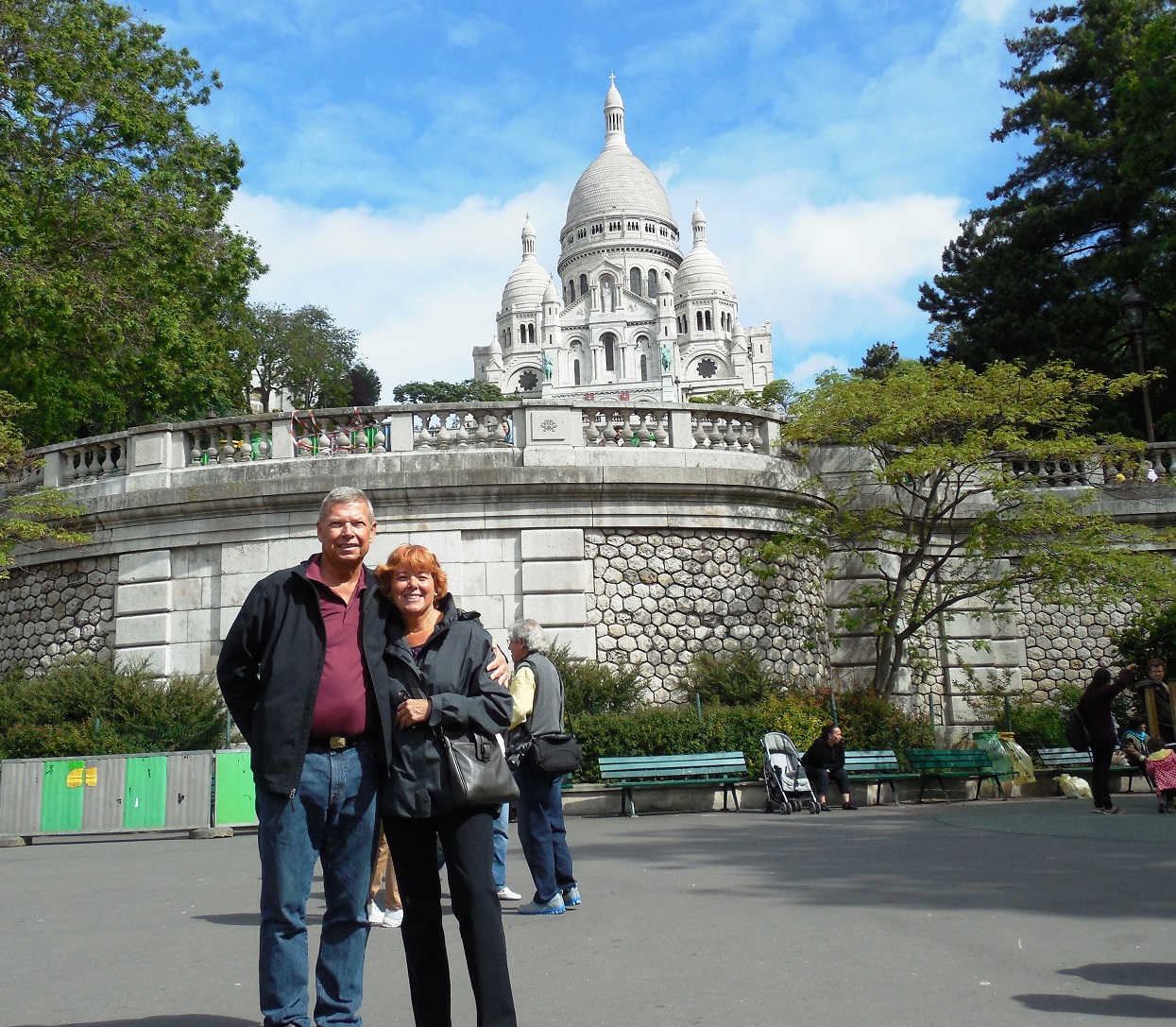
Being the brave souls that we are, we proceeded up, be it slowly, to the top and WOW was it worth it!
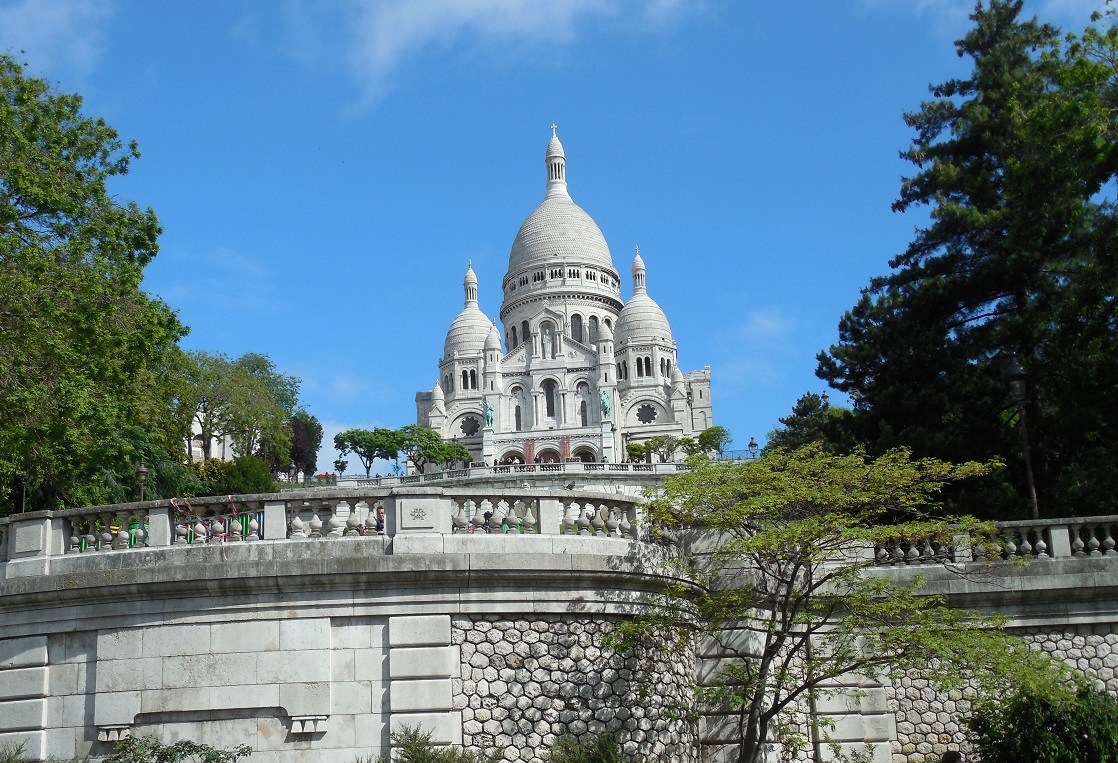
The Basilica is gorgeous!
This is the Basilica Sacre’Couer (Sacred Heart Basilica) which we found out later is #5 on our guide books must see list. Sacre Coure Basilica sits majestically on the highest point in Paris and gazes out at the city stretched below.
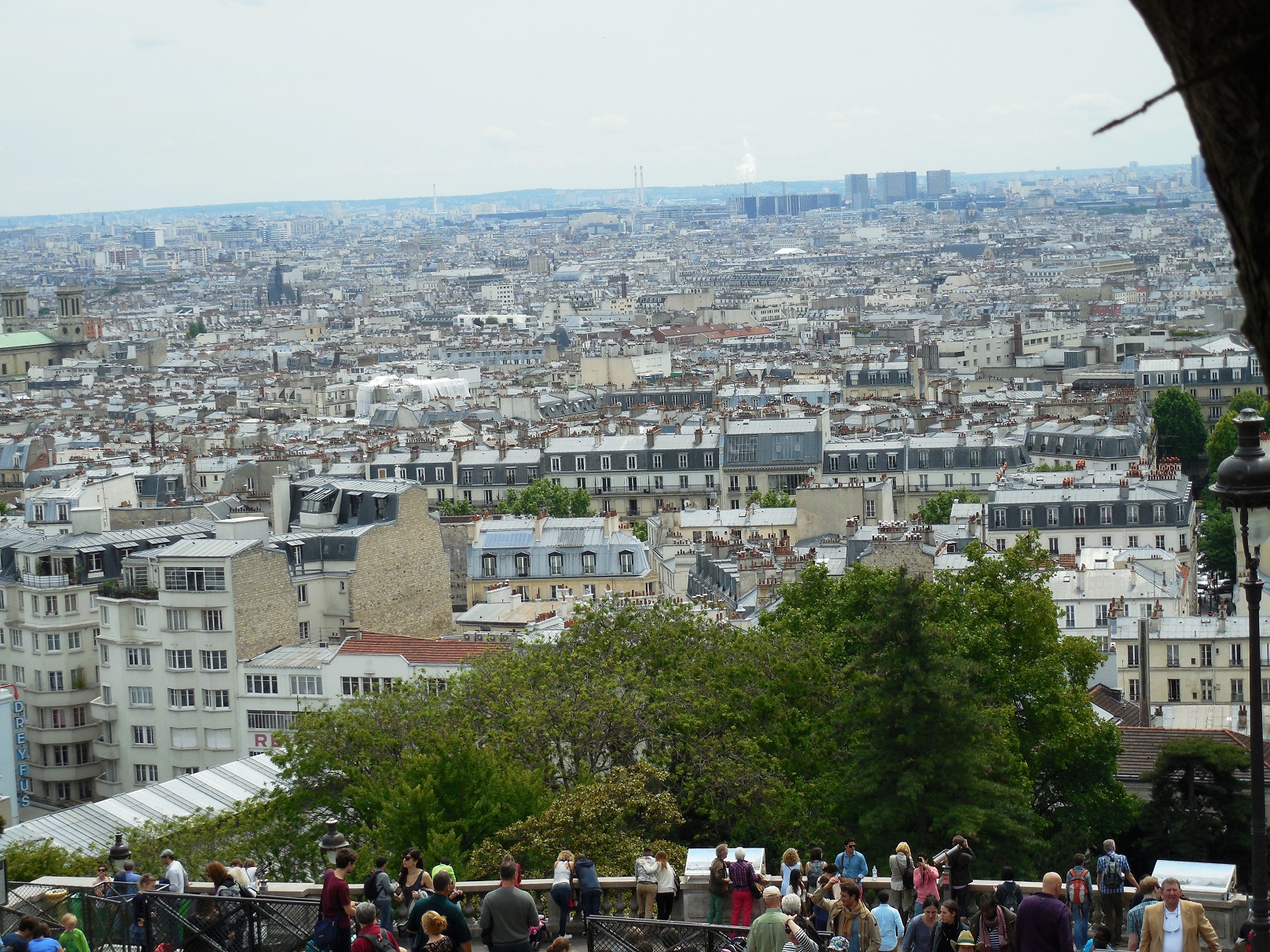
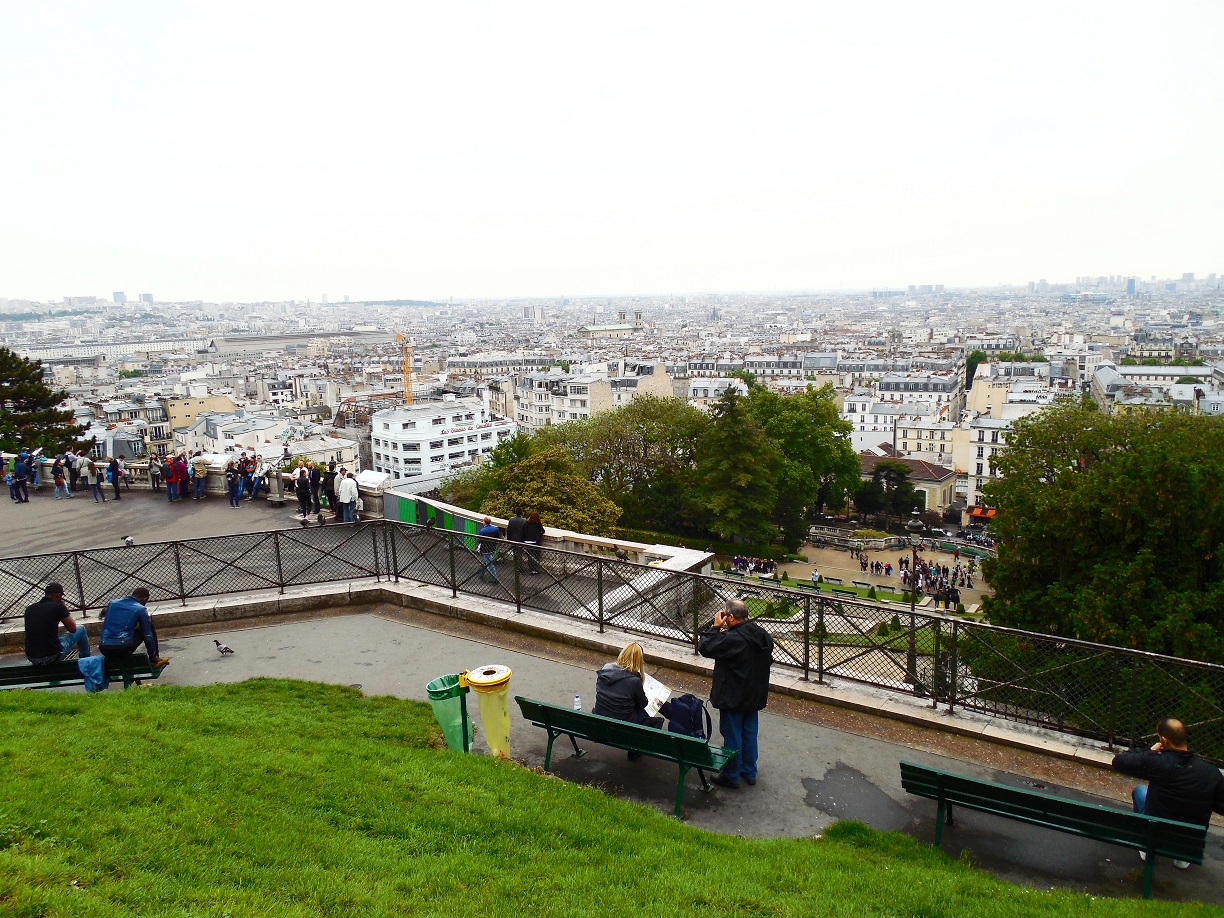
Sacre’-Couer sits on the highest point in Paris and gazes out at the city stretched below. If you enlarge the picture and look closely you can see the Eiffel Tower, Arc de Triumph, the Louver… you can see it all.
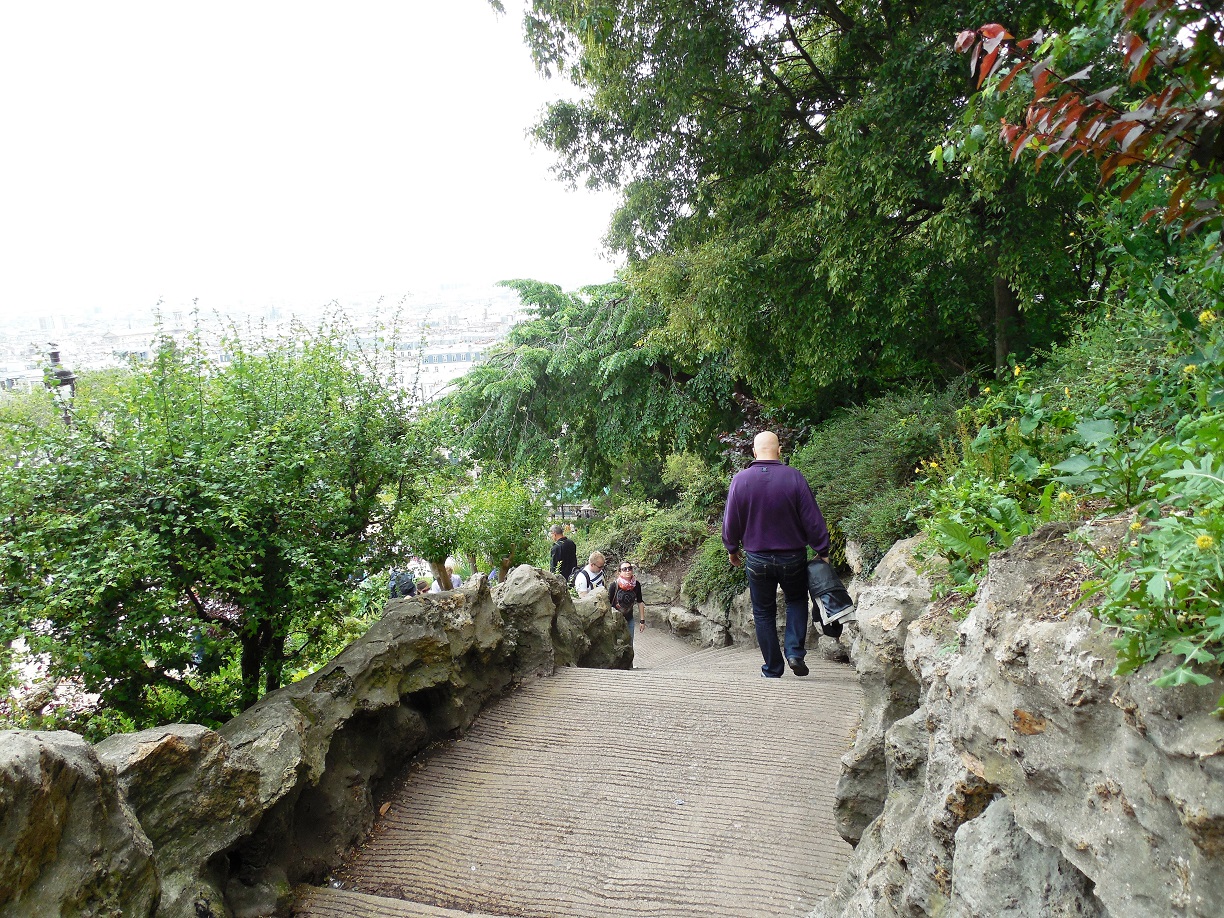
The balcony you see in the picture also looks down on a park below. Yet more stairs led down to this enchanting area.
Pretty walkways with yet more stairs.
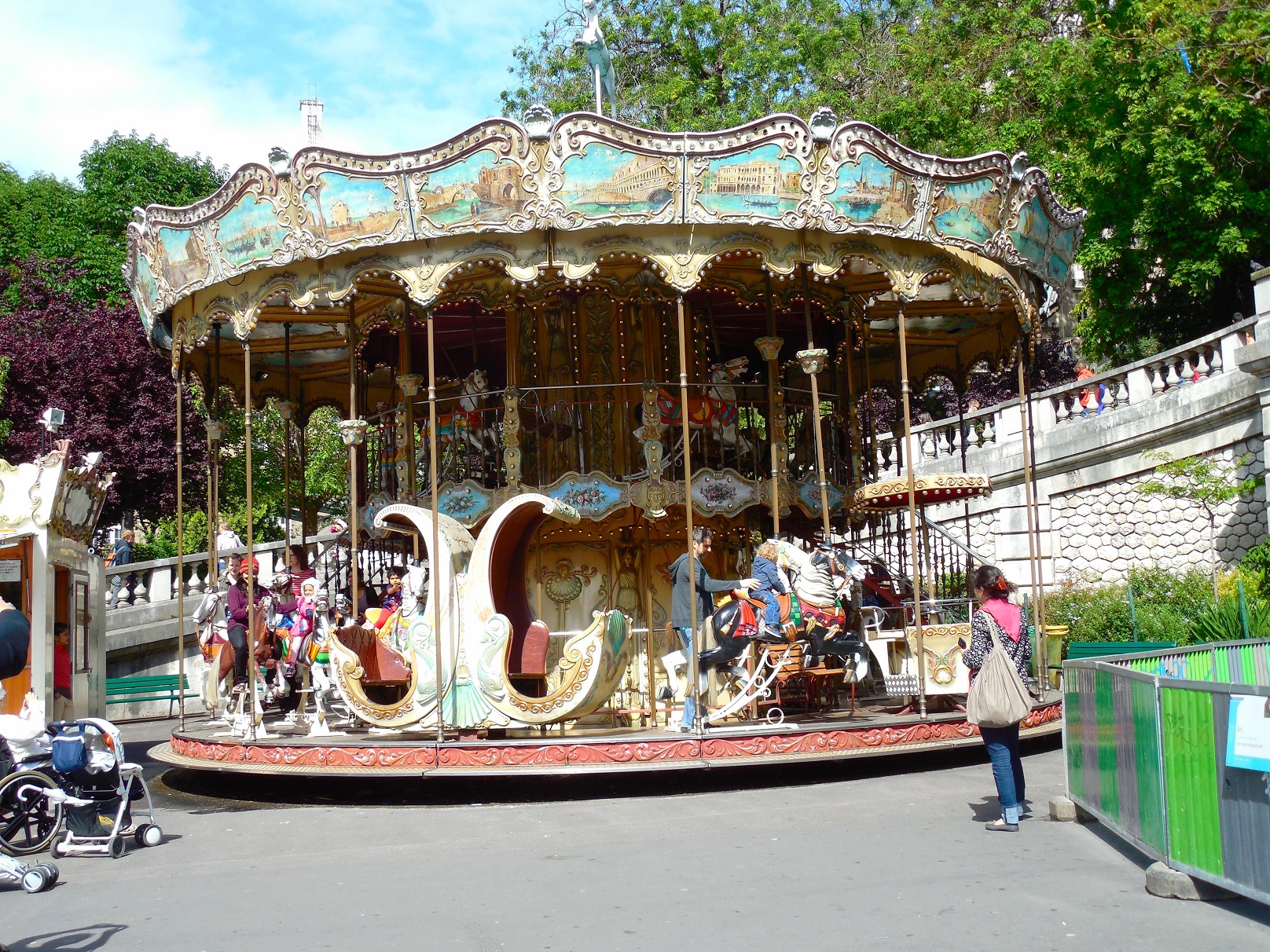
See, we really are here.We found enchanting carousels like this all over Paris.Looking down on the park.
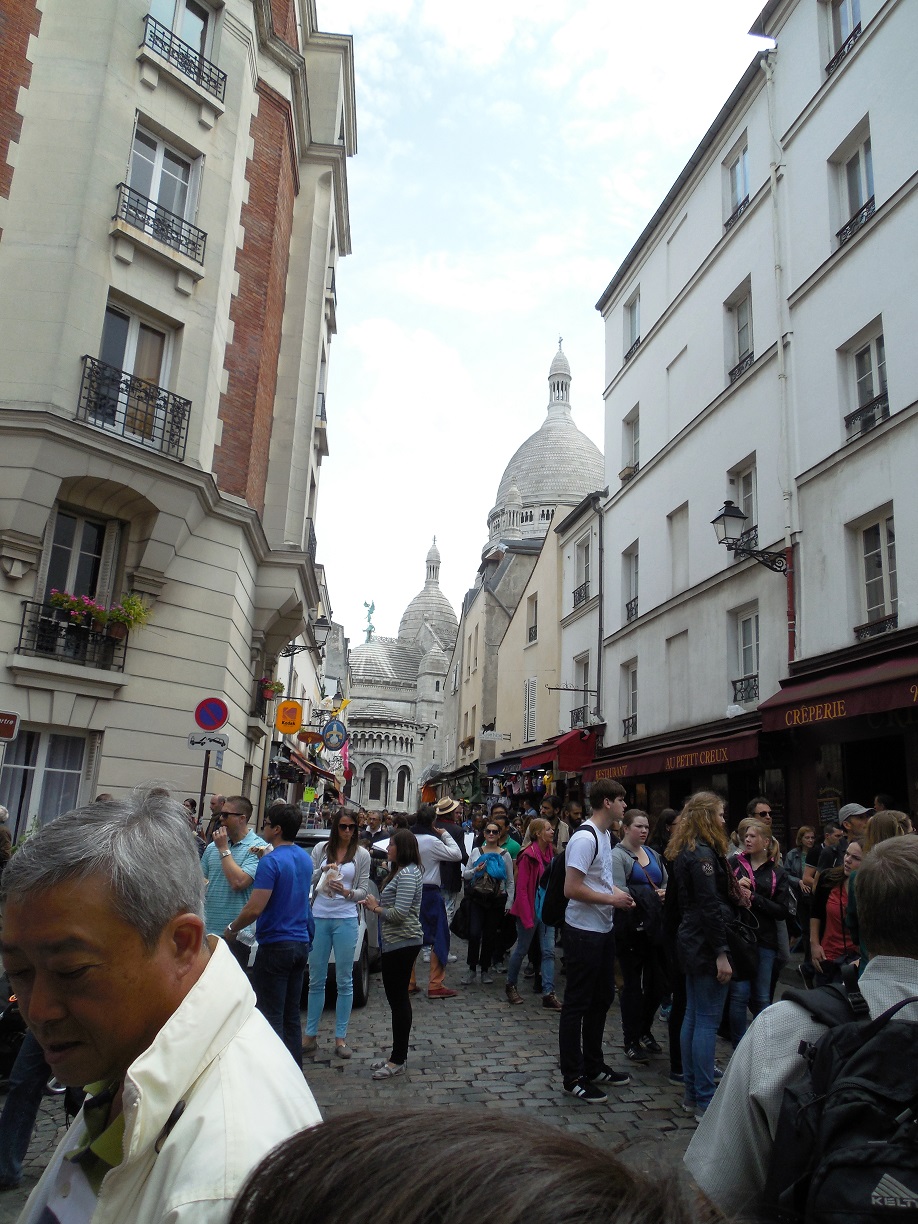
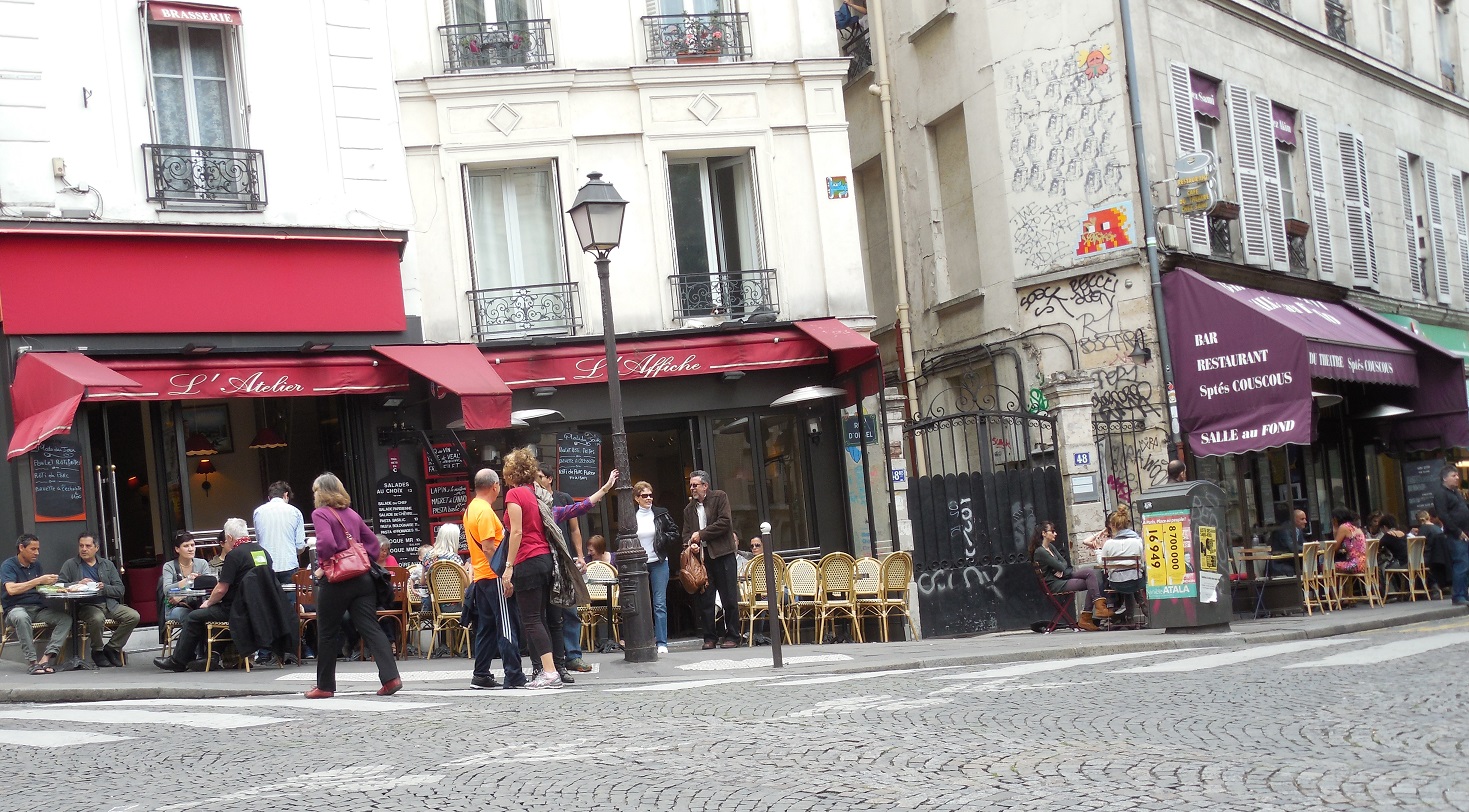
On Sunday we returned to the area after reading about it in the guide book. The book lead us to the neighborhood behind the basilica and we were amazed at how enchanting and incredibly busy it was. Tiny art galleries, cafes, and venders line the narrow cobbled streets and surging through the whole chaotic malaise were hundreds of people.
Montmartre – a very busy borough tucked behind the basilica.
More restaurants than you can imagine and all of them busy.
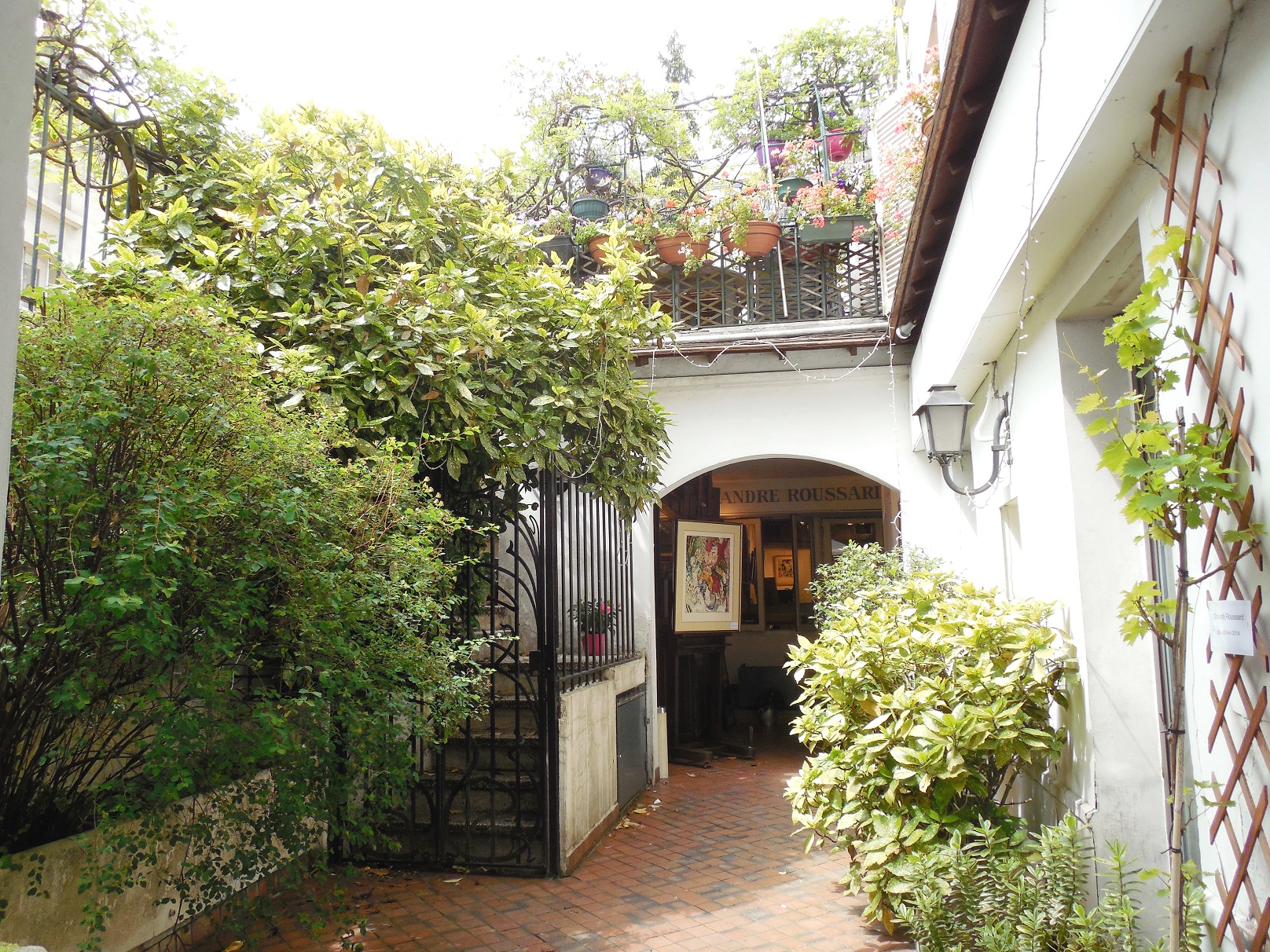
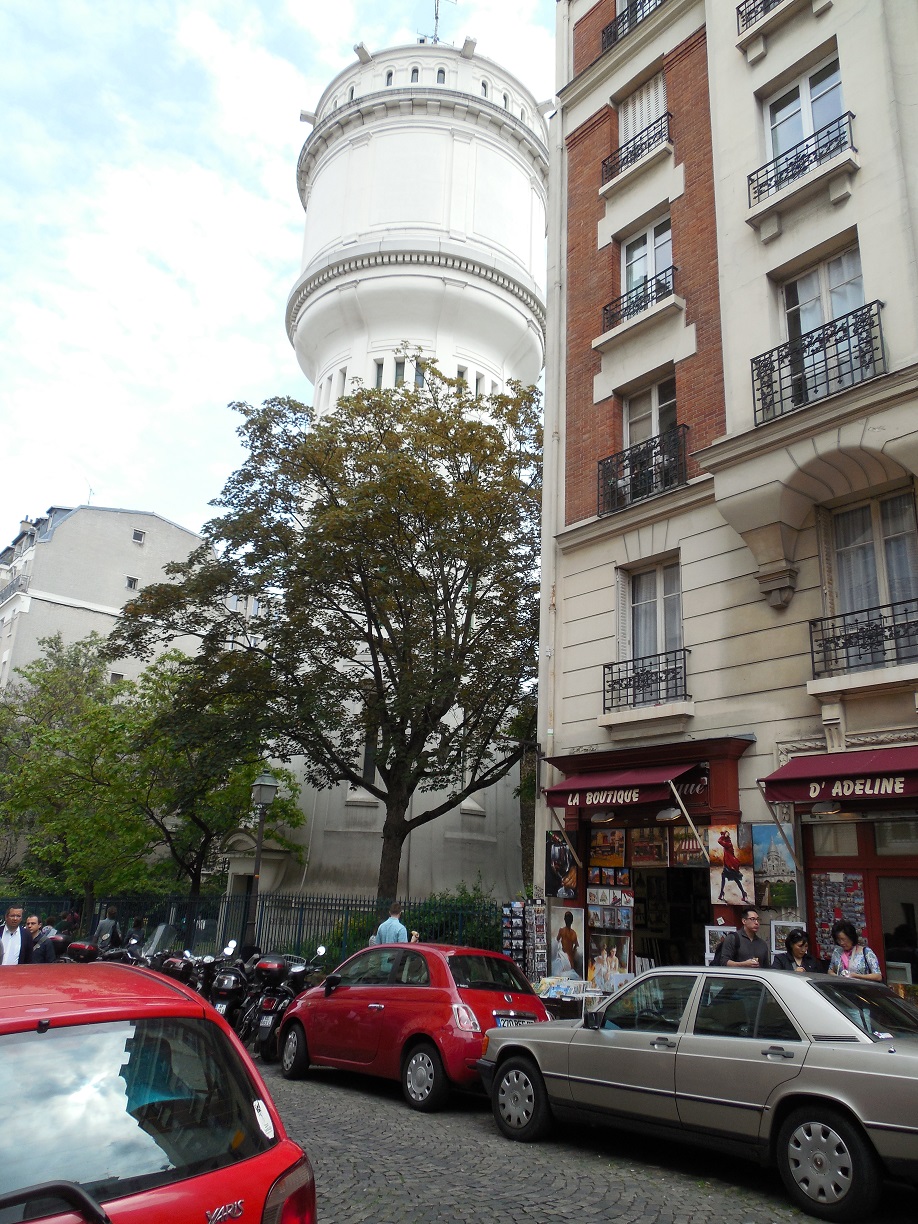
Small courtyards were wedged behind shops with stairs leading to more apartments.The large cylindrical building is Eau de Paris – in English, it’s the Paris water tower. A pretty fancy water tower.
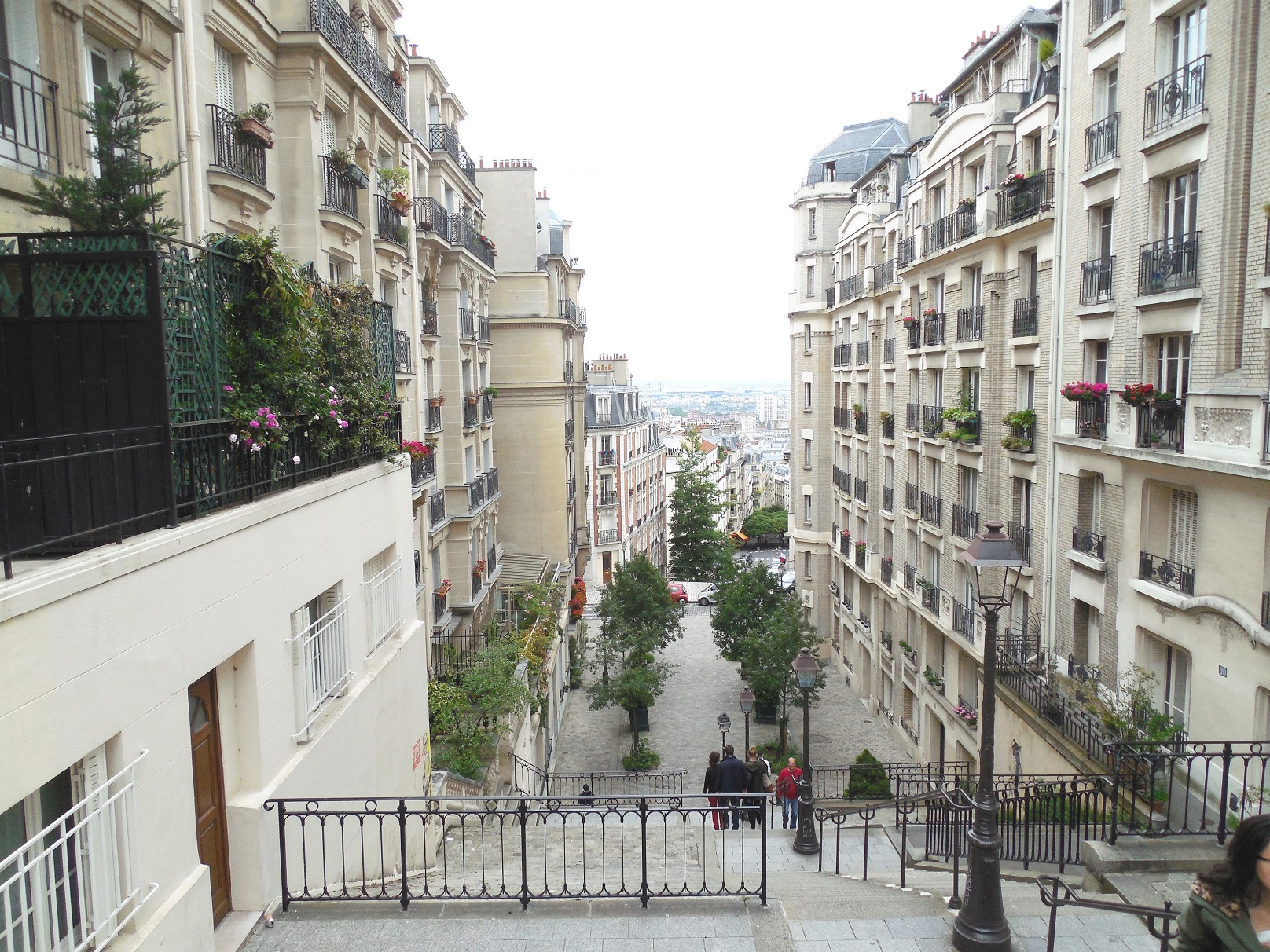
A beautiful view down the other side of the hill.
So this is our little section of Paris. Welcome to the neighborhood.
Our real exploring began on Thursday 5/23/14 beginning with Notre’ Dame (awesome) and then a walking tour of the surrounding area. So tune in tomorrow for the next exciting adventure.
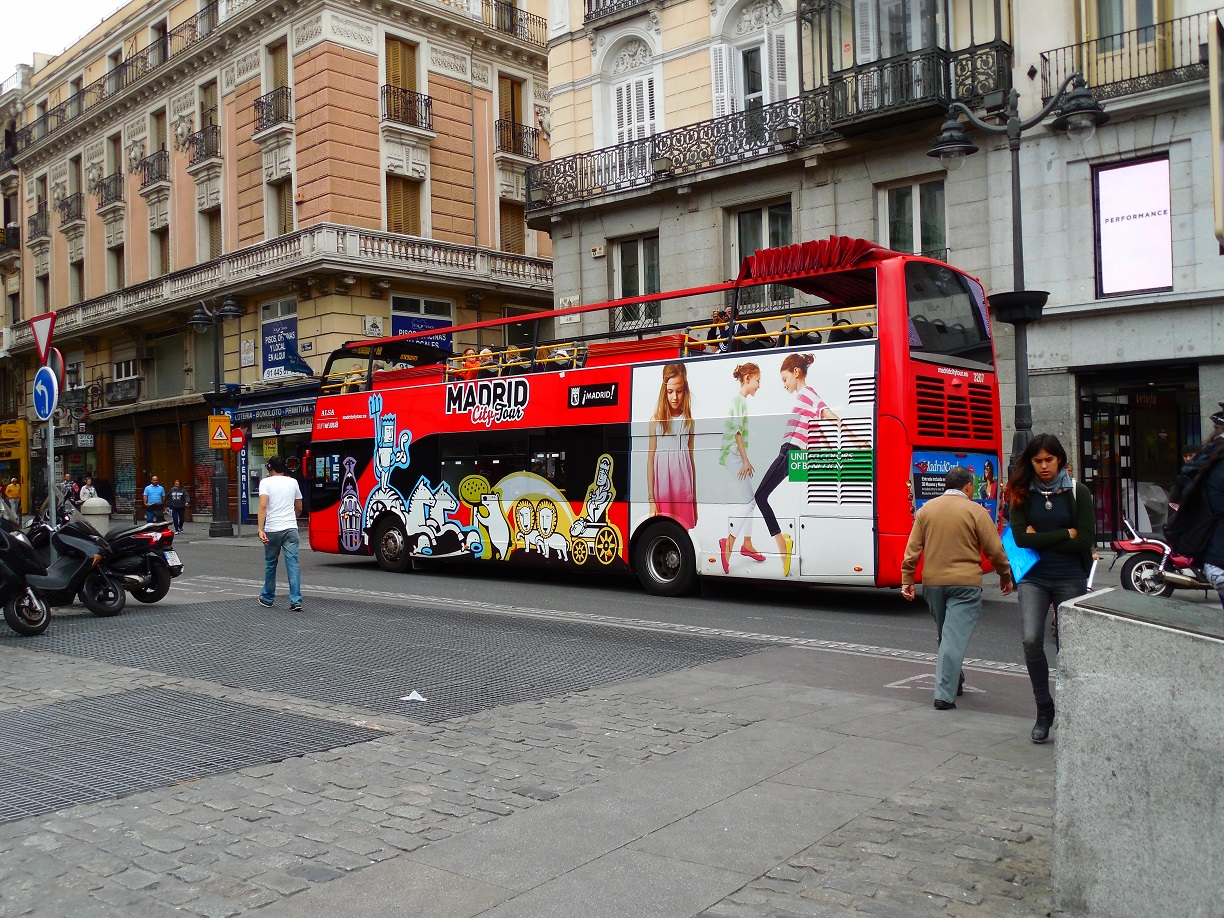
For our last two days in Madrid, we bought passes on the Hop-on….Hop-off buses to tour the city and catch some of the sights that we missed.
Hop-on…Hop-off Bus
As in Sydney, we could probably be here for months and never experience it all, but this gave us another flavor of the Madrid.
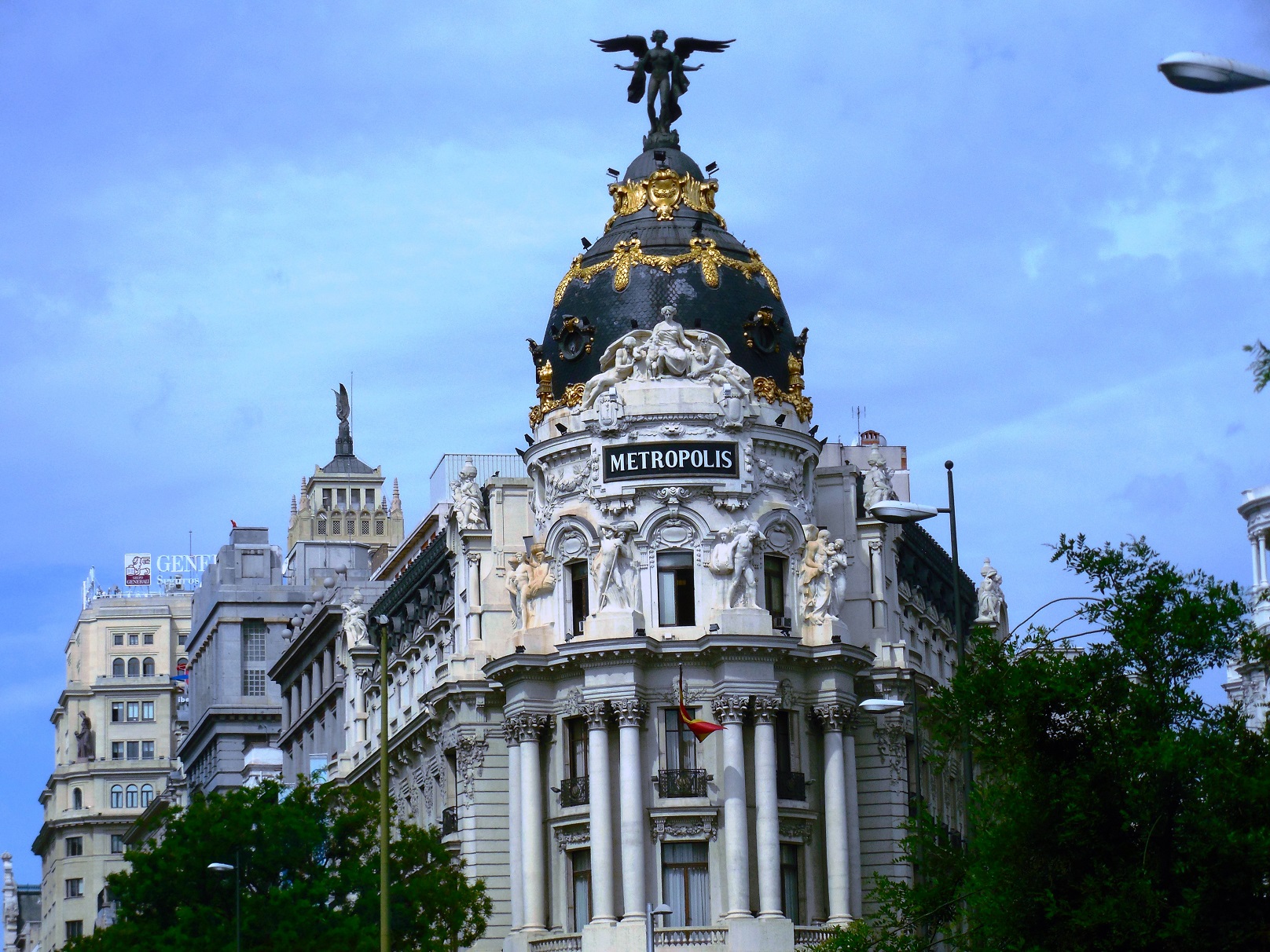
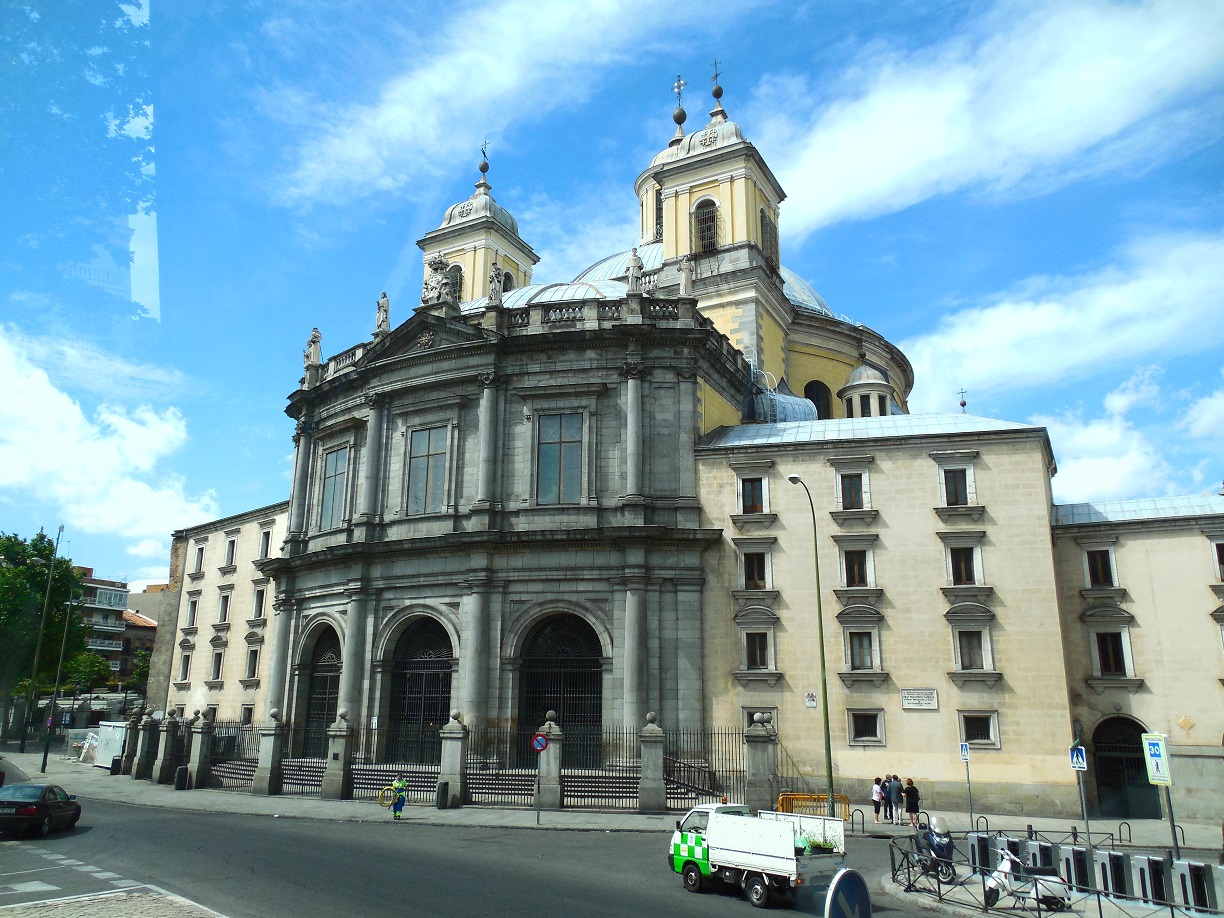
ImpressiveHustle and Bustle of Madrid
More Beautiful ArchitectureMore streets of Madrid
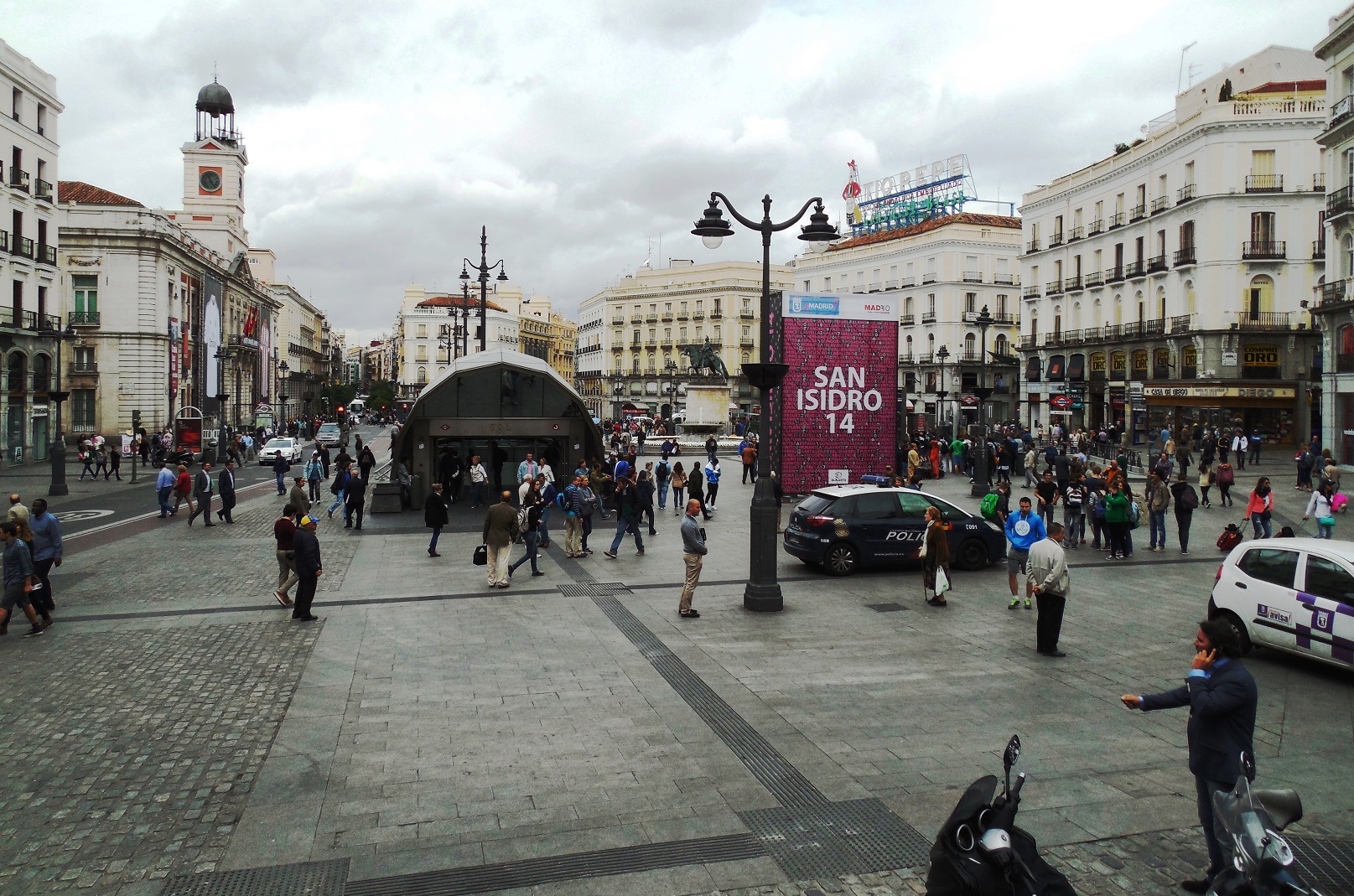
Our tour highlighted the fact that despite the antique quality of much of the architecture, Madrid is an up to date, modern city with subways, live theater it’s got it all.
Our tour showed us newer areas of Madrid where old style architecture blended with the new.The rounded structure is an entrance to the subway which we used a lot while in Madrid.
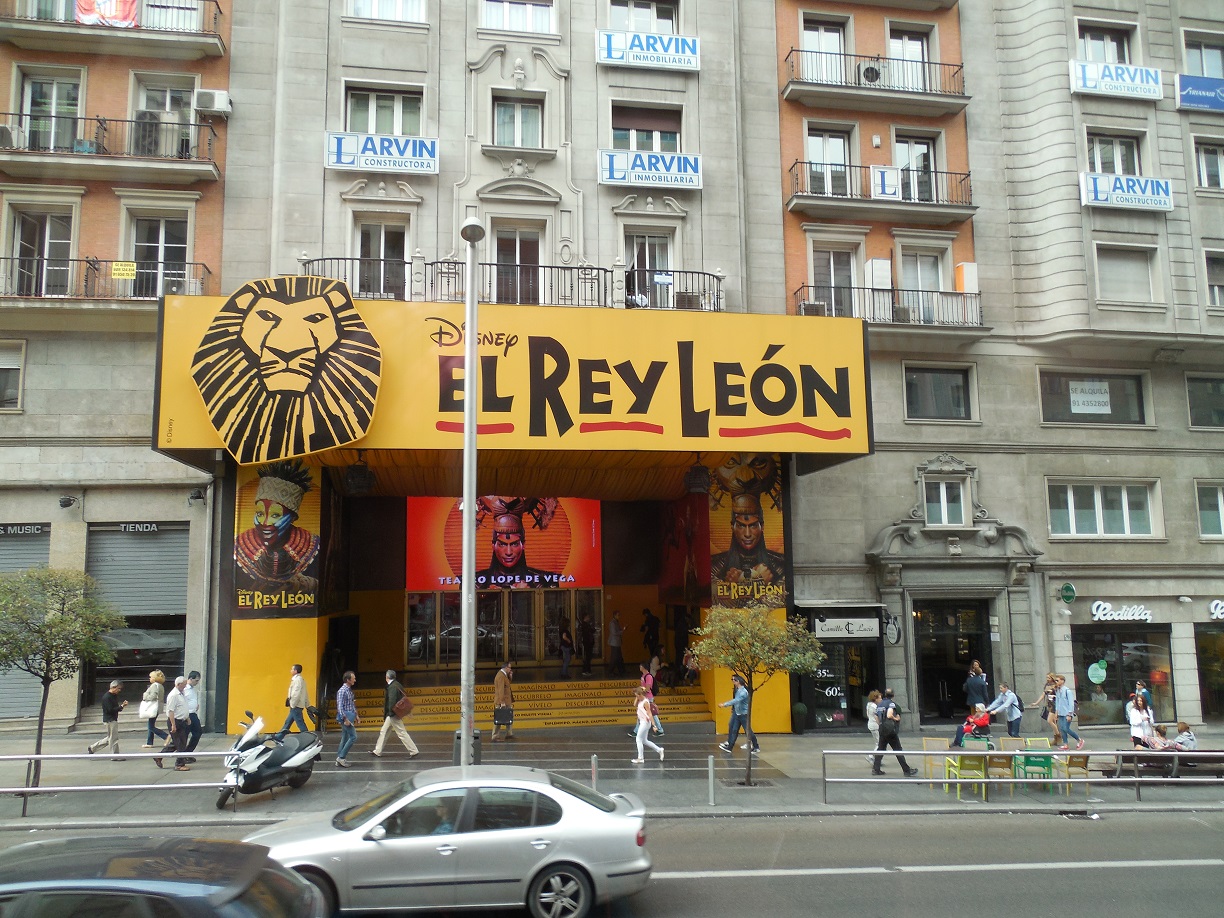
Live performance of Cabaret.The Lion King
The National Prado MuseumIn the afternoon of the first “Art” day, we visited the Museo National Del Prado (National Prado Museum). This building, built in 1785 to house the National History Cabinet, at the order of King Charles III (here he is yet again). It was later dedicated as the new Royal Museum of Paintings and Sculptures and opened as such in 1819. It houses works by Goya, Degas, Rembrandt, Ribera, and Regoyos to name a few.
On the second day we went to the Thyssen-Bornemisza Museum.
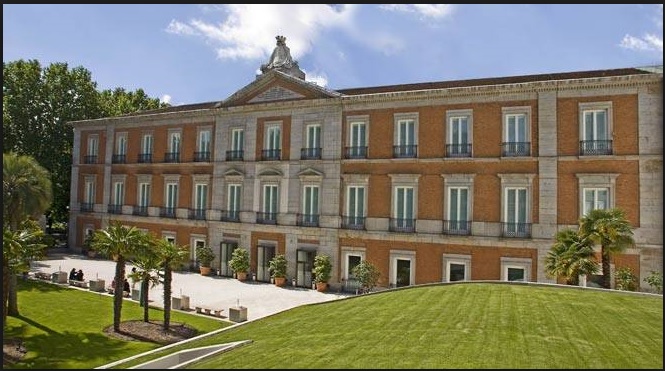
The Thyssen-Bornemisza Museum
This mansion was bought by the very wealthy art lovers Baron Van Heinrich Thyssen-Bornemisza and his wife Carmen. Between them they amassed the largest private art collection in the world. In 1992 the couple opened The Thyssen-Bornemisza Museum to the public. A year later the Spanish government bought the entire mansion and art collection for around $345 million – that’s a nice nest egg.
Baron Hans Heinrich And Carmen Thyssen-Bornemisza
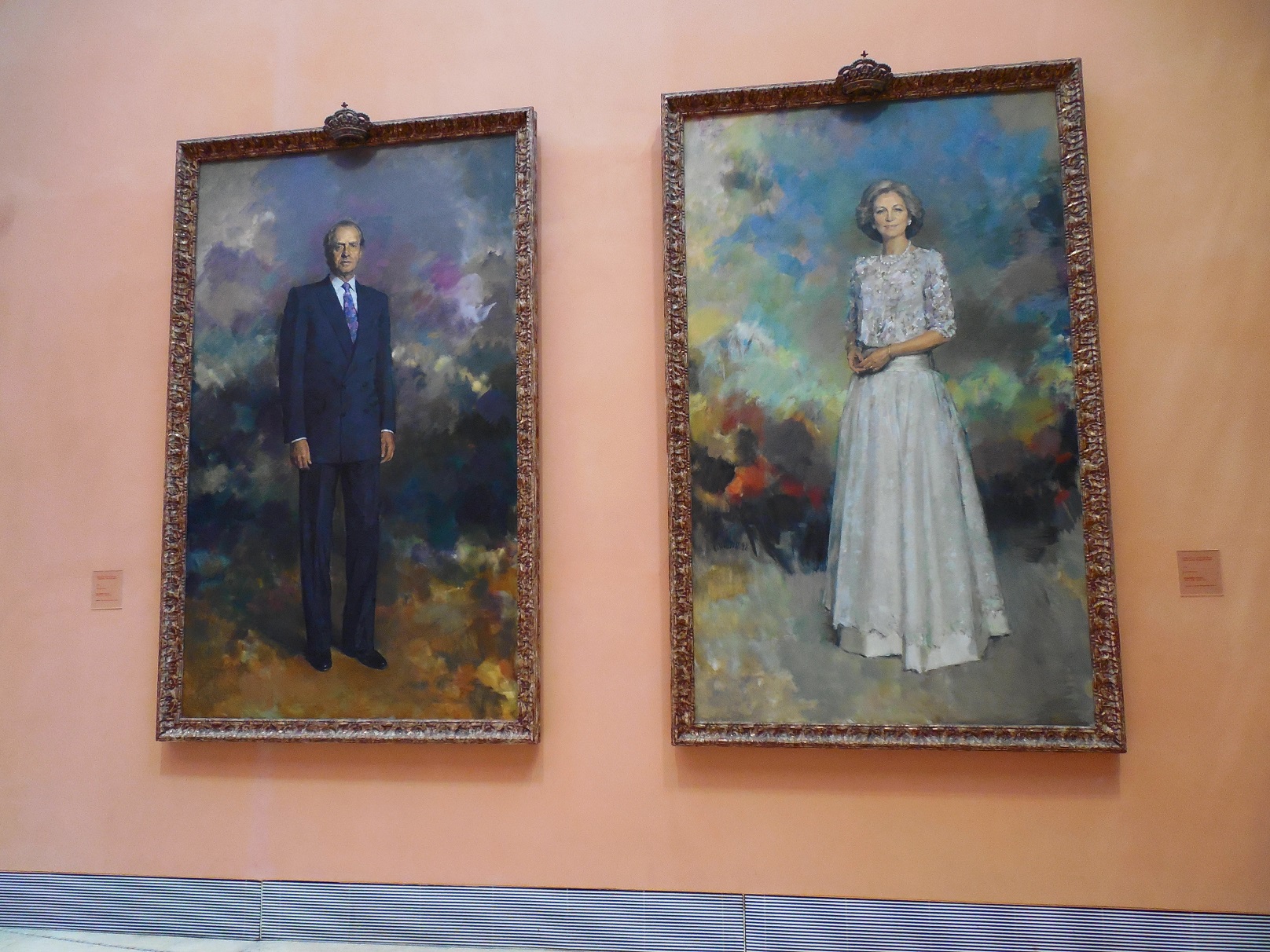
My pictures got a bit mixed, so I’m just going to let you see them and not worry about which picture came from which gallery, okay? Good then, here goes.
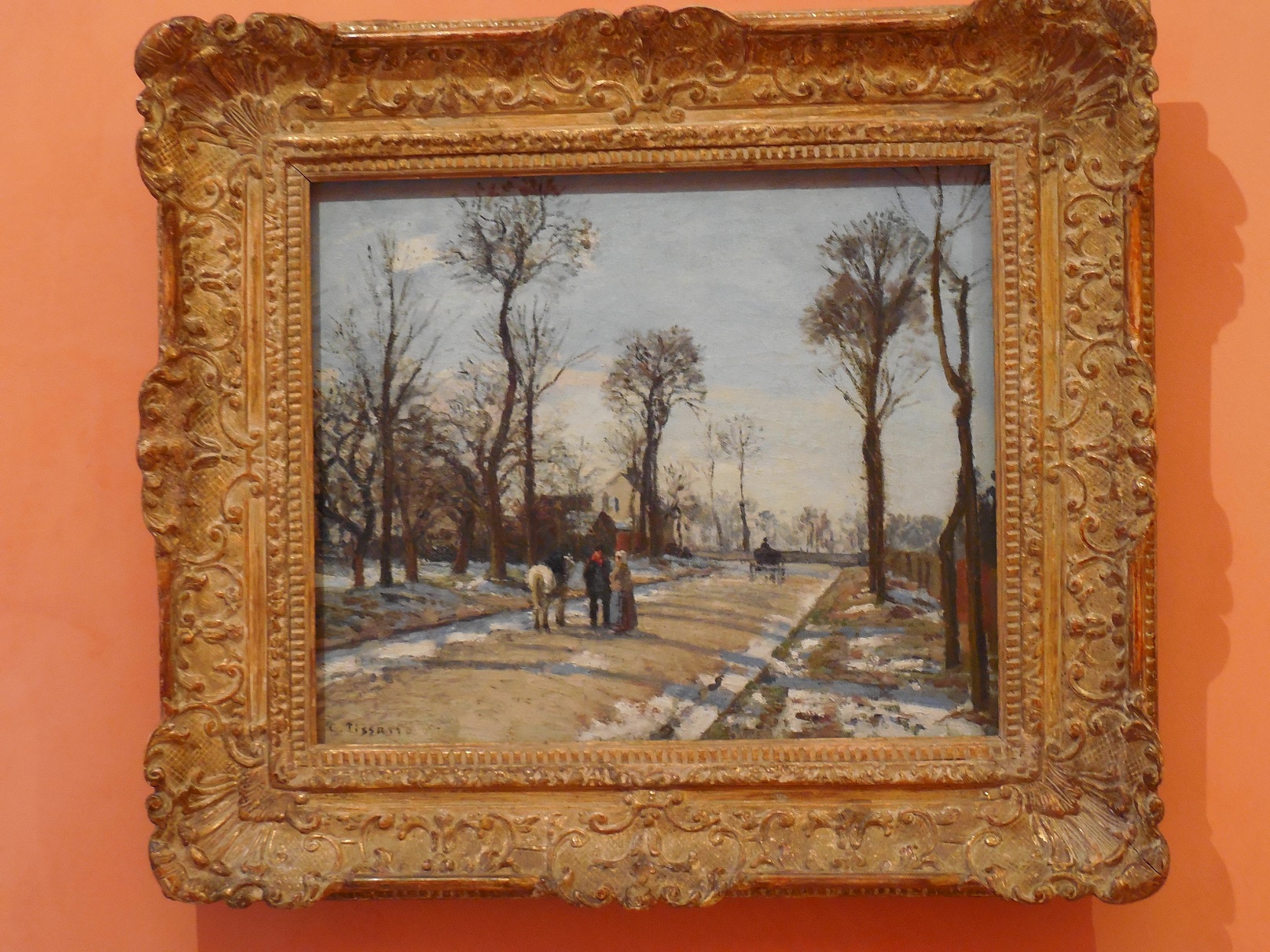
Camille Pissarro
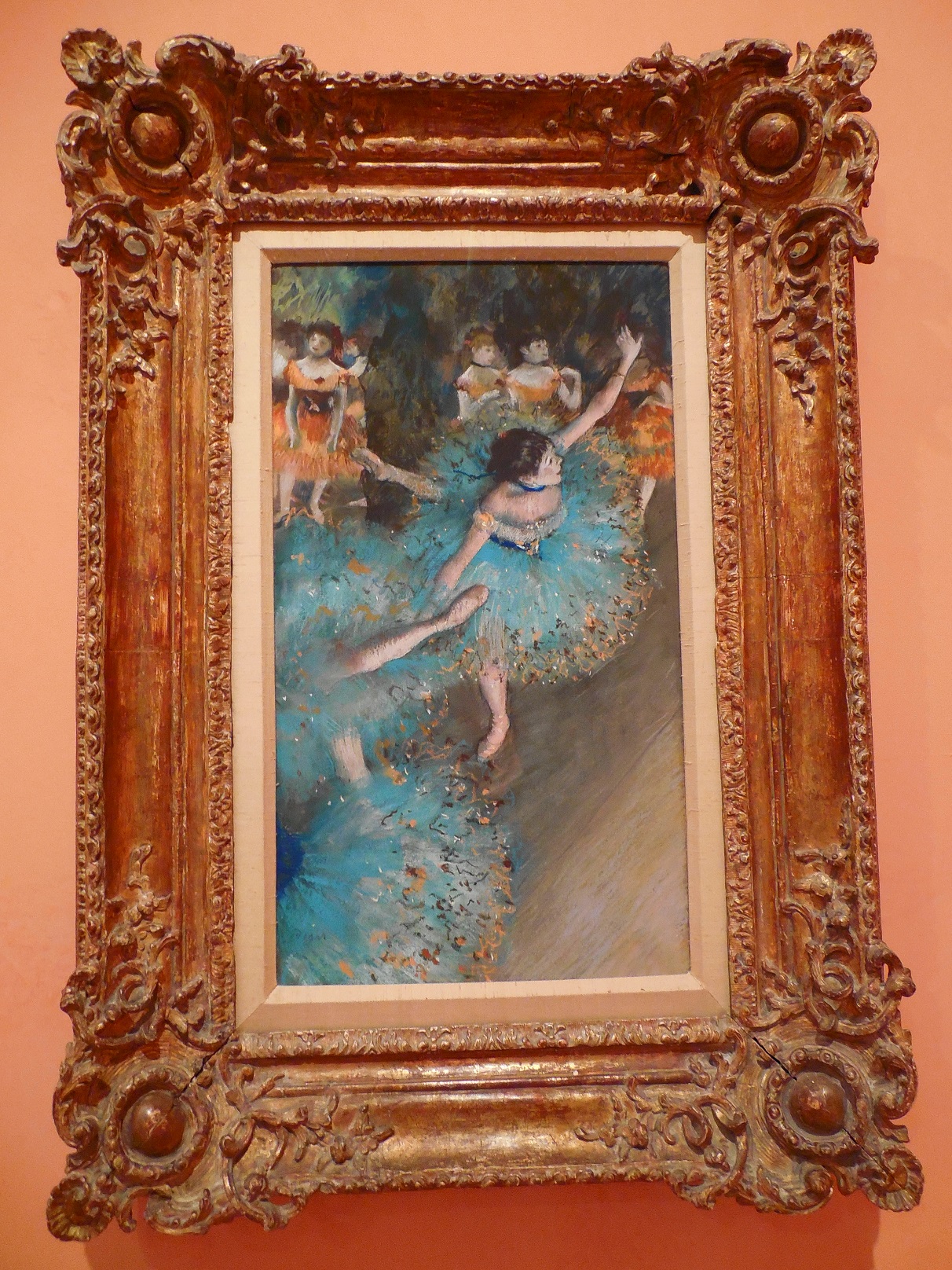
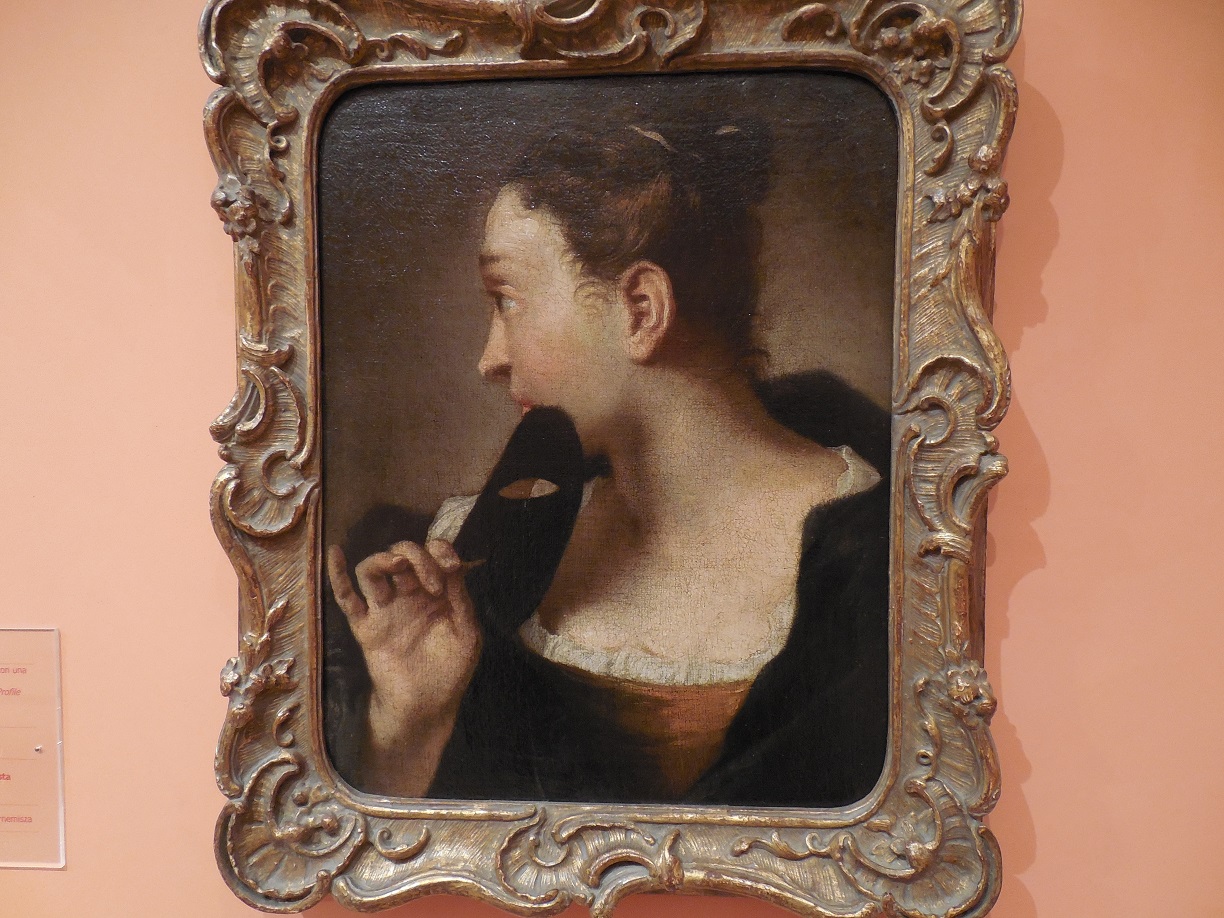
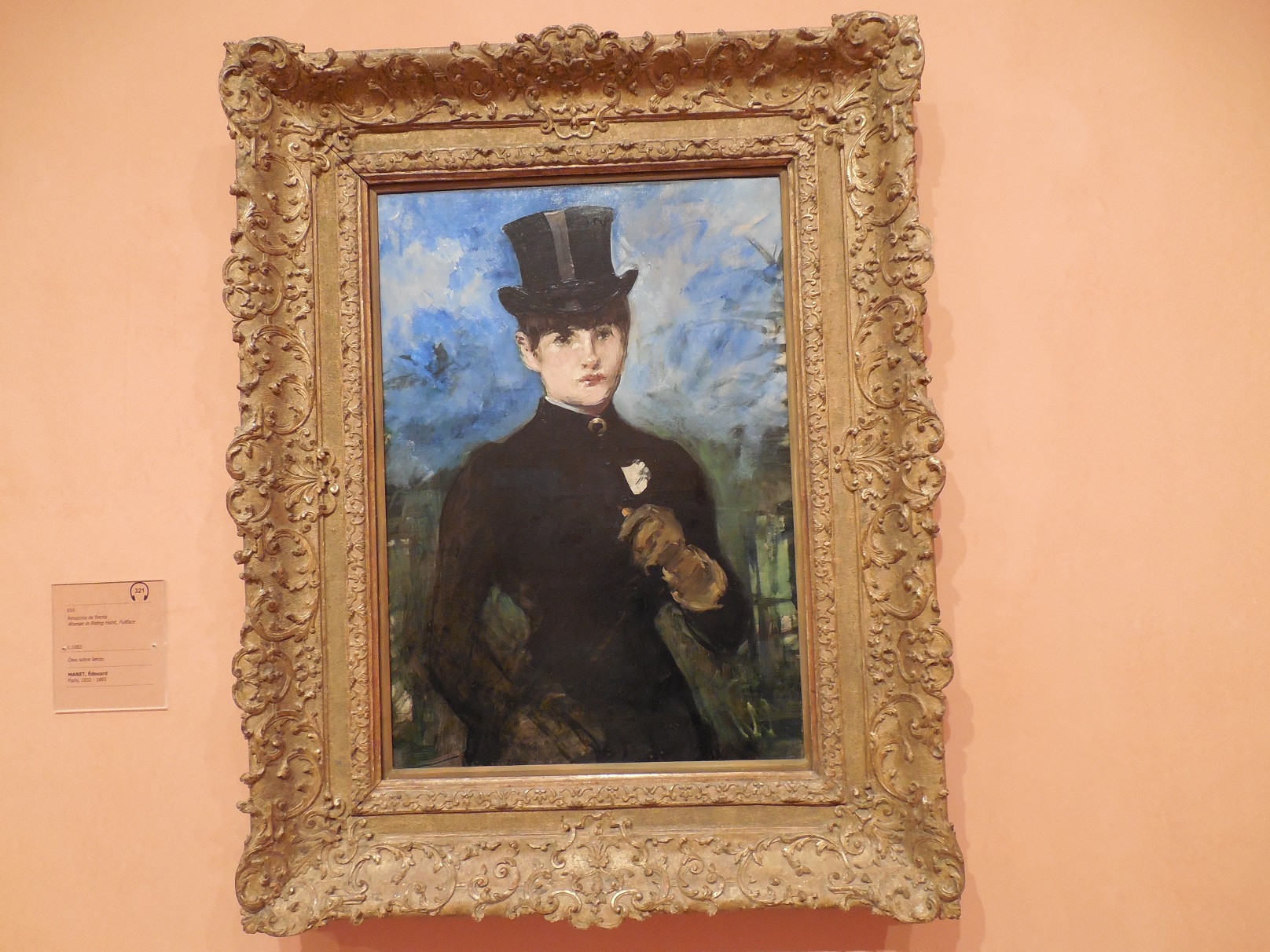
Swaying Dancer by Edgar DegasTom and I found some of the titles on the paintings pretty funny like – Portrait of a Young Woman in Profile with a Mask in Her Right HandClaude MonetTom insisted that I put in this painting by Edouard Manet along with a painting by Claude Monet for those like him who couldn’t tell there Monet’s from their Manet”sArt Student at work.
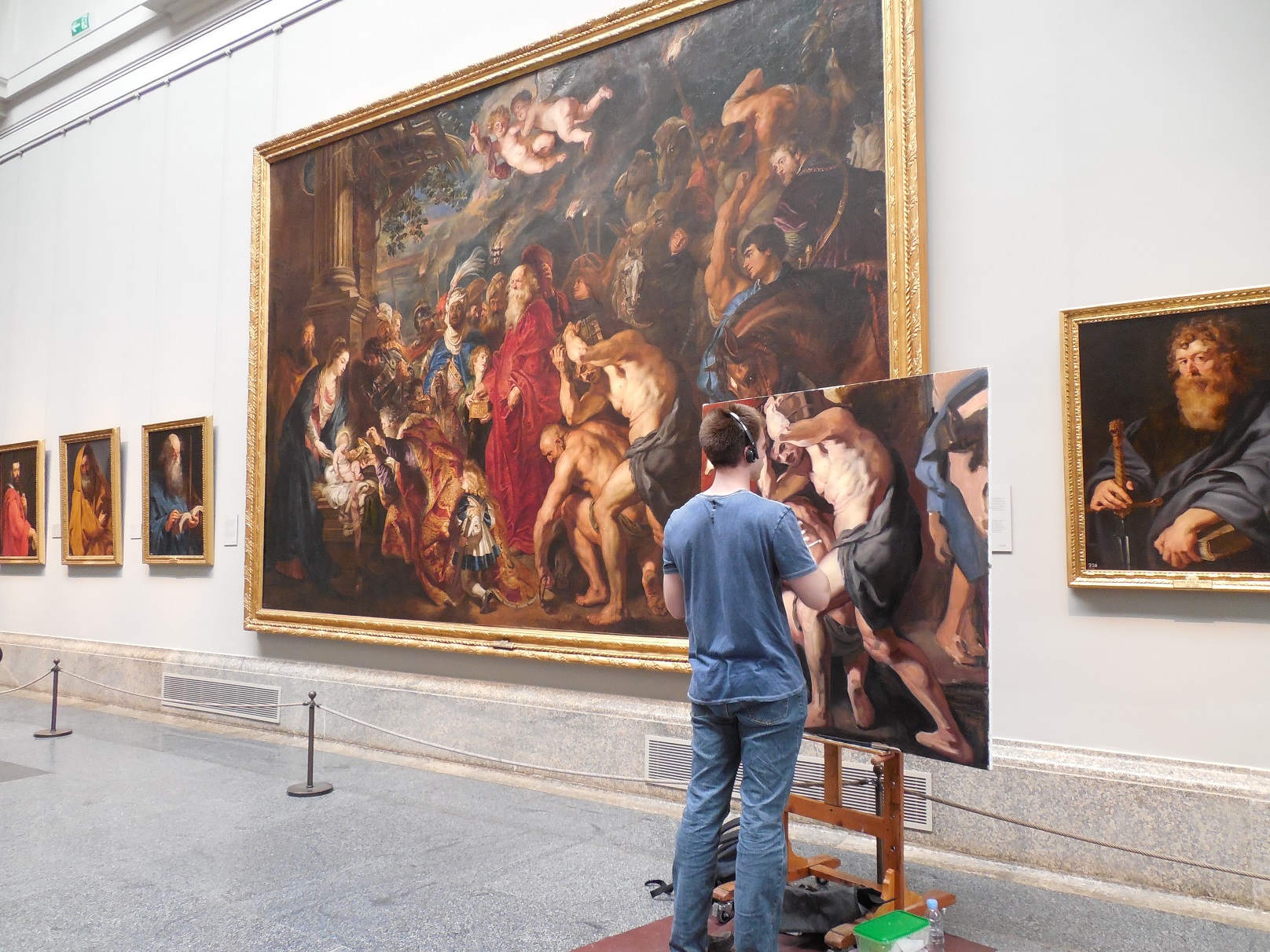
At various locations around the Prado we saw art students learning by imitating the masters. Some of them were very good.
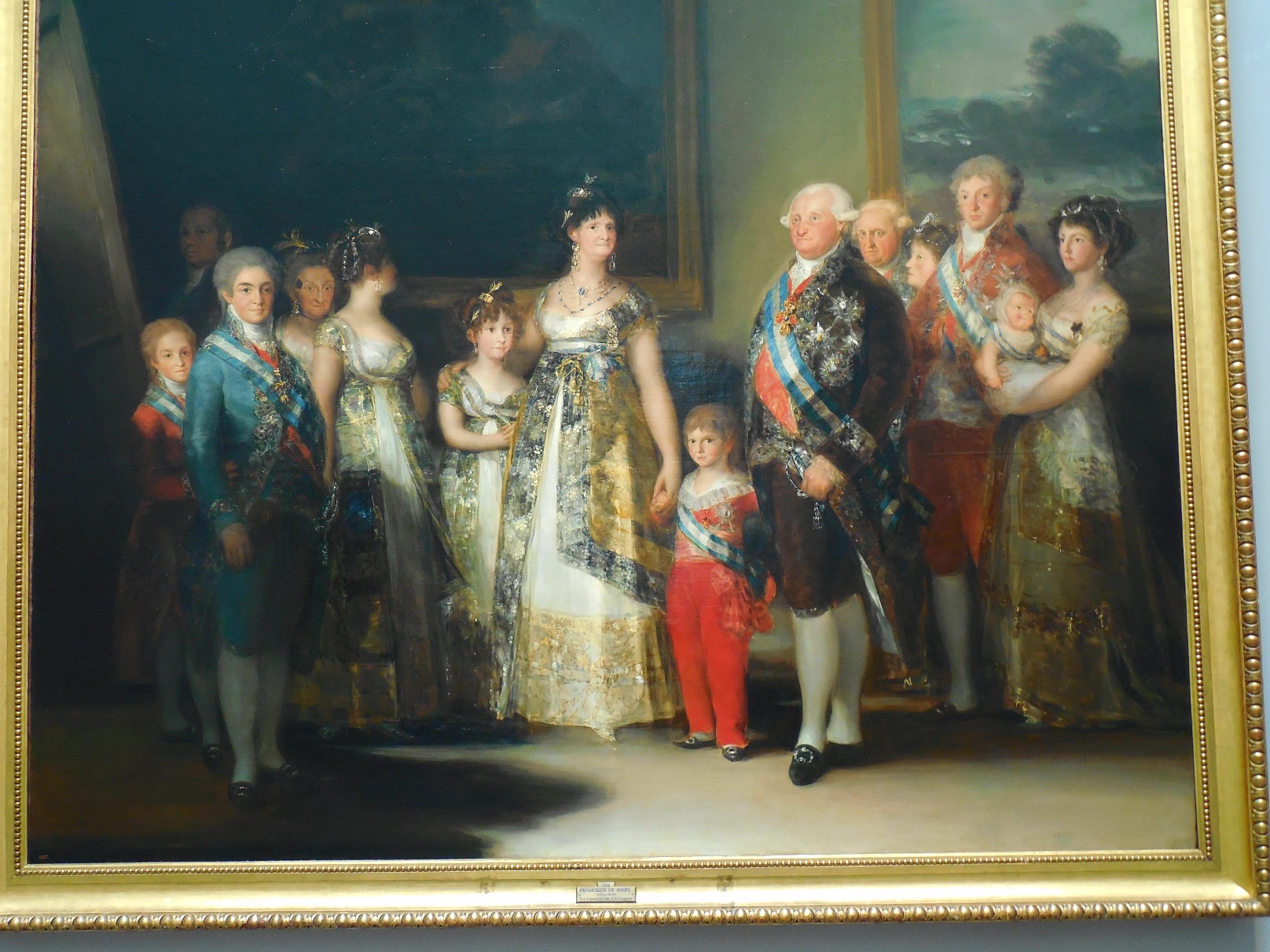
If you look closely at this painting by Francisco Goya you’ll see that he painted himself painting just behind the people on the left.A Statue of Francisco Goya stands at the entrance to the museum grounds.
There was a large showing of Goya’s works at the Thyssen Museum and a statue of him in front of the museum.
Both Tom and I have come to the conclusion that we just are not all that into Renaissance paintings.
Rubens or not, it just doesn’t sing to me.
We do however enjoy the impressionists, sculpture, furniture, pottery… so it was on that which we focused.
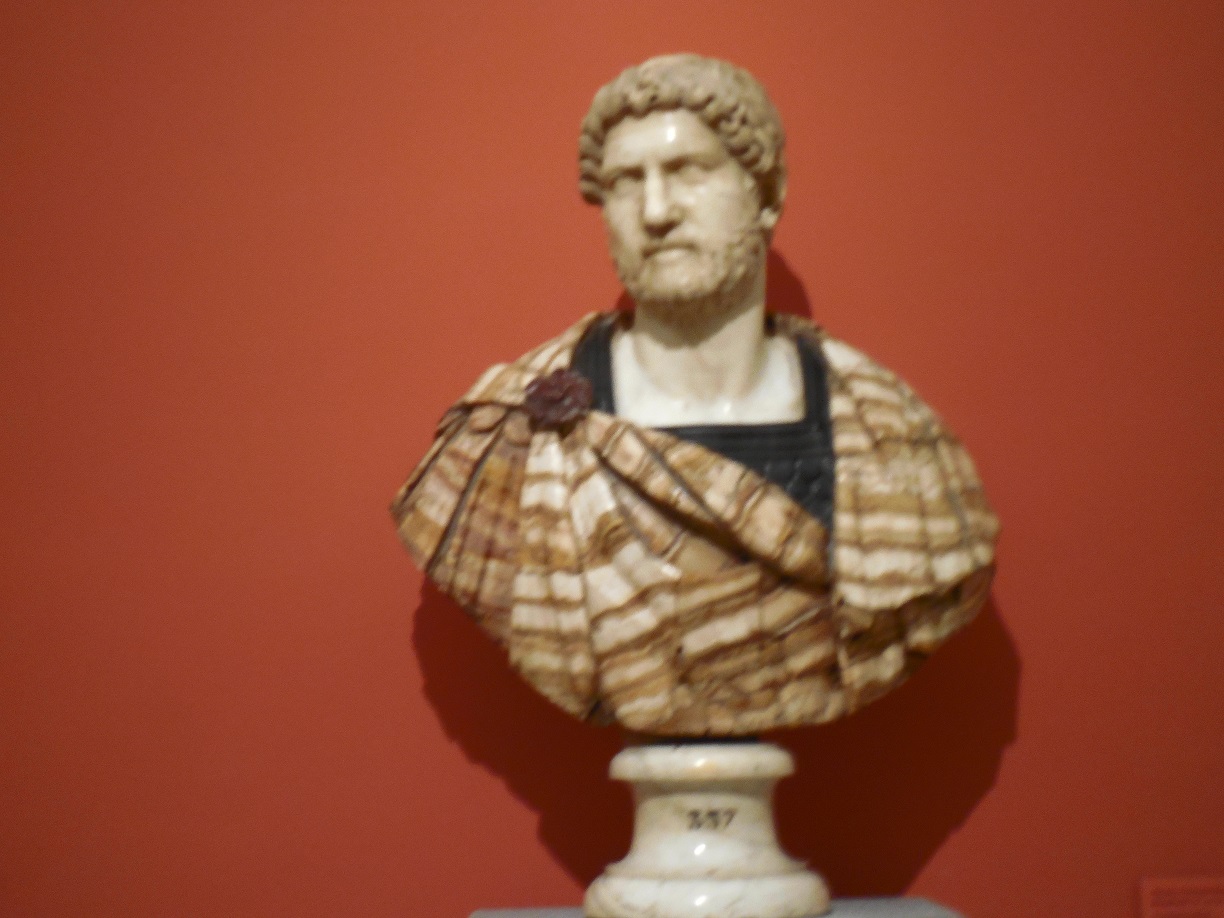
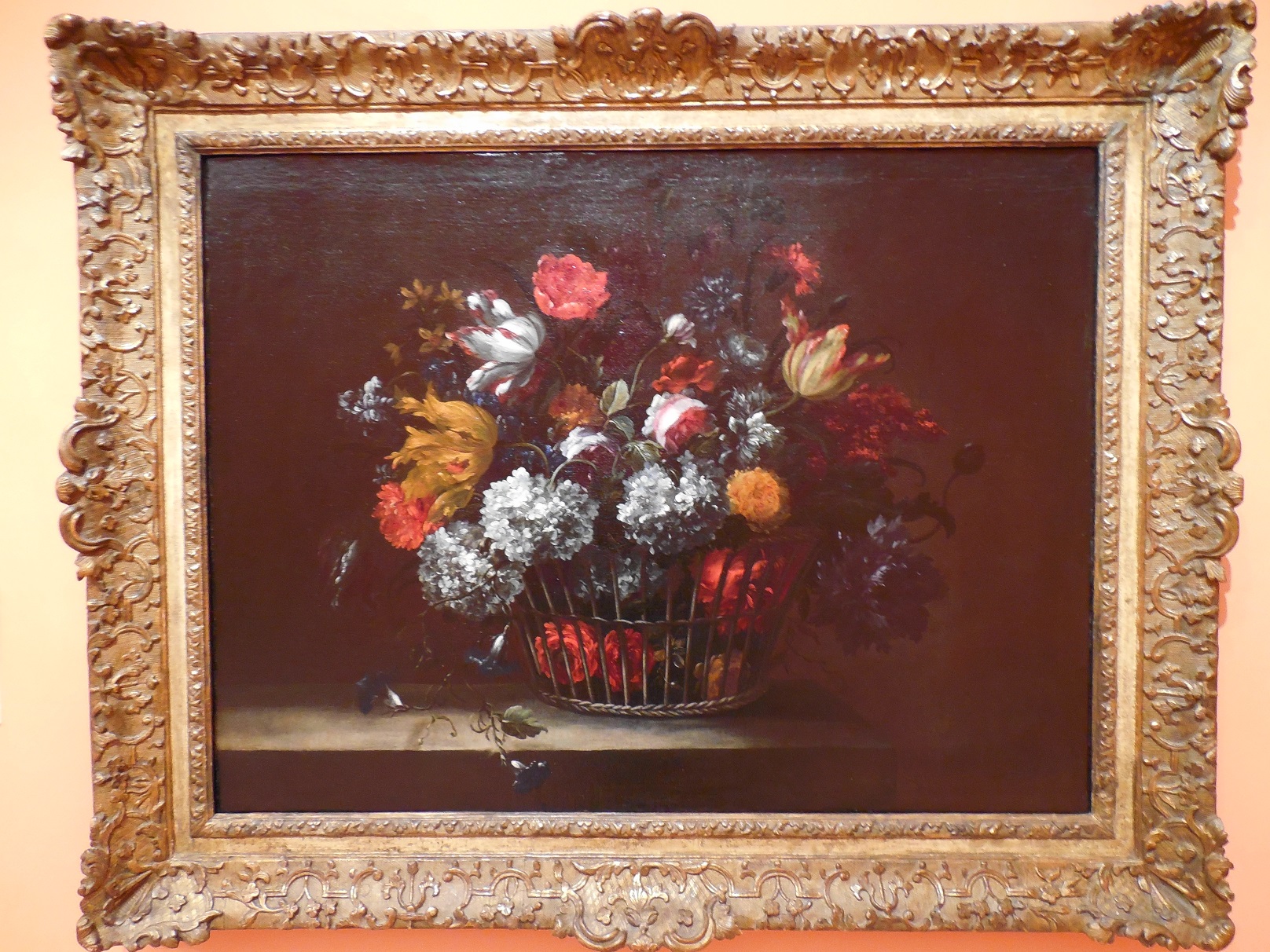
Gorgeous tables were also displayed.One hallway had marble busts displayed. I liked the combination of white and colored marble.Jean-Baptiste MonnoyerStatuary was scattered throughout, but paintings were the most well represented.Head of a Nude Draped by Pablo Picasso I’m not real big on Expressionism either and I think Picasso was pretty much off his rocker, but I like this one even if it has a weird title.




![venus_de_milo[1]](https://charliexplores.com/wp-content/uploads/2014/05/venus_de_milo1.jpg)



















![prado-b02[1]](https://charliexplores.com/wp-content/uploads/2014/05/prado-b021.jpg)





 CharliExplores