So after lunch our adventure in the Outback continued. JJ had been giving us background information some of which I shared in the last post. However, this is where the learning really started. This is where we began to learn the true lessons of this region – the stories of the Aboriginal people, the heart and history of The Red Center.

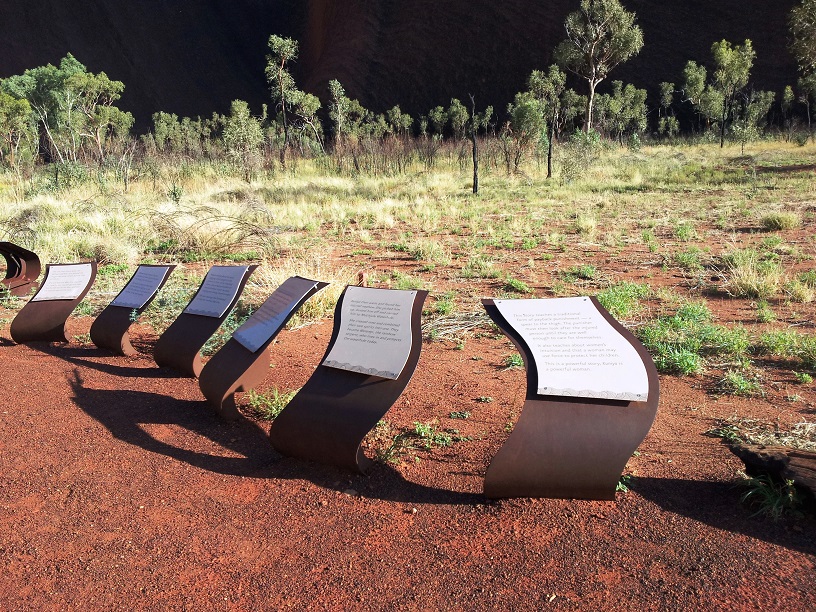
Our next excursion began with a stop at the Cultural Center at Uluru where we spent an hour or so reading and watching videos and learning a little bit about the Aboriginal culture.
Then it was off to Kata Tjuta (Kah-tah Jutah).
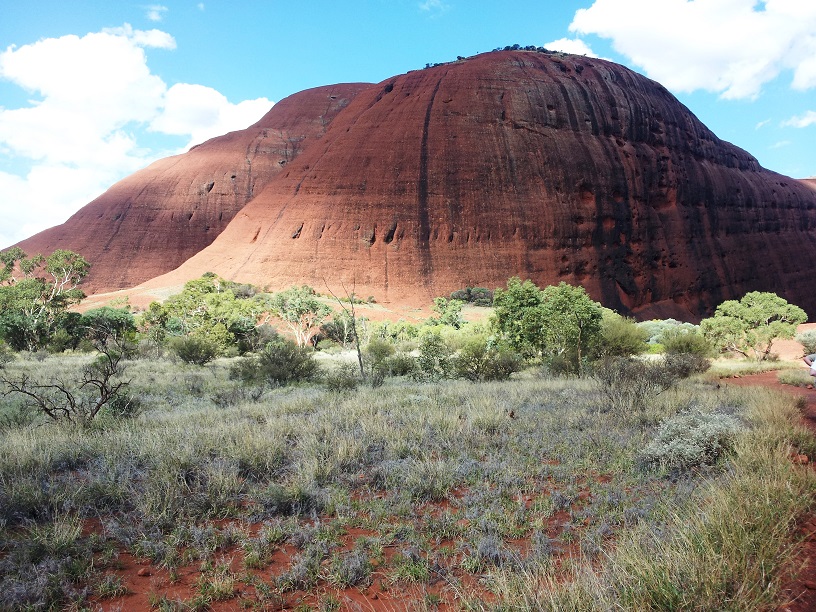
(translation – Many Heads)
Kata Tjuta (Many Heads) is a formation of huge red rocks about 30 kilometers or 18 miles from Uluru. It is also a sacred place for the Aboriginal people. It was the place where the men performed the ceremonial rite of passage – the place where boys became men. These ceremonies are holy and the Aboriginal people are a private people. Their ceremonies are not shared with the world or even with the opposite sex. Let me explain. In the Aboriginal culture, there was a clear distinction between “men’s business” and “women’s business.” The men were the hunters. They were ones that did the wall paintings that told their stories – their history. And the grandfathers were the ones who taught their grandsons.
The women were the gatherers, the ones who held the knowledge of plants – what was edible and which plant could be used for a stomachache, a burn, to promote or prevent fertility. And the grandmothers were the ones who passed this knowledge on to their granddaughters. More about this later.
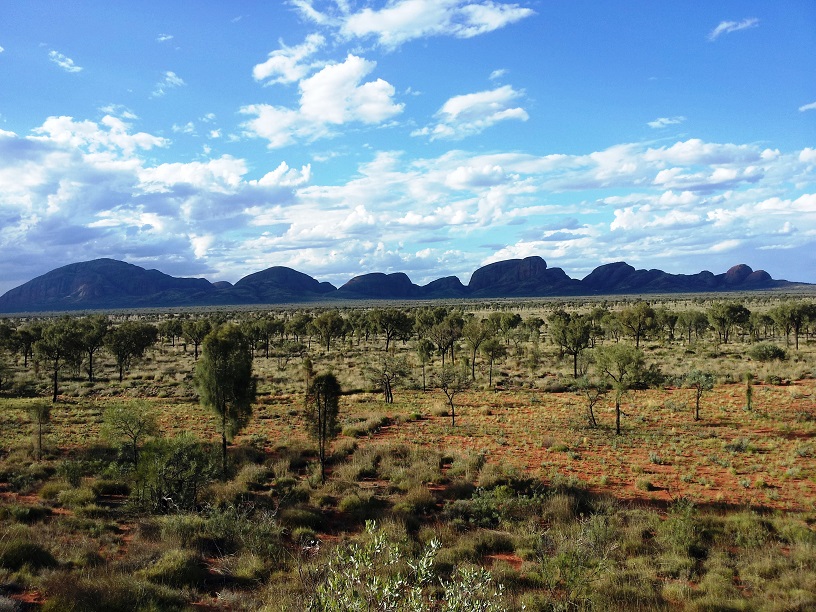
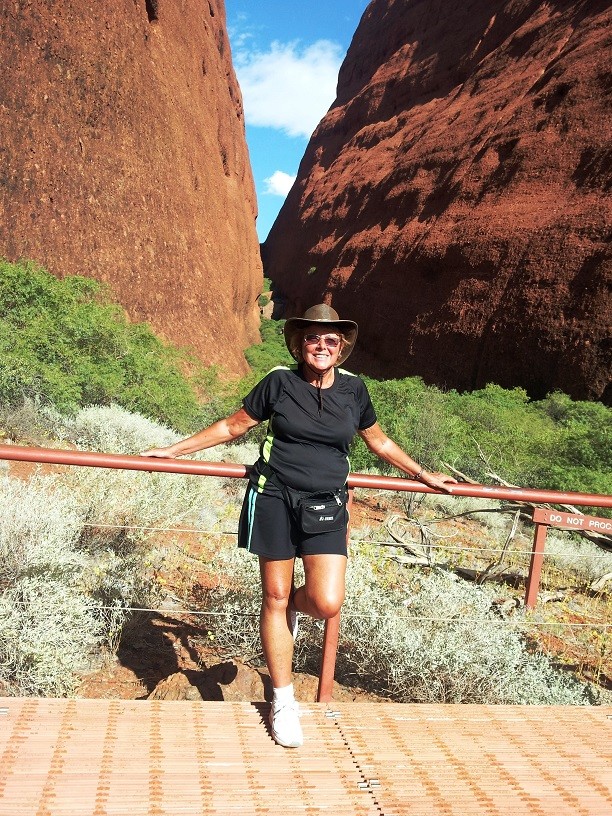
We arrived at Kata Tjuta at around 4:00PM and the temperature was hovering around 102°, but it was a dry heat which made it okay – NOT. Despite the temperature, we hiked the 1.5+ kilometers into a small canyon where we learned a bit more about the area and its history and sweated copious amount of bodily fluids. I should insert here that JJ had passed out 2 liter bottles of water to each of us, at the first station we stopped at, and laid down the rule – “If you don’t have your water with you, I won’t allow you to go with me on the excursions!” It seemed a little harsh at the time – not so much now. We hiked back to the van and it was off to the next stop – Sundowners (cocktails at sunset) and a sunset view of Uluru – now that works for me!
We arrived at exactly the right time to get set up, get our snacks and drinks, and to prepare for the impressive show of sunset at Uluru (JJ is very punctual). Unfortunately, Mother Nature was not in the mood – there was a pretty thick cloud cover so watching the sunset on Uluru was not happening…heavy sigh. But wait when we turned around toward the west, we were delighted with one of the most spectacular sunsets I have ever seen.
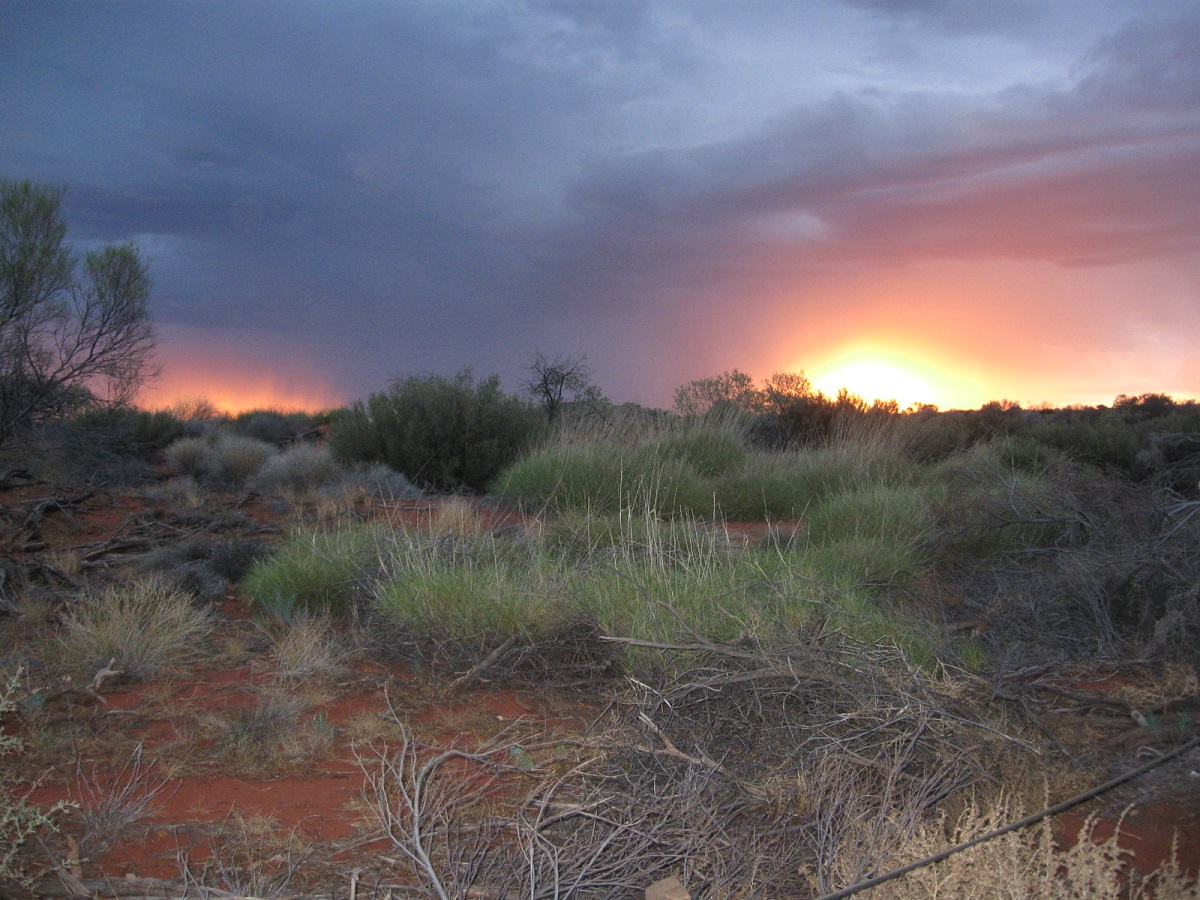
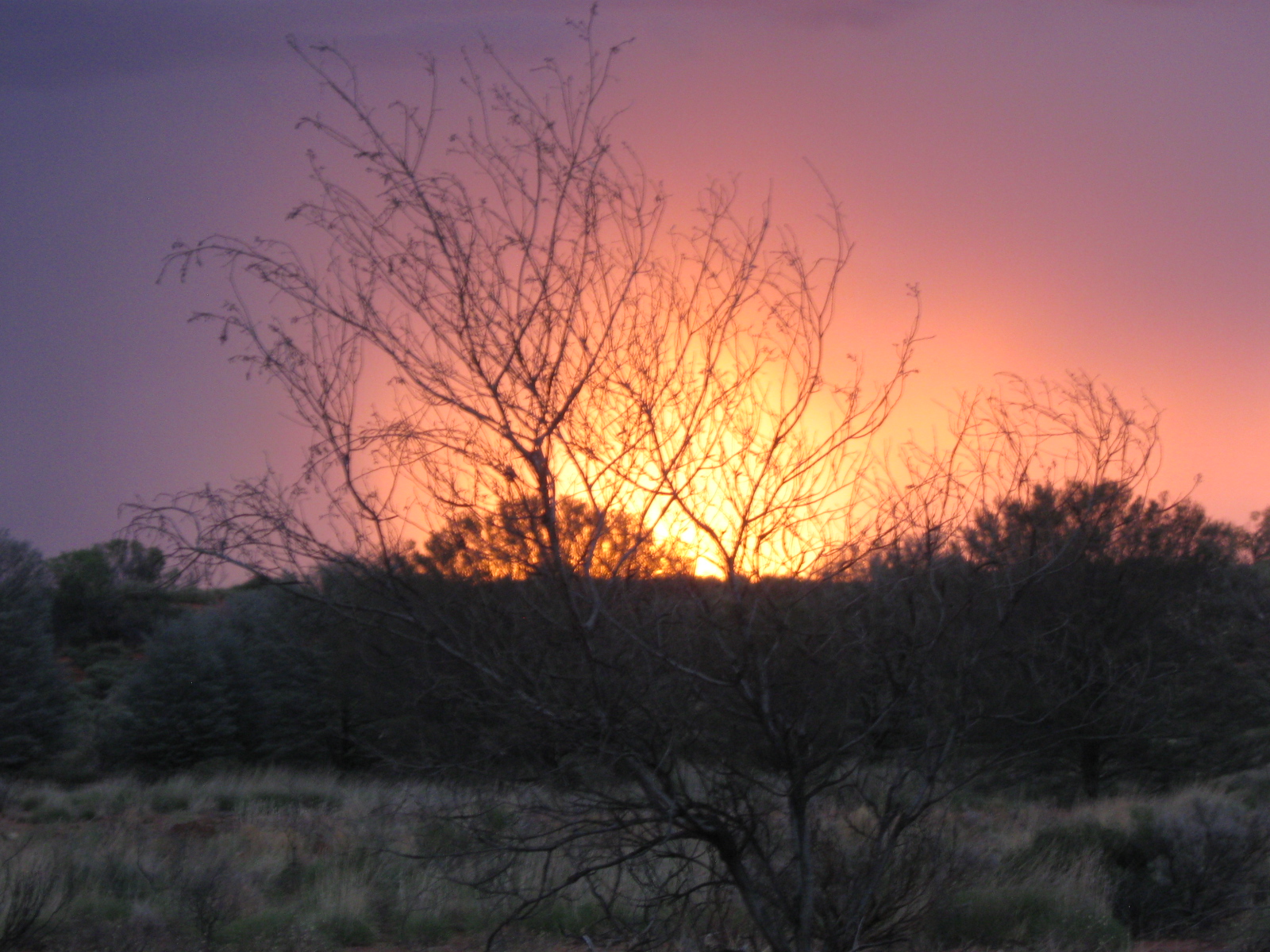

The colors were beautiful and in the center there was a thunderstorm showing off with amazing lightning flashes. The crowd was mesmerized and we stood watching in hushed amazement for nearly half an hour until it faded. Wow! Thank you Mother Nature.
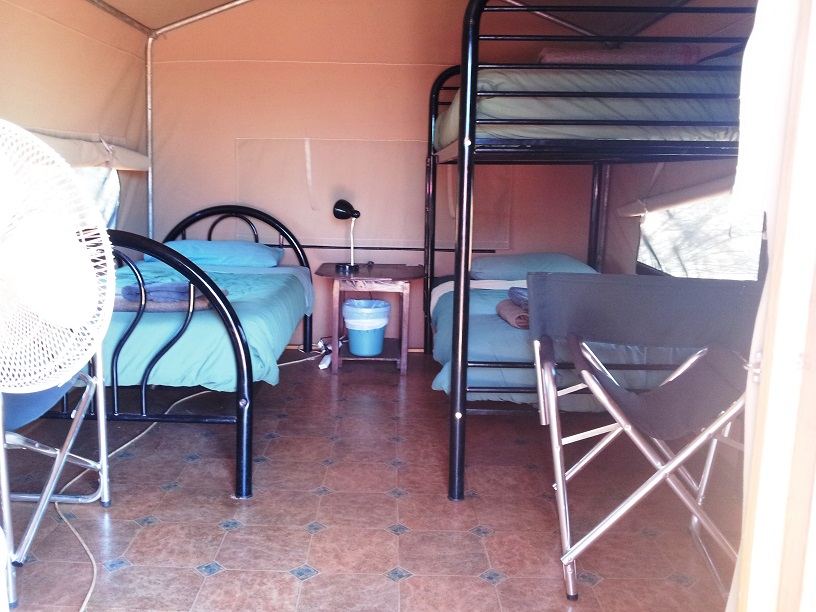
The next stop was camp, dinner – camel sausage (delicious and yeah, we rode a camel and ate camel all in the same day), kangaroo steak, salad, and desert – showers and bed by 8:30. We slept like the dead!
But not for very long, JJ had breakfast ready and was telling us we had 30 minutes until the bus left. That was at 4:30AM. We chowed down and left camp at precisely 5:00…ugh. We arrived at a hill near Uluru in time to watch the sunrise on the big red rock. In the still, early morning there was something majestic and magical about the place and we were to learn that this feeling is the spirit of Uluru.
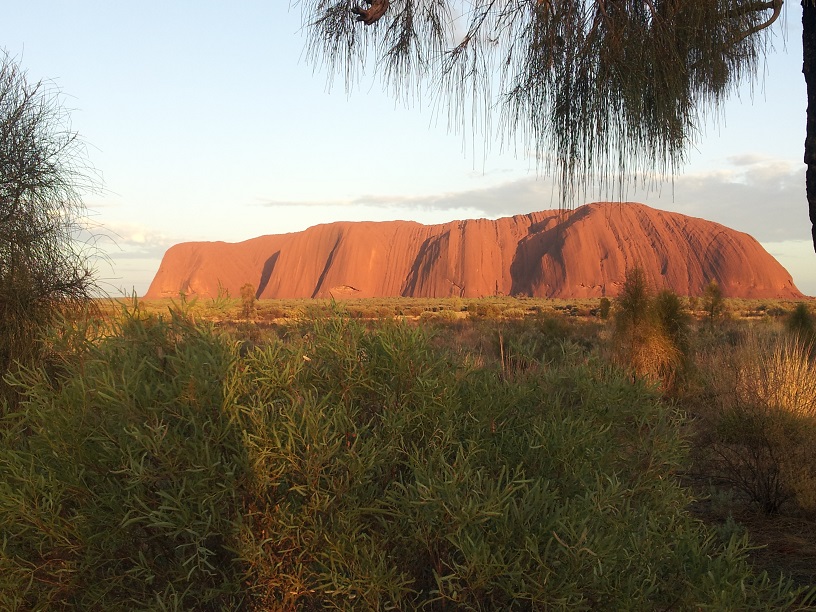
Then it was on to get up-close and personal with Uluru itself.

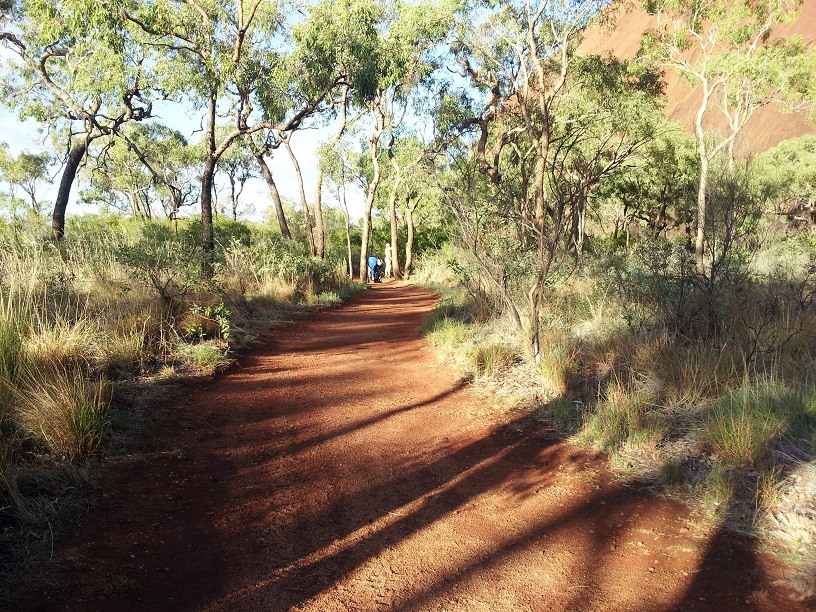
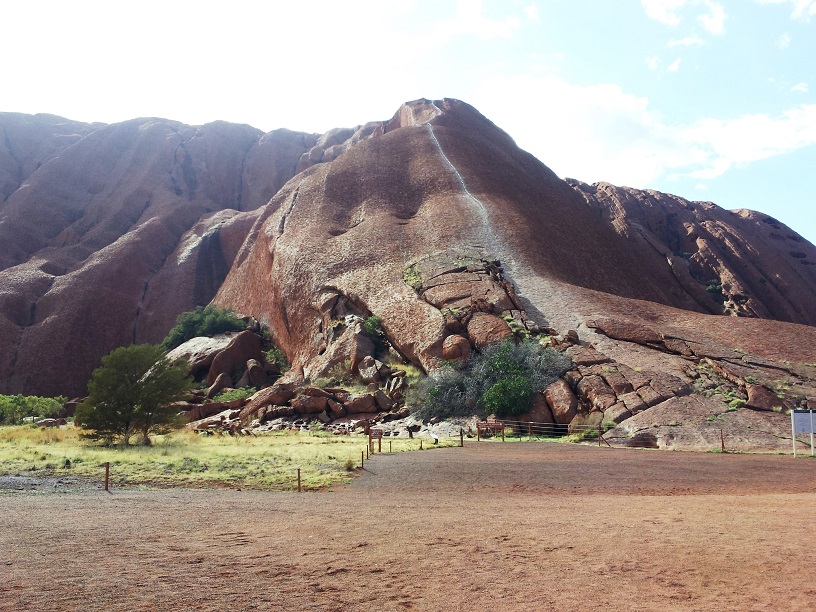
We started out with a self-guided tour. Reading the plaques and signs along the way we walked about half way around, about 5 kilometers/3miles. The rock formations are fantastic and it took us about twice as long as it usually would to walk it because I couldn’t stop taking pictures.
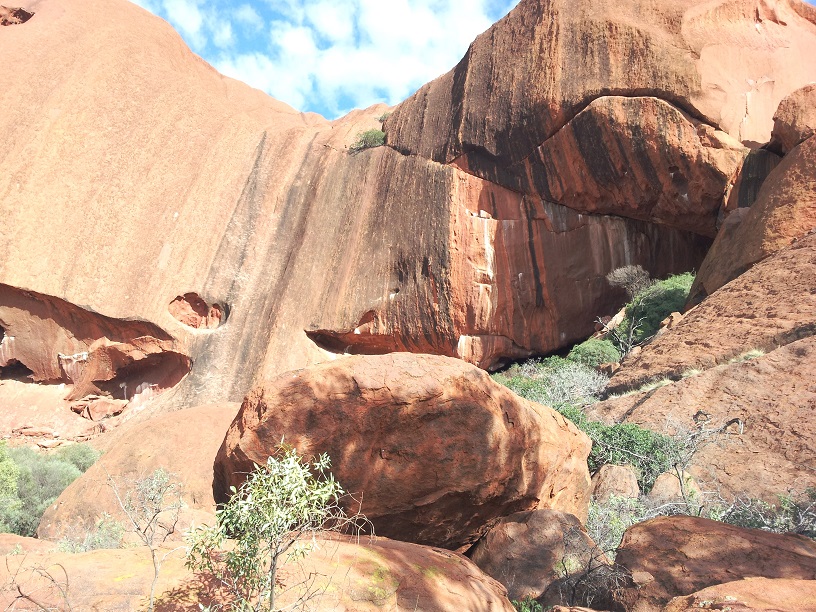
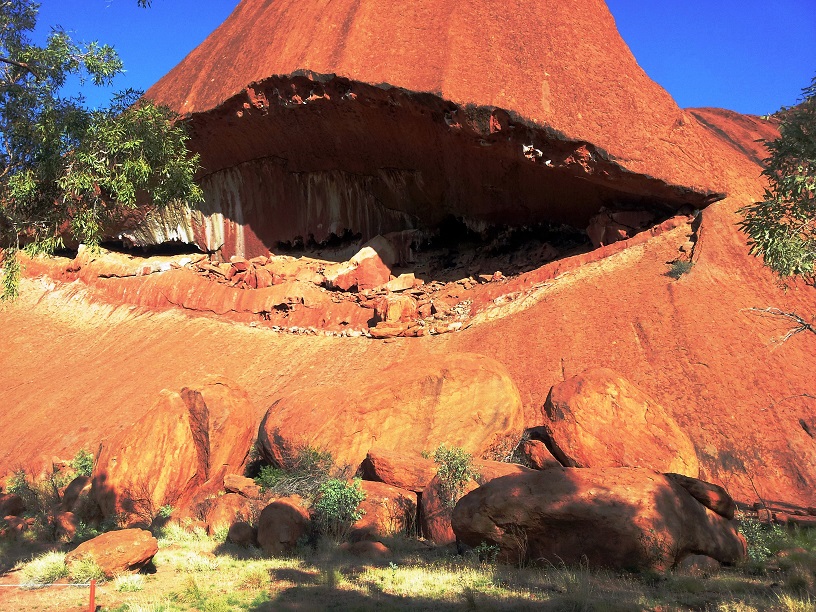
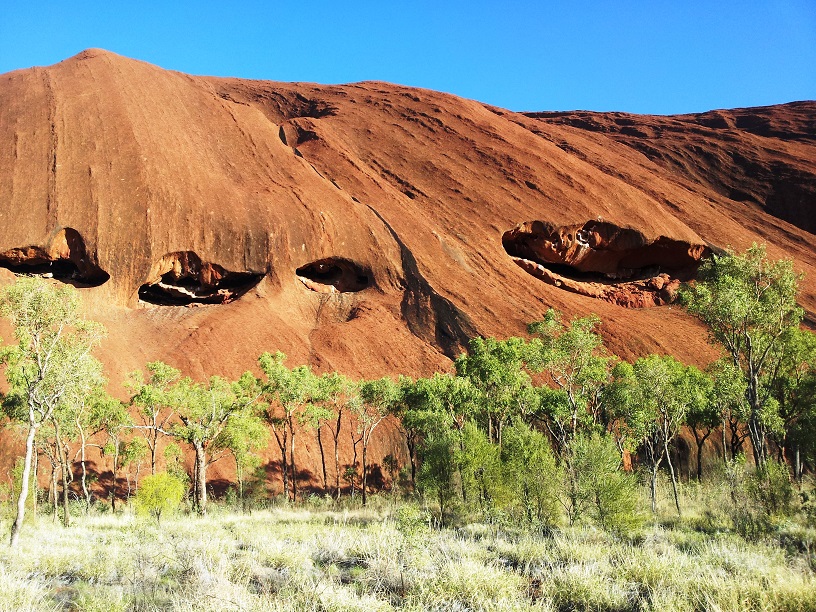

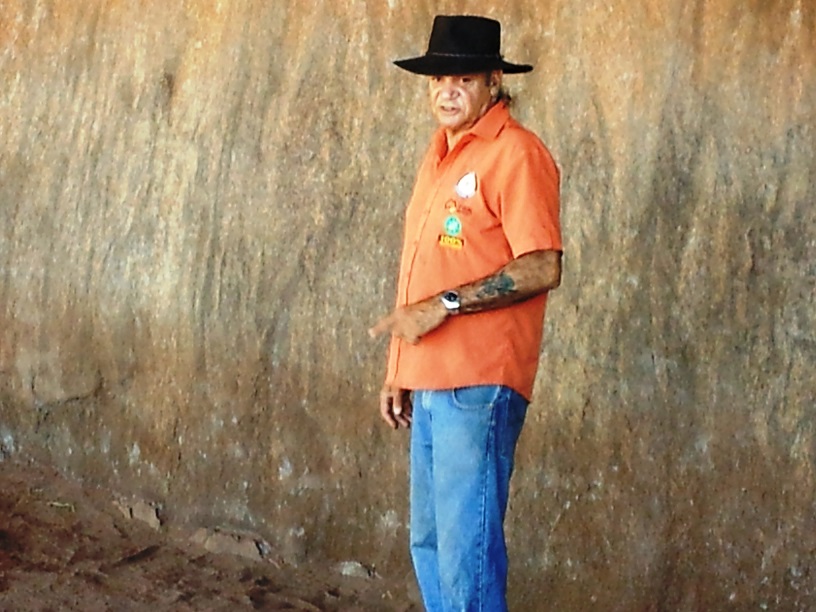
We finally met back up with JJ and the group at the designated time to meet with our Mala (one of the Aboriginal tribes) guide, Vincent. He would take us on the rest of the tour and explain a bit about the culture and history of the Aboriginal people and their relationship with Uluru.
The Aboriginal people had lived in Australia for over 33 thousand years and their numbers ranged in the 10s of thousands. They had developed a way of life allowed them to live and thrive in the harsh surroundings of the Australian Outback as well as in all the parts of Australia.
Vincent described more about men’s business and women’s business explaining that neither men nor women were dominant in the Aboriginal society. Each gender had its own jobs/”business”. They were dependent on each other and neither could survive without the other. They did not own the land but considered themselves a part of the land, a part of the natural order. For example, one of the practices the Aboriginal performed was back burning the land. They would set fire to the underbrush and large areas were allowed to burn. This practice served to get rid of dead brush, add much needed nitrogen to the soil, and it allowed the very hard seeds of the acacia plants and trees to crack so that they could sprout and grow. When the rains came, this bush area sprang to life with new growth providing food for the people and the animals of the area.
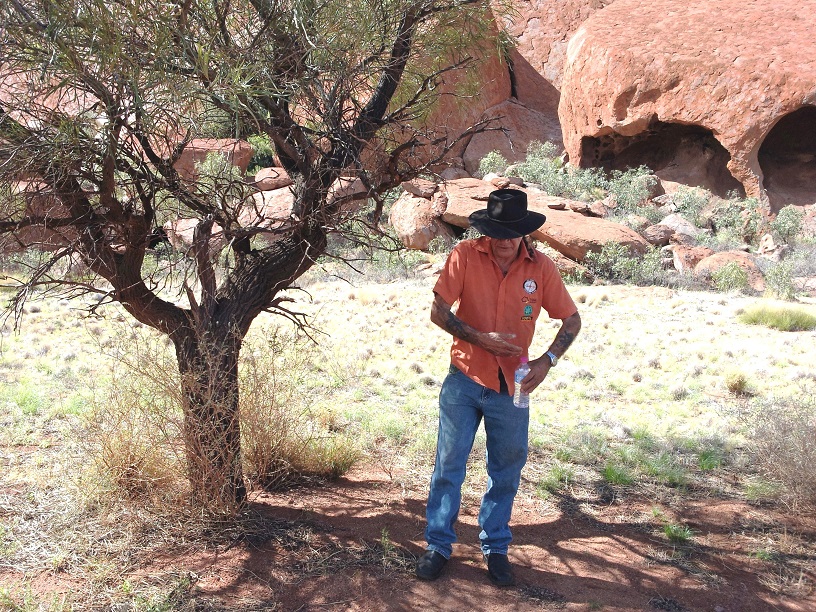
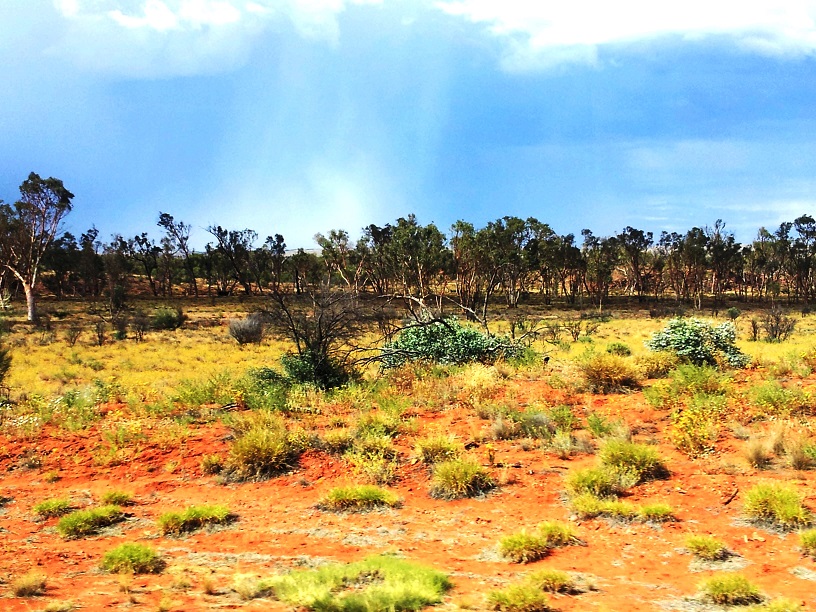
The Aboriginal people were an integral part of the process and the land.
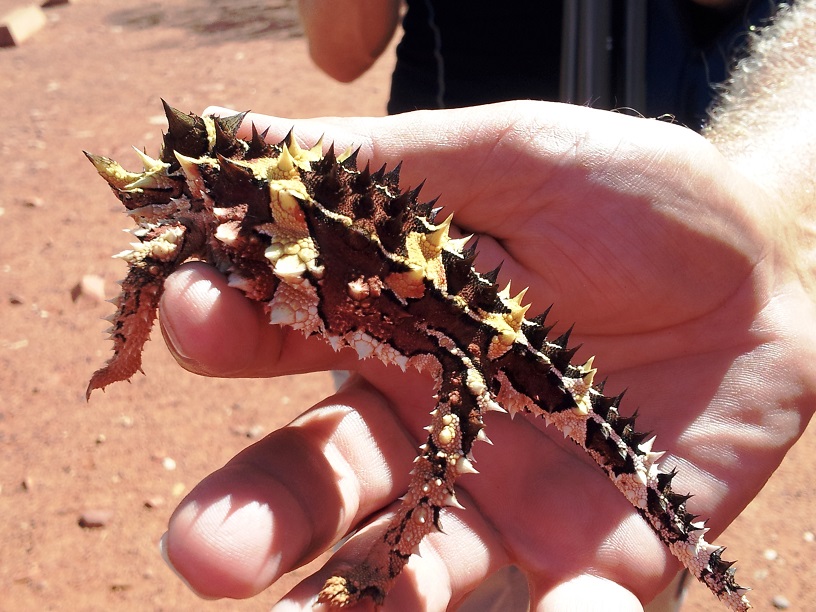
Vincent talked about how boys were taught and how girls were taught. He explained how various plants were used for food and medicine. He spent over an hour with us pointing out caves, plants, animals,
telling us the stories and explaining the sacredness of Uluru to his people.
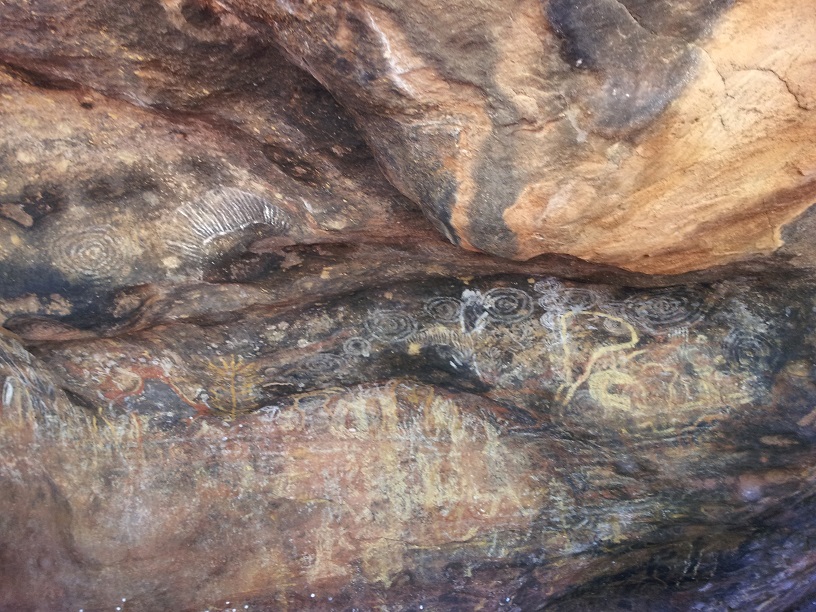
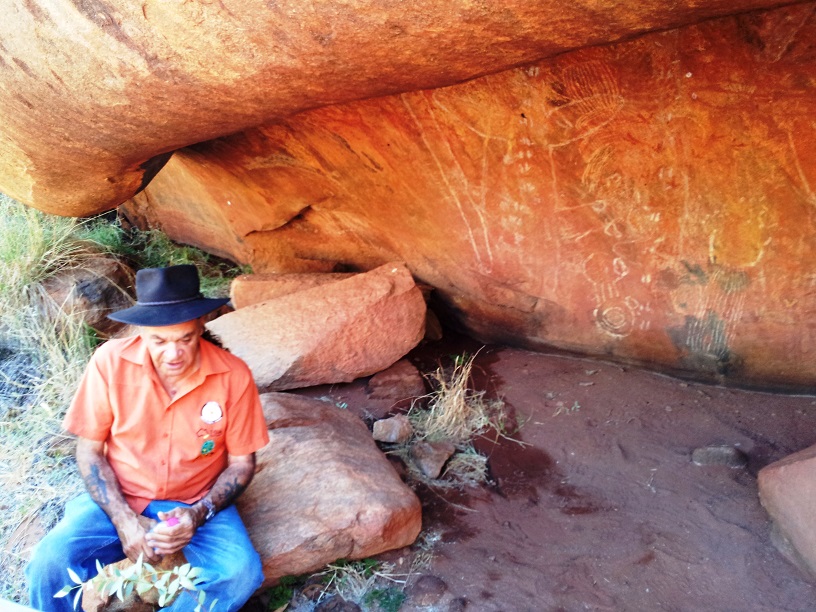
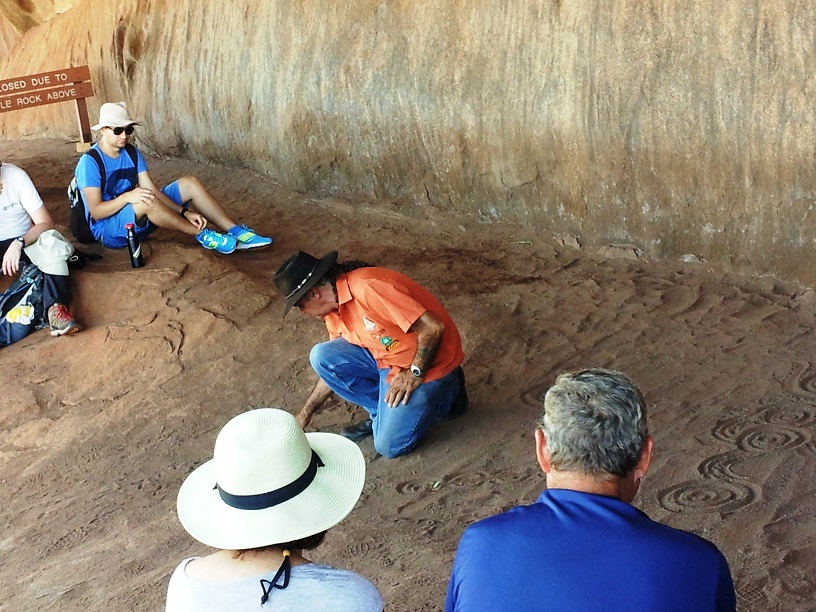
Using the ancient drawings and symbols, Vincent told us an Aboriginal story that was used to teach the children a morals lesson on honesty.
We left Uluru with a deeper understanding and respect for the people and the land.
Before we leave this part, I would like to point out that Vincent is college educated, a teacher, and for years, held an important position with a council that works with the Australian government in Aboriginal concerns. He works now to help his people and to educate those who come to Uluru.

After lunch we broke camp and headed to the next campsite in King’s Canyon. It was a pretty long trip with a stop at King’s Canyon Resort for a break and a swim before heading on.
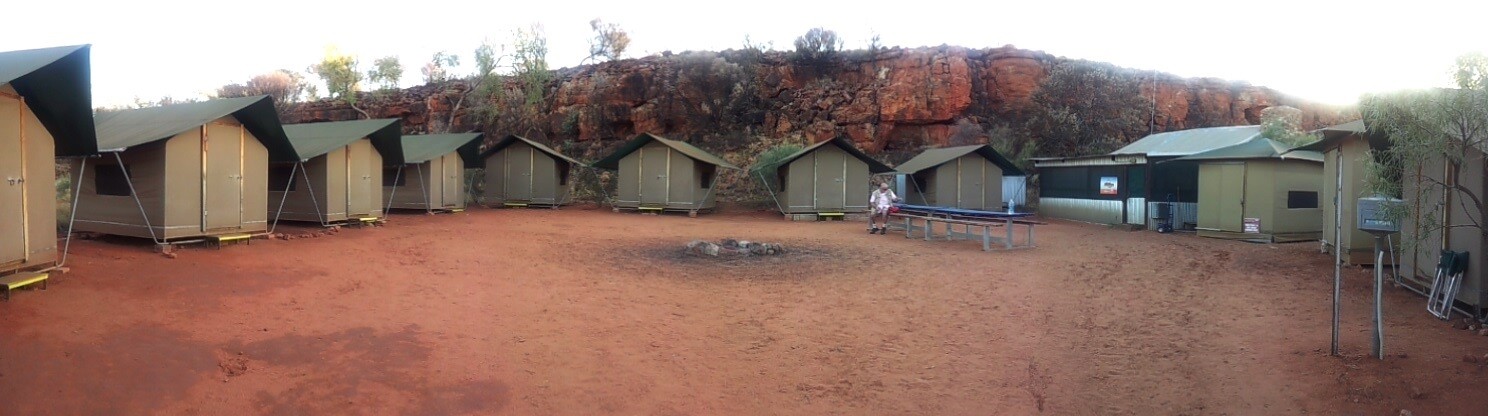
We arrived at our campsite in time to set up camp, have dinner, showers, and again collapse in our bunks. This Outback exploring is hard work.
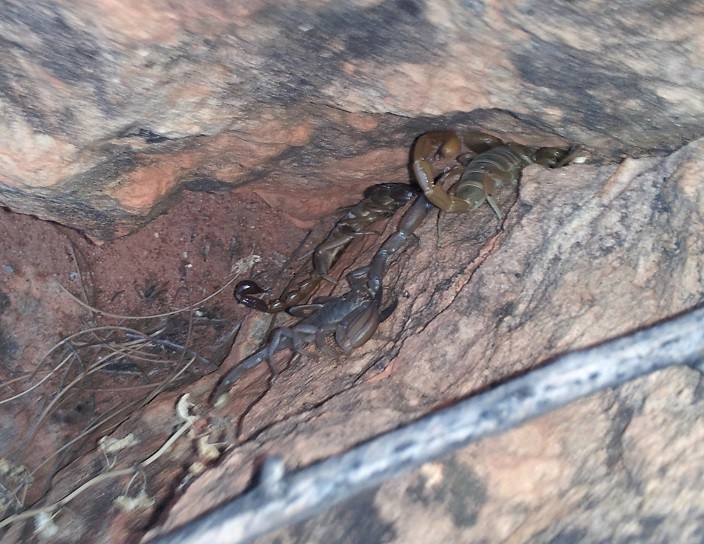
JJ showed some mercy the next morning and didn’t ring the breakfast bell until 5:30. We trouped to the mess tent and found breakfast and a container of scorpions waiting on the table. JJ had generously collected them during the night for our perusal – thanks JJ. It gave me pause when I remembered trekking to the bathroom in the middle of the night in flip-flops…
We were off and running by 6:30 and at our next hike by 7: 00. This one was a hike around the rim of the canyon. The only trouble with it was that we had to hike up to the rim – 120m/500ft and it was already in the mid 90°s.
None-the-less, armed with our water bottles, up we climbed, and we spent the next 3hrs hiking the rim, taking in the sites and JJ’s knowledge of the land.
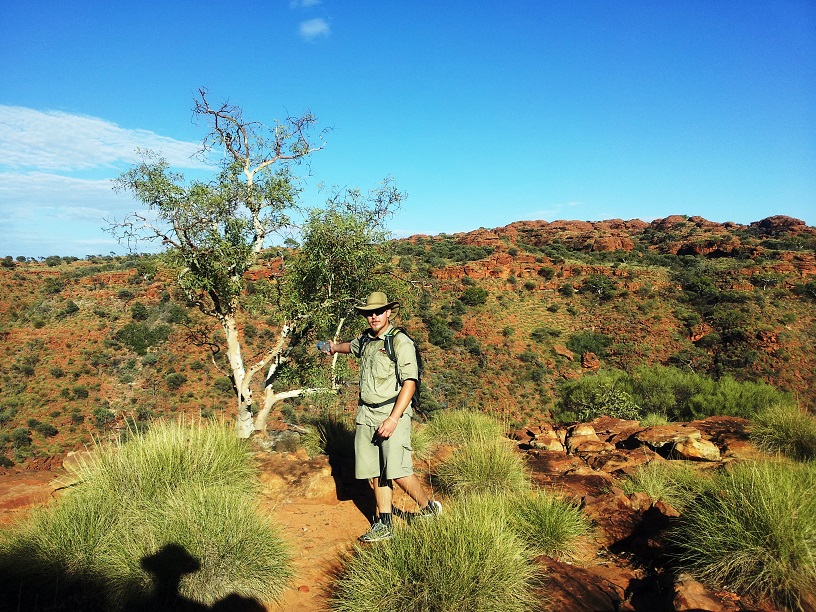
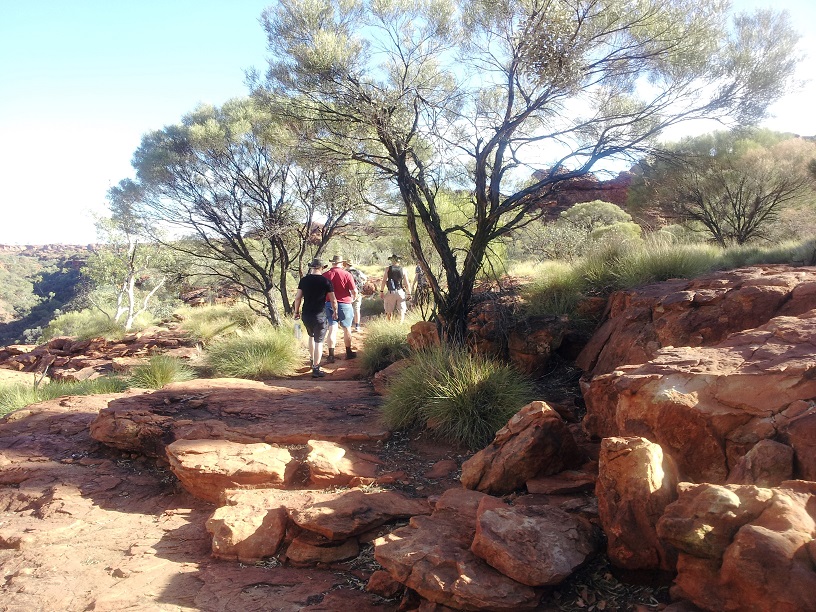
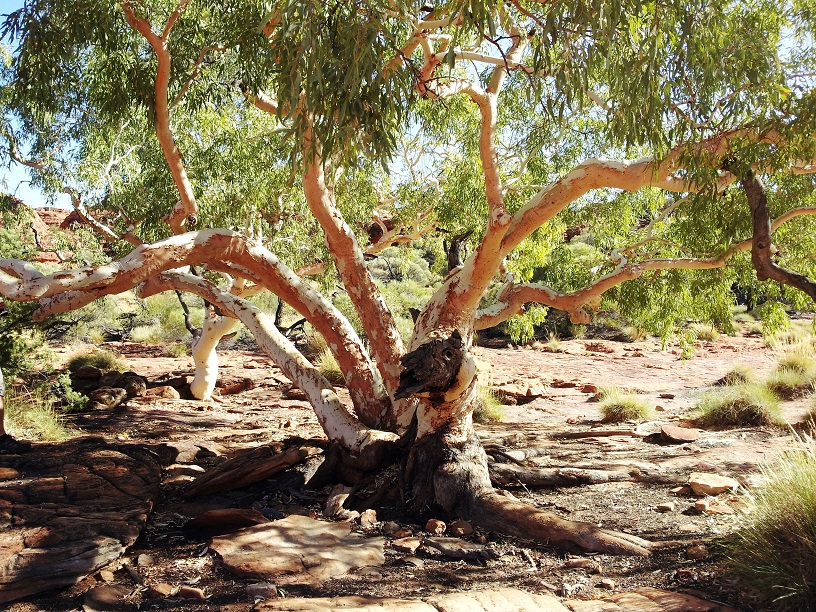


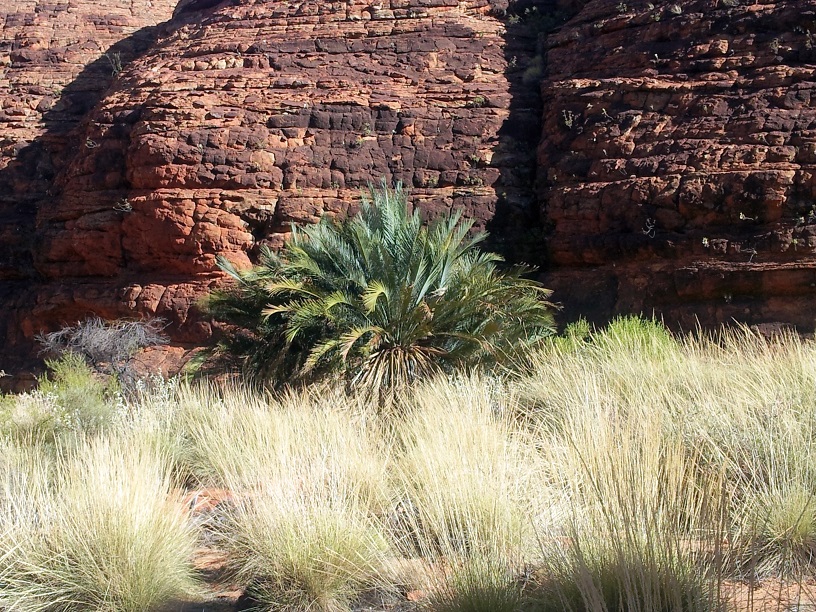
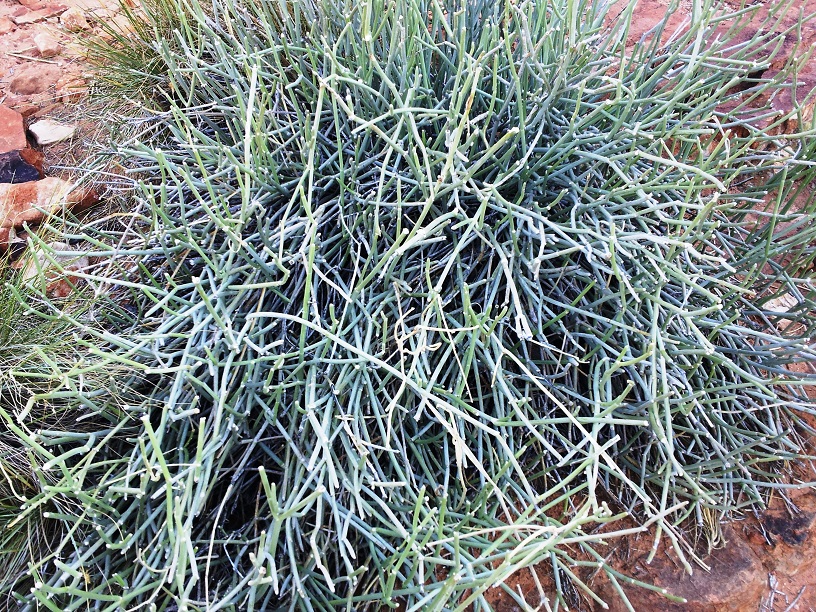


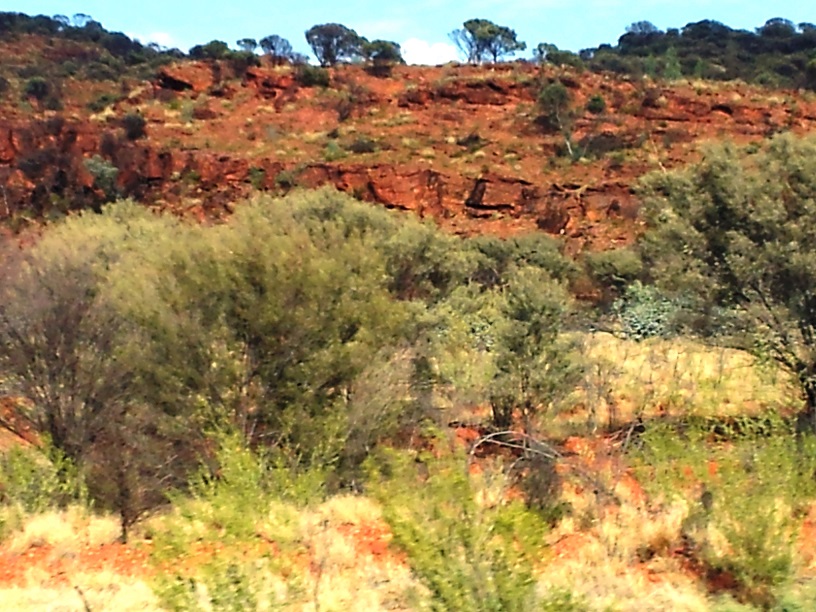
The sights were incredible!
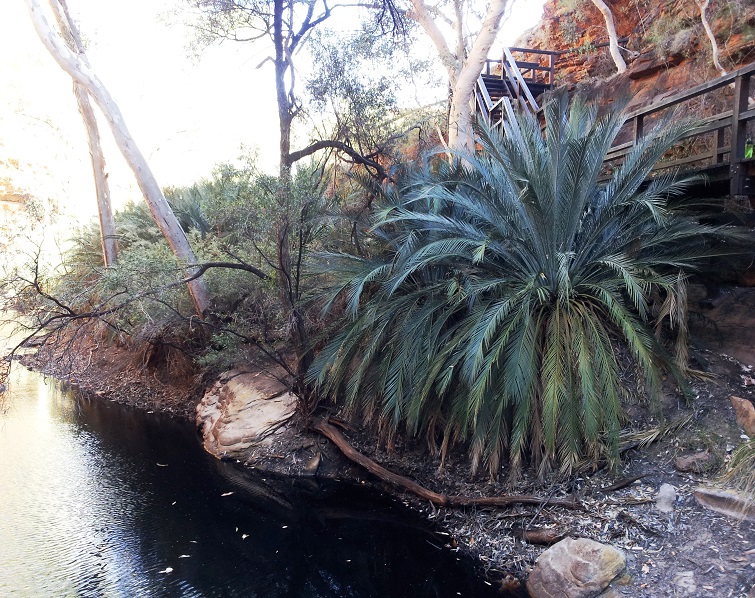
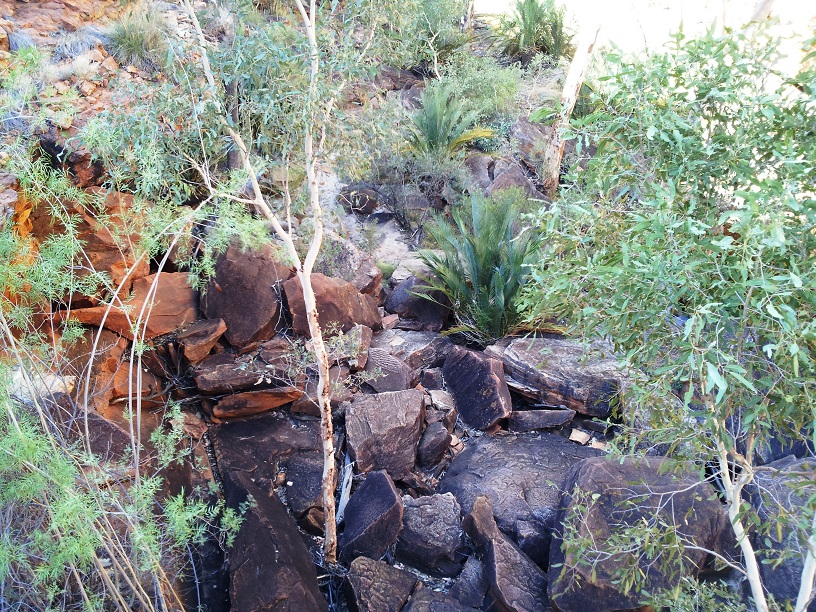
About ¾ of the way around, we hiked down into The Garden of Eden. It is a beautiful ravine at the bottom of the canyon where we stopped for a break and snacks.

Then we had to climb back up the other side.
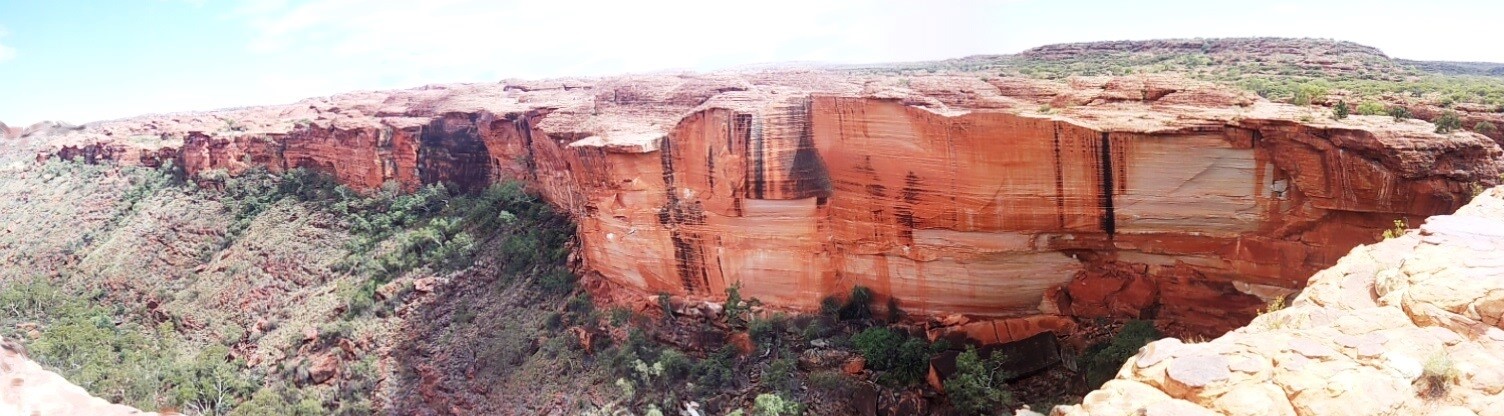
By the time we made it around to the climb back down the thermometer was registering 104°. We made it back to the bus, barely. Was it worth it? After I’d cooled down and was back on the air-conditioned van – definitely. Seriously, it was incredibly beautiful and well worth the significant effort.
Then it was back to the bus, to camp for lunch, and then we were headed for the long journey home. But wait there’s more. I forgot to mention that this is the “rainy season” in Australia and so it is for the Red Center. When the annual rainfall is less than 2 inches per year, an excursion being spoiled by rain isn’t a big threat. We did get bits of rain every day on this trip but never enough to slow us down. That being said, we made a brief stop on the way home to look at a meteor crater. The skies were pretty clouded and just after we got off the bus the wind picked up and the skies opened up. The results other than getting wet were the most amazing thing I’ve ever seen, a gorgeous double rainbow – WOW!!!
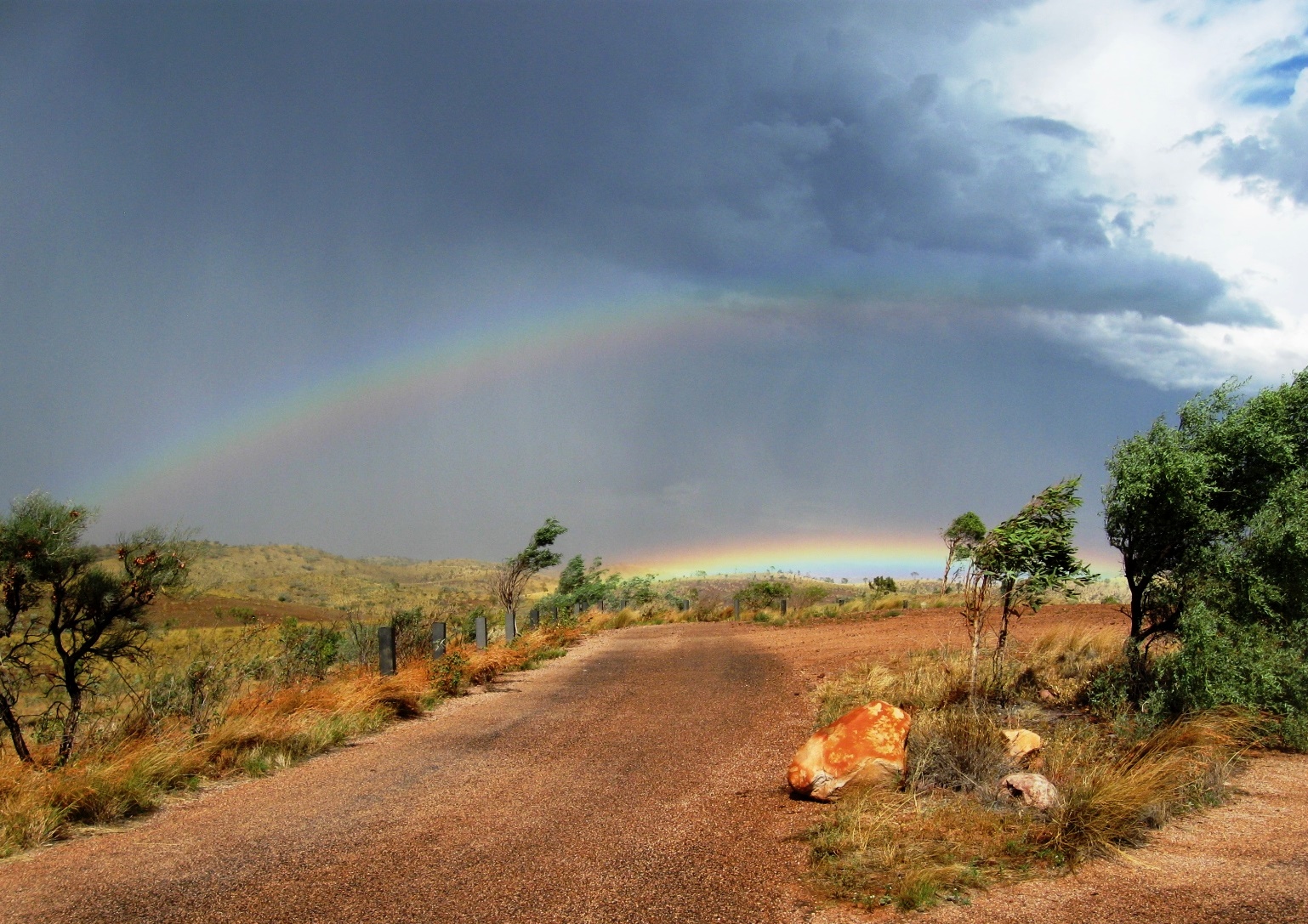

Isn’t nature astounding!!!!!
and what a way to end our adventure – a promise of things to come.
Our journey to the Red Center was illuminating and awe-inspiring. I am truly grateful for the experience and thank you for letting me share it with you.













 CharliExplores